
Wearable Patch Market Report Scope & Overview:
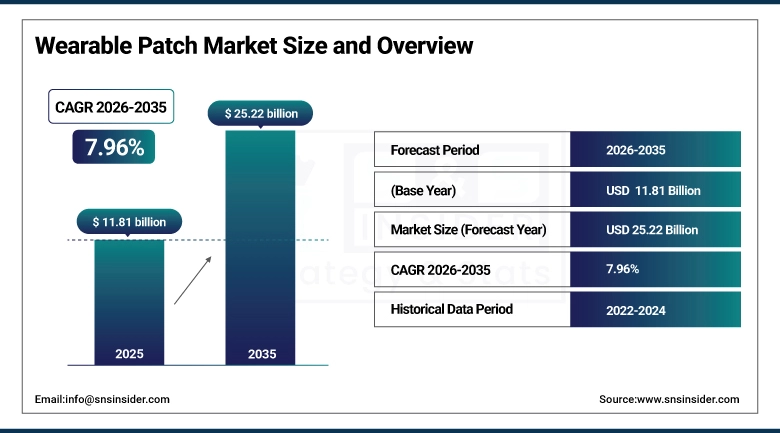
The Wearable Patch Market size is valued at USD 11.81 Billion in 2025 and is projected to reach USD 25.22 Billion by 2035, growing at a CAGR of 7.96% during the forecast period 2026-2035.
The Wearable Patch Market analysis report provides a comprehensive analysis of Wearable Patch Market dynamics, technology trends, and key healthcare and fitness applications. Growing prevalence of chronic diseases, increasing adoption of remote patient monitoring, growing demand for non-invasive healthcare solutions, and increasing digital health infrastructure are key factors driving steady Wearable Patch Market growth in the forecast period 2026-2035.
Wearable patch usage exceeds 320 million units in 2025, fuelled by increasing adoption of continuous monitoring solutions, health awareness, and integration of biosensor-based wearable technologies.
To Get more information on Wearable Patch Market - Request Free Sample Report
Wearable Patch Market Trends:
-
Rising incidence rates of chronic diseases such as diabetes and cardiovascular diseases are boosting the need for continuous monitoring wearable patches.
-
Rising trend of remote patient monitoring and home healthcare services is boosting the long-term use of wearable patches in the healthcare sector.
-
Biosensor technology advancements and multi-parameter monitoring abilities of wearable patches are enhancing the accuracy and real-time utilization of the product.
-
Wearable patches with flexible and skin-friendly materials and wireless connectivity options are enhancing the comfort and long-duration adherence of the product.
-
Rising trend of digital health technologies and mobile applications is boosting the accessibility and real-time utilization of wearable patches.
-
Rising collaborations between medical device manufacturers and healthcare services are accelerating the innovation and market reach of wearable patches.
U.S. Wearable Patch Market Insights:
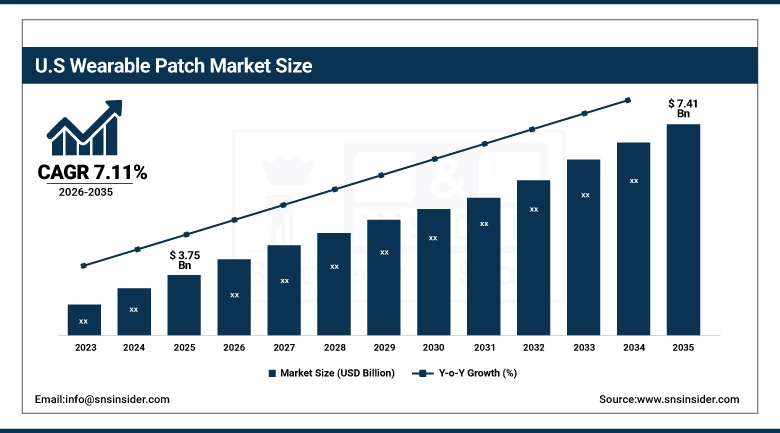
The U.S. Wearable Patch Market is estimated to grow from USD 3.75 Billion in 2025 to USD 7.41 Billion in 2035 at a CAGR of 7.11%. The market is driven by factors like the rising adoption of remote patient monitoring, the rising prevalence of chronic diseases like diabetes and cardiovascular conditions, high demand for continuous monitoring, and rising investments in advanced biosensors and connected healthcare devices in hospital and home healthcare settings.
Wearable Patch Market Growth Drivers:
-
Increase in the prevalence of chronic diseases and the need to maintain continuous health monitoring – driving the Wearable Patch Market.
The increase in the number of chronic diseases, including diabetes and cardiovascular diseases, along with the rising need to maintain continuous health monitoring, is a major factor driving the Wearable Patch Market. Wearable patches, especially those embedded with advanced biosensors, are being adopted by healthcare organizations, home healthcare providers, and digital health platforms to enable continuous health monitoring. The rising trend of remote patient monitoring and home healthcare, coupled with the increase in health awareness and adoption of preventive healthcare measures, is also driving the Wearable Patch Market.
More than 61% of healthcare providers and digital health users adopted the wearable patch solution in 2025 to enable continuous health monitoring, remote health monitoring, and to maintain proactive health management.
Wearable Patch Market Restraints:
-
High costs of the device and data privacy are major factors that are restraining the growth of the Wearable Patch Market.
The high costs of the device and data privacy are major factors that are restraining the growth of the Wearable Patch Market. Advanced wearable patches that are integrated with various features such as biosensors, connectivity solutions, and real-time analytics solutions make the device more expensive for small healthcare organizations and price-sensitive customers in emerging countries. Inconsistent reimbursement policies and lack of insurance coverage for wearable monitoring solutions are also factors that are restraining the growth of the global market for wearable patches, especially for long-term patient monitoring solutions. Moreover, data privacy is another factor that is restraining the growth of the global market for wearable patches. Challenges associated with the reliability of the device and irritation of the skin are factors that are restraining the growth of the global market for wearable patches.
Wearable Patch Market Opportunities:
-
Opportunities exist in the Wearable Patch Market due to the increasing integration of wearable patches with digital health platforms, telemedicine, and connected care ecosystems.
Healthcare providers and digital health companies are increasingly using wearable patches to facilitate continuous remote monitoring, real-time sharing, and personalized care delivery. There has been an increase in telehealth services and value-based care models, creating a demand for wearable patches that can provide seamless and interoperable monitoring solutions to support care delivery outside the traditional clinical setting. There has also been progress in cloud connectivity, data analytics, and interoperability standards to facilitate widespread adoption in chronic disease management, post-acute care, and preventive care.
More than 52% of healthcare providers and digital health platforms have integrated wearable patch data into remote monitoring and telehealth solutions in 2025 to support improved patient outcomes, operational efficiency, and scalable care delivery.
Wearable Patch Market Segmentation Analysis:
-
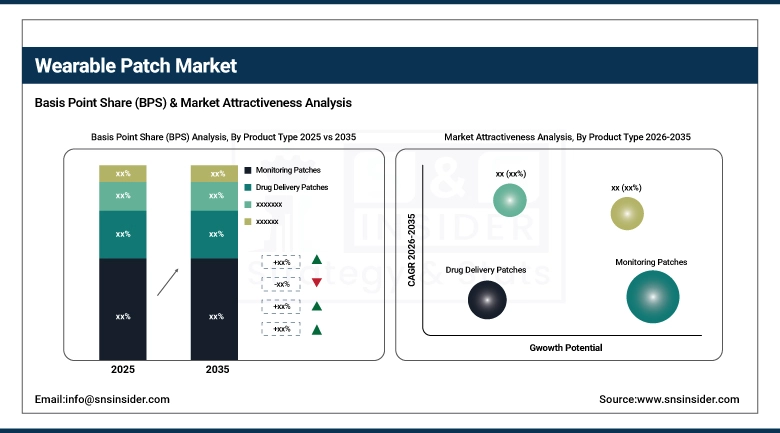
By Product Type, Monitoring Patches Dominate the largest market share of 52.80% in 2025, while Drug Delivery Patches are expected to grow at the fastest CAGR of 11.95% during 2026–2035.
-
By Technology, Biosensors dominated with 48.60% market share in 2025, whereas ECG Sensors are projected to record the fastest CAGR of 10.85% through 2026–2035.
-
By Application, Continuous Monitoring Dominate the highest market share of 46.20% in 2025, while Disease Management is expected to grow at the fastest CAGR of 11.40% during the forecast period.
-
By End-User, Hospitals Dominate with the largest share of 44.10% in 2025, while Home Healthcare is expected to grow at the fastest CAGR of 12.05% during the forecast period.
-
By Distribution Channel, Hospitals & Clinics dominated with a 49.30% share in 2025, while Online Channels are anticipated to expand at the fastest CAGR of 11.75% through 2026–2035.
By Product Type, Monitoring Patches Dominate While Drug Delivery Patches Grow Rapidly:
Monitoring Patches Segment dominated the global Patches market due to their widespread use in continuous health monitoring activities, especially in glucose level monitoring, cardiac activities, and vital sign monitoring. In 2025, the use of this type of Patches surpassed 180 million units globally, indicating their widespread adoption in continuous health monitoring activities in hospitals and home care settings.
Drug Delivery Patches Segment is the fastest-growing type of Patches due to the increasing demand for non-invasive drug delivery systems. In 2025, the adoption of this type of Patches increased dramatically, with over 70 million units being used in pain management, hormone therapy, and treatment of chronic diseases.
By Technology, Biosensors Dominate While ECG Sensors Grow Rapidly:
Biosensors segment dominated the market due to their widespread use as the core technology to detect and monitor physiological parameters like glucose levels, temperature, hydration, etc. In 2025, the use of biosensor-based wearable patches in the biosensors segment accounted for a significant number of device deployments, generating millions of real-time data points daily, signifying their widespread use in the industry.
ECG Sensors – This type of sensor has seen significant growth in the wearable patches market due to the increasing prevalence of cardiovascular diseases and the subsequent demand for continuous cardiac monitoring. In 2025, this type of sensor saw significant adoption, signifying the rapid growth of cardiac-focused wearable patch use cases.
By Application, Continuous Monitoring Dominates While Disease Management Grows Rapidly:
Continuous Monitoring segment accounted for a major market share due to its widespread adoption in monitoring real-time physiological parameters such as glucose levels, heart rate, and body temperature. In 2025, more than 200 million wearable patch usage was recorded, which indicates a strong adoption rate in hospitals as well as home healthcare settings for chronic disease management and preventive care.
Disease Management segment is expected to grow at a rapid rate. This segment is witnessing a surge in growth due to an increase in chronic conditions such as diabetes and cardiovascular disease. In 2025, more than 95 million patch-based applications were recorded in disease management.
By End-User, Hospitals Dominate While Home Healthcare Grows Rapidly:
Hospitals Segment dominated the Wearable Patch Utilization market as the primary adopters of Wearable Patch Technology for Patient Monitoring, Post-operative care, and Acute Condition Management. In 2025, the Hospitals Segment accounted for Wearable Patch Utilization exceeding 170 million due to their advanced infrastructure, skilled professionals, and integration with clinical monitoring systems. Higher Patient Volumes and Continuous Patient Monitoring also add to the Hospitals Segment's dominance.
Home Healthcare Segment is the fastest-growing Segment due to the adoption of Wearable Patch Technology in Remote Patient Monitoring and Decentralized Healthcare Delivery Models. In 2025, the Home Healthcare Segment accounted for Wearable Patch Utilization exceeding 110 million.
By Distribution Channel, Hospitals & Clinics Dominate While Online Channels Grow Rapidly:
The segment of Hospitals & Clinics led the market in terms of being a major distribution channel for wearable patches, with strong support from procurement, prescriptions, and service integration. In 2025, the segment enabled the distribution of more than 210 million devices, reflecting the strong dependence on healthcare infrastructure for the distribution of the devices.
The segment of Online Channels is witnessing the fastest growth, backed by the rising trend of digitalization, direct sales to consumers, and the adoption of connected health devices. In 2025, the segment enabled the sale of more than 85 million devices, backed by the rising trend of e-commerce penetration and consumer preference for online shopping
Regional Analysis:
North America Wearable Patch Market Insights:
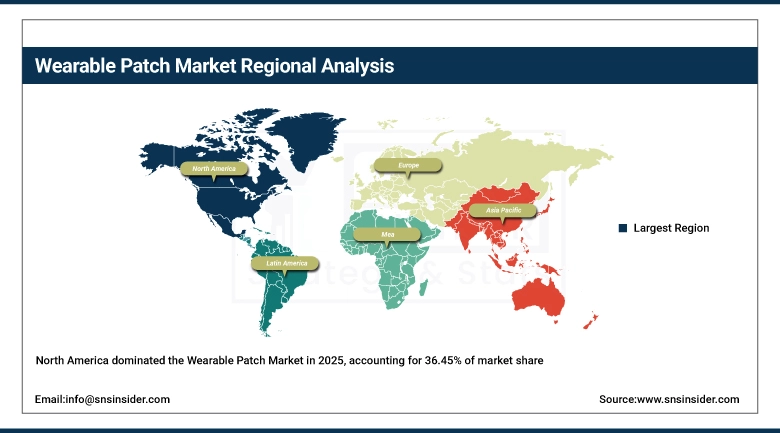
The North America Wearable Patch Market is dominated by a 36.45% share in 2025. This is owing to the well-developed healthcare infrastructure and adoption of digital health technologies in the U.S. and Canada. Wearable patches are commonly used in glucose monitoring, cardiac monitoring, and remote patient monitoring in healthcare centers. This has fueled growth in the North America Wearable Patch Market. Increasing cases of chronic diseases, coupled with a well-developed healthcare infrastructure and adoption of biosensor technologies, have fueled growth in the market. Continuous innovations in connected health technologies, data integration platforms, and reimbursement policies have strengthened the North America Wearable Patch Market’s position as a dominant market.
Get Customized Report as per Your Business Requirement - Enquiry Now
U.S. Wearable Patch Market Insights:
The U.S. Wearable Patch Market is fueled by widespread adoption of remote patient monitoring technologies, widespread adoption of continuous monitoring technologies, and well-established presence of key players. Increasing cases of chronic diseases, coupled with widespread adoption of home healthcare services, and integration of wearable patches with digital health technologies, have fueled growth in the U.S. Wearable Patch Market. Innovations in advanced biosensor technologies, AI-based analytics, and connected health technologies have strengthened the U.S. Wearable Patch Market’s position as a dominant market.
Asia-Pacific Wearable Patch Market Insights:
The wearable patch market is booming in the Asia-Pacific, with a compound annual growth rate (CAGR) of 9.93% Between 2026 and 2035 Across the region poised for significant expansion. This surge is largely due to the swift development of healthcare infrastructure, the increasing adoption of digital health solutions, and the growing need for affordable and effective monitoring systems across China, India, Japan, and Southeast Asia. Moreover, the market's growth in this area is being driven by the widespread use of smartphones, a greater focus on preventive healthcare, and increased investment in telehealth and remote monitoring technologies.
China Wearable Patch Market Insights:
China's healthcare market is experiencing growth, fueled by several factors. The increasing use of healthcare monitoring, the growing number of chronic illnesses, and the widespread adoption of smartphone-based healthcare solutions are all contributing to this expansion. Furthermore, China's robust local manufacturing capabilities, coupled with increased investment in biosensor technology, and the rising use of wearable patches in hospitals and remote monitoring environments, position the country as a significant player in the Asia-Pacific market.
Europe Wearable Patch Market Insights:
The Europe Wearable Patch Market is influenced by a high focus on preventive healthcare, a rising trend of adopting remote monitoring technology, and an increase in investments in digital health infrastructure. Countries such as Germany, France, and the UK are contributing to market growth in Europe by adopting wearable patches in various healthcare and wellness segments, such as chronic disease management, elderly care, and fitness tracking. Growing telehealth services, an increase in demand for connected care solutions, and a favorable regulatory environment are contributing to market growth in Europe. Ongoing advancements in sensor technology, wearable patches, and healthcare solutions make Europe a prominent player in the Wearable Patch Market.
Germany Wearable Patch Market Insights:
Germany is a prominent market in the Europe Wearable Patch Market, influenced by a strong industrial base, high standard of healthcare, and a rising trend of adopting digital health technology. Wearable patches in Germany are gaining popularity in remote patient monitoring, rehabilitation, and elderly care, and there is a high focus on investing in smart healthcare and medical technology innovation.
Latin America Wearable Patch Market Insights:
The Latin America Wearable Patch Market is witnessing growth due to an increase in the adoption of digital health solutions and an increase in access to healthcare services in the region. This is further bolstered by an increase in demand for remote monitoring and wearable health devices in Brazil, Mexico, and Argentina.
Middle East and Africa Wearable Patch Market Insights:
The wearable patch market in the Middle East and Africa is on the rise. This is largely thanks to increased investment in modernizing healthcare and the region's ongoing digital transformation. The trend is also fueled by the growing use of wearable patches for remote monitoring, fitness tracking, and preventive healthcare. Saudi Arabia, the UAE, and South Africa are becoming significant players in this market. Additionally, the expansion of healthcare infrastructure and greater awareness of digital health solutions are helping to drive the market's growth in this area.
Competitive Landscape:
Abbott Laboratories is a global medical device company that has a significant presence in the wearable patch market, particularly in the field of continuous glucose monitoring (CGM) systems under the name Freestyle Libre. The company specializes in innovative biosensors that allow for real-time glucose monitoring for diabetes management in both hospital settings and home healthcare environments. Abbott’s wide distribution network and innovative products in the field of wearable patches make them a dominant force in the market.
-
In September 2025 Abbott announced that it has expanded its next-generation Freestyle Libre system with enhanced sensor accuracy and wearability for a longer period to improve patient compliance and expand its presence in emerging markets.
Medtronic plc is a global medical device company that has a significant presence in the wearable patch market with innovative medical solutions in the field of insulin delivery patches and other chronic disease management solutions. Medtronic’s innovative solutions in the field of healthcare and its wide presence in the global market make them a dominant force in the field of wearable patches for both therapeutic and diagnostic solutions.
-
In August 2025, Medtronic launched an upgraded wearable insulin patch integrated with smart monitoring capabilities, enhancing automated insulin delivery and strengthening its position in diabetes care solutions.
Another major player in the wearable patches industry, especially in continuous glucose monitoring systems for diabetes management, is Dexcom, Inc. The company’s innovative and highly accurate continuous glucose monitoring systems have seen significant traction in the home healthcare and remote monitoring environments. The company’s commitment to innovation and accuracy in continuous glucose monitoring systems has helped the company achieve rapid growth and strong market competitiveness in the global market.
-
In July 2025, the company launched its latest CGM system with better connectivity and reduced calibration requirements.
Wearable Patch Market Key Players:
-
Abbott Laboratories
-
Dexcom, Inc.
-
Medtronic plc
-
Koninklijke Philips N.V.
-
iRhythm Technologies, Inc.
-
VitalConnect, Inc.
-
BioTelemetry, Inc.
-
VivaLNK, Inc.
-
LifeSignals, Inc.
-
GENTAG, Inc.
-
Sensium Healthcare Ltd.
-
Leaf Healthcare, Inc.
-
Isansys Lifecare Ltd.
-
Nemaura Medical Inc.
-
Proteus Digital Health
-
Qualcomm Technologies, Inc.
-
L’Oréal Group
-
Chrono Therapeutics
-
Kenzen, Inc.
-
Feeligreen
| Report Attributes | Details |
|---|---|
| Market Size in 2025 | USD 11.81 Billion |
| Market Size by 2035 | USD 25.22 billion |
| CAGR | CAGR of 7.96% From 2026 to 2035 |
| Base Year | 2025 |
| Forecast Period | 2026-2035 |
| Historical Data | 2022-2024 |
| Report Scope & Coverage | Market Size, Segments Analysis, Competitive Landscape, Regional Analysis, DROC & SWOT Analysis, Forecast Outlook |
| Key Segments | • By Product Type (Monitoring Patches, Drug Delivery Patches, Diagnostic Patches, Others) • By Technology (Biosensors, Temperature Sensors, ECG Sensors, Accelerometers, Others) • By Application (Continuous Monitoring, Disease Management, Fitness & Wellness, Clinical Trials, Others) • By End-User (Hospitals, Home Healthcare, Fitness & Sports, Clinical Research Organizations, Others) • By Distribution Channel (Online Channels, Pharmacies, Hospitals & Clinics, Others) |
| Regional Analysis/Coverage | North America (US, Canada), Europe (Germany, UK, France, Italy, Spain, Russia, Poland, Rest of Europe), Asia Pacific (China, India, Japan, South Korea, Australia, ASEAN Countries, Rest of Asia Pacific), Middle East & Africa (UAE, Saudi Arabia, Qatar, South Africa, Rest of Middle East & Africa), Latin America (Brazil, Argentina, Mexico, Colombia, Rest of Latin America). |
| Company Profiles | Abbott Laboratories, Medtronic, Dexcom, Inc., Koninklijke Philips N.V., VitalConnect, iRhythm Technologies, Inc., BioTelemetry, Inc., VivaLNK, Inc., LifeSignals, Inc., GENTAG, Inc., Sensium Healthcare Ltd., Leaf Healthcare, Inc., Isansys Lifecare Ltd., Nemaura Medical Inc., Proteus Digital Health, Qualcomm Technologies, Inc., L’Oréal Group, Chrono Therapeutics, Kenzen, Inc., Feeligreen |

Frequently Asked Questions
North America dominated with a 36.45% share in 2025, while Asia-Pacific is the fastest-growing region, expected to expand at a CAGR of 9.93% during 2026–2035.
Monitoring Patches dominated with a 52.80% share in 2025, while Drug Delivery Patches are projected to grow at the fastest CAGR of 11.95% during 2026–2035.
Growth is driven by rising chronic diseases, increasing adoption of remote patient monitoring, growing demand for non-invasive healthcare solutions, and expansion of digital health technologies.
The market is valued at USD 11.81 Billion in 2025 and is projected to reach USD 25.22 Billion by 2035.
The Wearable Patch Market is projected to grow at a CAGR of 7.96% during 2026–2035.
