
The Advanced Analytics Market is growing because companies now treat their data as a working tool, not just a stored record. Banks, retailers, hospitals and manufacturers want to know what is likely to happen next, not only what happened last quarter. Cheaper cloud computing, more connected devices and easier AI tools have made this possible for many more firms. As a result, analytics is moving out of specialist teams and into everyday business decisions.
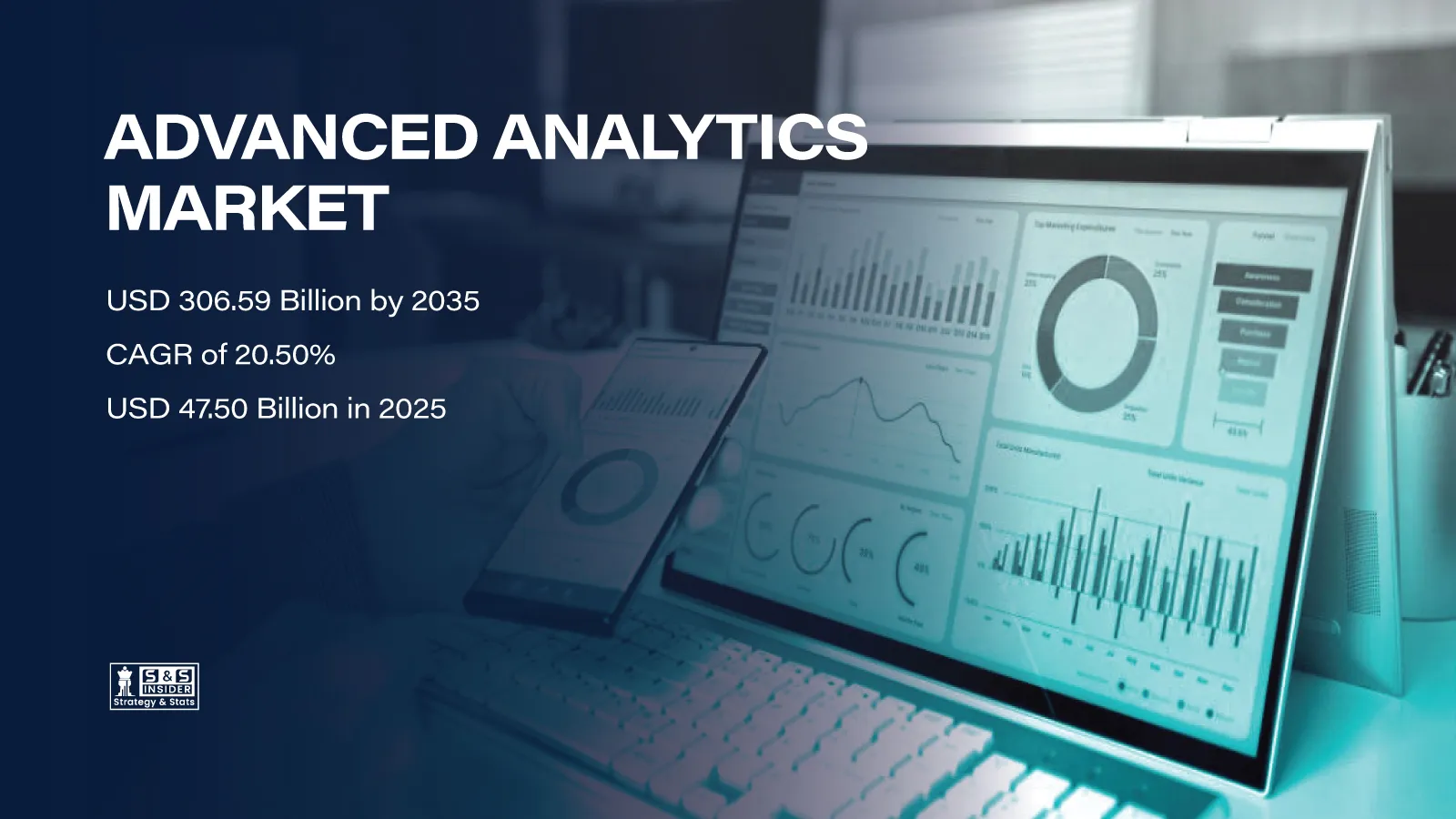
According to a recent study by SNS Insider, the global Advanced Analytics Market was valued at USD 47.50 Billion in 2025 and is expected to reach USD 306.59 Billion by 2035, growing at a CAGR of 20.50% over the forecast period 2026–2035. The market is estimated at USD 57.24 Billion in 2026.
Gain Actionable Intelligence on the Advanced Analytics Market - Request a Sample Report
Turning Data Volume into Revenue
Most organizations now collect far more data than they can use. Sales systems, mobile apps, sensors and support channels all produce records every second. Much of this information sits unused because teams lack the tools or time to study it.
This gap is the market's main commercial opening. Vendors that help buyers find value in data they already hold can show returns quickly. A retailer that predicts demand more accurately carries less stock. A lender that spots risky accounts earlier loses less money.
Buyers are also changing how they measure success. They want results tied to cost, revenue or risk, not only better reports. Suppliers that link their products to clear business outcomes will find it easier to win budgets and renew contracts.
AI Is Changing Who Uses Analytics
For years, advanced analytics needed trained data scientists and complex code. That limited its use to large firms with dedicated teams. New AI-based tools now let business users ask questions in plain language and get answers in seconds.
This shift widens the customer base. Managers in finance, marketing and operations can run their own analysis without waiting for a specialist. Each new user adds demand for software seats, data access and support services.
The change also creates new risks for buyers. Answers produced by AI must be accurate, explainable and safe to act on. Vendors that offer strong data controls and clear audit trails will earn more trust, especially in regulated industries.
Advanced Analytics Market Segmentation Highlights
By Component: Software held 66.80% of the market in 2025, as firms buy platforms to run their analysis in-house. Services accounted for 22.60%. Demand for services is growing as buyers need help with setup, integration and staff training.
By Type: Big Data Analytics led with a 36.50% share in 2025, supported by rising data volumes across digital channels. Customer Analytics held 23.20%, as companies try to understand buying behavior and keep customers longer.
By Organization Size: Large Enterprises accounted for 64.20% of the market in 2025, because they have the largest data sets and budgets. SMEs held 23.80%. Cloud pricing and simpler tools are making analytics affordable for smaller firms.
By End User: BFSI led with a 26.10% share in 2025, driven by fraud detection, credit scoring and compliance needs. Healthcare held 23.40%, as providers use data to improve patient care and control costs.
North America Leads with 38.40% Market Share as Asia Pacific Advances at 23.10% CAGR
North America held 38.40% of the market in 2025. The United States accounted for USD 16.42 Billion in 2025 and is projected to grow at a CAGR of 19.80%. A mature cloud base and early AI adoption keep the region ahead, and buyers there are now focused on scaling tools across whole organizations.
Asia Pacific held 24.20% of the market in 2025 and is the fastest-growing region, with a CAGR of 23.10%. China leads regional demand. Fast digital growth in banking, retail and manufacturing gives suppliers a large base of new buyers.
Europe held 24.60% of the market in 2025, led by the United Kingdom, where strict data rules favor vendors with strong privacy controls. The Middle East & Africa held 6.40%, led by Saudi Arabia and its national digital programs. In Latin America, Brazil leads demand as banks and retailers expand their digital services.
Analytics as a Service Opens New Buyer Groups
Many firms do not want to buy and run large analytics platforms themselves. They prefer to pay a monthly fee for ready-to-use tools hosted in the cloud. This model lowers upfront cost and shortens setup time.
For suppliers, subscription pricing brings steady, repeat revenue. It also makes it easier to sell to mid-sized firms that once found analytics too costly. Usage-based pricing lets buyers start small and expand as they see results.
Managed services add another layer of value. Some buyers lack staff to clean data, build models and keep systems running. Vendors that take on these tasks can build longer and deeper customer relationships.
Competitive Outlook: Platforms Compete on Trust and Ease of Use
The market includes large software firms, cloud providers and specialist analytics companies. Competition is moving away from raw features toward ease of use, data security and how well tools fit with existing systems. Buyers want fewer tools that work together, which is pushing some smaller products out.
Privacy duties, integration costs and a shortage of skilled staff still slow some projects. Vendors that reduce these barriers through built-in governance, simple setup and training support are best placed to gain share.
Advanced Analytics Market Outlook Through 2035
The Advanced Analytics Market is expected to grow steadily through 2035 as AI tools, cloud platforms and rising data volumes push analytics into everyday business work. North America will remain the largest market, while Asia Pacific offers the fastest growth. Suppliers that combine accurate insights with strong data protection and simple pricing are likely to gain the most from this expansion.



