According to the latest SNS Insider Healthcare CRM Market report, the global market is experiencing significant transformation as hospitals, insurers, and life sciences companies invest in intelligent patient engagement platforms, automated communications, and integrated healthcare information systems.
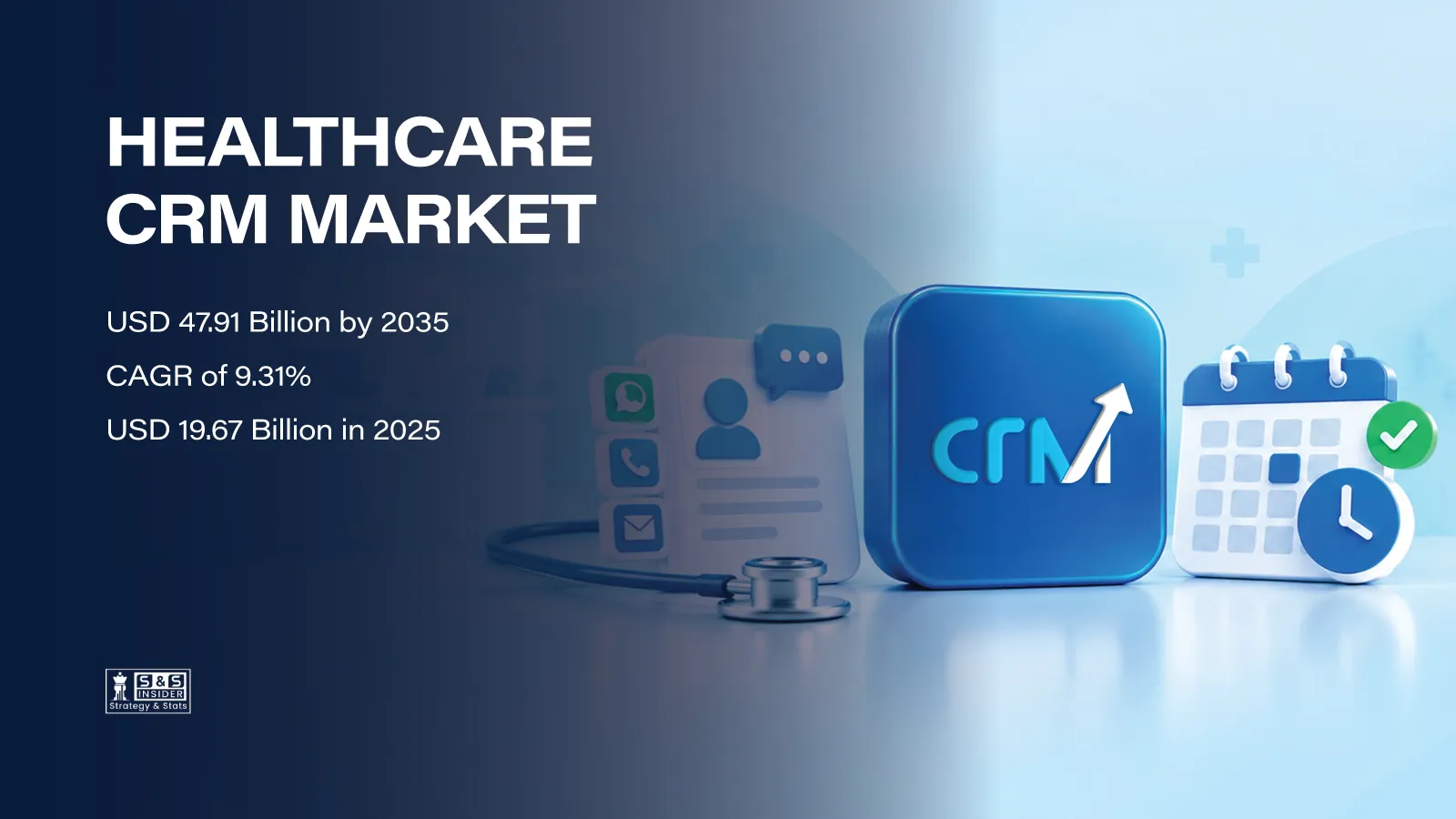
The global healthcare CRM market was valued at USD 19.67 billion in 2025, is estimated to reach USD 21.50 billion in 2026, and is projected to attain USD 47.91 billion by 2035, expanding at a CAGR of 9.31% during 2026–2035.
Healthcare organizations are increasingly replacing fragmented communication systems with centralized platforms that coordinate appointments, patient inquiries, referrals, and follow-up activities. Growing emphasis on value-based healthcare, personalized experiences, and operational efficiency is accelerating investment in customer relationship management technologies.
Artificial intelligence and automated workflows are reshaping competitive dynamics. Healthcare providers are adopting intelligent virtual assistants, predictive analytics, and omnichannel communication systems to improve responsiveness while controlling administrative workloads.
North America maintains the leading market position, supported by established digital healthcare infrastructure, while Asia-Pacific offers the strongest growth prospects through expanding hospital networks and digital health initiatives.
Through 2035, industry growth will increasingly depend on cloud adoption, interoperability, automation capabilities, and secure patient data management.
Demand Drivers and Constraints
Primary Demand Drivers
-
Patient-centered healthcare: Growing expectations for personalized communication and coordinated services encourage CRM adoption.
-
AI-powered automation: Intelligent assistants and automated scheduling tools improve service efficiency and patient interactions.
-
Digital healthcare expansion: Telehealth, mobile applications, and electronic health records increase demand for connected engagement systems.
-
Value-based reimbursement: Healthcare organizations require improved patient follow-up, preventive outreach, and care coordination.
-
Cloud transformation: Subscription-based platforms reduce infrastructure requirements and support scalable deployment.
-
Regulatory interoperability: Healthcare data-sharing initiatives encourage integration between CRM platforms and clinical systems.
Potential Growth Constraints
-
High integration costs associated with fragmented healthcare information systems.
-
Patient privacy requirements and complex cybersecurity obligations.
-
Limited availability of experienced healthcare IT professionals.
-
Resistance to workflow changes among clinical and administrative employees.
-
Difficulties maintaining consistent patient records across multiple software platforms.
Demand Structure by Component
Software (2025 Market Share: 59.74%)
The Software segment captured the highest market share of the total revenue of 59.74% in 2025. Hospitals, insurers and drug companies are increasingly turning to centralized systems for patient communications, case tracking, appointment coordination and engagement analytics. Subscription licensing along with continuous product improvements are the source of recurring demand. Use of AI-enabled functionality and integration with electronic health records will continue to grow through 2035.
Current trend: Growing deployment of integrated healthcare engagement platforms.
Major trends: AI assistants, automated workflows, cloud subscriptions, predictive analytics, and centralized patient records.
Services (Forecast CAGR: 10.22%)
Services represent the fastest-growing component, with a projected CAGR of 10.22% during 2026–2035. Healthcare organizations require specialized assistance with platform implementation, data migration, system customization, employee training, and continuous maintenance. Increasing adoption of automated engagement tools also creates opportunities for consulting and managed service providers.
Current trend: Rising demand for implementation and integration expertise.
Major trends: Managed CRM services, system interoperability, employee training, workflow optimization, and AI governance.
Demand Structure by Deployment
Cloud (2025 Market Share: 63.48%)
The cloud deployment segment accounted for the maximum revenue share in the market, at 63.48%, in 2025. That’s due to scalable infrastructure, subscription pricing, and simplified software maintenance. Many large hospital groups are looking at centralized cloud environments to manage patient engagement across their various locations. Cloud solutions are even more attractive because they are updated automatically and offer access to sophisticated analytics.
Current trend: Accelerating migration from legacy systems toward cloud platforms.
Major trends: SaaS subscriptions, centralized administration, automated upgrades, AI integration, and scalable patient communication.
Hybrid (Forecast CAGR: 10.15%)
The hybrid deployment is expected to grow at CAGR of 10.15% till 2035. Healthcare organizations are trending toward combining locally controlled clinical information with cloud-hosted communication and analytics applications. This model is especially relevant in cases where technology purchase is influenced by organizational policies, regional data residency requirements and sensitive patient data.
Current trend: Increasing preference for flexible healthcare IT architectures.
Major trends: Secure data integration, hybrid cloud infrastructure, regulatory compliance, and interoperability solutions.
Demand Structure by Application
Customer Service and Support (2025 Market Share: 30.58%)
The application segment had the highest market share in 2025, which was 30.58%. This market share is attributable to customer service and support. In the healthcare sector, the CRM software deals with appointment and payment queries, prescription queries, and insurance communication. The interaction history is aggregated, and therefore the service representatives will be able to reply faster.
Current trend: Growing automation of patient service operations.
Major trends: Conversational AI, intelligent call routing, omnichannel support, automated appointment assistance, and service analytics.
Patient Management (Forecast CAGR: 10.33%)
The patient management segment is projected to witness a CAGR of 10.33% over the years 2026 to 2035. There is increasing need for assistance with patient referral programs, chronic illness management, follow up after discharge, and preventive health. There is an increasing trend of integrating patient engagement data in the electronic medical records for effective communication.
Current trend: Expansion of proactive patient engagement programs.
Major trends: Personalized follow-ups, care coordination, referral tracking, automated reminders, and population health engagement.
Demand Structure by End User
Healthcare Providers (2025 Market Share: 47.81%)
Healthcare providers constituted 47.81% of total market revenue in 2025. There is significant investment being made by hospitals, specialty clinics, diagnostic centers, and pharmacies in the application of CRM solutions in order to make the process of patient access, referrals, and communication more efficient. The need to build patient loyalty and digital convenience is also contributing to this trend.
Current trend: Expansion of digital patient access and engagement platforms.
Major trends: Online scheduling, patient retention, referral management, digital check-in, and integrated care communication.
Healthcare Payers (Forecast CAGR: 10.43%)
The healthcare payers have been the fastest growing end-users and the growth rate is expected to increase with a CAGR of 10.43%. The insurance companies are now updating their methods of communicating with the members, handling benefit queries, authorizations, and care management communications. It also helps in making the customer experience consistent.
Current trend: Increasing modernization of insurance member engagement.
Major trends: Automated benefits assistance, authorization tracking, personalized member outreach, and claims-system integration.
Demand Structure by Organization Size
Large Enterprises (2025 Market Share: 64.37%)
Large enterprises accounted for 64.37% of the market in 2025. Integrated hospital networks, national insurers, and multinational life sciences companies require sophisticated platforms capable of supporting complex operations. Their investments emphasize governance, scalability, analytics, and standardized communication across locations.
Current trend: Enterprise-wide consolidation of patient engagement systems.
Major trends: Multisite deployment, advanced analytics, centralized governance, and integrated enterprise applications.
Small and Medium Enterprises (Forecast CAGR: 9.94%)
SMEs will see their growth rate at a CAGR of 9.94% till 2035. The independent clinics, dental firms, and regional health care providers are looking for cost-effective subscription models. The ease of integration and communication capabilities make CRM solutions available for the least technically capable companies as well.
Current trend: Growing adoption of affordable cloud-based CRM subscriptions.
Major trends: Automated reminders, simplified implementation, digital payments, and bundled patient communication services.
Regional Market Dynamics
North America (2025 Market Share: 53.64%)
North America led the healthcare CRM market with a 53.64% share in 2025. The United States drives regional demand through extensive hospital networks, advanced digital infrastructure, and strong investment in healthcare technology. Its market was valued at USD 7.90 billion in 2025. Canada contributes through digital scheduling and patient portal modernization. Increasing demand for secure communication, consent management, and AI-enabled engagement supports continued expansion.
Direction: Sustained leadership through cloud modernization and intelligent patient engagement.
Europe (2025 Market Share: 22.87%)
Europe accounted for 22.87% of market revenue in 2025. Germany leads regional adoption, supported by hospital digitalization, while the United Kingdom, France, Italy, and Spain contribute through patient access modernization. GDPR compliance and the European Health Data Space influence purchasing priorities. Healthcare organizations increasingly favor secure platforms capable of supporting coordinated communications and interoperable digital services.
Direction: Steady expansion supported by digital health initiatives and regulatory requirements.
Asia-Pacific (Forecast CAGR: 11.34%)
Asia-Pacific is projected to register the fastest regional growth at 11.34% CAGR during 2026–2035. China leads regional market demand, while India benefits from digital health initiatives and expanding hospital networks. Japan, South Korea, Australia, and ASEAN countries contribute through telehealth integration and patient communication improvements. Affordable cloud subscriptions and multilingual applications create additional opportunities.
Direction: Rapid growth driven by healthcare digitization and expanding patient engagement infrastructure.
Latin America (2025 Market Share: 4.13%)
Latin America represented 4.13% of global revenue in 2025. Brazil leads regional demand through its private hospital networks and digital healthcare initiatives. Mexico, Argentina, and Colombia offer opportunities as healthcare providers adopt cloud platforms for appointment management and patient communication. Currency volatility and limited technical resources encourage demand for flexible subscription models.
Direction: Gradual growth through cloud adoption and healthcare service modernization.
Middle East & Africa (2025 Market Share: 2.43%)
The Middle East & Africa accounted for 2.43% of the market in 2025. Saudi Arabia leads regional demand through digital hospital programs, while the UAE and Qatar invest in patient experience technologies. South Africa contributes through established private healthcare networks. Data residency requirements, infrastructure limitations, and affordability influence platform selection.
Direction: Emerging opportunities supported by national healthcare transformation and mobile engagement solutions.
Competitive Landscape
The global healthcare CRM market features enterprise software vendors, healthcare technology specialists, and patient communication providers.
Major participants include Salesforce, Microsoft, Oracle Health, Veeva Systems, Innovaccer, Weave Communications, Zoho, Keona Health, and Epic Systems.
Competition increasingly focuses on healthcare-specific AI agents, electronic health record integration, configurable engagement workflows, and data security.
Recent developments include Salesforce's March 2026 introduction of six Agentforce Health agents and Oracle Health's April 2026 digital check-in solution using CLEAR identity verification. These developments reflect the growing importance of automated patient services and digital identity capabilities.
Market Outlook (2026–2035)
SNS Insider forecasts that the global healthcare CRM market will increase from USD 19.67 billion in 2025 to USD 47.91 billion by 2035, registering a CAGR of 9.31% during 2026–2035.
Future growth will be shaped by greater reliance on AI-powered communication, expanding cloud infrastructure, and demand for connected patient experiences. Healthcare organizations will increasingly evaluate CRM platforms based on interoperability, security, operational efficiency, and measurable engagement improvements.
Cloud platforms are expected to maintain a strong position, while hybrid deployment and specialized implementation services generate additional opportunities.
North America will remain an established market, while Asia-Pacific offers the strongest growth potential.
Overall, healthcare CRM is evolving from an administrative relationship management tool into a strategic digital engagement platform, with long-term competitiveness increasingly dependent on intelligent automation, integrated patient information, and scalable healthcare communication capabilities.