
The U.S. is the dominant country in North America due to abundant forestry and biomass resources, established construction and recycling industries, and well-developed municipal waste management infrastructure. Increasing quantities of municipal and industrial waste, renewable energy projects, and environmental legislation drive demand for efficient and sustainable grinding equipment. Manufacturers develop hybrid and electric-powered grinders with automation to increase productivity, minimize emissions, and reduce operational costs, thus increasing the adoption of advanced horizontal grinding technologies in the country.
The U.S. Horizontal Grinder Market size amounted to USD 0.45 billion in 2025 and is forecast to reach USD 0.65 billion by 2035, growing at a CAGR of 3.78% during 2026–2035. The market is driven by the increasing demand for efficient wood and biomass processing, growing adoption of environmentally friendly waste management solutions, and growing construction, forestry, and demolition activities. Advances in portable and stationary grinders, diesel-electric hybrid technologies, and automation increase productivity, minimize operational costs, and enhance versatility of applications.
Gain Actionable Intelligence on This Market - Request a Free Sample Report
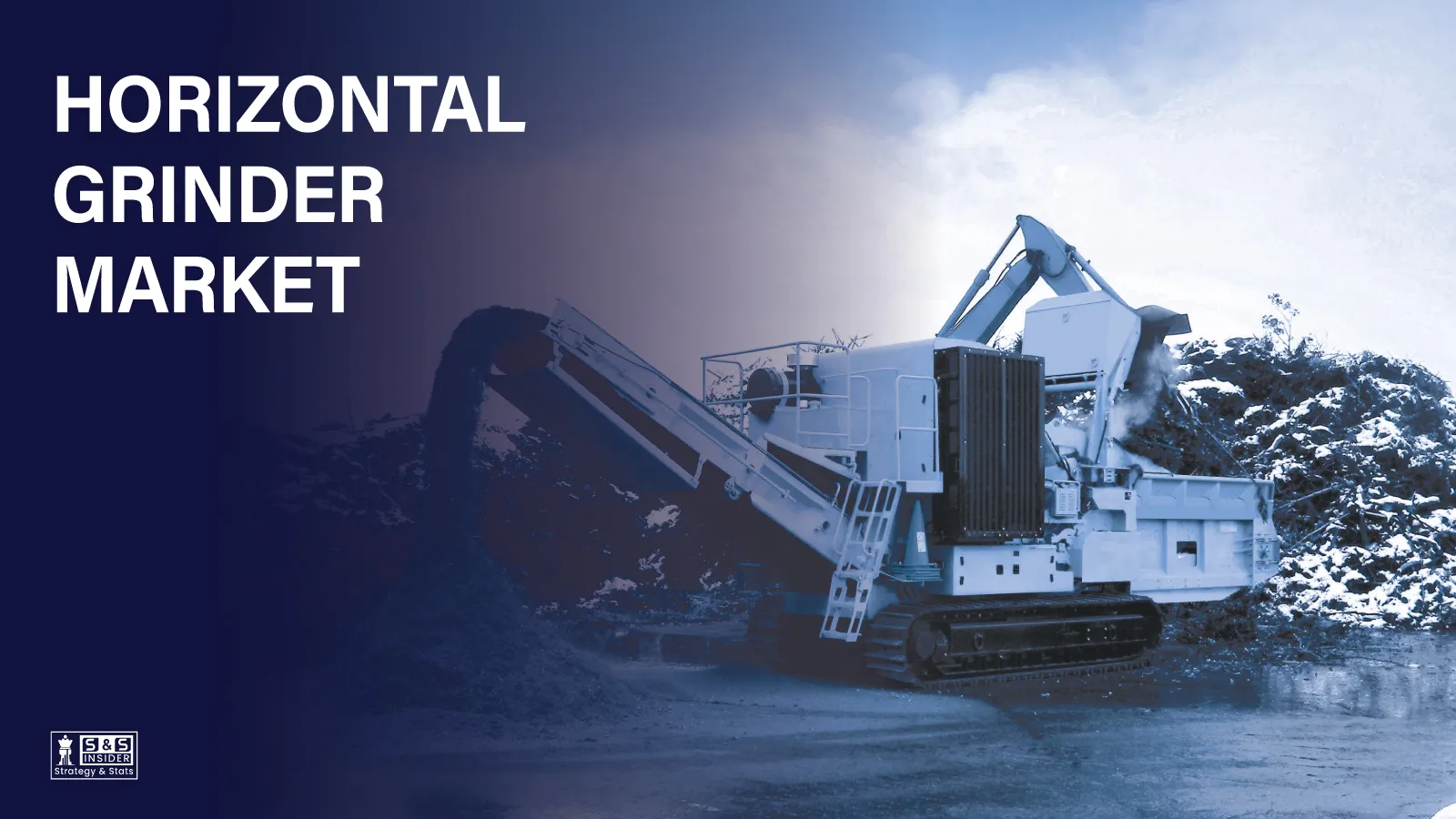
U.S. Horizontal Grinder Market Analysis
Market analysis of the US Horizontal Grinder shows that the market is registering continuous growth as there is an increasing need for material processing machines in the sectors of forestry, construction, recycling, biomass, and smart waste management. It is observed that portable grinders have great significance for on-site processing, which helps operators cut down costs of transporting and operations. The market is currently headed towards the use of hybrid and electric power machines.
Top 5 Global Horizontal Grinder Companies Driving Growth in the U.S.
1. Vermeer Corporation

Vermeer Corporation is among those well-known enterprises dealing in horizontal grinders that are used for various purposes like forest products, biomass, land-clearing, and waste-processing. Vermeer Corporation's emphasis on high-capacity grinding and efficient equipment coincides with increasing demands from the United States for highly effective processing equipment.
Vermeer Corporation released its newest hybrid horizontal grinder called HG6000TX in May 2025; it allows for the grinding of as many as 300 tons of material per hour. The equipment lowers fuel usage by 15% and illustrates the move to more efficient grinding equipment.
2. Morbark, LLC

Morbark, LLC plays an important role in the horizontal grinder market as it offers its machines for forestry, biomass, recycling, and waste processing applications. Morbark’s emphasis on productivity and power technology contributes to the move towards more energy-efficient grinding systems.
The HG5400 hybrid-electric grinder with automatic load sensing and fuel optimization was launched by Morbark in September 2025. This machine emits 20% less pollution than other systems, which shows the significance of hybrid technologies in grinding operations.
3. Bandit Industries, Inc.

Morbark, LLC plays an important role in the horizontal grinder market as it offers its machines for forestry, biomass, recycling, and waste processing applications. Morbark’s emphasis on productivity and power technology contributes to the move towards more energy-efficient grinding systems.
The HG5400 hybrid-electric grinder with automatic load sensing and fuel optimization was launched by Morbark in September 2025. This machine emits 20% less pollution than other systems, which shows the significance of hybrid technologies in grinding operations.
4. Peterson Pacific Corporation

Peterson Pacific Corporation is one of such companies that are working to develop high-efficiency horizontal grinding technology. The machines used by the company can be employed where wood wastes, biomass materials, forest residues and other such materials need to be processed in large volumes.
There are many new opportunities arising from the increase in demand for efficient waste and biomass processing in municipal, forestry, construction and other industries in America.
5. CBI (Continental Biomass Industries)

CBI (Continental Biomass Industries) is a known player in the horizontal grinder market, providing solutions that are fit for challenging material-processing applications. CBI's position in the market will be aided by the increasing demand for high capacity grinding machines as well as focus on resource recovery and sustainable waste management.
Increased use of grinding technology will be essential as U.S. companies aim at increased production capacity, reduced operational costs, and efficient processing of wood, green waste, biomass, and construction waste.
Key U.S. Horizontal Grinder Market Trends
- Growing biomass demand: Rising renewable energy adoption is increasing demand for high-capacity grinders.
- Sustainable waste management: Increasing municipal and industrial waste volumes are supporting eco-friendly processing equipment.
- Portable equipment adoption: Mobile grinders provide greater flexibility for forestry, land-clearing, and construction applications.
- Hybrid and electric technology: Diesel-electric and electric systems are gaining attention because of lower fuel consumption and emissions.
- Automation and smart controls: Automated systems are improving safety, material handling, productivity, and operational efficiency.
Future Outlook for the U.S. Horizontal Grinder Market
The U.S. Horizontal Grinder Market will continue to grow steadily up until 2035 owing to rising demands for biomass grinding, sustainable waste management, forestry, construction, and recycling. The increasing use of hybrid and electric grinders, automation, intelligent controls, and energy-efficient machines will provide new opportunities for manufacturers as well as machine operators.
With the U.S. market forecasted to rise from USD 0.45 billion in 2025 to USD 0.65 billion in 2035, manufacturers that are concentrated on fuel economy, reduced emissions, high capacity, portability, and automation are likely to gain from increased investments in sustainable material processing.



