
According to the latest SNS Insider Intruder Alarm System Market report, the global market is growing at a steady pace. More homeowners, businesses and public buyers now see alarm systems as part of a connected security setup rather than a standalone device. New housing, home renovation and the spread of smart home products are adding to demand each year.
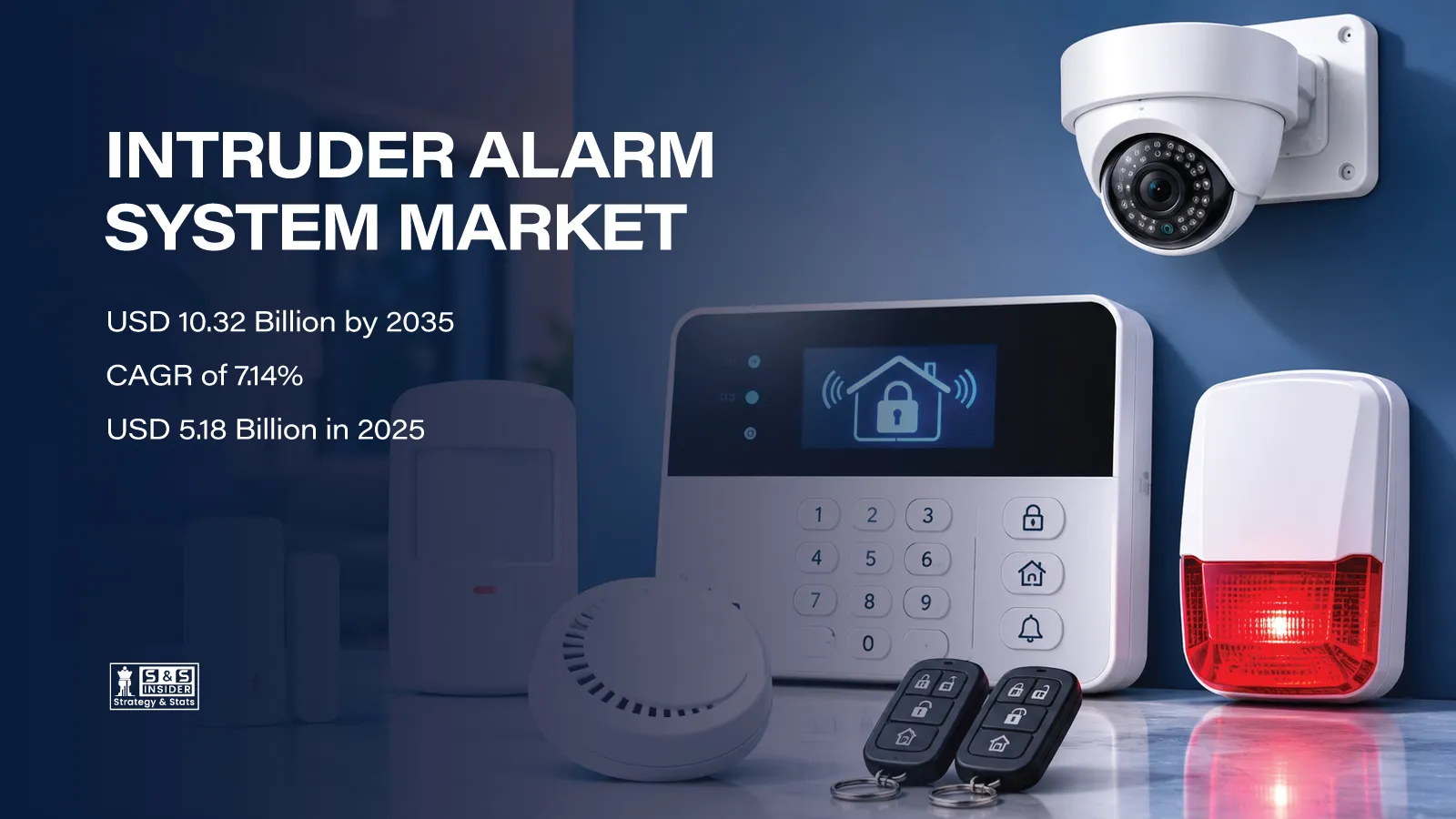
The global intruder alarm system market was valued at USD 5.18 Billion in 2025 and is estimated at USD 5.55 Billion in 2026. It is projected to reach USD 10.32 Billion by 2035, growing at a CAGR of 7.14% during 2026–2035.
Wireless systems lead the market because they are quicker to install and easier to expand. Hybrid systems are growing faster, as many sites want to keep existing wired sensors while adding wireless devices and app control.
Residential buyers remain the largest user group, while commercial sites are adding alarms that link with access control and video verification. Stricter rules for secure signal transmission are also pushing owners to replace older communicators.
North America is the largest regional market, while Asia Pacific is growing the fastest as housing stock and urban security spending expand.
Market Size and Forecast
|
Market Indicator |
Value |
|
Market Size, 2025 |
USD 5.18 Billion |
|
Market Size, 2026 |
USD 5.55 Billion |
|
Market Forecast, 2035 |
USD 10.32 Billion |
|
CAGR, 2026–2035 |
7.14% |
|
Leading Region, 2025 |
North America (35.40%) |
|
Fastest-Growing Region |
Asia Pacific (8.62% CAGR) |
Demand Drivers and Constraints
Primary Demand Drivers
-
Housing activity: New homes and renovation projects create direct demand for alarm panels, sensors and sirens.
-
Smart home adoption: Buyers often bundle alarms with smart locks, cameras and voice assistants, which raises the value of each sale.
-
Secure communication rules: A 2026 revision of an alarm transmission standard favors encrypted communicators and is prompting upgrades.
-
Higher security grades: Certified wireless products are now reaching banks, schools and data sites that once used only wired systems.
-
System integration: Links with access control, video verification and building management create recurring software and service revenue.
Potential Growth Constraints
-
False alarms that lead police to tighten response policies and add fines.
-
Low-cost DIY kits that pull buyers away from professional installation.
-
Strong price competition in entry-level hardware.
-
Subscription fatigue that makes some households avoid long monitoring contracts.
-
Ongoing costs of meeting new cybersecurity rules for connected devices.
Demand Structure by Component
Sensors and Detectors (2025 Market Share: 37.20%)
Sensors and detectors accounted for 37.20% of the intruder alarm system market in 2025. Each installation needs several of them, including motion sensors, door and window contacts, glass break detectors and outdoor beams. Larger homes and commercial sites use many more units per system, so this component carries the highest volume. Buyers also replace sensors more often than panels, as they move to pet-friendly, outdoor-rated or wireless models. Better detection and fewer false alarms keep this category at the center of every purchase.
Current trend: Rising demand for outdoor and high-mount detectors that cut false alarms.
Major trends: Dual-technology sensors, pet-immune motion detection, wireless contacts, and outdoor curtain detectors.
Control Panels and Hubs (Forecast CAGR: 8.04%)
Control panels and hubs are projected to grow at a CAGR of 8.04% through 2035. The panel is now the point where alarms connect to apps, cameras, locks and monitoring centers. Owners who want remote control and smart home links often replace an older panel before anything else. New secure signaling rules also favor panels with encrypted, upgraded communicators. Vendors are adding cloud services and over-the-air updates to hubs, which turns a one-time hardware sale into an ongoing service relationship with the customer.
Current trend: Growing replacement of legacy panels with connected, app-based hubs.
Major trends: Encrypted communicators, cloud-managed hubs, Grade 3 wireless panels, and over-the-air updates.
Demand Structure by Connectivity
Wireless (2025 Market Share: 47.80%)
Wireless systems accounted for 47.80% of the market in 2025. They need no cable runs, so installers can finish jobs faster and with less disruption to the property. This suits retrofits in existing homes and small businesses, where opening walls is costly. Wireless devices are also easy to add later, which lets owners expand their system over time. Better battery life and stronger radio protocols have improved reliability, and certified products now meet higher security grades for more demanding sites.
Current trend: Wider use of certified wireless systems in commercial and high-security sites.
Major trends: Long-range radio protocols, longer battery life, encrypted signaling, and app-based setup.
Hybrid (Forecast CAGR: 8.46%)
Hybrid connectivity is projected to grow at a CAGR of 8.46% during 2026–2035. Many buildings already have wired sensors that still work well, and owners prefer to keep them while adding wireless devices where cabling is hard. Hybrid panels make this possible on one system, which lowers the cost of an upgrade. Commercial sites and larger homes use this approach when they expand or modernize. Installers also favor hybrid designs because they can reuse existing wiring and still offer app control.
Current trend: Growing upgrades of wired sites with added wireless devices.
Major trends: Hybrid control panels, wiring reuse, phased upgrades, and unified app control.
Demand Structure by End User
Residential (2025 Market Share: 52.30%)
Residential users accounted for 52.30% of market revenue in 2025. Homeowners buy alarms to protect property and family, and many now add them as part of a wider smart home setup. New housing and renovation projects create steady installation demand. Insurance discounts and monitored service plans also support adoption. At the same time, low-cost DIY kits are widening access for renters and first-time buyers. Professional installers still serve buyers who want monitoring, warranty support and a system that works with other connected devices.
Current trend: Bundling of alarms with smart locks, cameras and home apps.
Major trends: DIY systems, professional monitoring, smart home integration, and video-verified alerts.
Commercial (Forecast CAGR: 7.64%)
Commercial users are projected to grow at a CAGR of 7.64% through 2035. Retail stores, offices, warehouses, schools and banks need systems that meet higher security grades and insurer requirements. These sites increasingly link alarms with access control, video verification and building management. This gives security teams one view of events across several locations. New cybersecurity rules are also driving replacement of older equipment. As a result, commercial buyers are spending more on integrated systems and managed services instead of standalone alarms.
Current trend: Rising demand for integrated intrusion, access control and video platforms.
Major trends: Unified security consoles, video verification, multi-site management, and managed monitoring services.
Key Market Participants
The intruder alarm system market includes security equipment manufacturers, smart home platform providers, monitoring service companies and detector specialists.
Key participants include Johnson Controls, Honeywell, Resideo, ADT, Alarm.com, Ajax Systems, RISCO, Optex, SimpliSafe, Hikvision and Assa Abloy.
Competition centers on wireless reliability, security certification, ease of installation and integration with video and access control. Companies that offer connected hubs, secure signaling and recurring service plans are well placed as buyers look for complete security systems rather than single devices.
Regional Market Dynamics
North America (2025 Market Share: 35.40%)
North America led the global intruder alarm system market with a 35.40% share in 2025. The United States is the leading country market, valued at USD 1.54 Billion in 2025, and it is projected to grow at a CAGR of 6.78%. Demand comes from a large base of monitored homes, strong smart home adoption and steady housing renovation. Commercial users are adding video-verified alarms as some police departments tighten response policies for unverified alerts. Professional monitoring and DIY systems both have large customer bases in the region.
Direction: Continued market leadership supported by smart home adoption and monitored security services.
Asia Pacific (Forecast CAGR: 8.62%)
Asia Pacific held a 27.10% share in 2025 and is expected to grow fastest, at a CAGR of 8.62% through 2035. New housing in growing cities is creating demand for both residential and commercial alarm systems. Rising incomes are bringing more households into the market for connected security products. Commercial buildings, retail chains and public facilities are also adding systems as security standards rise. Local manufacturers offer lower-cost products, which helps adoption in price-sensitive markets.
Direction: Fastest regional growth supported by urban housing, commercial construction and rising security spending.
Europe (2025 Market Share: 26.20%)
Europe accounted for 26.20% of the market in 2025. Demand is shaped by strict security grading and certification, which insurers often require for homes and businesses. The Cyber Resilience Act is raising security expectations for connected devices, and this is prompting product updates and replacement cycles. Certified wireless systems are now reaching higher-grade sites such as banks and schools. Buyers in the region also show strong interest in hybrid upgrades that keep existing wired installations in use.
Direction: Steady growth driven by certification standards, cybersecurity rules and system upgrades.
Middle East & Africa
The Middle East and Africa held a 6.20% share in 2025. Demand comes mainly from commercial buildings, hotels, residential compounds and government sites in large urban centers. New construction projects create opportunities for integrated alarm, access control and video systems. In parts of Africa, budget limits and uneven network coverage slow adoption. As a result, many buyers favor wireless systems and service-based plans that reduce upfront costs.
Direction: Gradual growth supported by construction activity and integrated security projects.
Latin America
Latin America accounted for a 5.10% share in 2025. Concerns about property crime keep demand steady among households and small businesses. Monitored alarm services are common in larger cities, and wireless systems help installers serve older buildings at lower cost. Currency swings and price sensitivity lead many buyers to choose entry-level hardware and monthly service plans. Retail chains and commercial sites are adding video-verified alarms to improve response.
Direction: Moderate growth supported by monitored services and affordable wireless systems.
Market Outlook (2026–2035)
The global intruder alarm system market is forecast to reach USD 10.32 Billion by 2035, which reflects steady investment in home and business security.
Smart home adoption, housing activity and secure communication rules will remain the main growth drivers. Hybrid systems are expected to gain ground as owners upgrade existing wired sites.
Commercial demand will widen as alarms link with access control, video verification and building management. This will create more recurring service revenue.
North America will keep its lead, while Asia Pacific will offer the fastest growth over the forecast period.
Overall, the intruder alarm system market is set for steady growth through 2035. Success will depend on wireless reliability, secure signaling, false alarm reduction and smooth integration with connected security systems.



