
The global epigenetics industry is set to experience a period of rapid growth as demand for technologies that can explain how genes are regulated without changing DNA sequences drives demand in cancer diagnostics, precision medicine and advanced molecular research. DNA methylation analysis, histone modification profiling and epigenomic analysis are emerging as important tools in disease research, biomarker discovery and therapeutic development.
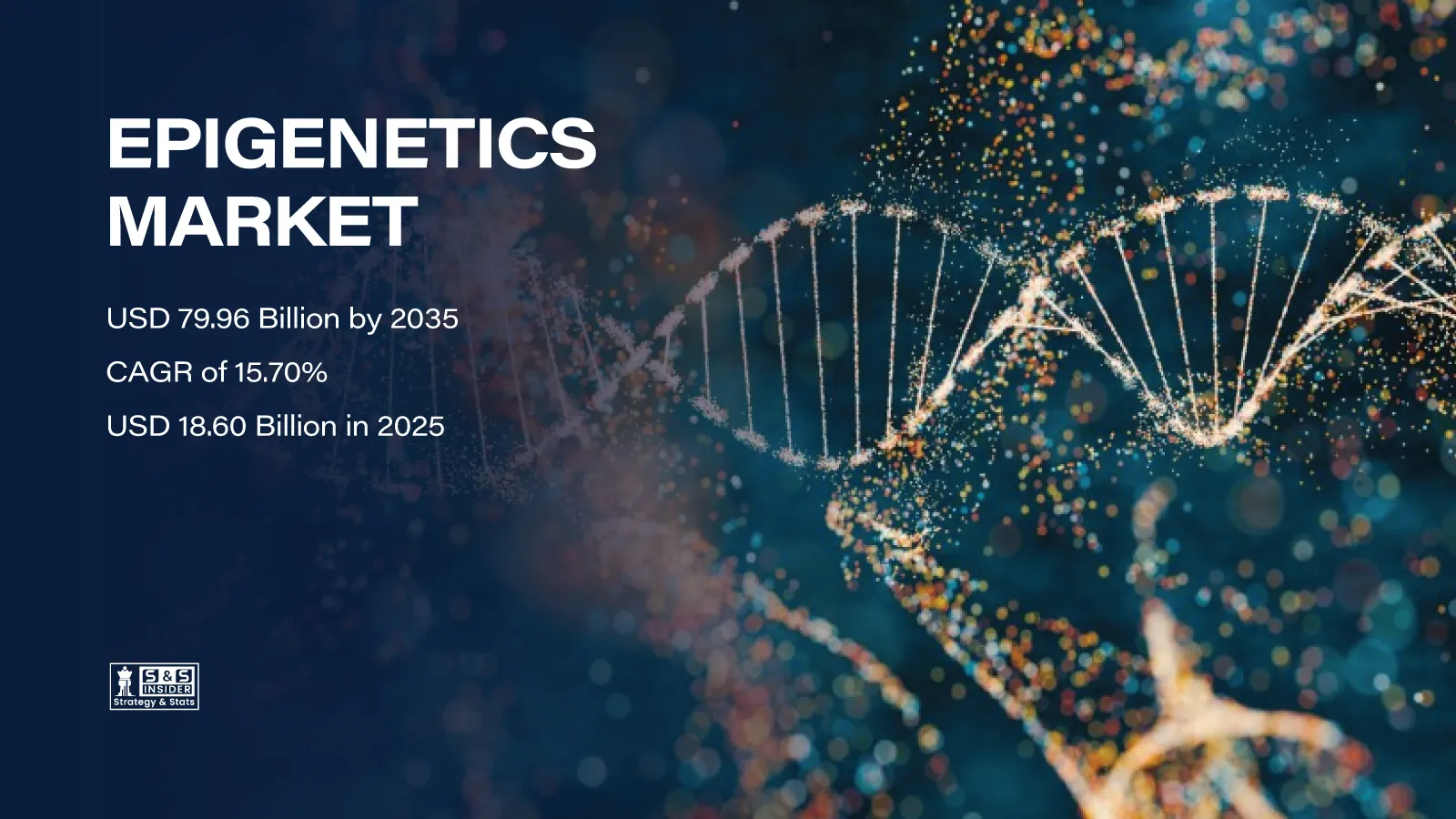
According to SNS Insider, the Epigenetics Market was valued at USD 18.60 Billion in 2025, is estimated to reach USD 21.52 Billion in 2026 and is projected to achieve USD 79.96 Billion by 2035, registering a CAGR of 15.70% during 2026–2035.
Growing investments in early cancer detection, pharmaceutical research and next-generation sequencing are fueling the market growth. The largest share in the region belongs to North America and the Asia Pacific region is expected to grow the fastest until 2035.
To Get Detailed Insights on the Epigenetics Market – Request a Sample Report
Epigenetics Market Outlook: Molecular Diagnostics and Gene Regulation Research Reshape Demand
Epigenetics is the study of biological processes that regulate the expression of genes without altering the DNA sequence itself. These mechanisms are DNA methylation, histone modification, chromatin remodeling and non-coding RNA regulation . The technology is gaining importance as epigenetic abnormalities are implicated in cancer, neurological disorders, metabolic diseases and inflammatory conditions.
Researchers are increasingly combining epigenomic profiling with genome sequencing to understand disease progression, to identify therapeutic targets and to develop predictive biomarkers. Clinical labs are also looking at methylation-based liquid biopsy tests, which detect tumor-associated DNA signals in blood samples. Progress in single-cell sequencing, long-read analysis and automated sample preparation are simultaneously extending the reach of epigenetic research in both academic and commercial laboratories.
Key Growth Drivers: Cancer Screening and Precision Medicine Strengthen Market Expansion
Rising demand for early cancer detection is a key driver for market growth. Aberrant patterns of DNA methylation may contain information about the presence of tumors and their tissue of origin, providing opportunities for minimally invasive diagnostic technologies.
The pharmaceutical industry is also looking into therapeutics that target enzymes controlling epigenetic modifications, particularly histone deacetylases and methyltransferases. Government funding for genomics and investment in biotechnology is driving the growth of laboratory infrastructure and increasing demand for research consumables.
New methods for the enzymatic conversion of DNA, sequencing and bioinformatics are enabling researchers to study complex epigenetic changes more effectively. However, the challenges of expensive instrumentation, complex data interpretation, inconsistent laboratory procedures, and stringent clinical validation requirements remain.
Epigenetics Market Segment Analysis
Reagents and Kits Dominate with 38.40% Market Share in 2025
Reagents and kits accounted for 38.40% of global epigenetics market revenue in 2025, reflecting recurring consumption across DNA methylation, chromatin and histone modification studies. Bisulfite conversion kits, antibodies, sample preparation products and sequencing library reagents support essential laboratory workflows.
Demand is reinforced by expanding research programs and the need for reproducible analytical procedures. Suppliers are developing sensitive products that accommodate smaller biological samples.
Current trend: Increasing demand for standardized methylation and chromatin analysis kits.
Major trends: Enzymatic conversion, low-input sample preparation and integrated sequencing workflows.
Epigenetics Services Register the Fastest CAGR of 17.70%
Epigenetics services are projected to expand at a 17.70% CAGR during 2026–2035, supported by increasing outsourcing of sequencing, methylation profiling and bioinformatics analysis.
Many biotechnology companies and smaller laboratories lack the specialized equipment or computational capabilities required for complex epigenomic studies. Contract service providers offer sample processing, analytical interpretation and comprehensive project support, allowing customers to reduce infrastructure investments.
Current trend: Growing outsourcing of specialized epigenomic analysis.
Major trends: End-to-end sequencing services, cloud bioinformatics and integrated molecular research support.
DNA Methylation Leads with 45.80% Market Share
DNA methylation accounted for 45.80% of the epigenetics market in 2025, supported by established applications in cancer diagnostics, developmental biology and disease biomarker research.
Methylation patterns provide information about gene regulation and can help differentiate biological tissues and disease states. Sequencing, microarrays and emerging enzymatic methods enable laboratories to investigate these patterns at different scales and costs.
Current trend: Expanding adoption of methylation profiling in oncology research.
Major trends: Multi-cancer detection, long-read methylation sequencing and automated biomarker analysis.
Histone Acetylation Records the Fastest CAGR of 18.10%
Histone acetylation technologies are expected to achieve an 18.10% CAGR from 2026 to 2035, driven by advances in chromatin biology and epigenetic drug discovery. Pharmaceutical researchers investigate histone acetylation pathways to identify therapeutic targets involved in cancer and inflammatory diseases. Improved chromatin profiling methods are making these studies more accessible and supporting investigations involving smaller cell populations.
Current trend: Increasing use of histone acetylation assays in therapeutic research.
Major trends: Chromatin profiling, epigenetic enzyme inhibitors and precision drug discovery.
Oncology Dominates with 58.90% Market Share in 2025
Oncology represented 58.90% of global epigenetics revenue in 2025, demonstrating the importance of epigenetic abnormalities in cancer development and diagnosis. Methylation biomarkers are being investigated for tumor classification, early detection and treatment monitoring. Cancer research organizations and pharmaceutical companies also use epigenetic technologies to identify drug targets and evaluate treatment responses.
Current trend: Increasing clinical investigation of methylation-based cancer biomarkers.
Major trends: Liquid biopsy diagnostics, molecular tumor classification and targeted epigenetic therapies.
Non-Oncology Applications Grow at 16.30% CAGR
Non-oncology applications are forecast to expand at a 16.30% CAGR during 2026–2035, supported by growing research into neurological, metabolic, cardiovascular and inflammatory disorders.
Scientists are investigating how environmental exposures, aging and lifestyle factors influence epigenetic regulation. Research into biological aging markers and disease-associated methylation patterns is creating opportunities for diagnostic development and biomarker discovery.
Current trend: Expanding epigenetic research beyond cancer.
Major trends: Biological aging biomarkers, neurological disease research and metabolic disorder diagnostics.
Academic and Research Institutes Lead with 39.20% Market Share
Academic and research institutes accounted for 39.20% of market revenue in 2025, benefiting from public research funding and established molecular biology infrastructure.
Universities and scientific institutions conduct fundamental investigations into gene regulation, disease mechanisms and cellular development. Their research programs generate recurring demand for reagents, antibodies, instruments and sequencing services.
Current trend: Growing investment in large-scale epigenome mapping projects.
Major trends: Single-cell epigenomics, collaborative research programs and integrated multiomics platforms.
Clinical Research and Hospital Laboratories Grow at 16.80% CAGR
Clinical research and hospital laboratories represent the fastest-growing end-user group, with a projected 16.80% CAGR during 2026–2035.
Healthcare institutions are investigating methylation biomarkers for cancer detection, tumor classification and treatment selection. Expansion of clinical sequencing capabilities is encouraging demand for validated assays, standardized procedures and specialized laboratory services.
Current trend: Increasing evaluation of epigenetic biomarkers in clinical laboratories.
Major trends: Clinical assay validation, molecular diagnostics integration and personalized treatment monitoring.
Regional Analysis: North America Leads as Asia Pacific Accelerates
North America Leads with 39.80% Market Share in 2025
North America held 39.80% of global epigenetics revenue in 2025, supported by strong biotechnology investment, advanced sequencing infrastructure and substantial public research funding. The United States leads regional demand through cancer research institutions, pharmaceutical companies and molecular diagnostics developers.
The U.S. Epigenetics Market was valued at USD 6.88 Billion in 2025 and is projected to grow at 15.46% CAGR during 2026–2035. Canada contributes through academic genomics research, biotechnology innovation and cancer research programs.
Direction: North America will prioritize clinical applications, advanced molecular diagnostics and commercialization of epigenetic technologies.
Asia Pacific Holds 23.60% Share and Fastest 17.40% CAGR
The Asia Pacific region is projected to be the fastest growing market with a revenue share of 23.60% in 2025 and a CAGR of 17.40% during the forecast period (2025-2035). China, India, Japan, South Korea and Australia are enhancing their capacity for genomics research and molecular diagnostics infrastructure.
China has made large investments in biotechnology and has a strong sequencing capacity. Japan and South Korea fund sophisticated research programs. India presents opportunities in terms of research in biotechnology, development of pharmaceuticals and greater access to molecular testing.
Direction: Asia Pacific will drive substantial incremental growth through research investment, laboratory expansion and biotechnology development.
Europe Accounts for 26.20% Market Share
In 2025, Europe accounted for 26.20% of the global epigenetics revenue share, due to the existence of well-established pharmaceutical industries and molecular research institutions. Germany, The UK, France, Italy and Spain are supporting projects in academic research, biotechnology innovation and precision medicine.
Demand for analytical instruments, sequencing services and specialized reagents is generated by international research collaborations and publicly funded scientific programs. Regulatory requirements and data protection obligations impact on clinical implementation.
Direction: Europe will emphasize translational research, standardized molecular diagnostics and collaborative scientific development.
Latin America Represents 5.90% Market Share
In Latin America, Brazil and Mexico are identified as important demand centers, and the region contributed 5.90% of the global epigenetics revenue in 2025. Argentina, Colombia and Chile also contribute through academic institutions and biomedical research programs.
Cancer biomarkers, population genomics and metabolic disorders are increasingly on the radar of regional labs. Working with partners abroad provides access to specialized instrumentation, research expertise and sequencing capabilities.
Direction: Growth will depend on expanding research infrastructure, international partnerships and improved molecular diagnostic access.
Middle East & Africa Holds 4.50% Market Share
Middle East & Africa constituted 4.50% of the total epigenetics revenue in 2025. Saudi Arabia, the United Arab Emirates, Israel, South Africa and Egypt are leading the demand with genomics initiatives, biotechnology research and cancer centers.
Regional capability is being built through national healthcare modernization strategies and partnerships with global life science suppliers. But the restrictions on the specialized workforce and the reliance on imported research equipment persist.
Direction: Regional expansion will be supported by national genomics programs, cancer research investments and laboratory modernization.
Competitive Landscape: Advanced Sequencing and Diagnostic Innovation Shape Competition
The epigenetics market features multinational life science technology companies, specialized reagent manufacturers and molecular diagnostics developers.
Major participants include Illumina, Thermo Fisher Scientific, QIAGEN, Agilent Technologies, Roche, Merck KGaA, Bio-Techne, Bio-Rad Laboratories, Zymo Research, Active Motif, New England Biolabs, Pacific Biosciences, Promega, GRAIL and Guardant Health. Competitive differentiation increasingly depends on analytical sensitivity, reproducibility, workflow efficiency and bioinformatics support.
May 2026: Pacific Biosciences announces advancements in long-read sequencing chemistry and methylation analysis. New England Biolabs also expanded its EpiCypher collaboration to offer access to specialty epigenomics products. Ongoing investments in molecular diagnostics and sequencing workflows are likely to impact competition.
Epigenetics Market Outlook Through 2035
Molecular research is moving toward clinical applications, and this will fuel major growth in the global epigenetics industry. DNA methylation analysis, histone profiling and outsourced analytical services will create opportunities in academic, pharmaceutical and healthcare settings.
Cancer diagnostics will remain a key application, while neurological disorders, metabolic diseases and biological aging research broaden the industry’s commercial potential. Epigenetics market will be playing an increasingly important role in precision medicine, molecular diagnostics and next generation therapeutic research with global revenue forecast to reach USD 79.96 Billion by 2035.
About the Author

Get in touch




