
Multinational companies are changing where and how they run research. Product cycles are getting shorter, and engineering talent is scarce in home markets. As a result, firms are moving core development work into global capability centers (GCCs) that they own and control. These centers no longer just provide support. Many now run full product programs, hold intellectual property, and shape global roadmaps. This shift is turning offshore research from a cost decision into a strategic investment.
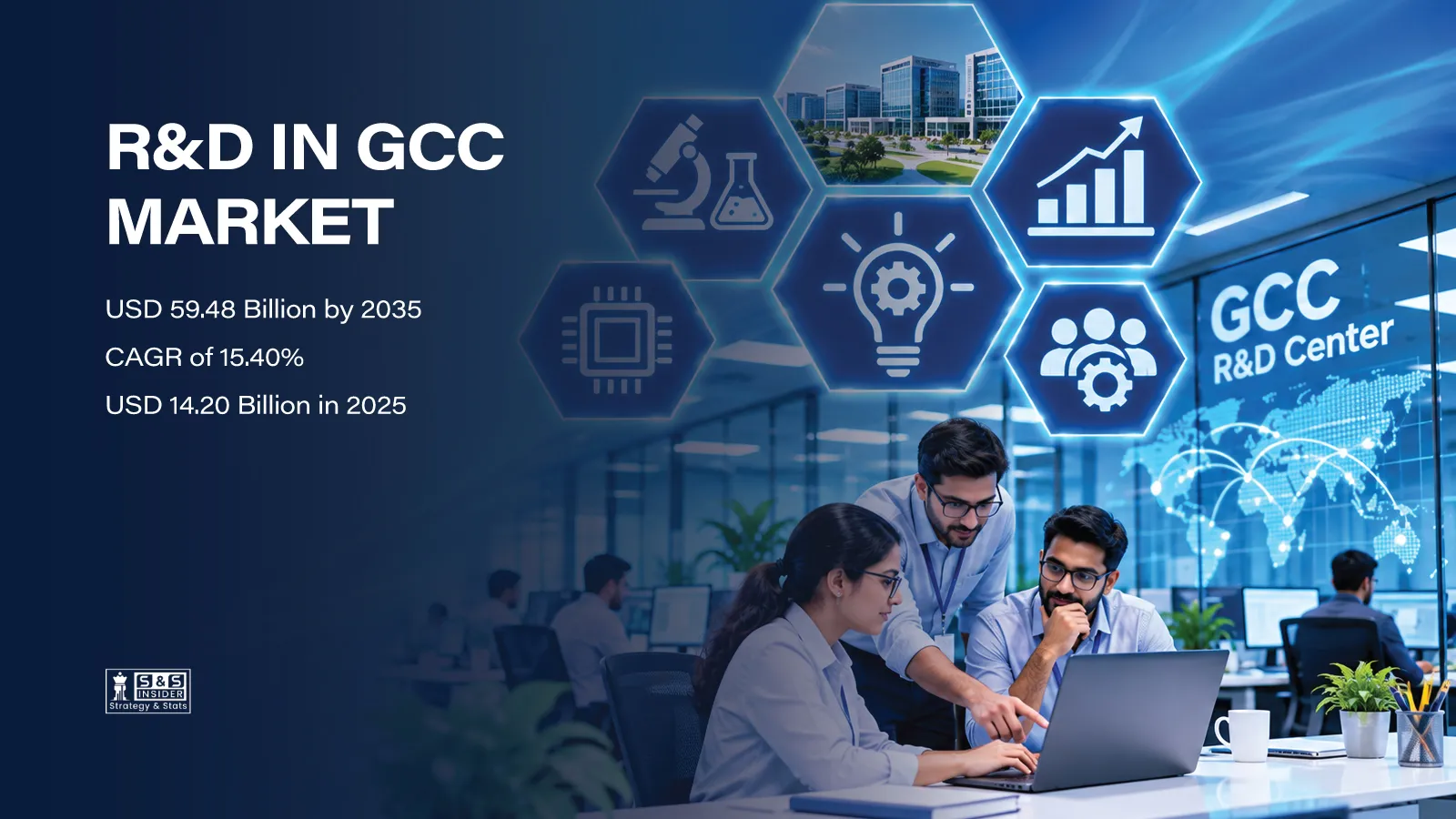
According to a recent study by SNS Insider, the global R&D in GCC Market size was valued at USD 14.20 Billion in 2025 and is anticipated to reach USD 59.48 Billion by 2035, registering a CAGR of 15.40% over the forecast period 2026–2035. The market is estimated at USD 16.39 Billion in 2026.
Innovation Speed Is Becoming a Board-Level Priority
Companies that bring products to market late lose pricing power and market share. Leadership teams now judge research operations by how fast they deliver results, not only by what they cost. GCCs help by running engineering work across time zones, which keeps development moving around the clock.
A center with mature teams can take on full design, testing, and release cycles. This cuts handoffs between regions and lowers the risk of delays.
For service providers, real estate partners, and talent firms, this opens a steady pipeline of work. Their offer moves from cheaper labor to faster, more reliable innovation.
To Get Detailed Insights on the R&D in GCC Market – Request a Sample Report
Ownership of Knowledge Opens Long-Term Value
Captive research centers allow firms to keep core know-how in-house. Patents, design files, and test data stay inside the company. This gives parent firms more control than outsourced contracts do.
Over time, these centers build deep product expertise. Many begin to lead global programs rather than follow instructions from headquarters.
This creates opportunities for suppliers of secure collaboration tools, research data platforms, and IP management services. Each of these needs grows as the center takes on more responsibility.
R&D in GCC Market Segmentation Highlights
By Industry
IT & software development held the largest share of 47.60% in 2025, as software products remain the most portable form of research work. Pharma & biotech is expected to register the fastest CAGR of 18.30%. This opens opportunities in clinical data science, drug discovery analytics, and regulatory support.
By Technology
AI & machine learning had a 51.90% market share in 2025 as companies focused on applied AI as the core of new products. Cloud computing is expected to have the highest CAGR of 18.90% which is the reason for the demand for platform engineering and cloud native development skills.
By Operating Model
In 2025 captive centres had the largest share of 62.30%. The Build-Operate-Transfer models are expected to grow at a CAGR of 18.10% This growth offers setup partners a means to service firms that want a quick launch and then full ownership later.
By Enterprise Size
Large enterprises accounted for 78.40% of revenue in 2025. Small & medium enterprises are expected to grow at a CAGR of 19.20%. Smaller firms create demand for shared facilities, managed hiring, and lower-cost entry models.
Asia Pacific Leads with 52.40% Market Share and Advances at 17.60% CAGR
Asia Pacific dominated the R&D in GCC Market with a 52.40% share in 2025 and is also projected to grow at the fastest CAGR of 17.60%. Large engineering talent pools and mature center ecosystems make the region the first choice for new research setups. India alone hosts 2,117 capability centers employing 2.36 million professionals, which supports demand for office space, hiring services, and specialized training.
North America held 27.10% of revenue in 2025. The U.S. market was valued at USD 3.39 Billion in 2025 and is projected to grow at a CAGR of 15.12%. Firms in this region are expanding nearshore centers to handle sensitive programs and to stay close to key customers.
Europe accounted for 14.60% of the market in 2025, followed by Latin America at 3.20% and Middle East & Africa at 2.70%. Opportunities in these regions will depend on local talent supply, incentive programs, and time-zone fit with parent operations.
Hybrid and Managed Models Could Unlock New Buyers
Not all companies have the capital and time to build a centre from the ground up. Managed centre services, shared research hubs and staged ownership plans facilitate the entry of these firms into the market.
Workspace operators, consultants and talent partners can expand their customer base by repackaging these models for mid-sized firms.
These arrangements provide ongoing revenue from management of operations, compliance support and ongoing hiring contracts.
Competitive Outlook: Talent Retention to Become a Key Differentiator
Future competition among GCC locations and service partners will depend on more than labor cost. Companies increasingly look for stable senior talent, strong IP protection, and a clear path to higher-value work.
Partners that can offer reliable hiring, secure infrastructure, and flexible operating models may be in a stronger position. Alliances with universities, local governments, and technology vendors can also help attract long-term research programs.
R&D in GCC Market Outlook Through 2035
Over the next decade, global capability centers are set to become central to how multinational firms plan, build, and own their innovation. Partners that help companies cut time to market, protect knowledge, and keep skilled teams in place will be best placed to capture growing demand across software, life sciences, cloud, and AI programs.
About the Author

Get in touch




