
APOC3 Inhibitors Market Report Scope and Overview:
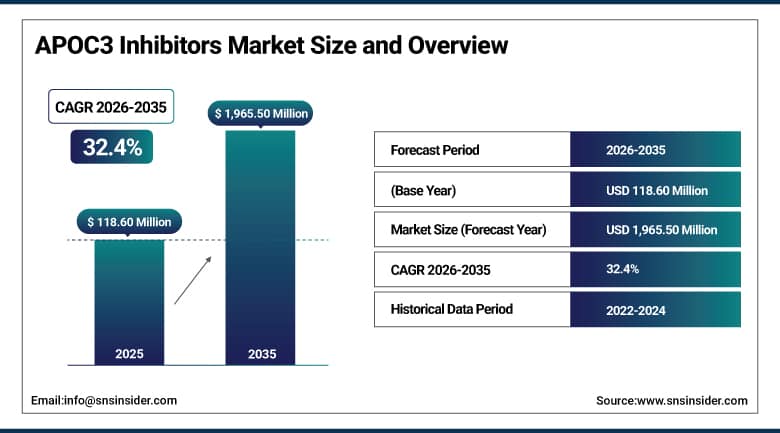
The APOC3 Inhibitors Market was valued at USD 118.60 Million in 2025 and is projected to reach USD 1,965.50 Million by 2035, registering a CAGR of 32.4% from 2026 to 2035.
The APOC3 Inhibitors Market is transforming the current therapeutic paradigm for treating severe hypertriglyceridemia and familial chylomicronemia syndrome with the development of therapies based on antisense oligonucleotide and small interfering RNA technology that inhibit the production of apolipoprotein C-III. This treatment paradigm targets an ultra-rare disease indication with no available treatment option thus far. Rapid regulatory movement is observed in the market based on groundbreaking Phase III data, where indications for use are widening to include severe hypertriglyceridemia apart from the familial chylomicronemia syndrome, and increased competition is observed within the GalNAc conjugated RNA-based platforms.
In 2025, Ionis Pharmaceuticals and Sobi announced European Union approval of TRYNGOLZA (olezarsen) for the treatment of familial chylomicronemia syndrome, marking the drug's first regulatory clearance outside the United States and expanding patient access across major European markets.
To Get More Information On APOC3 Inhibitors Market - Request Free Sample Report
APOC3 Inhibitors Market Trends
-
Rising regulatory approval momentum continues expanding APOC3 inhibitor access beyond the United States into major European and Latin American markets.
-
Growing physician recognition of triglyceride-driven residual cardiovascular risk continues broadening prescribing beyond ultra-rare familial chylomicronemia syndrome alone.
-
Expanding pipeline activity around GalNAc-conjugated small interfering RNA molecules continues improving dosing convenience compared with earlier antisense formulations.
-
Increasing pharmaceutical licensing and geographic commercialization partnerships continues accelerating international market access for approved and pipeline candidates.
-
Rising clinical trial activity exploring severe hypertriglyceridemia indications beyond familial chylomicronemia syndrome continues expanding the addressable patient population.
U.S. APOC3 Inhibitors Market Outlook
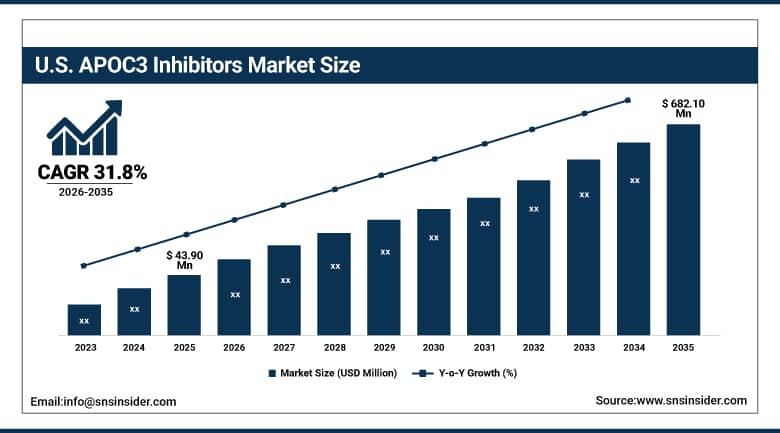
The U.S. APOC3 Inhibitors Market was valued at approximately USD 43.90 Million in 2025 and is projected to reach approximately USD 682.10 Million by 2035, registering a CAGR of approximately 31.8% from 2026 to 2035.
Demand across the United States continued to be shaped by the country's position as the first commercial market for approved APOC3 inhibitor therapies, a concentration of leading rare-disease and lipidology specialty prescribers, and active FDA engagement with pipeline candidates targeting expanded severe hypertriglyceridemia indications. Rising diagnosis rates for familial chylomicronemia syndrome, supported by growing genetic testing and lipid panel screening programs, continued reinforcing the country's position as both the largest and most clinically advanced market for APOC3-targeted therapy. Expanding specialty pharmacy distribution infrastructure and growing payer familiarity with ultra-rare disease reimbursement pathways added further layers of sustained domestic demand nationwide.
In 2025, Arrowhead Pharmaceuticals announced FDA acceptance of the New Drug Application for investigational plozasiran, targeting familial chylomicronemia syndrome ahead of an anticipated regulatory decision expected to position the candidate as a second approved APOC3-targeted therapy in the United States.
APOC3 Inhibitors Market Segment Analysis
-
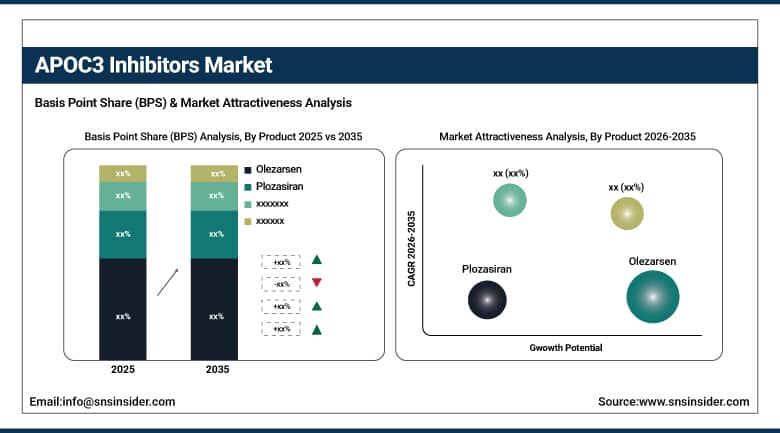
By Product, Olezarsen segment dominated the APOC3 Inhibitors Market in 2025 with 44.80% share; Plozasiran segment is the fastest growing segment, registering a CAGR of 35.8% from 2026 to 2035.
-
By Mechanism, Antisense Oligonucleotides segment dominated the market in 2025 with 58.70% share; Small Interfering RNA segment is the fastest growing segment, registering a CAGR of 36.5% from 2026 to 2035.
-
By Age Group, Adult segment dominated the market in 2025 with 91.20% share; Pediatric segment is the fastest growing segment, registering a CAGR of 38.2% from 2026 to 2035.
-
By Distribution Channel, Hospital Pharmacies segment dominated the market in 2025 with 52.40% share; Online Pharmacies segment is the fastest growing segment, registering a CAGR of 35.1% from 2026 to 2035.
By Product, Olezarsen Leads the Market While Plozasiran Posts the Fastest Growth
The Olezarsen segment dominated the APOC3 Inhibitors Market in 2025, supported by its status as the first APOC3-targeted therapy to achieve regulatory approval for familial chylomicronemia syndrome in both the United States and European Union. Positive phase III trials results of CORE & CORE2 demonstrating reduction in fasting triglyceride levels gave a boost to the molecule in terms of physicians' and insurers' trust. The already existing specialty pharmacy network and international commercialization agreements helped consolidate olezarsen as the leading revenue generator.
The Plozasiran segment is the fastest growing in the APOC3 Inhibitors Market, driven by pending regulatory approval following FDA acceptance of its New Drug Application and completion of enrollment across multiple pivotal Phase III trials targeting severe hypertriglyceridemia. Increasing strategic licensing deals, which include geographic commercialization deals across key international markets, continue to enhance the commercial prospects for plozasiran, especially ahead of its expected launch as another important treatment option targeting APOC3.
By Mechanism, Antisense Oligonucleotides Dominate While Small Interfering RNA Records the Fastest Growth
The Antisense Oligonucleotides segment dominated the APOC3 Inhibitors Market in 2025, owing to the established commercial presence of GalNAc-antibody conjugated antisense products, which have been approved by regulators and have become more payable by payers in leading geographies. Having already established themselves as clinically efficacious drugs backed by several years of safety profile, doctors have developed trust in antisense mechanism-based therapeutics as a standard treatment for APOC3-mediated hypertriglyceridemia.
The Small Interfering RNA segment is the fastest growing in the APOC3 Inhibitors Market as pharmaceutical companies advance next-generation siRNA candidates offering potentially longer dosing intervals and improved patient convenience compared with earlier antisense formulations. Rising regulatory approval activity for siRNA-based APOC3 inhibitors, combined with expanding strategic partnerships to accelerate international commercialization, continues driving this mechanism's rapid growth trajectory across the forecast period.
By Age Group, Adult Patients Dominate While Pediatric Indications Emerge as the Fastest-Growing Segment
The Adult segment dominated the APOC3 Inhibitors Market in 2025, owing to the presence of most cases of diagnosed familial chylomicronemia syndrome and hypertriglyceridemia in the adult population where the evidence from trials and approvals is more prevalent. Increased risk of heart diseases due to lifestyle and age contributed to making adults the leading target group for treatment.
The Pediatric segment is the fastest growing in the APOC3 Inhibitors Market as clinical trial programs begin extending into younger patient populations affected by severe genetic hypertriglyceridemia disorders. Growing recognition that early intervention in pediatric familial chylomicronemia syndrome patients may prevent long-term cardiovascular and pancreatitis complications continues expanding investigator interest in pediatric-focused clinical development programs.
By Distribution Channel, Hospital Pharmacies Dominate While Online Pharmacies Post the Fastest Growth
The Hospital Pharmacies segment dominated the APOC3 Inhibitors Market in 2025 due to the concentration of specialized lipidology and rare disease treatment centers where initial diagnosis, treatment initiation, and ongoing monitoring for APOC3-targeted therapies typically occur. Increasingly, the trend toward cooperation among the drug manufacturers to gain exclusive rights to commercialize through hospital-based specialty pharmacies has led to its dominance as the major source of distribution for such ultra-rare diseases.
The Online Pharmacies segment is the fastest growing in the APOC3 Inhibitors Market as specialty digital pharmacy platforms increasingly support recurring prescription fulfillment for chronic rare-disease patients who require ongoing treatment access without frequent in-person hospital visits. Growing manufacturer investment in direct-to-patient specialty distribution programs continues expanding online channel adoption as patient populations become more geographically dispersed following international commercialization expansion.
Regional Analysis
|
Region |
Major Country |
Share within Region, 2025 (%) |
|
North America |
United States |
79.6% |
|
Europe |
Germany |
24.80% |
|
Asia Pacific |
China |
29.60% |
|
Middle East and Africa |
UAE |
27.10% |
|
Latin America |
Brazil |
35.40% |
North America APOC3 Inhibitors Market Insights
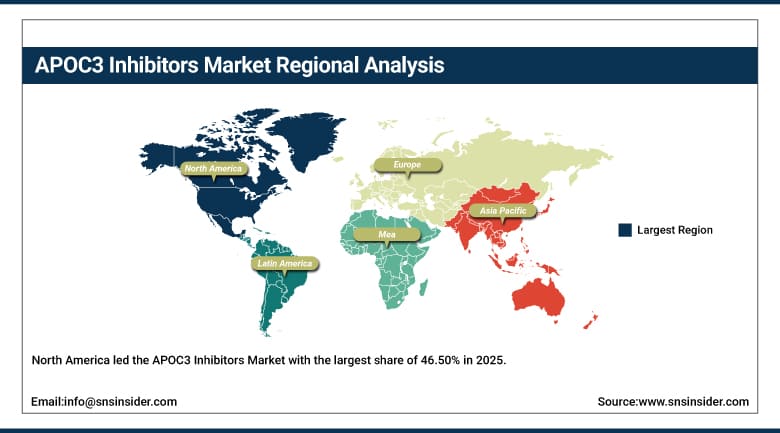
North America led the APOC3 Inhibitors Market with the largest share of 46.50% in 2025. The region's status as the first commercial market for approved APOC3-targeted therapies, combined with a strong presence of specialized rare-disease treatment centers and favorable orphan drug reimbursement pathways, continued reinforcing this dominant regional position. Extensive clinical trial infrastructure, growing genetic testing and lipid panel screening programs, and a concentration of leading biopharmaceutical developers headquartered in the region further supported sustained demand throughout the current forecast period.
The United States accounted for major share of regional revenue, anchored by its position as the first regulatory market for approved APOC3 inhibitor therapies and its concentration of specialized lipidology and rare-disease treatment centers. Canada added further regional demand through steady public healthcare system engagement with emerging orphan disease therapies, and that combined strength kept the continent the largest addressable market for APOC3 inhibitor vendors through the forecast period.
Get Customized Report as Per Your Business Requirement - Enquiry Now
Europe APOC3 Inhibitors Market Insights
Europe held a meaningful share of global revenue, supported by growing regulatory approval activity, well-established public healthcare systems, and increasing national health service recognition of familial chylomicronemia syndrome as a treatable orphan disease. Continued clinical trial participation and expanding reimbursement pathways for ultra-rare disease therapies reinforced sustained demand for APOC3-targeted treatment across the region's leading healthcare economies.
Germany led demand of European revenue, supported by its strong specialty pharmaceutical distribution infrastructure and favorable statutory health insurance coverage for orphan disease treatment. The United Kingdom and France contributed substantial additional demand through national health system engagement with recently approved APOC3 inhibitor therapies, and continued European regulatory approval activity should keep regional demand climbing through the forecast period.
Asia Pacific APOC3 Inhibitors Market Insights
Asia Pacific is expected to grow at the fastest CAGR of about 38.20% through 2035, driven by rapidly improving diagnosis rates for hypertriglyceridemia disorders, expanding healthcare expenditure, and growing regulatory engagement with international pharmaceutical developers seeking to commercialize APOC3-targeted therapies across the region's largest pharmaceutical markets. Rising physician awareness and improving specialty drug access kept the region's growth trajectory well ahead of every other region tracked in this report.
China led the pack of regional revenue, supported by growing government investment in rare-disease diagnosis infrastructure and expanding pharmaceutical licensing activity bringing international APOC3 inhibitor therapies into the domestic market. Japan and India contributed meaningful additional demand, with Japan's advanced healthcare regulatory framework and India's large undiagnosed hypertriglyceridemia patient population both reinforcing the region's position as the fastest-growing market tracked in this report.
MEA and Latin America APOC3 Inhibitors Market Insights
The Middle East and Africa and Latin America both showed steady growth, driven by expanding specialty healthcare infrastructure investment, growing government focus on rare disease diagnosis and treatment access, and rising demand for advanced lipid disorder management capacity across both areas. As these markets continued building out modern specialty healthcare infrastructure, APOC3 inhibitors offered a genuinely effective way to address previously undertreated severe hypertriglyceridemia populations.
In Middle East and Africa, UAE led the demand of the regional revenue, thanks to the state-of-the-art private healthcare facilities in the country, as well as investments in the access to the rare disease treatment. In Latin America, Brazil was another leading country in the region, driven by increasing regulatory approvals in the country.
Market Dynamics
Growth Drivers: Rising Ultra-Rare Disease Recognition and Landmark Clinical Trial Results
The industry is driven by rising recognition of high-burden, ultra-rare disorders such as familial chylomicronemia syndrome, growing genetic testing and lipid panel screening programs that identify previously undiagnosed patients, and landmark Phase III trial results demonstrating substantial triglyceride reduction with APOC3-targeted therapies. As physicians increasingly understand the cardiovascular risk associated with severe hypertriglyceridemia, the clinical need for effective, targeted treatment options continues driving adoption across specialty lipidology and rare-disease treatment centers.
Growing strategic licensing and geographic commercialization partnerships continue reinforcing this driver, as pharmaceutical companies expand international market access for approved and pipeline APOC3 inhibitor candidates. Rising regulatory approval momentum across multiple major markets continues strengthening physician and payer confidence in this treatment class, and that combination of clinical validation and expanding geographic access is exactly what keeps prescriber and patient demand climbing at such a sustained, steady pace.
Restraints: High Treatment Costs and Limited Reimbursement in Middle-Income Countries
The substantial annual cost of APOC3 inhibitor therapies continues posing a genuine restraint on faster market-wide expansion, particularly given the complexity of orphan drug development and the limited patient population available to spread research and manufacturing costs across. That pricing profile has kept broader adoption concentrated among well-insured patient populations in developed healthcare systems with established orphan drug reimbursement frameworks.
Limited reimbursement coverage in middle-income countries continues posing a further restraint, as the high price point of these specialty biologics decreases adoption where national health systems lack dedicated orphan drug reimbursement pathways. That access gap keeps many diagnosed patients in developing healthcare markets without meaningful treatment options despite growing awareness of APOC3-targeted therapy availability elsewhere.
Opportunities: Expanded Indications and New Molecule Development
Research and development of new molecules targeting apolipoprotein C-III represents a genuinely significant opportunity, as pharmaceutical companies continue advancing next-generation candidates offering improved dosing convenience and expanded clinical indications beyond familial chylomicronemia syndrome. Vendors positioned early with strong late-stage pipeline candidates stand to capture meaningful share as broader severe hypertriglyceridemia indications gain regulatory approval across major markets.
The increasing rates of diagnosing patients and healthcare system development within the emerging markets represent the second major opportunity, since the improvement of genetic testing availability and increased awareness of physicians about the cardiovascular risks associated with hypertriglyceridemia continue generating new demands for treatment. Companies that have a successful history in terms of obtaining regulatory approvals can take advantage of this situation by signing additional licenses.
Recent Developments:
-
2026: Sobi advanced Tryngolza (olezarsen) for severe hypertriglyceridemia, supporting broader access and reinforcing its potential to reduce triglyceride levels and acute pancreatitis risk.
-
2026: Alnylam advanced ALN-APOC3, an RNAi therapy targeting APOC3 for dyslipidemia. Its Phase 1 evaluation supported further development following licensing to Regeneron.
-
2025: Ionis Pharmaceuticals reported positive Phase III CORE and CORE2 trial results for olezarsen in patients with severe hypertriglyceridemia, showing fasting triglyceride reductions of up to 72%.
APOC3 Inhibitors Market key players are:
-
Ionis Pharmaceuticals, Inc.
-
Arrowhead Pharmaceuticals, Inc.
-
Swedish Orphan Biovitrum AB (Sobi)
-
PTC Therapeutics, Inc.
-
Sanofi S.A.
-
Novo Nordisk A/S
-
Staten Biotechnology B.V.
-
Regeneron Pharmaceuticals, Inc.
-
Alnylam Pharmaceuticals, Inc.
-
Silence Therapeutics plc
-
Novartis AG
-
Amgen Inc.
-
Verve Therapeutics, Inc.
-
Lexeo Therapeutics, Inc.
-
Eli Lilly and Company
-
LIB Therapeutics LLC
-
NewAmsterdam Pharma Company N.V.
-
Esperion Therapeutics, Inc.
-
Merck & Co., Inc.
-
Kowa Company, Ltd.
APOC3 Inhibitors Market Report Scope:
| Report Attributes | Details |
|---|---|
| Market Size in 2025 | USD 118.60 Million |
| Market Size by 2035 | USD 1,965.50 Million |
| CAGR | CAGR of 32.4% From 2026 to 2035 |
| Base Year | 2025 |
| Forecast Period | 2026-2035 |
| Historical Data | 2022-2024 |
| Report Scope & Coverage | Market Size, Segments Analysis, Competitive Landscape, Regional Analysis, DROC & SWOT Analysis, Forecast Outlook |
| Key Segments | • By Product (Olezarsen, Volanesorsen, Plozasiran, Others) • By Mechanism (Antisense Oligonucleotides, Small Interfering RNA, Others) • By Age Group (Adult, Pediatric) • By Distribution Channel (Hospital Pharmacies, Drug Stores and Retail Pharmacies, Online Pharmacies) |
| Regional Analysis/Coverage | North America (US, Canada), Europe (Germany, UK, France, Italy, Spain, Russia, Poland, Rest of Europe), Asia Pacific (China, India, Japan, South Korea, Australia, ASEAN Countries, Rest of Asia Pacific), Middle East & Africa (UAE, Saudi Arabia, Qatar, South Africa, Rest of Middle East & Africa), Latin America (Brazil, Argentina, Mexico, Colombia, Rest of Latin America). |
| Company Profiles | Ionis Pharmaceuticals, Inc., Arrowhead Pharmaceuticals, Inc., Swedish Orphan Biovitrum AB (Sobi), PTC Therapeutics, Inc., Sanofi S.A., Novo Nordisk A/S, Staten Biotechnology B.V., Regeneron Pharmaceuticals, Inc., Alnylam Pharmaceuticals, Inc., Silence Therapeutics plc, Novartis AG, Amgen Inc., Verve Therapeutics, Inc., Lexeo Therapeutics, Inc., Eli Lilly and Company, LIB Therapeutics LLC, NewAmsterdam Pharma Company N.V., Esperion Therapeutics, Inc., Merck & Co., Inc., Kowa Company, Ltd. |

Frequently Asked Questions
Key players include Ionis Pharmaceuticals, Inc., Arrowhead Pharmaceuticals, Inc., Swedish Orphan Biovitrum AB (Sobi), PTC Therapeutics, Inc., and Sanofi S.A., among others.
Key opportunities include expanding cardiovascular disease indications, increasing demand for triglyceride-lowering therapies, advances in RNA-based treatments, growing clinical pipelines, and broader adoption of targeted lipid-management therapies.
The major growth factor is rising recognition of ultra-rare hypertriglyceridemia disorders, expanding regulatory approvals, and landmark clinical trial results supporting triglyceride reduction.
The Olezarsen segment dominated the APOC3 Inhibitors Market by product, representing the largest share of revenue in 2025.
North America dominated the APOC3 Inhibitors Market in 2025, holding an estimated 46.50% share of total global market revenue.
