
Autoimmune Encephalitis Treatment & Diagnostics Market Report Scope & Overview:
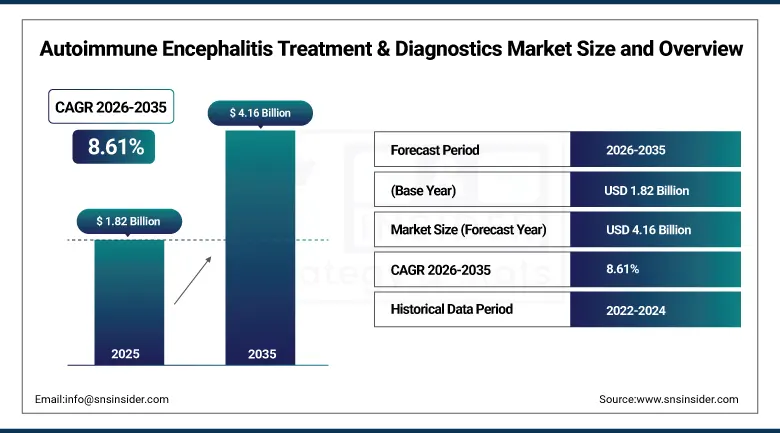
The Autoimmune Encephalitis Treatment & Diagnostics Market was valued at USD 1.82 Billion in 2025 and is projected to reach USD 4.16 Billion by 2035, expanding at a CAGR of 8.61% during the forecast period 2026–2035.
The worldwide Autoimmune Encephalitis Treatment & Diagnostics Market is experiencing consistent growth owing to rising awareness about autoimmune neurological diseases, advances in the field of antibody-based diagnostics, and rising awareness amongst neurologists for diagnosing such conditions. Diagnostic tests incorporating serum/cerebrospinal fluid antibodies testing, neuroimaging techniques, electroencephalography, and biomarkers are being increasingly employed by hospitals and neurological specialty clinics to provide early detection and treatment of diseases.
At the same time, pharma companies have been consistently focusing on developing new drugs and immunotherapeutic approaches for the treatment of such diseases to ensure good neurological outcome and reduction in relapse rates. Consistent clinical research efforts, rising neurological care provision and adoption of precision medicine approach will continue driving commercialization activities in developed as well as emerging health care markets. Healthcare providers have increased usage of advanced autoimmune encephalitis antibody panels, AI-based neuroimaging diagnostics, and comprehensive neurological diagnosis process. Several biotech firms have also started accelerating their drug development process for treating autoimmune neurological diseases.
To Get more information On Autoimmune Encephalitis Treatment & Diagnostics Marke - Request Free Sample Report
Autoimmune Encephalitis Treatment & Diagnostics Market Trends
-
Increasing adoption of comprehensive neuronal autoantibody testing for early diagnosis.
-
Growing utilization of targeted immunotherapies and B-cell depletion therapies.
-
Rising clinical development of FcRn inhibitors and cytokine-targeted biologics for autoimmune neurological disorders.
-
Expansion of AI-assisted MRI interpretation and integrated neurological diagnostic workflows.
-
Increasing investment in precision neurology and biomarker-based disease monitoring.
The U.S. Autoimmune Encephalitis Treatment & Diagnostics Market Size Outlook
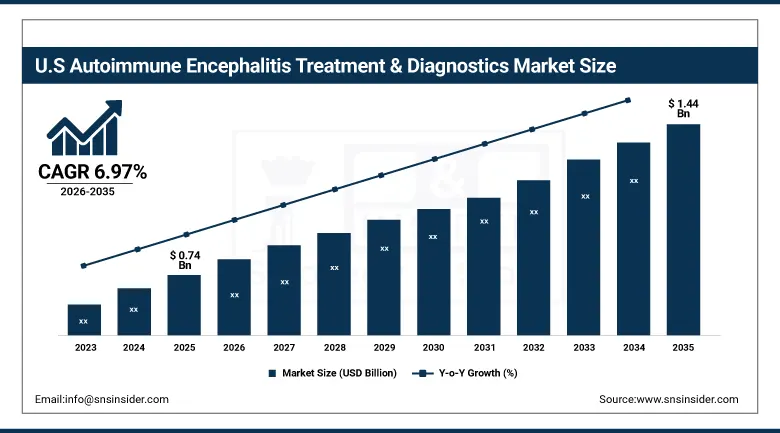
The U.S. Autoimmune Encephalitis Treatment & Diagnostics Market was valued at USD 0.74 billion in 2025 and is expected to reach approximately USD 1.44 billion by 2035, expanding at a CAGR of 6.97% during 2026–2035.
The United States remains the dominant force in the Global Autoimmune Encephalitis Treatment & Diagnostics Market due to superior healthcare facilities available in the country, presence of neuroimmunology centers, and adoption of antibody-based tests among other factors. Healthcare professionals have been increasingly adopting serum and CSF autoantibody testing along with AI-driven neuroimaging techniques, accurate EEG analysis, and multidisciplinary care for neurological disorders to increase accuracy of diagnosis and treatment.
Precision medicine, increased clinical trials on the immunotherapy approach, increased reimbursements for advanced neurology tests, and collaboration between academic medical centers and biotech firms are contributing toward market growth in the long run. In 2025, many neurological centers in the United States have expanded their programs to diagnose autoimmune encephalitis while carrying out clinical studies on biologic therapies and precision neuroimmunology.
Autoimmune Encephalitis Treatment & Diagnostics Market Segment Analysis
-
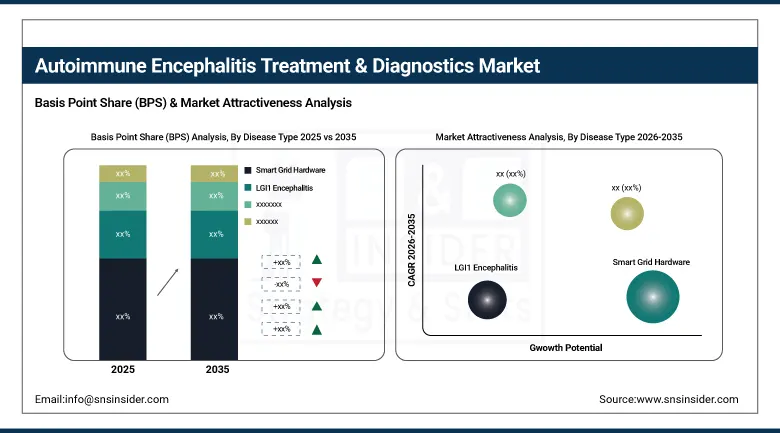
By Treatment Type, first-line immunotherapy (steroids, IVIG & plasma exchange) dominated the market with 46.00% share in 2025, while emerging biologics & FcRn/cytokine therapies are projected to witness the fastest growth with 16.41% CAGR during the forecast period.
-
By Diagnostic Method, autoantibody testing (serum & CSF) dominated the market with 36.00% share in 2025, while CSF analysis & biomarkers are projected to witness the fastest growth with 10.61% CAGR during the forecast period.
-
By Disease Type, anti-NMDA receptor encephalitis dominated the market with 39.00% share in 2025, while CASPR2 encephalitis is projected to witness the fastest growth with 9.56% CAGR during the forecast period.
-
By End User, hospitals dominated the market with 44.00% share in 2025, while neurology specialty centers are projected to witness the fastest growth with 9.76% CAGR during the forecast period.
By Treatment Type, First-line immunotherapy dominated, while emerging biologics & FcRn/cytokine therapies fastest-growing.
First-line immunotherapy (steroids, IVIG & plasma exchange) constituted the leading revenue share of 46.00% in 2025 due to its well-established status as the initial therapy used immediately after diagnosis. High-dose steroids, IVIG, and plasma exchange are still the most prescribed first-line treatments for almost all types of autoimmune encephalitis since they help quickly manage the inflammation and restore neurological function. Growing awareness among physicians, availability in tertiary hospitals, clinical guidelines, and reimbursement further ensure high prevalence of the treatment. Autoimmune Encephalitis Alliance continues implementing educational programs among physicians for earlier diagnosis and first-line immunotherapy initiation in neuroimmunology clinics.
Emerging biologics & FcRn/cytokine therapies held the fastest-growing CAGR of 16.41% in 2026-2035 due to an increasing focus on development of precision immunotherapies that would target specific inflammatory pathway associated with autoimmune encephalitis. Various biotech companies work on development of FcRn inhibitors, cytokine modulators, complement inhibitors, as well as new generation monoclonal antibodies to reduce frequency of relapses while avoiding immunosuppression. An active involvement in multicenter clinical trials, growing orphan disease investment and regulatory incentives accelerate commercialization process. Multiple biotechnology companies are currently involved in clinical development of FcRn inhibitors for rare autoimmune diseases of neurologic origin.
By Diagnostic Method, autoantibody testing dominated, while CSF analysis & biomarkers fastest-growing.
Autoantibody testing (serum & CSF) segment dominated the market with a share of 36.00% in 2025 as disease-specific neuronal antibodies testing constitutes a gold standard diagnostic test for autoimmune encephalitis. Laboratory tests with advanced antibody panels for detection of NMDA receptors, LGI1, CASPR2, GABA receptor and other neuronal autoantibodies with enhanced sensitivity and specificity are being increasingly used. This allows timely initiation of immunotherapy prior to irreversible damage. Increased accessibility to specialized neuroimmunology laboratories, better assay standardization and physician awareness will ensure further increase in adoption of diagnostic methods based on antibody testing across the world healthcare systems. Several reference laboratories extended comprehensive antibody testing panels for better diagnostic performance in autoimmune neurological disorders.
CSF analysis & biomarkers segment is projected to demonstrate the highest CAGR of 10.61% over the forecast period owing to research on inflammatory biomarkers, cytokine profiling, neurofilament light chain testing and advances in next generation diagnostics. Biomarker-based methods offer advantages in addition to conventional antibody testing for better disease monitoring, prognosis, and prediction of relapses and assessment of therapy. Research institutions continued to expand their biomarker discovery programs in cerebrospinal fluid inflammatory markers for autoimmune neurological disorders.
By Disease Type, anti-NMDA receptor encephalitis dominated, while CASPR2 encephalitis fastest-growing.
Anti-NMDA receptor encephalitis dominated the industry with a revenue share of 39.00% in 2025 on account of higher prevalence as compared to other autoimmune encephalitis types, as well as rising recognition through better neuronal antibodies testing. Rising physician awareness, easy availability of anti-NMDA receptor antibodies tests, and standardized diagnostic guidelines have led to early disease diagnosis and treatment. Increasing usage of first-line therapies, B cell targeted therapies, and neurological management is expected to drive the market in the coming years. Autoimmune Encephalitis Alliance initiated additional education and physician awareness programs in order to detect and treat Anti-NMDA receptor encephalitis early on.
CASPR2 encephalitis is anticipated to witness the highest growth rate of 9.56% during the forecast period as a result of growing recognition of CASPR2 antibodies associated neurological syndromes and developments in autoimmune neurological diagnostics. Increased usage of comprehensive neuronal antibody test panels, rising accessibility to specialized neuroimmunology laboratories and increased research in precision immunotherapies are some factors leading to better diagnosis and disease management. International clinical research is underway to study targeted immunotherapies and treatment strategies for rare autoimmune neurological diseases such as CASPR2 encephalitis.
Regional Analysis
|
Region |
Major Country |
Share within Region, 2025 (%) |
|---|---|---|
|
North America |
United States |
94.50% |
|
Europe |
Germany |
29.00% |
|
Asia Pacific |
China |
20.00% |
|
Middle East & Africa |
UAE |
4.00% |
|
Latin America |
Brazil |
4.00% |
North America Autoimmune Encephalitis Treatment & Diagnostics Market Insights
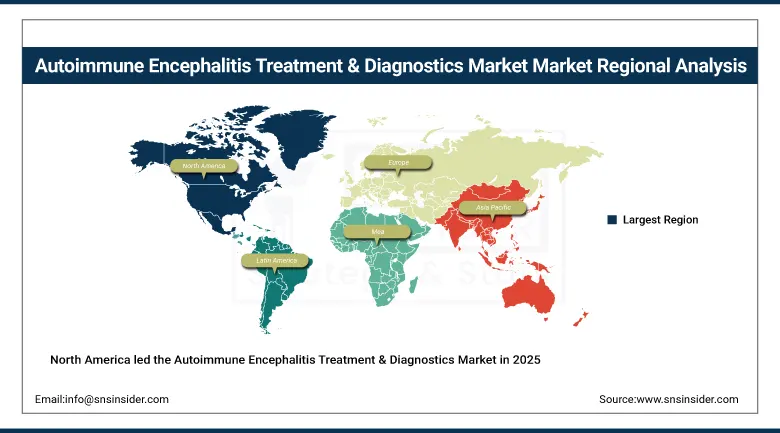
North America led the Autoimmune Encephalitis Treatment & Diagnostics Market in 2025, occupying 43.00% share of the overall revenue. Leadership in North America stems from well-established infrastructure for neurological health care, availability of various neuroimmunology centers, and wide application of high-end antibody diagnostic tools. Medical facilities widely use multidisciplinary approach to treating the disease, including autoantibodies testing, MRI scans, electroencephalography, analysis of cerebrospinal fluid, and precise immunotherapy.
Continued funding of clinical research, good reimbursement practices, and rapid acceptance of biologics remain supportive factors for market development. Leading presence of biotech firms and growing awareness in the field among neurologists add to successful commercialization in the US and Canada. The National Institute of Neurological Disorders and Stroke (NINDS) continued sponsoring research programs dedicated to autoimmune neurological disorders and precision neuroimmunology.
Get Customized Report as per Your Business Requirement - Enquiry Now
Europe Autoimmune Encephalitis Treatment & Diagnostics Market Insights
Europe because of increased cases of autoimmune neurological disorders, increased expertise in neuroimmunology, and more specialized diagnostic labs available. Germany, France, UK, Italy, and Spain are continuing their investments in building up their neurological care infrastructure and diagnostic precision capabilities. Collaborations between academic hospitals in Europe and biotechnology firms have been enhanced in order to test new immunotherapy treatments and diagnostic techniques based on biomarkers. Increased education among physicians, positive orphan diseases research, and clinical guideline adoption are some factors that are contributing towards early diagnosis and better access to treatment in the region. The European Academy of Neurology (EAN) continued its initiative for collaborative research and clinical education concerning autoimmune encephalitis and neuroimmunological disorders.
Asia Pacific Autoimmune Encephalitis Treatment & Diagnostics Market Insights
APAC is forecasted to exhibit the highest CAGR of 11.92% through 2026–2035 due to increasing investment in healthcare budgets, enhanced capability in diagnosis, increased awareness of autoimmune encephalitis in China, Japan, India, South Korea, and Australia. Investment in the establishment of specialized neuroscience centers, lab development, and immunology test kits by governments and healthcare service providers will contribute to market growth.
Availability of monoclonal antibodies, involvement in international clinical studies, and precision medicine initiatives are some factors that will drive market growth in APAC region. Prevalence of autoimmune diseases along with healthcare availability will present numerous long-term opportunities in the region. Several top hospitals in Asia have introduced special neuroimmunology centers utilizing advanced antibody diagnostics along with multi-specialty care in autoimmune disorders.
Middle East & Africa and Latin America Autoimmune Encephalitis Treatment & Diagnostics Market Insights
The Middle East & Africa region continues expanding with rising investments in tertiary care neurology centers, lab modernization, and advanced diagnostic facilities. Nations such as the UAE, Saudi Arabia, and South Africa are working on upgrading their specialized centers for neuroscience in addition to building more physician education programs on autoimmune neurology disorders. Rising public health investments in addition to rising access to biologic drugs remain key market drivers in the region.
Latin America is also benefiting from improving neurological healthcare services, availability of antibody testing, and rising awareness amongst clinicians on autoimmune encephalitis. The nations of Brazil, Mexico, Argentina, and Chile are increasingly working on upgrading hospitals for diagnostics, neurological research collaborations, and immunology labs to improve disease diagnosis and management. Improving healthcare infrastructure and increased access to immunotherapy remain key market drivers in the region. Healthcare organizations in these regions have been expanding their neurological disease awareness campaigns and access to specialized autoimmune diagnostic services.
Market Dynamics
Growth Drivers: Precision immunotherapy, early diagnosis by means of advanced neuronal antibody tests.
The rising clinical understanding of autoimmune encephalitis as an autoimmune and treatable neurological condition is creating a strong need for advanced diagnostics and personalized immunotherapy across the world. Clinicians are adopting comprehensive neuronal autoantibody profiling, cerebrospinal fluid analysis, AI-based neuroimaging techniques, and multidisciplinary neurological evaluations to facilitate early diagnosis before any significant neurological damage is done to the brain.
At the same time, pharmaceutical companies are making considerable efforts towards developing precision biologics, such as B-cell targeting medications, FcRn inhibitors, cytokines inhibitors, which would be highly effective and would reduce the number of relapses. Physician awareness, development of clinical guidelines, growth of neuroimmunology clinics, and investments in rare disease therapies will continue fueling the commercialization of innovative treatments and diagnostic products. Autoimmune Encephalitis Alliance has continued its activities on spreading the education regarding early diagnosis, treatment pathways, and raising awareness about autoimmune encephalitis among physicians.
Restraints: Limited disease awareness, late diagnosis, and costly treatments continue posing important obstacles.
Even with the continuous advancements in the field of neuroimmunology, there is still a significant number of patients suffering from autoimmune encephalitis that still experience a late diagnosis because the symptoms can easily be confused with psychiatric diseases, viral encephalitis, epilepsy, or any other neurological disorders. The limited number of specialist centers carrying out antibody testing, the lack of neuroimmunology specialists, and the inability to access modern diagnostic technologies have been identified as some of the factors causing a late initiation of treatment. Biologics, IVIG, plasma exchange, and long-term immunotherapy cost a lot of money, making the disease unaffordable to treat in less-developed healthcare systems. Neurology organizations have kept focusing on early recognition and diagnosis of autoimmune encephalitis.
Opportunities: Further expansion of biomarker-based diagnostics and next-generation targeted biologics.
Many lucrative opportunities exist in the form of development of advanced diagnostic technologies and personalized treatment options with the help of precision diagnostics, biomarker-guided disease monitoring and immune modulators that are highly selective. Cerebrospinal fluid biomarkers, multiplex neuronal antibody panels, genomics and artificial intelligence based diagnostics will contribute significantly in increasing the precision of diagnoses, as well as in developing personalized treatment plans.
There has been much emphasis on development of FcRn inhibitors, complement inhibitors, cytokines as well as next generation monoclonal antibodies for treating refractory autoimmune neurological disorders. Many collaborations between academic medical centers, pharmaceutical firms and research institutions have led to more clinical trials involving advanced therapies. Precision Neurology program, orphan drugs and personalized medicine will offer many growth opportunities during the forecast period. Several clinical trials were carried out around the globe involving novel therapies targeting FcRn and B-cells in autoimmune neurological diseases.
Recent Developments
-
2026: argenx SE continued expanding clinical development of FcRn-targeted therapies for autoimmune neurological diseases, supporting broader applications across rare neuroimmunological disorders.
-
2026: Roche Holding AG advanced clinical research evaluating targeted B-cell depletion therapies for autoimmune neurological disorders through ongoing neuroimmunology development programs.
-
2025: Mayo Clinic Laboratories expanded advanced neuronal antibody testing services, strengthening comprehensive diagnostic capabilities for autoimmune encephalitis and related neuroimmune disorders.
-
2025: The Encephalitis Society expanded international physician education initiatives promoting earlier recognition, standardized diagnosis, and improved management of autoimmune encephalitis.
Autoimmune Encephalitis Treatment & Diagnostics Market Key Players are:
-
F. Hoffmann-La Roche Ltd.
-
UCB S.A.
-
Novartis AG
-
Sanofi S.A.
-
Pfizer Inc.
-
Bristol Myers Squibb
-
AstraZeneca PLC
-
Amgen Inc.
-
CSL Behring
-
Grifols S.A.
-
Takeda Pharmaceutical Company Limited
-
Biogen Inc.
-
argenx SE
-
Arialys Therapeutics
-
Evergreen Therapeutics Inc.
-
Siemens Healthineers AG
-
Thermo Fisher Scientific Inc.
-
Mayo Clinic Laboratories
-
Quest Diagnostics Incorporated
-
Euroimmun AG
Autoimmune Encephalitis Treatment & Diagnostics Market Report Scope:
| Report Attributes | Details |
|---|---|
| Market Size in 2025 | USD 1.82 Billion |
| Market Size by 2035 | USD 4.16 Billion |
| CAGR | CAGR of 8.61% From 2026 to 2035 |
| Base Year | 2025 |
| Forecast Period | 2026-2035 |
| Historical Data | 2022-2024 |
| Report Scope & Coverage | Market Size, Segments Analysis, Competitive Landscape, Regional Analysis, DROC & SWOT Analysis, Forecast Outlook |
| Key Segments | • By Treatment Type (First-line Immunotherapy (Steroids, IVIG & Plasma Exchange), B-cell Targeted Therapy (Rituximab), Immunosuppressants, Emerging Biologics & FcRn/Cytokine Therapies, Others) • By Diagnostic Method (Autoantibody Testing (Serum & CSF), MRI & Neuroimaging, EEG, CSF Analysis & Biomarkers, Others) • By Disease Type (Anti-NMDA Receptor Encephalitis, LGI1 Encephalitis, CASPR2 Encephalitis, Paraneoplastic Autoimmune Encephalitis, Others) • By End User (Hospitals, Neurology Specialty Centers, Academic & Research Institutes, Diagnostic Laboratories, Others) |
| Regional Analysis/Coverage | North America (US, Canada), Europe (Germany, UK, France, Italy, Spain, Russia, Poland, Rest of Europe), Asia Pacific (China, India, Japan, South Korea, Australia, ASEAN Countries, Rest of Asia Pacific), Middle East & Africa (UAE, Saudi Arabia, Qatar, South Africa, Rest of Middle East & Africa), Latin America (Brazil, Argentina, Mexico, Colombia, Rest of Latin America). |
| Company Profiles | F. Hoffmann-La Roche Ltd., UCB S.A., Novartis AG, Sanofi S.A., Pfizer Inc., Bristol Myers Squibb, AstraZeneca PLC, Amgen Inc., CSL Behring, Grifols S.A., Takeda Pharmaceutical Company Limited, Biogen Inc., argenx SE, Arialys Therapeutics, Evergreen Therapeutics Inc., Siemens Healthineers AG, Thermo Fisher Scientific Inc., Mayo Clinic Laboratories, Quest Diagnostics Incorporated, Euroimmun AG |
Frequently Asked Questions
First-line Immunotherapy (Steroids, IVIG & Plasma Exchange) dominated the market, accounting for 46.00% of total revenue in 2025.
The market is expected to expand at a CAGR of 8.61% during the forecast period.
North America dominated the global market in 2025, accounting for 43.00% of total revenue.
The Autoimmune Encephalitis Treatment & Diagnostics Market was valued at USD 1.82 Billion in 2025.
