
Baby Pulse Oximeters Market Report Scope & Overview:
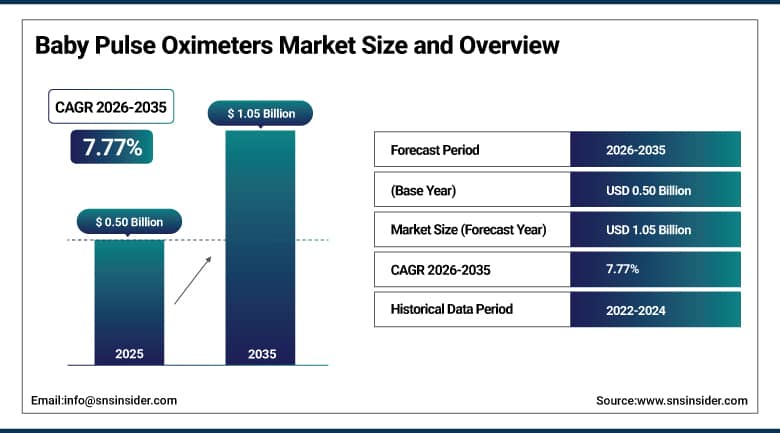
Baby Pulse Oximeters Market was valued at USD 0.50 billion in 2025 and is expected to reach USD 1.05 billion by 2035, growing at a CAGR of 7.77% from 2026-2035.
The Baby Pulse Oximeters Market is witnessing steady growth as a result of increased awareness about baby’s health monitoring and early detection of respiratory conditions. The growing number of cases of respiratory disease in neonates and children is boosting the demand for monitoring tools. Innovations related to sensors that are non-invasive, smaller device size, and increased accuracy are also helping the growth of the market. Besides, an increase in the infrastructure for neonate care, healthcare expenditures, and the preference for at-home monitoring is expected to contribute to market growth. Increased awareness among parents and caregivers about constant oxygen level monitoring is also boosting the demand for infant pulse oximetry devices.
CDC reported that 8.52% of U.S. births were low birthweight in 2024, representing approximately 309,000 infants requiring potentially greater neonatal medical attention.
Market Size and Forecast
-
Market Size in 2026E: USD 0.54 Billion
-
Market Size by 2035: USD 1.05 Billion
-
CAGR: 7.77% from 2026 to 2035
-
Fastest Growing Region: Asia Pacific
-
Largest Region: North America
To Get More Information On Baby Pulse Oximeters Market - Request Free Sample Report
Baby Pulse Oximeters Market Trends
-
Rising awareness of neonatal health monitoring is driving demand for baby pulse oximeters across hospitals, clinics, and homecare settings.
-
Increasing prevalence of respiratory disorders and congenital conditions among infants is expanding demand for continuous oxygen saturation monitoring solutions.
-
Growing adoption of non-invasive monitoring technologies is encouraging healthcare providers to use pulse oximeters for safer and convenient neonatal assessment.
-
Advancements in sensor technology and compact device designs are improving measurement accuracy, comfort, portability, and usability for newborns and infants.
-
Increasing integration of wireless connectivity and digital monitoring features is enabling remote tracking, data sharing, and faster clinical decision-making.
U.S. Baby Pulse Oximeters Market Outlook
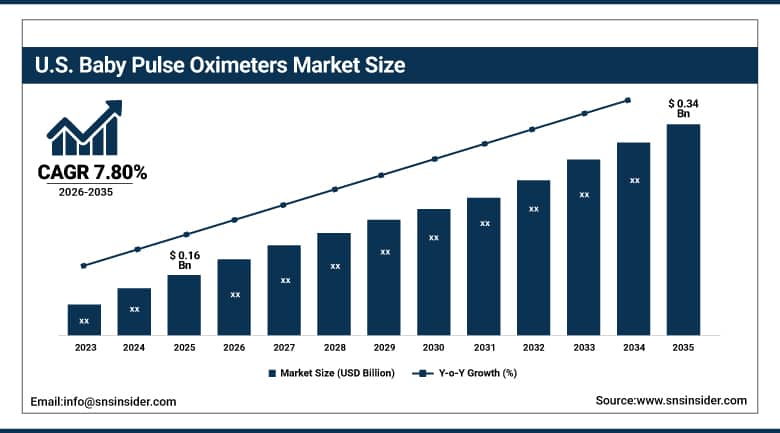
U.S. Baby Pulse Oximeters Market was valued at USD 0.16 billion in 2025 and is expected to reach USD 0.34 billion by 2035, growing at a CAGR of 7.80% from 2026-2035.
The U.S. Baby Pulse Oximeters Market is witnessing steady growth as there is an increased awareness regarding the health monitoring of infants and the significance of timely detection of oxygen and respiratory problems in infants. There is a rising demand for the neonatal care and pediatric care sector; this has prompted hospitals to use reliable and non-invasive monitoring devices. The development of sensors in terms of precision, small design, and easy-to-use features has also aided in adoption. In addition, the growing infrastructure for neonatal intensive care units, increased spending on healthcare, and preference for at-home monitoring are aiding in the growth of the market.
The United States recorded approximately 3.63 million live births in 2024, representing a substantial underlying population for neonatal and pediatric healthcare services.
Baby Pulse Oximeters Market Segment Analysis
-
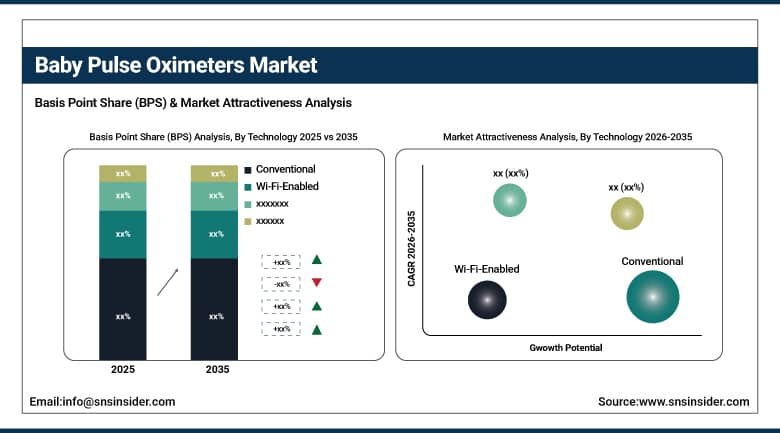
By Technology, Conventional dominated the Baby Pulse Oximeters Market with 61% share in 2025; Wi-Fi-Enabled is expected to grow at the fastest CAGR of 10.13% from 2026–2035.
-
By Product Type, Fingertip Pulse Oximeters dominated the Baby Pulse Oximeters Market with 34% share in 2025; Wearable Pulse Oximeters are expected to grow at the fastest CAGR of 9.71% from 2026–2035.
-
By Application, Hospitals & Clinics dominated the Baby Pulse Oximeters Market with 34% share in 2025; Homecare is expected to grow at the fastest CAGR of 8.80% from 2026–2035.
-
By Distribution Channel, Other Applications dominated the Baby Pulse Oximeters Market with 42% share in 2025; Online is expected to grow at the fastest CAGR of 8.35% from 2026–2035.
By Technology, Conventional dominates the baby pulse oximeters market, Wi-Fi-Enabled grows fastest.
Conventional segment dominated the Baby Pulse Oximeters Market with the highest revenue share of about 61% in 2025 owing to their proven clinical applications, simplicity of usage, low cost, and dependable measurement systems. Traditional devices are commonly used by hospitals and medical centers for routine screening of babies since the least technological framework is needed. Increasing demands for children’s healthcare services and affordable measurement devices play an important role.
Wi-Fi-Enabled segment is expected to grow at the fastest CAGR of 10.13% from 2026-2035 due to the growing requirement of monitoring, connectivity, and real-time transfer of data of infant health. Wi-Fi-based devices allow communications between the caregiver and medical professionals along with continuous monitoring. The increasing use of telemedicine, advanced healthcare systems, and increasing need for connected monitoring of infants will propel the market growth.
By Product Type, Fingertip Pulse Oximeters dominate the baby pulse oximeters market, Wearable Pulse Oximeters grow fastest.
Fingertip Pulse Oximeters segment dominated the Baby Pulse Oximeters Market with the highest revenue share of about 34% in 2025 this is because of the small nature of the device, its user-friendliness, portability, and affordability. The device can be used to monitor oxygen levels and heartbeats of children easily. It also helps that people have realized the need to monitor pediatric respiration.
Wearable Pulse Oximeters segment is expected to grow at the fastest CAGR of 9.71% from 2026-2035 as a result of increasing demand for continuous and non-invasive monitoring of oxygen saturation levels and pulse rates of infants. These wearable devices are more comfortable and convenient than traditional devices. Advancements in technology, remote monitoring, and the increasing use of connected healthcare devices among children are set to drive growth.
By Application, Hospitals & Clinics dominate the baby pulse oximeters market, Homecare grows fastest.
Hospitals & Clinics segment dominated the Baby Pulse Oximeters Market with the highest revenue share of about 34% in 2025 due to the large number of neonates and children who require constant monitoring of their oxygen saturation levels. Pulse oximetry is used in such medical institutions for respiratory monitoring, post-operative evaluation, and critical care. Increased investments in the expansion of neonatal care infrastructure and healthcare for children bolster its usage.
Homecare segment is expected to grow at the fastest CAGR of 8.80% from 2026-2035 due to growing inclination toward convenient health monitoring of babies in non-clinical settings. There is an increasing trend of parents/caregivers seeking devices to monitor their babies with breathing problems or those who need to be monitored. Higher healthcare awareness levels, remote monitoring, and availability of pulse oximeters will fuel the growth of home healthcare industry.
By Distribution Channel, Other Applications dominates the baby pulse oximeters market, Online grows fastest.
Other Applications segment dominated the Baby Pulse Oximeters Market with the highest revenue share of about 42% in 2025 owing to the demand for these devices in specialized pediatric care hospitals, diagnostic centers, and other medical institutions that require oxygen monitoring for infants. These uses ensure that monitoring goes beyond the normal scope of application in hospitals. Awareness of the need for early diagnosis of respiratory problems adds to this demand.
Online segment is expected to grow at the fastest CAGR of 8.35% from 2026-2035 as consumers become increasingly aware of convenience buying, greater availability of products, easier price comparisons, and home delivery services. E-commerce websites offer a wide range of products to monitor children at different geographic locations. The growing use of the internet, e-healthcare, and heightened consumer awareness is anticipated to boost online sales.
Regional Analysis
|
Region |
Major Country |
Share within Region, 2025 (%) |
|---|---|---|
|
North America |
United States |
90.0% |
|
Europe |
Germany |
22.5% |
|
Asia Pacific |
China |
41.0% |
|
Middle East & Africa |
UAE |
18.0% |
|
Latin America |
Brazil |
35.0% |
North America Baby Pulse Oximeters Market Insights
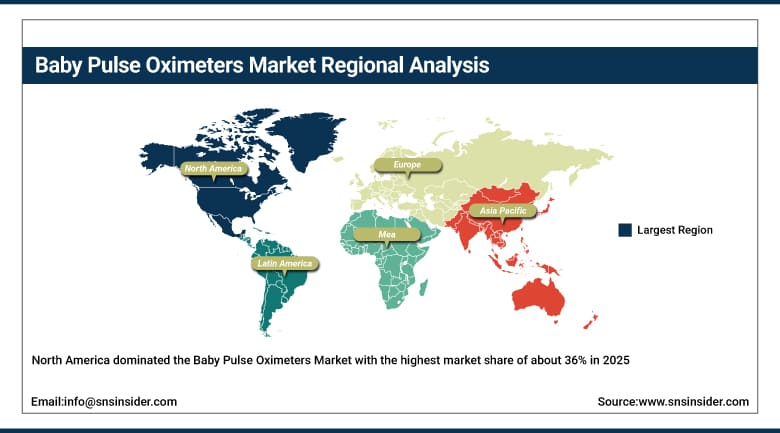
North America dominated the Baby Pulse Oximeters Market with the highest market share of about 36% in 2025, due to robust pediatric healthcare infrastructure, awareness regarding monitoring of infants, and the rise in prevalence of respiratory diseases among newborns. Growing usage of non-invasive monitoring systems, robust healthcare infrastructure, technological innovations, and reimbursement support is aiding in the dominance of the region’s market.
The U.S. Baby Pulse Oximeters Market accounted for a market share of 90.0%, with the help of pediatric healthcare infrastructure, strong capability for neonatal care, and awareness about monitoring of infant health. Increased usage of non-invasive monitoring instruments, development in technology, existing healthcare infrastructure, and awareness about the diagnosis of respiratory disorders is contributing to market growth in the United States.
Get Customized Report as Per Your Business Requirement - Enquiry Now
Europe Baby Pulse Oximeters Market Insights
Europe Baby Pulse Oximeters Market is witnessing steady growth, Backed by the presence of sophisticated pediatric healthcare infrastructure, the growth in neonatal care and rising awareness about oxygen monitoring in infants. The high demand for non-invasive monitoring devices, along with technological innovations, is driving the adoption of the product. The growth in healthcare spending and neonatal screening programs are other factors aiding the growth of the regional market.
The Germany Baby Pulse Oximeters Market accounted for a market share of 22.5%, powered by the presence of efficient healthcare infrastructure for pediatrics, efficient neonatal care facilities, and increasing awareness about oxygen monitoring in infants. Increased usage of non-invasive medical instruments, technology developments, and health-care investments are some of the major factors aiding in the growth of the demand for oxygen analyzers.
Asia Pacific Baby Pulse Oximeters Market Insights
Asia Pacific is expected to grow at the fastest CAGR of about 8.80% from 2026–2035, driven by increasing demands for neonatal healthcare, improvements in healthcare infrastructure, and growing awareness regarding oxygen monitoring in infants. Increasing healthcare spending, establishment of new pediatric care centers, growing use of portable monitoring systems, and government efforts for improving maternal and neonatal healthcare are driving regional market growth even further.
The China Baby Pulse Oximeters Market accounted for a market share of 41.0%, facilitated by increased pediatric healthcare infrastructural development, increased need for neonatal care, and increased awareness about infant monitoring. Increased healthcare spending and usage of portable medical instruments are propelling the market growth. The government’s initiative, healthcare modernization, access to pediatric healthcare services, and early diagnosis of respiratory ailments are contributing even more to market growth.
Middle East & Africa and Latin America Baby Pulse Oximeters Market Insights
The Middle East & Africa and Latin America Baby Pulse Oximeters Market Market is expanding slowly because of better pediatric healthcare infrastructure, more needs for neonatal care, and growing consciousness of baby health monitoring. More healthcare investments, and use of portable devices in the field, are providing opportunities for the market to grow. Improved government policies about maternal and neonatal healthcare, increased healthcare access, and demands for early respiratory disease diagnosis are contributing further to market growth.
The UAE Baby Pulse Oximeters Market accounted for a market share of 18.0%, backed by enhancements in the infrastructure of pediatric healthcare, availability of neonatal care services, and awareness regarding monitoring the health of infants. Increasing health care expenditure and the use of new-age medical devices are driving the market’s demand. Health care programs from the government, pediatric health centers, and neonatal respiratory disorders are boosting the market.
Market Dynamics
Growth Drivers: Rising prevalence of neonatal respiratory disorders is accelerating demand for reliable oxygen monitoring devices across healthcare settings
The increasing prevalence of neonatal respiratory disorders is significantly driving demand for baby pulse oximeters. The premature babies and infants who suffer from breathing difficulty, heart-related diseases, infections, and other medical complications need the constant monitoring of their blood oxygen saturation levels and pulse rate. The pulse oximeters help in the non-invasive and quick diagnosis of the oxygen-levels in the blood and the pulse rate of patients. The rising knowledge concerning the monitoring of neonatal patients is making hospitals and clinics focus on the better monitoring facilities for their neonatal ICU and pediatric sections. The advancements in the sensor accuracy, compactness of the design, and comfortable probes are adding further support for the same.
Restraints: Accuracy limitations caused by infant movement and small anatomical size can restrict adoption of baby pulse oximeters
Measurement accuracy can remain challenging when monitoring newborns due to the small size of infants' fingers, toes, or other measuring sites and their movement during the measurement process. Potential sources of interference with the reading of oxygen saturation include the motion artifacts, poor placement of sensors, decreased peripheral perfusion, skin properties, and the presence of ambient light. Inaccurate or unreliable readings may raise questions for health professionals about the use of such devices for vulnerable newborns. Therefore, it is necessary for manufacturers to produce dedicated neonatal sensors and algorithms that would allow reliable readings to be obtained even in difficult conditions. Good-quality devices of clinical grade might require advanced sensing capabilities, which makes their production more expensive.
Opportunities: Growing adoption of home-based infant monitoring creates significant opportunities for connected baby pulse oximeter manufacturers globally
Increasing interest in home-based infant monitoring is creating new opportunities for baby pulse oximeter manufacturers. It is becoming more common for parents and caretakers to look for technologies that are simple to use and have the capability of assisting in the monitoring of babies with certain health concerns with expert assistance. Pulse oximeters that have the capability of being connected to the Internet can help give real-time oxygen saturation and pulse readings on digital screens or mobile applications. Other features such as wireless capability, small size, rechargeable battery, and simple interface design would make these devices suitable for home care applications. Telehealth practices can allow doctors to view some patient information at a distance when required.
Recent Developments:
-
2026 : Masimo continued advancing neonatal pulse oximetry through SET® technology, highlighting real-world NICU accuracy across newborns of different skin tones and supporting reliable oxygen monitoring in fragile infants.
-
2026 : Medtronic continued strengthening its neonatal monitoring portfolio with Nellcor™ OxySoft™ SpO₂ sensors, featuring silicone adhesive designed to protect fragile neonatal skin while improving sensor repositionability during monitoring.
-
2026 : Masimo strengthened its newborn-care portfolio with specialized sensors and monitoring technologies designed for neonatal resuscitation, low perfusion, and motion conditions, supporting faster and more reliable oxygen saturation measurements.
-
2026 : Medtronic expanded its NICU monitoring solutions with infant-neonatal INVOS™ regional saturation sensors, designed with soft, small configurations for fragile neonatal skin and flexible placement across the body.
Baby Pulse Oximeters Market key players are:
-
Medtronic plc
-
Masimo Corporation
-
GE HealthCare Technologies Inc.
-
Koninklijke Philips N.V.
-
Nonin Medical, Inc.
-
Nihon Kohden Corporation
-
Shenzhen Mindray Bio-Medical Electronics Co., Ltd.
-
CONTEC Medical Systems Co., Ltd.
-
ICU Medical, Inc.
-
Drägerwerk AG & Co. KGaA
-
Smiths Medical
-
Beurer GmbH
-
Edan Instruments, Inc.
-
Mediana Co., Ltd.
-
Fisher & Paykel Healthcare Limited
-
Atom Medical Corporation
-
Natus Medical Incorporated
-
Opto Circuits India Ltd.
-
BPL Medical Technologies
-
ChoiceMMed
Baby Pulse Oximeters Market Report Scope:
| Report Attributes | Details |
|---|---|
| Market Size in 2025 | USD 0.50 Billion |
| Market Size by 2035 | USD 1.05 Billion |
| CAGR | CAGR of 7.77% From 2026 to 2035 |
| Base Year | 2025 |
| Forecast Period | 2026-2035 |
| Historical Data | 2022-2024 |
| Report Scope & Coverage | Market Size, Segments Analysis, Competitive Landscape, Regional Analysis, DROC & SWOT Analysis, Forecast Outlook |
| Key Segments | • By Product Type (Fingertip Pulse Oximeters, Handheld Pulse Oximeters, Tabletop/Bedside Pulse Oximeters, Wearable Pulse Oximeters) • By Technology (Conventional, Bluetooth-Enabled, Wi-Fi-Enabled) • By Application (Hospitals & Clinics, Homecare, Neonatal Intensive Care Units, Other Applications) • By Distribution Channel (Online, Offline) |
| Regional Analysis/Coverage | North America (US, Canada), Europe (Germany, UK, France, Italy, Spain, Russia, Poland, Rest of Europe), Asia Pacific (China, India, Japan, South Korea, Australia, ASEAN Countries, Rest of Asia Pacific), Middle East & Africa (UAE, Saudi Arabia, Qatar, South Africa, Rest of Middle East & Africa), Latin America (Brazil, Argentina, Mexico, Colombia, Rest of Latin America). |
| Company Profiles | Medtronic plc, Masimo Corporation, GE HealthCare Technologies Inc., Koninklijke Philips N.V., Nonin Medical, Inc., Nihon Kohden Corporation, Shenzhen Mindray Bio-Medical Electronics Co., Ltd., CONTEC Medical Systems Co., Ltd., ICU Medical, Inc., Drägerwerk AG & Co. KGaA, Smiths Medical, Beurer GmbH, Edan Instruments, Inc., Mediana Co., Ltd., Fisher & Paykel Healthcare Limited, Atom Medical Corporation, Natus Medical Incorporated, Opto Circuits India Ltd., BPL Medical Technologies, and ChoiceMMed. |

Frequently Asked Questions
The Baby Pulse Oximeters Market is expected to grow at a CAGR of 7.77% from 2026 to 2035.
The Baby Pulse Oximeters Market was valued at USD 0.50 billion in 2025.
The major growth factor is rising prevalence of neonatal and pediatric respiratory disorders, increasing demand for continuous, non-invasive oxygen monitoring and early detection of hypoxemia in infants.
The Fingertip Pulse Oximeters segment dominated the Baby Pulse Oximeters Market in 2025.
North America dominated the Baby Pulse Oximeters Market in 2025.
