
Microfluidic Diagnostic Devices Market Report Scope & Overview:
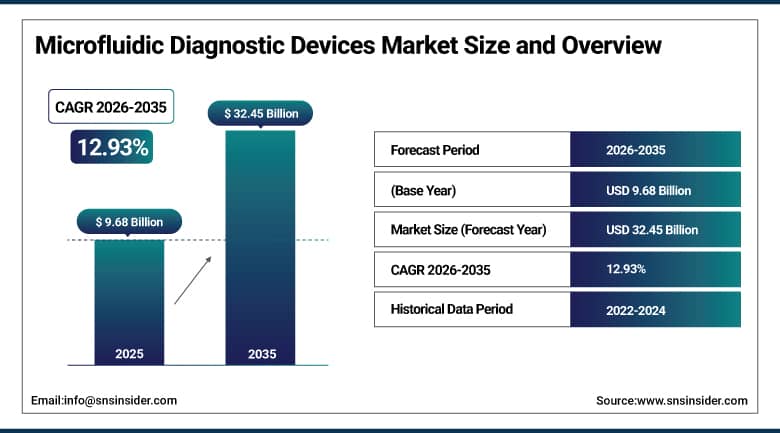
The Microfluidic Diagnostic Devices Market was valued at USD 9.68 Billion in 2025 and is expected to reach USD 32.45 Billion by 2035, growing at a CAGR of 12.93% from 2026 to 2035.
The microfluidic diagnostic devices market is steadily gaining traction amid the increasing trend of decentralization and speed up of healthcare delivery systems all over the world. Microfluidic diagnostic systems involve sample preparation, reagents management and diagnostics of diseases using one single chip, allowing medical professionals and patients to get the test results based on small sample sizes in few minutes rather than hours or even days. Such ability becomes even more useful due to the increased frequency of various diseases including infectious diseases and diabetes, cardiovascular disorders, and different types of cancer where regular and early diagnostics becomes important. Investment by diagnostic devices producers into lab-on-a-chip technologies and the growth of reimbursement opportunities for point-of-care tests in some advanced healthcare delivery systems contribute to the increasing market footprint of microfluidic devices.
In 2026, Roche Diagnostics and Abbott Laboratories have both increased their production capacity of point-of-care microfluidic cartridges for fast diagnostics of infectious and cardiac biomarkers due to the continuing trend of decentralization of diagnostic services in hospitals, retail clinics, and homes.
To Get More Information On Microfluidic Diagnostic Devices Market - Request Free Sample Report
Microfluidic Diagnostic Devices Market Trends:
-
Rising adoption of point-of-care and home-based testing is accelerating microfluidic cartridge demand across infectious and chronic disease screening.
-
Growing integration of AI-enabled automation in microfluidic analyzers is improving diagnostic accuracy and shortening laboratory turnaround time.
-
Expanding use of microfluidics in liquid biopsy is driving demand for high-sensitivity lab-on-a-chip oncology diagnostic platforms.
-
Increasing availability of low-cost, disposable polymer-based cartridges is improving diagnostic accessibility across resource-limited healthcare settings.
-
Strategic partnerships between device manufacturers and healthcare networks are accelerating commercialization of next-generation multiplexed testing platforms.
U.S. Microfluidic Diagnostic Devices Market Outlook:
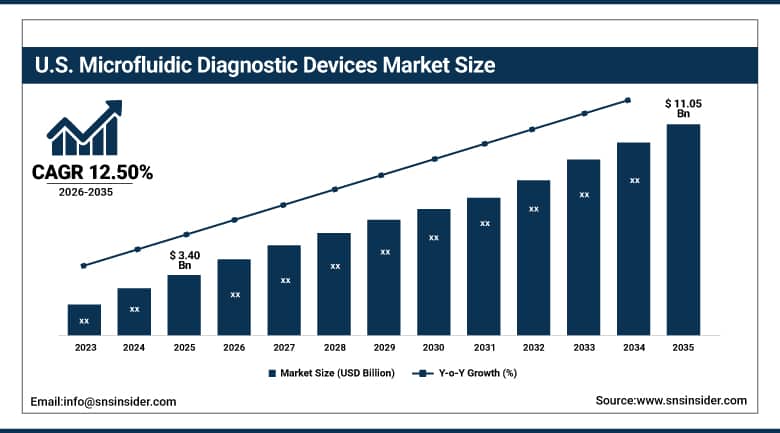
The U.S. Microfluidic Diagnostic Devices Market was USD 3.40 billion in 2025 and is forecast to reach USD 11.05 billion by 2035, giving it a CAGR of 12.50% between 2026 and 2035.
More and more diagnostic companies and hospital chains in the country are adopting microfluidics testing technology due to the increasing demand for speedy diagnostics, decreased chances of acquiring infections in hospitals, and decreased cost of tests from the U.S. healthcare system. The presence of a strong domestic biotechnology industry base, approved FDA approval pathway for point-of-care devices, and continued public and private investments for development of pandemic preparedness diagnostic tools are continuously propelling product launches in infectious diseases, oncology, and cardiac biomarker testing. Moreover, the rising preference for CLIA-waived microfluidic cartridge systems among physician office labs and urgent care centers that have less operating training requirements is ensuring demand growth in outpatient and retail segments.
In 2026, Abbott increased its manufacturing facility by installing cartridge manufacturing lines for its ID NOW point-of-care devices used in domestic hospitals and retail clinics.
Microfluidic Diagnostic Devices Market Segment Analysis:
-
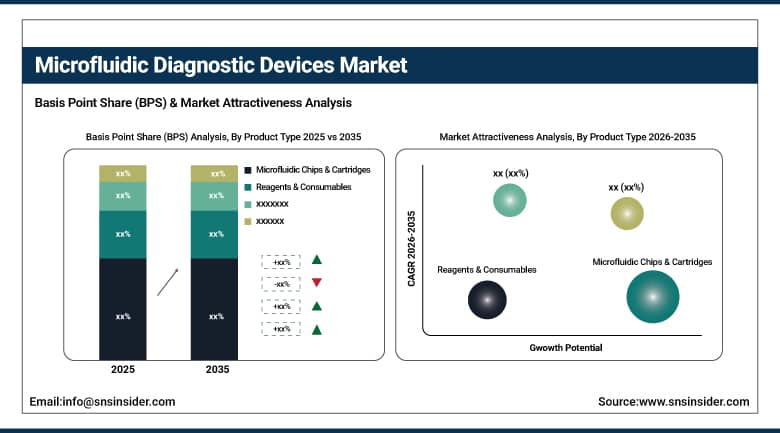
By Product Type, Microfluidic Chips & Cartridges dominated the Microfluidic Diagnostic Devices Market with a 42.80% share in 2025, while Reagents & Consumables is the fastest-growing product segment with a CAGR of 15.60% from 2026–2035.
-
By Material, Polymer dominated the Microfluidic Diagnostic Devices Market with a 58.70% share in 2025, while Silicon is the fastest-growing material segment with a CAGR of 14.40% from 2026–2035.
-
By Application, Infectious Disease Testing dominated the Microfluidic Diagnostic Devices Market with a 36.50% share in 2025, while Oncology & Cancer Diagnostics is the fastest-growing application segment with a CAGR of 16.20% from 2026–2035.
-
By End User, Hospitals & Diagnostic Laboratories dominated the Microfluidic Diagnostic Devices Market with a 48.90% share in 2025, while Point-of-Care & Home Testing Settings is the fastest-growing end-user segment with a CAGR of 15.90% from 2026–2035.
By Product Type: Microfluidic Chips & Cartridges leads; Reagents & Consumables grows fastest.
The Microfluidic Chips & Cartridges Segment led the Microfluidic Diagnostic Devices Market in 2025. The segment holds prime importance as it acts as the critical consumable required in almost every diagnostic procedure at hospitals, laboratories, and point-of-care locations. Microfluidic chips and cartridges are purchased multiple times as a part of each test performed, resulting in consistent revenues for the manufacturing firms and offering a ready-to-use and pre-calibrated format for minimizing any errors involved with samples. The capability of the segment to function with a broad range of benchtop and portable analyzers, alongside their improved designs to facilitate multiplex testing of pathogens or biomarkers through a single cartridge, is what makes it a leader in both advanced and developing nations.
The Reagents & Consumables segment is expected to register the fastest CAGR during the forecast period 2026-2035, supported by the rapidly expanding installed base of microfluidic analyzers across hospital, laboratory, and decentralized testing sites that continually require compatible assay reagents, calibrators, and sample-preparation kits. Diagnostic manufacturers are increasingly bundling proprietary reagent formulations with instrument placements to secure long-term recurring revenue streams, while growing test menu expansion into oncology biomarkers, genetic panels, and multiplex infectious disease assays is further widening reagent consumption per installed system, driving this segment's above-average growth relative to the broader product category.
By Material: Polymer leads; Silicon grows fastest.
Polymer is estimated to occupy the highest market share in the Microfluidic Diagnostic Devices Market in 2025 owing to its status as the preferred substrate on account of its economical manufacturing process, easy mass production via injection molding & hot embossing process, and disposability properties. Microfluidic chips made from polymer allow manufacturers to produce at an economical rate and yet satisfy stringent biocompatibility & optical clarity standards necessary for conducting colorimetric and fluorescence-based detection assays. This has led to the popularity of polymers in infectious disease and POC testing applications across the globe.
Silicon is expected to witness rapid growth in terms of CAGR in the forecast period 2026-2035. Increasing need for highly accurate microfluidic architectures for sophisticated applications like digital PCR, single cell analysis, and biosensor detection has driven demand for silicon material. Superior thermal conductivity along with its compatibility with semiconductor fabrication process makes it more lucrative than other materials for developing next-generation diagnostic devices which involve electronic detection capabilities. This is driving adoption of silicon material in oncology and genetic testing applications.
By Application: Infectious Disease Testing leads; Oncology & Cancer Diagnostics grows fastest.
The Infectious Disease Testing segment was dominant in the Microfluidic Diagnostic Devices market in 2025 and was the largest segment by application due to its importance for prompt detection of respiratory, sexually transmitted and hospital-acquired infections that help in making effective clinical decision and minimizing the chances of spreading infection. Microfluidic technology has emerged as a vital technology for infectious disease diagnosis due to its high precision of both molecular and immunological testings in the small form factor that is used close to the patient's vicinity.
The Oncology & Cancer Diagnostics segment is expected to register the fastest CAGR during the forecast period 2026-2035, propelled by rapid growth in liquid biopsy testing that uses microfluidic circulating tumor cell and cell-free DNA isolation platforms to detect and monitor cancer with a simple blood draw rather than invasive tissue biopsy. Expanding use of companion diagnostics to guide targeted cancer therapy selection, combined with growing oncologist and payer acceptance of minimally invasive monitoring protocols for treatment response and recurrence surveillance, continues to drive strong above-average growth in microfluidic-based oncology testing adoption across major diagnostic and reference laboratory networks.
By End User: Hospitals & Diagnostic Laboratories lead; Point-of-Care & Home Testing grows fastest.
The Hospitals & Diagnostic Laboratories segment dominated the Microfluidic Diagnostic Devices Market in 2025. Such high revenue is a result of the ability to carry out multiple tests on a daily basis, having a budget of money for advanced diagnostics instruments as well as the requirement to run a wide clinical test menu – including the diagnosis of infections, heart diseases, and cancer. The hospitals and reference laboratories continue to invest in automated high-throughput microfluidic analyzer platforms that work together with the laboratory information management systems in order to efficiently process a large number of samples while maintaining the necessary regulatory compliance and quality control standards.
The Point-of-Care & Home Testing Settings segment will have the highest growth rate among all others in 2026-2035. This can be attributed to the growing consumer interest towards convenient point-of-care and at-home test kits for various diseases – diabetes, respiratory infections, and fertility. The development of the retail pharmacy diagnostics services, the increase of telemedicine services usage with the home testing devices as well as the development of the microfluidic cartridges with the simplified workflow that requires minimal patient training will positively impact the market.
Regional Analysis:
|
Region |
Major Country |
Share within Region, 2025 (%) |
|---|---|---|
|
North America |
United States |
84.50% |
|
Europe |
Germany |
24.80% |
|
Asia Pacific |
China |
41.60% |
|
Middle East & Africa |
UAE |
26.40% |
|
Latin America |
Brazil |
36.90% |
North America Microfluidic Diagnostic Devices Market Insights
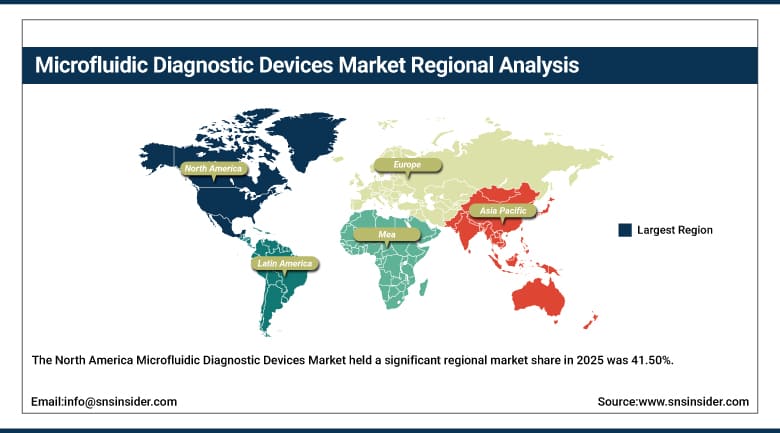
The North America Microfluidic Diagnostic Devices Market held a dominating regional market share in 2025 was 41.50%, owing to the region's advanced healthcare infrastructure, high per-capita diagnostic testing expenditure, and strong presence of leading microfluidic device manufacturers investing heavily in research and commercialization of next-generation testing platforms. Well-established reimbursement pathways for point-of-care diagnostics, combined with growing hospital and laboratory adoption of automated, multiplexed testing systems, continue to support strong demand across the region's diagnostic, oncology, and infectious disease testing channels, while sustained public health investment following recent infectious disease outbreaks has further reinforced procurement of rapid, decentralized diagnostic capacity across care settings.
The US was the leading country within the North America Microfluidic Diagnostic Devices Market in 2025 of the regional market, driven by extensive domestic diagnostic manufacturing infrastructure, strong FDA-cleared product pipelines across leading device makers, and growing hospital network transition toward decentralized, cartridge-based testing formats. Canada is contributing to regional growth through its own expanding public healthcare diagnostic modernization initiatives and growing laboratory adoption of point-of-care molecular testing platforms across provincial health networks.
Get Customized Report as Per Your Business Requirement - Enquiry Now
Europe Microfluidic Diagnostic Devices Market Insights
The Europe region was a major contributor to the Microfluidic Diagnostic Devices Market in 2025, expected to register comparatively higher growth for compact, decentralized testing platforms during the forecast period. This is attributed to the region's strong regulatory framework under the EU In Vitro Diagnostic Regulation, well-established hospital and public laboratory infrastructure, and growing government emphasis on early disease detection and antimicrobial resistance surveillance across member states pursuing broader public health modernization objectives.
Germany is one of the major markets in Europe owing to its strong medical device manufacturing base, along with presence of leading diagnostic technology developers serving both domestic and international customers. Other countries such as the UK, France, and Italy, home to well-established national health systems and growing private diagnostic laboratory networks, are also contributing to market growth through expanding point-of-care testing adoption and continued diagnostic infrastructure investment.
Asia Pacific Microfluidic Diagnostic Devices Market Insights
The Asia Pacific Microfluidic Diagnostic Devices Market is expected to witness the fastest growth rate of approximately 14.5% during the forecast period 2026-2035. The market growth is driven by rapidly expanding healthcare infrastructure investment, growing government funding toward infectious disease surveillance programs, and increasing affordability of diagnostic testing across the region's large and growing patient population pursuing improved access to early and accurate disease detection services.
China is one of the main growth drivers in the Asia Pacific Microfluidic Diagnostic Devices Market, owing to its expanding domestic diagnostic manufacturing ecosystem and rapidly growing hospital network investment in point-of-care testing capacity supporting both urban and rural healthcare access initiatives. India and Japan, both major regional diagnostic markets, are also contributing to regional growth through expanding private laboratory networks and increasing adoption of rapid molecular and immunoassay testing platforms across public and private healthcare channels.
Middle East & Africa and Latin America Microfluidic Diagnostic Devices Market Insights
Middle East & Africa and Latin American regions are gradually expanding microfluidic diagnostic device adoption as healthcare infrastructure investment grows across both regions, supported by increasing government focus on early disease detection programs and expanding private hospital and diagnostic laboratory networks seeking to modernize testing capacity across urban healthcare centers.
Brazil is set to be a prominent Latin American market fueled by its substantial public healthcare diagnostic modernization programs and growing private laboratory network requiring efficient, decentralized testing capacity. The Middle East & Africa region has the UAE and Saudi Arabia investing in advanced hospital and diagnostic infrastructure that is gradually increasing demand for microfluidic diagnostic platforms across their expanding private healthcare and medical tourism sectors.
Market Dynamics:
Growth Drivers: Rising demand for rapid, decentralized testing and precision diagnostics driving market growth
The rising global burden of infectious and chronic diseases, combined with growing healthcare system emphasis on early detection and decentralized testing, are among the primary drivers of the Microfluidic Diagnostic Devices Market. Microfluidic platforms provide fast, accurate, and minimally invasive diagnostic capability that reduces dependence on centralized laboratory infrastructure, improving turnaround time and clinical decision-making across hospital, point-of-care, and home testing settings requiring efficient sample-to-result testing capability, from respiratory infection panels through oncology biomarker and cardiac diagnostic testing operations.
Technological advancements in biosensor integration and chip miniaturization have significantly increased microfluidic device sensitivity, with recent innovations improving multiplex assay capability and digital connectivity across commercial diagnostic platforms. Rising point-of-care testing adoption as healthcare providers seek to reduce laboratory turnaround delays, growing integration of microfluidics into liquid biopsy and companion diagnostic workflows requiring precise biomarker isolation, and continued diagnostic industry investment expanding chip and cartridge manufacturing capacity are further supporting demand across the forecast period, as microfluidic platforms continue displacing conventional bench-scale laboratory testing methods across an increasingly broad range of clinical diagnostic applications.
Restraints: High device costs and complex regulatory pathways limiting market expansion
One of the most critical obstacles to market growth comes in the form of high upfront instrument and cartridge development costs relative to conventional laboratory testing methods. This comes down to the fact that microfluidic chip fabrication requires specialized cleanroom manufacturing infrastructure and precision engineering expertise, which limits the number of manufacturers capable of achieving cost-competitive, high-volume production, particularly for smaller diagnostic companies attempting to enter the market with novel testing platforms.
Moreover, lengthy and varied regulatory approval pathways across different countries directly impact time-to-market for new microfluidic diagnostic products and create compliance complexity for manufacturers seeking simultaneous global product launches. Besides, the high technical requirements in terms of ensuring consistent assay performance across manufacturing batches, including maintaining reagent stability and cartridge shelf life under diverse storage and transport conditions, require considerable ongoing quality assurance and R&D investment.
Opportunities: Expansion of home-based testing and AI-integrated diagnostics creating new growth avenues
The prospects for microfluidic diagnostic devices are promising due to the increasing demands for at-home or remote tests, growing connected diagnostic solutions used in combination with telemedicine software, and increased attention to AI-assisted analysis of results due to growing investment in digital health. There is an increasing need for cost-effective testing infrastructures in developing and rural areas and as more countries expand public health screening programs, this factor will further fuel the future development of the market.
Moreover, the industry can benefit from the development of multiplexed diagnostic panels which incorporate several biomarkers into one microfluidic chip. This method decreases costs of each test and amount of needed samples both for the provider of healthcare services and for the patient. Growing private investments in diagnostics and expansion of diagnostic laboratories in emerging markets such as Asia Pacific and Latin America and increased efforts by governments in providing universal access to health screenings will drive growth.
Recent Developments:
-
2025: Roche Diagnostics launched its cobas liat PCR System expansion cartridge for combined influenza A/B, RSV, and strep A detection, enabling faster syndromic testing at the point of care.
-
2025: Cepheid, a Danaher operating company, introduced an expanded Xpert MTB/XDR cartridge menu offering rapid molecular detection of drug-resistant tuberculosis directly at decentralized testing sites.
-
2026: Bio-Rad Laboratories expanded its droplet digital PCR microfluidic chip manufacturing capacity to support growing demand for its QX Continuum system in oncology and infectious disease diagnostics.
-
2026: Standard BioTools unveiled its next-generation Biomark HD integrated fluidic circuit platform for high-throughput single-cell genomic diagnostic applications in precision oncology research.
Microfluidic Diagnostic Devices Market Key Players are:
-
Abbott Laboratories
-
Danaher Corporation
-
Roche Diagnostics
-
Bio-Rad Laboratories, Inc.
-
Thermo Fisher Scientific Inc.
-
Siemens Healthineers AG
-
Revvity, Inc.
-
QIAGEN N.V.
-
bioMérieux SA
-
Illumina, Inc.
-
Standard BioTools Inc.
-
Agilent Technologies, Inc.
-
Becton, Dickinson and Company
-
QuidelOrtho Corporation
-
Sysmex Corporation
-
Randox Laboratories Ltd.
-
DiaSorin S.p.A.
-
Micronit B.V.
-
Dolomite Microfluidics
-
Fluigent SA
Microfluidic Diagnostic Devices Market Report Scope:
| Report Attributes | Details |
|---|---|
| Market Size in 2025 | USD 9.68 Billion |
| Market Size by 2035 | USD 32.45 Billion |
| CAGR | CAGR of 12.93% From 2026 to 2035 |
| Base Year | 2025 |
| Forecast Period | 2026-2035 |
| Historical Data | 2022-2024 |
| Report Scope & Coverage | Market Size, Segments Analysis, Competitive Landscape, Regional Analysis, DROC & SWOT Analysis, Forecast Outlook |
| Key Segments | • By Product Type (Microfluidic Chips & Cartridges, Instruments & Analyzers, Reagents & Consumables) • By Material (Polymer, Glass, Silicon) • By Application (Infectious Disease Testing, Oncology & Cancer Diagnostics, Cardiometabolic Disease Testing, Other Applications) • By End User (Hospitals & Diagnostic Laboratories, Point-of-Care & Home Testing Settings, Academic & Research Institutes) |
| Regional Analysis/Coverage | North America (US, Canada), Europe (Germany, France, UK, Italy, Spain, Russia, Poland, Rest of Europe), Asia Pacific (China, India, Japan, South Korea, Australia, ASEAN Countries, Rest of Asia Pacific), Latin America (Brazil, Argentina, Mexico, Colombia, Rest of Latin America), Middle East & Africa (UAE, Saudi Arabia, Qatar, South Africa, Rest of Middle East & Africa) |
| Company Profiles | Abbott Laboratories, Danaher Corporation, Roche Diagnostics, Bio-Rad Laboratories Inc., Thermo Fisher Scientific Inc., Siemens Healthineers AG, Revvity, Inc., QIAGEN N.V., bioMérieux SA, Illumina Inc., Standard BioTools Inc., Agilent Technologies Inc., Becton, Dickinson and Company, QuidelOrtho Corporation, Sysmex Corporation, Randox Laboratories Ltd., DiaSorin S.p.A., Micronit B.V., Dolomite Microfluidics, Fluigent SA |

Frequently Asked Questions
Key players include Abbott Laboratories, Danaher Corporation, Roche Diagnostics, Bio-Rad Laboratories Inc., and Thermo Fisher Scientific Inc., among others.
Key opportunities include rising demand for point-of-care testing, increasing adoption of lab-on-a-chip technologies, miniaturization of diagnostic platforms, expanding molecular diagnostics, and growing decentralized healthcare applications.
The market is driven by rising demand for rapid, decentralized diagnostic testing, growing chronic and infectious disease burden, and continued advancement in microfluidic chip and biosensor technology.
The Infectious Disease Testing segment dominated the Microfluidic Diagnostic Devices Market in 2025, accounting for approximately 36.50% market share.
The North America region dominated the Microfluidic Diagnostic Devices Market in 2025, holding a 41.50% share, driven by advanced healthcare infrastructure and strong presence of leading diagnostic device manufacturers.
