
Prescription Digital Therapeutics (PDTx) Market Report Scope & Overview:
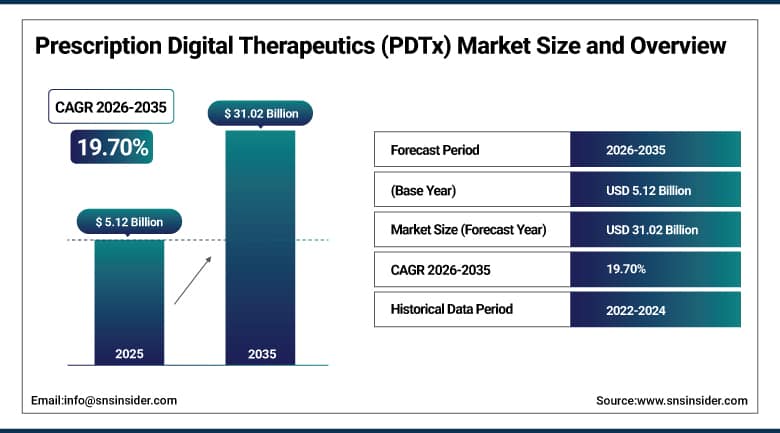
The Prescription Digital Therapeutics (PDTx) Market was valued at USD 5.12 Billion in 2025 and is expected to reach USD 31.02 Billion by 2035, growing at a CAGR of 19.70% from 2026 to 2035.
The Prescription Digital Therapeutics (PDTx) Market is experiencing rapid growth due to an increase in FDA as well as global approvals of software-based clinical treatments, increased payer adoption of prescription digital therapeutics as a viable form of reimbursement treatment, and the growing trust among physicians in prescribing app-based and VR-based therapy in addition to medications. Prescription digital therapeutics are being increasingly prescribed as both first-line treatments and adjunct therapies for mental health conditions, chronic pain, substance abuse disorders, and metabolic disorders, which are clinically valid and scalable solutions reducing dependence on medication only and aiding patient compliance and long-term outcomes tracking.
⮞In October 2026, Click Therapeutics announced FDA clearance for Motivista (CT-155), a prescription digital therapeutic for the negative symptoms of schizophrenia in adults. Authorized as an adjunct to clinician-managed treatment, the smartphone-based therapy expands the range of psychiatric conditions addressed by regulated digital treatments.
To Get More Information On Prescription Digital Therapeutics (PDTx) Market - Request Free Sample Report
Prescription Digital Therapeutics (PDTx) Market Trends:
-
Rising FDA and global regulatory authorizations for prescription digital therapeutics across mental health, chronic pain, and metabolic disorders are expanding the addressable indication base.
-
Growing payer reimbursement pathways and dedicated billing codes, including Germany's DiGA framework, are accelerating prescriber confidence and patient access.
-
Increasing integration of prescription digital therapeutics with GLP-1 and other pharmacological treatment regimens is creating combination “beyond the pill” care models.
-
Expanding pharma-digital health partnerships are driving co-development and commercialization of indication-specific prescription therapeutic applications.
-
Rising adoption of VR- and AI-enabled prescription therapeutic platforms is improving clinical engagement and long-term treatment adherence.
U.S. Prescription Digital Therapeutics (PDTx) Market Outlook:
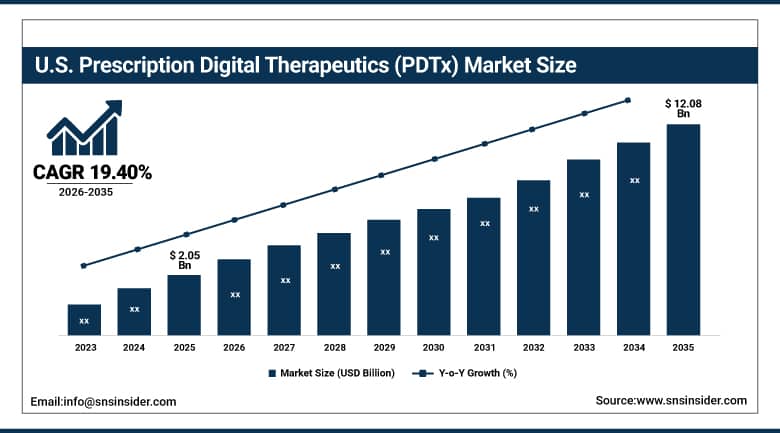
The U.S. Prescription Digital Therapeutics (PDTx) Market registered USD 2.05 billion in 2025 and is projected to reach USD 12.08 billion by 2035, growing at a CAGR of 19.40% during 2026-2035.
Major digital health and pharmaceutical firms in the region have been extending their prescription digital therapeutic pipelines, thanks to the advancement of the FDA De Novo and 510(k) pathway approvals, the coverage decisions by the commercial insurers and Medicaid programs, and the increasing confidence of clinicians in prescribing software-driven treatments. The robust investment by venture capital firms in digital health startups, combined with an increasing number of partnerships between the prescription digital therapeutics developers and pharmaceutical manufacturers, supports the position of the United States as the biggest global market of FDA-approved software solutions.
⮞In February 2026, Big Health secured USD 23.7 million in strategic funding to expand access to its FDA-cleared SleepioRx and DaylightRx digital mental health treatments. The investment supports commercialization through U.S. healthcare systems and reflects growing interest in reimbursable, clinician-directed software therapies.In 2026, Big Health obtained FDA clearance for the prescription digital therapeutic for generalized anxiety disorder – DaylightRx.
Prescription Digital Therapeutics (PDTx) Market Segment Analysis:
-
By Therapeutic Area, Mental Health & Behavioral Disorders dominated the Prescription Digital Therapeutics (PDTx) Market with a 27.60% share in 2025, while Diabetes & Metabolic Disorders is the fastest-growing therapeutic area segment with a CAGR of 23.40% from 2026–2035.
-
By Platform, Mobile/Smartphone Application-Based dominated the Prescription Digital Therapeutics (PDTx) Market with a 58.70% share in 2025, while VR/AR-Based Platforms is the fastest-growing platform segment with a CAGR of 26.80% from 2026–2035.
-
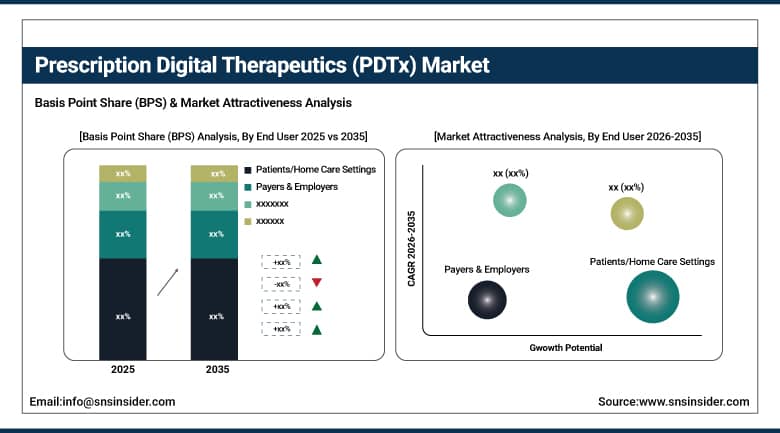
By End User, Patients/Home Care Settings dominated the Prescription Digital Therapeutics (PDTx) Market with a 52.30% share in 2025, while Payers & Employers is the fastest-growing end-user segment with a CAGR of 24.90% from 2026–2035.
-
By Distribution Channel, Provider-Prescribed (Clinical Channel) dominated the Prescription Digital Therapeutics (PDTx) Market with a 61.40% share in 2025, while Payer/Employer-Sponsored Programs is the fastest-growing distribution channel segment with a CAGR of 25.70% from 2026–2035.
By End User, Patients/Home Care Settings led, while Payers & Employers is growing fastest.
The segment of Patients/Home Care Settings emerged as a leader in the Prescription Digital Therapeutics (PDTx) Market in 2025 and accounted for 52.30% revenue share. Prescription digital therapeutics have been developed for home-based usage by patients post their prescription by the doctors. This would allow the patients to perform their cognitive behavioral therapy sessions, biofeedback sessions, or symptom monitoring sessions, etc. This delivery model not only reduces the strain on the healthcare system but also makes the therapy available to patients residing in remote or rural locations. Home-based digital therapeutics provide an opportunity to collect real-world data which is used by the developers to prove the clinical efficacy of their product offerings to the payers and regulators.
The Payers & Employers segment is expected to witness the fastest CAGR of 24.90% during the forecast period 2026–2035. Health insurers, pharmacy benefit managers, and self-insured employers are increasingly incorporating prescription digital therapeutics into covered benefit designs as a strategy to reduce total cost of care for chronic mental health, diabetes, and substance use disorder management, driving direct payer-sponsored procurement and distribution of these products to enrolled populations. Growing availability of real-world evidence demonstrating reduced hospitalization and medication costs, combined with expanding value-based contracting arrangements between digital therapeutic developers and payers, is strengthening this channel's commercial importance.
⮞In January 2026, AppliedVR highlighted the U.S. Department of Veterans Affairs' use of RelieVRx as an at-home virtual reality treatment option for veterans with chronic pain. The initiative demonstrates the potential for prescription immersive therapeutics to reach patients outside conventional clinical facilities.
By Therapeutic Area, Mental Health & Behavioral Disorders led, while Diabetes & Metabolic Disorders is growing fastest.
Mental Health & Behavioral Disorders dominated the Prescription Digital Therapeutics (PDTx) Market with the largest revenue share of 27.60% in 2025 due to the prevalence of mental diseases such as depression, anxiety, PTSD, and other behavioral disorders, coupled with increasing FDA-approved digital tools for cognitive behavioral therapy. Digital therapeutic products such as Rejoyn and DaylightRx are effective options that physicians can prescribe to patients as an alternative to purely pharmacological treatment. Strong scientific data regarding symptom reduction, increasing use of telepsychiatry, and increasing number of mental health benefits by employers has increased the level of trust of prescribers and payers. Moreover, the segment benefits from regulatory experience and relatively low hardware complexity of devices compared with other therapeutic areas.
The Diabetes & Metabolic Disorders segment is expected to witness the highest CAGR of 23.40% during the forecast period 2026–2035. Growing integration of prescription digital therapeutics with GLP-1 receptor agonist treatment regimens is driving strong momentum in this category, as software-based coaching, cognitive behavioral therapy, and adherence-monitoring platforms are increasingly prescribed alongside pharmacological weight-management and glycemic-control therapies to improve long-term patient outcomes and reduce medication de-prescription risk. Rising global diabetes and obesity prevalence, expanding payer willingness to reimburse digital adjuncts that demonstrably reduce total cost of chronic disease care, and continued pharmaceutical company investment in companion digital therapeutic pipelines are further accelerating adoption.
⮞In January 2026, Welldoc submitted a 510(k) premarket notification to the FDA for a continuous glucose monitoring-informed glucose prediction feature designed for people with Type 2 diabetes who do not use insulin. The proposed functionality would support personalized, lifestyle-focused diabetes management; it was a regulatory submission, not an FDA clearance.
By Platform, Mobile/Smartphone Application-Based led, while VR/AR-Based Platforms is growing fastest.
Mobile/Smartphone Application-Based Digital Therapeutics accounted for 58.70% share of the Prescription Digital Therapeutics (PDTx) Market in 2025. The smartphone application-based prescription digital therapeutics are likely to remain market leaders due to absence of specific hardware, compatibility with patient devices and ability to update software, personalize content and monitor patients remotely using dashboard without any additional distribution costs. This mode of delivering digital therapeutics has shown to be highly successful in mental healthcare, substance abuse treatment and diabetes coaching applications through patient engagement, habit forming and cognitive behavioral therapy modules on a daily basis.
The VR/AR-Based Platforms segment is anticipated to grow at the fastest rate during the forecast period 2026–2035, at a CAGR of 26.80%. Immersive virtual and augmented reality-based prescription therapeutics, such as RelieVRx for chronic pain management, are gaining rapid clinical and commercial traction due to their demonstrated ability to deliver highly engaging, non-pharmacological pain and behavioral interventions with strong patient adherence and measurable symptom reduction outcomes. Declining consumer VR hardware costs, growing hospital and pain-clinic procurement of VR-enabled treatment carts, and expanding clinical evidence supporting immersive therapy for chronic pain, anxiety, and rehabilitation indications are accelerating adoption. Increasing collaboration between VR technology developers and pharmaceutical or medical device companies is also broadening the pipeline of indication-specific immersive prescription digital therapeutics entering regulatory review.
⮞In April 2026, a two-year follow-up analysis of a randomized clinical trial examined the durability of skill-based virtual reality therapy in patients experiencing high-impact chronic pain. Listed among AppliedVR's RelieVRx research publications, the findings contribute to the clinical evidence supporting immersive, home-based therapeutic delivery.
By Distribution Channel, Provider-Prescribed led, while Payer/Employer-Sponsored Programs is growing fastest.
The Provider-Prescribed (Clinical Channel) segment dominated the Prescription Digital Therapeutics (PDTx) Market with a revenue share of 61.40% in 2025. As prescription digital therapeutics are regulated software products requiring a licensed healthcare provider's order to unlock access, the clinical prescribing channel remains the primary and, in most jurisdictions, legally mandated route to patient access. Physicians and specialists across psychiatry, endocrinology, pain management, and primary care are increasingly familiar with evaluating and prescribing these products following growing continuing medical education efforts, professional society guidance, and inclusion of digital therapeutics in treatment algorithms for select conditions. Expanding electronic health record integration that allows direct in-workflow prescribing.
Payer/Employer-sponsored Programs segment is expected to witness the fastest growth rate, at a CAGR of 25.70% during 2026-2035. Both health plans and employers are increasingly bypassing the existing point-of-care prescribing constraints and sponsoring/distributing the prescription digital therapeutics to their eligible members through digital health benefits platforms. The use of such platforms will not only help reduce the burden on prescribers but will also help increase the reach and adoption of evidence-based behavioral or chronic disease intervention therapies. Such platforms will also provide an opportunity to the payers to identify the high-risk patients and monitor their engagement and outcomes; further they can even leverage value-based pricing due to the demonstrated cost savings.
⮞In January 2025, Medicare introduced three HCPCS codes—G0552, G0553 and G0554—for eligible digital mental health treatment devices and associated professional services. The new payment framework established a defined billing mechanism for qualifying clinician-directed digital treatments, although reimbursement remains subject to applicable requirements.
Regional Analysis:
|
Region |
Major Country |
Share within Region, 2025 (%) |
|---|---|---|
|
North America |
United States |
86.50% |
|
Europe |
Germany |
26.40% |
|
Asia Pacific |
Japan |
32.50% |
|
Middle East & Africa |
UAE |
24.80% |
|
Latin America |
Brazil |
36.90% |
North America Prescription Digital Therapeutics (PDTx) Market Insights
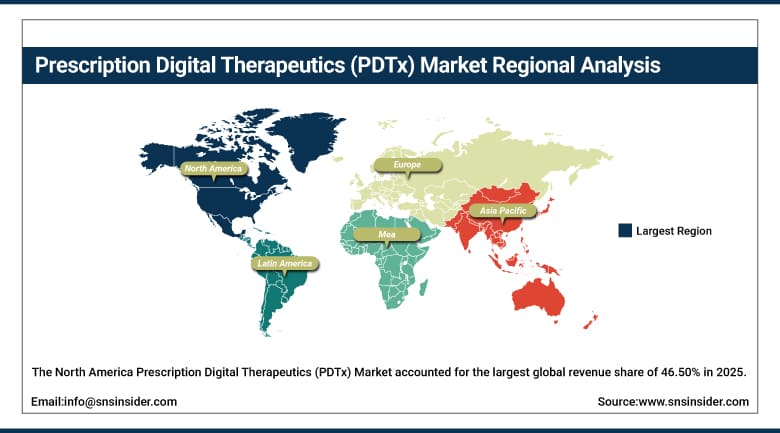
The North America Prescription Digital Therapeutics (PDTx) Market accounted for the largest global revenue share of 46.50% in 2025, driven by the region's mature FDA regulatory framework for Software as a Medical Device, well-established commercial and government payer reimbursement pathways, and high physician and patient familiarity with digital health tools following years of telehealth expansion. The presence of leading prescription digital therapeutic developers, strong venture capital and pharmaceutical company investment in the sector, and growing employer adoption of digital therapeutic benefit programs continue to reinforce the region's leadership position. Expanding Medicare and Medicaid coverage discussions, alongside proposed federal legislation to create dedicated reimbursement categories for prescription digital therapeutics, are further strengthening the region's long-term commercial outlook.
The United States was the leader in the North America Prescription Digital Therapeutics (PDTx) Market in 2025, accounting for around 86.50% of the regional market. The leadership of the country can be attributed to the presence of a vast number of FDA-approved digital therapeutics, strong investment environment for digital health startups, and growing coverage by commercial payers for conditions like major depressive disorder, chronic insomnia, and substance use disorders.
⮞In September 2026, Welldoc introduced an AI-powered care platform connecting patients' daily health information with clinical care teams through personalized digital support. Designed for conditions including diabetes and obesity, the platform illustrates the growing U.S. emphasis on integrating software-driven interventions into ongoing chronic disease management.
Get Customized Report as Per Your Business Requirement - Enquiry Now
Europe Prescription Digital Therapeutics (PDTx) Market Insights
The Europe region was a major contributor to the Prescription Digital Therapeutics (PDTx) Market in 2025, supported by Germany's pioneering DiGA fast-track reimbursement framework, which has established statutory health insurance coverage for approved prescription digital therapeutics comparable to pharmaceutical drug reimbursement. This regulatory model has provided a commercial blueprint that other European countries, including France and Belgium, are progressively adapting for their own national digital therapeutic reimbursement pathways. Growing pan-European clinical evidence requirements, expanding cross-border product launches, and increasing physician training on digital therapeutic prescribing are expected to support comparatively strong growth for the region during the forecast period.
Germany accounted for 26.40% of the European Prescription Digital Therapeutics (PDTx) Market in 2025, owing to its established DiGA reimbursement pathway, which has already listed dozens of approved prescription digital therapeutics for conditions ranging from insomnia to anxiety and chronic pain. Other countries such as France, the Netherlands, and the United Kingdom are contributing to regional growth through expanding national digital health strategies and growing NHS and statutory insurer interest in commissioning clinically validated software-based treatment programs. Continued regulatory harmonization efforts across the European Union are expected to further streamline market entry for prescription digital therapeutic developers seeking multi-country commercialization.
⮞In April 2026, Germany's National Association of Statutory Health Insurance Funds reported approximately 1.6 million uses of prescribed or insurer-approved digital health applications under the DiGA framework between September 2020 and December 2025. Utilization increased by 63% compared with the preceding year, demonstrating growing integration of reimbursed digital therapeutics into routine healthcare.
Asia Pacific Prescription Digital Therapeutics (PDTx) Market Insights
The Asia Pacific Prescription Digital Therapeutics (PDTx) Market will be experiencing the highest growth at a projected CAGR of 24.30% during the forecast period of 2026-2035. The major factors contributing to such growth include an advanced regulatory and approval pathway for software-based medical devices in Japan, increasing digital health investment landscape in China, and extensive governmental initiatives in the region promoting telemedicine and digital infrastructure development for managing chronic conditions. Besides, an increase in the number of smartphone owners and internet users, awareness of the burden of mental disorders and chronic diseases, and growing interests of regional pharmaceutical companies in collaboration with local tech companies on prescription digital therapeutics are adding fuel to market expansion.
Among countries in the region, Japan can be mentioned as the major contributor to the rapid expansion of the market in question, holding 32.50% of the total regional market share in 2025. Such high market share is determined by the well-developed regulatory and reimbursement system for prescription digital therapeutics which includes products approved by PMDA including applications developed by CureApp for managing hypertension and quitting smoking. China and South Korea also contribute to the growth of the regional market through the development of their own domestic regulatory framework for digital health and increased government investment into infrastructure for the software-based treatment of chronic disorders and mental disorders.
⮞In September 2025, Japan's CureApp commercially introduced its prescription digital therapeutic for alcohol dependence, with reimbursement under the country's public health insurance system. The launch broadened Japan's regulated therapeutic-app portfolio beyond previously approved treatments for smoking cessation and hypertension.
Middle East & Africa and Latin America Prescription Digital Therapeutics (PDTx) Market Insights
Middle East & Africa and Latin American regions are gradually expanding prescription digital therapeutic adoption as digital health infrastructure investment grows across both regions, supported by increasing government focus on telemedicine expansion, rising chronic disease burden, and growing private insurer interest in covering clinically validated software-based treatment programs as an alternative to costlier in-person specialist care.
Brazil is set to be a prominent Latin American market, holding a 36.90% share within the region in 2025, fueled by its expanding digital health regulatory framework and growing private insurer coverage of validated telehealth and digital therapeutic products for mental health and chronic disease management. The Middle East & Africa region has the UAE and Saudi Arabia investing in advanced digital health infrastructure and national health transformation strategies that are gradually increasing government and private payer interest in prescription digital therapeutics across mental health, diabetes, and cardiovascular disease management programs.
Market Dynamics:
Growth Drivers: Expanding FDA authorizations and payer reimbursement pathways driving market growth
The increase in FDA and worldwide approval of prescription digital therapeutics in fields like mental disorders, chronic pain, substance use disorders, and metabolic diseases, along with the increased inclination by insurers to cover clinically-proven software solutions, is one of the significant drivers of the Prescription Digital Therapeutics (PDTx) Market. Prescription digital therapeutics act as a scalable and evidence-based solution to conventional pharmaceutical therapies through the provision of structured cognitive-behavioral therapy, biofeedback, and medication adherence tracking. They enhance patient outcomes and decrease dependence on medications only through the treatment of various chronic and behavioral health diseases.
Technological advancements in mobile health, artificial intelligence-driven personalization, and immersive VR-based therapeutic delivery have significantly improved patient engagement and clinical efficacy across commercial prescription digital therapeutic products. Rising physician familiarity with digital therapeutic prescribing following growing continuing medical education efforts, expanding electronic health record integration enabling in-workflow prescribing, and increasing pharmaceutical company investment in companion digital therapeutic development to support drug adherence and real-world outcome tracking are further supporting demand across the forecast period, as prescription digital therapeutics continue transitioning from pilot programs to established components of mainstream chronic disease and behavioral health treatment pathways.
⮞In April 2025, the FDA granted De Novo marketing authorization to Click Therapeutics' CT-132 for the preventive treatment of episodic migraine in adults. The prescription digital therapeutic is intended for adjunctive use alongside other migraine treatments, providing another indication-specific regulatory precedent for software-based therapies.
Restraints: Reimbursement fragmentation and commercialization challenges limiting market expansion
Fragmentation of the reimbursement environment for prescription digital therapeutics remains one of the challenges that affect the market's development. There is a lot of commercial risk for manufacturers. In contrast to conventional drugs, there are no special billing codes used for prescription digital therapeutics in typical pharmacy and medical benefit programs. Consequently, the manufacturers have to establish contracts with payers individually. It has always been a time- and resource-intensive procedure. The experiences of Pear Therapeutics and Better Therapeutics proved that these challenges are difficult to overcome.
Moreover, physicians generally exhibit limited awareness of digital therapies relative to conventional drugs, which makes physician education efforts necessary. The patient adherence and engagement rates in relation to app or VR-based treatment are also relatively lower, creating uncertainties regarding the efficacy of such prescription digital therapeutics in practice. In addition, the expenses associated with running costly clinical trials and obtaining FDA clearance, along with the lengthy time frame necessary to obtain payer coverage following the release of the medicine, make it challenging for smaller prescription digital therapeutics developers to maintain their financial sustainability.
Opportunities: GLP-1 integration and expanding payer partnerships creating new growth avenues
The growing integration of prescription digital therapeutics with GLP-1 receptor agonist and other chronic disease pharmacological regimens, combined with rising pharmaceutical company interest in co-developing companion digital therapeutic products to differentiate drug offerings and improve real-world adherence data, will provide substantial growth opportunities in the Prescription Digital Therapeutics (PDTx) Market. Expanding value-based payer contracting models that tie digital therapeutic reimbursement to demonstrated reductions in total cost of chronic disease care are creating clearer commercial pathways for developers able to generate compelling real-world outcome evidence.
There are immense opportunities for digital therapeutics benefit plans provided by employers and health plans, particularly in the fields of mental disorders, diabetes, and substance use disorder. Companies are realizing that it makes sense to invest in such initiatives that would help them save money and improve their efficiency. In the future, as the pathway for digital therapeutics continues to evolve in new Asian Pacific and Latin American regions, along with the increased funding for digital health infrastructure from governments, there will be more need for prescription digital therapeutics.
⮞In January 2026, Ultrahuman partnered with Click Therapeutics to develop Migraine PowerPlug, a biomarker-informed digital migraine management feature incorporating technology from Click's FDA-authorized platform. The collaboration demonstrates emerging opportunities to combine regulated therapeutic software technologies with wearable-generated health information.
Recent Developments:
-
In August 2025, Boehringer Ingelheim and Click Therapeutics announced that the pivotal Phase III CONVOKE study of investigational CT-155 met its primary endpoint for reducing the experiential negative symptoms of schizophrenia. The study evaluated the software as an adjunct to standard antipsychotic therapy.
-
In December 2025, CureApp launched DTx-BASE, a support platform for companies developing prescription digital therapeutics and software-based medical devices. The initiative covers development, regulatory approval, reimbursement preparation and commercialization, addressing operational barriers to bringing digital treatments into clinical practice.
-
In April 2026, Boehringer Ingelheim announced a USD 50 million Series D investment in Click Therapeutics, alongside dedicated commercialization funding for CT-155. The agreement transferred product and commercialization responsibility to Click Therapeutics, strengthening financial support for the prescription digital therapeutic ahead of broader market access.
-
In July 2026, France established reimbursement arrangements under its PECAN early-access pathway for the POPPINS CLINICAL digital therapeutic. The framework specified an initial reimbursement amount of EUR 435 and subsequent monthly payments, illustrating the development of defined payment mechanisms for eligible therapeutic digital medical devices.
Prescription Digital Therapeutics (PDTx) Market Key Players are:
-
Big Health, Inc.
-
Nox Health Corporation
-
Welldoc, Inc.
-
Aptar Digital Health (Voluntis)
-
AppliedVR, Inc.
-
Theranica Bio-Electronics Ltd.
-
Freespira, Inc.
-
NightWare, Inc.
-
Luminopia, Inc.
-
PursueCare, Inc.
-
MindMaze S.A.
-
Renovia, Inc.
-
Qompium NV
-
HeartBeam, Inc.
-
Nuvo Group Ltd.
-
DarioHealth Corp.
-
Omada Health, Inc.
Prescription Digital Therapeutics (PDTx) Market Report Scope:
| Report Attributes | Details |
|---|---|
| Market Size in 2025 | USD 5.12 Billion |
| Market Size by 2035 | USD 31.02 Billion |
| CAGR | CAGR of 19.70% From 2026 to 2035 |
| Base Year | 2025 |
| Forecast Period | 2026-2035 |
| Historical Data | 2022-2024 |
| Report Scope & Coverage | Market Size, Segments Analysis, Competitive Landscape, Regional Analysis, DROC & SWOT Analysis, Forecast Outlook |
| Key Segments | • By Therapeutic Area (Mental Health & Behavioral Disorders, CNS & Neurological Disorders, Diabetes & Metabolic Disorders, Substance Use Disorders, Chronic Pain Management, Cardiovascular & Respiratory Disorders) • By Platform (Mobile/Smartphone Application-Based, Web/Cloud-Based, VR/AR-Based, Wearable-Integrated) • By End User (Patients/Home Care Settings, Hospitals & Specialty Clinics, Payers & Employers) • By Distribution Channel (Provider-Prescribed (Clinical Channel), Direct-to-Patient (DTC), Payer/Employer-Sponsored Programs) |
| Regional Analysis/Coverage | North America (US, Canada, Mexico), Europe (Eastern Europe [Poland, Romania, Hungary, Turkey, Rest of Eastern Europe] Western Europe] Germany, France, UK, Italy, Spain, Netherlands, Switzerland, Austria, Rest of Western Europe]), Asia Pacific (China, India, Japan, South Korea, Vietnam, Singapore, Australia, Rest of Asia Pacific), Middle East & Africa (Middle East [UAE, Egypt, Saudi Arabia, Qatar, Rest of Middle East], Africa [Nigeria, South Africa, Rest of Africa], Latin America (Brazil, Argentina, Colombia, Rest of Latin America) |
| Company Profiles | Otsuka Pharmaceutical Co., Ltd., Click Therapeutics, Inc., Akili Interactive Labs, Inc., Big Health, Inc., Nox Health Corporation, Welldoc, Inc., Aptar Digital Health (Voluntis), AppliedVR, Inc., Theranica Bio-Electronics Ltd., Freespira, Inc., NightWare, Inc., Luminopia, Inc., PursueCare, Inc., MindMaze S.A., Renovia, Inc., Qompium NV, HeartBeam, Inc., Nuvo Group Ltd., DarioHealth Corp., Omada Health, Inc. |

Frequently Asked Questions
Key players include Otsuka Pharmaceutical Co., Ltd., Click Therapeutics, Inc., Akili Interactive Labs, Inc., Big Health, Inc., and Nox Health Corporation, among others.
Key opportunities include GLP-1 integration, expanding payer partnerships, employer-sponsored digital therapeutic programs, and growth of regulatory and reimbursement pathways across emerging markets.
The market is driven by expanding FDA and international regulatory authorizations, growing payer reimbursement, increasing physician confidence, and rising adoption of software-based treatments for mental health and chronic diseases.
The Mental Health & Behavioral Disorders segment dominated the Prescription Digital Therapeutics (PDTx) Market, accounting for approximately 27.60% market share in 2025.
North America dominated the Prescription Digital Therapeutics (PDTx) Market in 2025 with a 46.50% share, driven by mature regulatory pathways, payer reimbursement, strong digital health investment, and high adoption of prescription digital therapeutics.
