
Amyotrophic Lateral Sclerosis Therapeutics Market Report Scope & Overview:
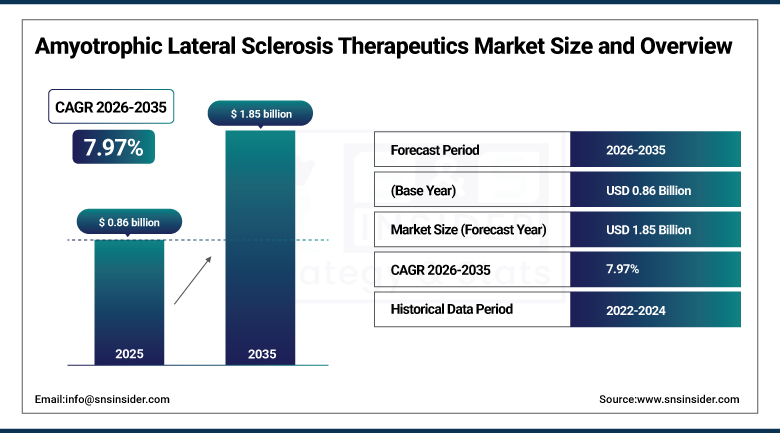
The Amyotrophic Lateral Sclerosis Therapeutics Market was valued at USD 0.86 Billion in 2025 and is projected to reach USD 1.85 Billion by 2035, expanding at a CAGR of 7.97% during the forecast period 2026–2035.
The global market of ALS therapeutic drugs is experiencing sustained growth due to the rise in disease awareness, advances in neurological diagnostics, increased availability of disease modifying drugs, and investment in rare neurological disorders research. Amyotrophic lateral sclerosis continues being a progressive neurodegenerative disorder caused by damage to motor neurons, leading to gradual muscle weakness and dysfunction. Rising prevalence of ALS in elderly populations, progress in early diagnosis through genetic screening and biomarker discovery, and growing demand for ALS therapies capable of slowing down the progression of the disorder are driving the market growth.
There is a shift in market dynamics from conventional symptom management towards more advanced disease modifying and precision medicine solutions. Increased activities of research and development in gene therapy, RNA-targeting, and molecular pathways responsible for ALS mutations have resulted in promising business opportunities for pharmaceutical companies. New therapies that are aimed at treating specific mutations like the SOD1 mutation and the evolution of antisense oligonucleotides are most likely going to shape the future approach for treatment. Moreover, there are many more collaborations emerging between biotech companies, academics, and medical practitioners that are contributing to the drug pipeline of ALS therapy.
Market Size and Forecast
-
Market Size 2026E: USD 0.93 Billion
-
Market Size 2035: USD 1.85 Billion
-
CAGR: 7.97% from 2026 to 2035
-
Fastest Growing Region: Asia Pacific
-
Largest Region: North America
To Get more information Amyotrophic Lateral Sclerosis Therapeutics Market - Request Free Sample Report
Amyotrophic Lateral Sclerosis Therapeutics Market Trends
-
Increasing adoption of disease-modifying ALS therapies globally.
-
Rising investment in gene and RNA-based treatment development.
-
Growing use of precision medicine approaches in ALS management.
-
Expansion of multidisciplinary neurology specialty care centers.
-
Increasing clinical research activity for rare neurological disorders.
The U.S. Amyotrophic Lateral Sclerosis Therapeutics Market Size Outlook
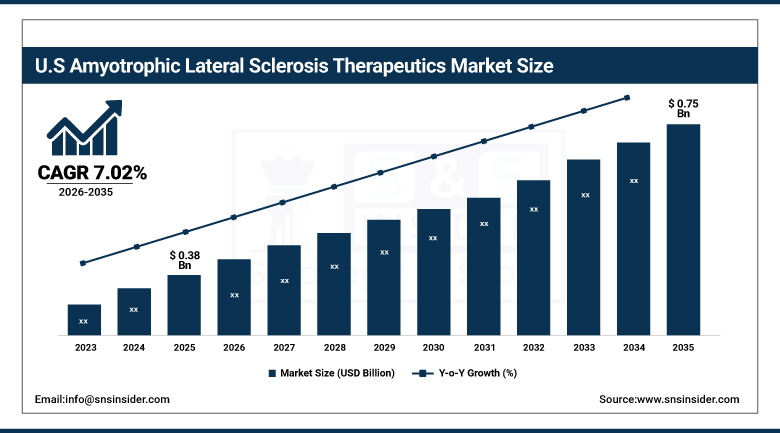
The U.S. Amyotrophic Lateral Sclerosis Therapeutics Market was valued at USD 0.38 billion in 2025 and is expected to reach approximately USD 0.75 billion by 2035, expanding at a CAGR of 7.02% during 2026–2035.
The U.S. leads the North American market for ALS therapeutics because of its well-established neurological healthcare infrastructure, high density of biotech companies, rich clinical trials network, and supportive regulatory landscape for developing drugs for rare diseases. In addition to a rising adoption of approved ALS treatments, the region has been recording a higher uptake of disease-modifying therapies and ALS treatment centers. Rising expenditures on health care, robust reimbursement systems, and heightened awareness campaigns carried out by patient advocacy groups are driving treatment availability in the region.
In addition, the U.S. ALS market is enjoying substantial investments in precision medicine, genetic studies, and therapeutic platforms to stop disease progression. In 2025, the U.S. ALS research landscape kept growing because of rising investments in genetic ALS therapies, biomarker identification, and clinical trial activities. The National Institutes of Health (NIH) has been funding neurodegenerative disease research programs designed to explore the disease pathology and develop effective therapeutics.
Amyotrophic Lateral Sclerosis Therapeutics Market Segmentation Analysis
-
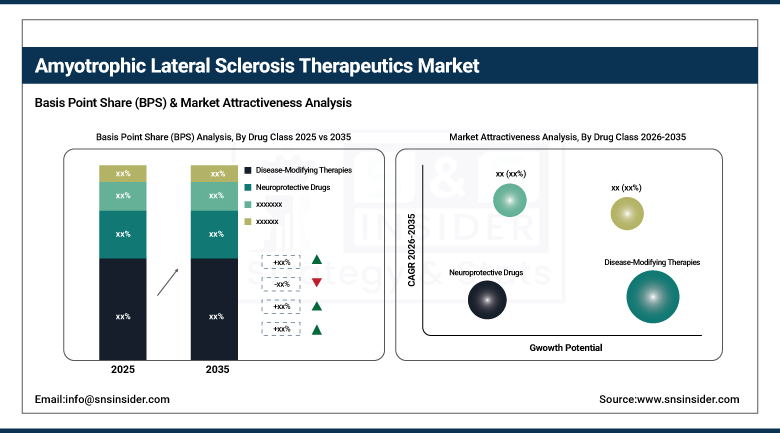
By Drug Class, disease-modifying therapies dominated the market with 34.00% share in 2025, while gene & RNA therapies are projected to witness the fastest growth with 18.67% CAGR during the forecast period.
-
By Disease Type, sporadic ALS dominated the market with 87.00% share in 2025, while familial ALS is projected to witness the fastest growth with 10.21% CAGR during the forecast period.
-
By Route of Administration, oral therapies dominated the market with 44.00% share in 2025, while intrathecal administration is projected to witness the fastest growth with 14.46% CAGR during the forecast period.
-
By End User, hospitals dominated the market with 46.00% share in 2025, while retail & specialty pharmacies are projected to witness the fastest growth with 14.46% CAGR during the forecast period.
By Drug Class, disease-modifying therapies dominated, while gene & RNA therapies grows fastest.
Disease-Modifying Therapies occupied the most significant market share of 34.00% in 2025 due to growing clinical acceptance of disease-modifying therapies approved for use in slowing down disease progression and maintaining neural functions. These treatments are crucial as medical practitioners are trying to focus on treatments that will not only treat symptoms but slow down the disease progression. Growing awareness of the disease, treatment protocol and accurate diagnosis of the condition in healthcare markets are driving the need for disease-modifying therapies. Pharmaceutical companies are investing heavily in the development of next-generation disease-modifying therapies.
Gene and RNA therapies are projected to show the fastest growth rate of 18.67% during 2026-2035 due to high adoption of personalized medicines and developments in genetics. With the developments made in genetics associated with ALS, researchers are now increasingly paying attention to the genetic factors responsible for ALS, particularly those associated with the development of ALS in families. With the introduction of antisense oligonucleotide treatment, RNA treatments, and other treatment methods based on genes, future treatment methodologies associated with ALS are projected to take shape.
By Disease Type, sporadic ALS dominated, while familial ALS grows fastest.
Sporadic ALS held the largest revenue share of 87.00% in 2025 due to its high prevalence rate among the total diagnosed cases of ALS across the globe. Sporadic ALS held dominance over other segments mainly due to higher incidence of sporadic ALS cases in comparison to familial ALS cases. Most cases are detected in the absence of any history of family members being affected with ALS or any genetic causes identified in the patient. There is increasing recognition of the disease, improvement in diagnosis through neurology along with opening of ALS clinics to cater to an increasing number of sporadic ALS cases around the world.
Familial ALS was anticipated to exhibit the highest CAGR of 10.21% during the forecast period from 2026 to 2035 mainly due to advancements in molecular diagnostics and genetic testing along with development of therapies specific for inherited ALS mutation. Even though familial ALS holds a smaller patient population than sporadic ALS, there are increasing identifications of genetic mutation such as SOD1 and C9orf72 in familial ALS patients. Increasing use of genetic counseling, next generation sequencing technology and development of specific therapies for mutations in familial ALS patients is driving the growth of the segment.
By Route of Administration, oral therapies dominated, while intrathecal administration grows fastest.
Oral administration therapies held a significant market share of 44.00% in the global ALS therapeutics market in 2025 owing to ease of administration, patient convenience, clinical use, and the familiarity of physicians. Oral drugs have always been a popular choice because of the simplicity of administration and improvement in treatment adherence, especially in cases where there is a need for long-term disease management. This market segment thrives on easy access, lower administration cost when compared to infusion therapy, and simpler outpatient application. Considering that ALS treatments are moving towards a patient-centered approach, oral therapies are projected to
Intrathecal administration is expected to be the fastest growing at a CAGR of 14.46% during the forecast period 2026 to 2035 fueled by increased usage of targeted drug delivery systems and the growing number of therapies that require access to the central nervous system. The advantage of intrathecal delivery is that it enables direct delivery of drugs to cerebrospinal fluid. This market segment will benefit greatly from technological innovations in gene and RNA-based therapeutic solutions as well as the increase in research activities using antisense oligonucleotide and molecular therapies.
Regional Analysis
|
Region |
Major Country |
Share within Region, 2025 (%) |
|---|---|---|
|
North America |
United States |
94.00% |
|
Europe |
Germany |
29.00% |
|
Asia Pacific |
China |
17.00% |
|
Middle East & Africa |
UAE |
4.00% |
|
Latin America |
Brazil |
3.00% |
North America Amyotrophic Lateral Sclerosis Therapeutics Market Insights
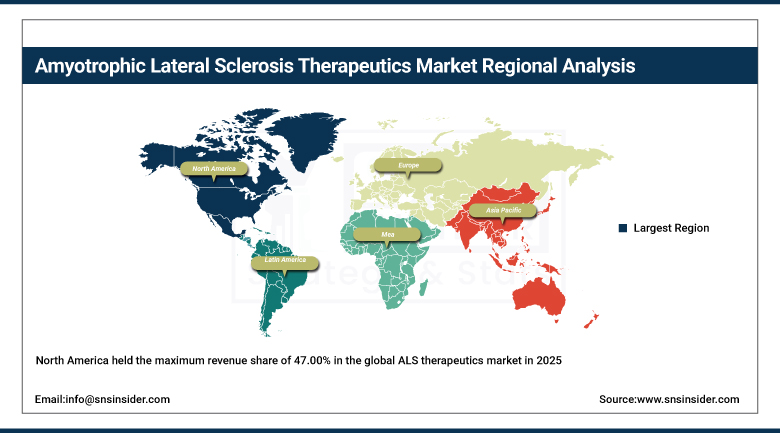
North America held the maximum revenue share of 47.00% in the global ALS therapeutics market in 2025 owing to the highly advanced neurological health care infrastructure, robust pharmaceutical innovation capacities, and higher adoption rates of specialty neurological therapies. This region is characterized by well-developed ALS therapeutic infrastructure, high level of clinical research activities, and substantial funding from governments and institutions for neurodegenerative disease research. In the region, the United States accounted for the major share of revenues with a share of 94.00% in North America in 2025.
The area is positioned in a dominant manner due to the presence of top biotechnology companies and a robust clinical trial infrastructure and orphan drug regulatory pathway. Investments made in the fields of gene therapy, RNA-based drugs, and biomarker-led ALS treatments are contributing to many opportunities in the region. In 2025, the ALS research companies based in the U.S. continued making investments in precision medicine, clinical trials, and biomarker research.
Get Customized Report as per Your Business Requirement - Enquiry Now
Europe Amyotrophic Lateral Sclerosis Therapeutics Market Insights
Europe has been propelled by its advanced healthcare infrastructure, rising uptake of neurology treatments, and robust research capacities for rare diseases. Europe comprises some of the main contributors in the market owing to their well-established neurology infrastructure and rising investments in cutting-edge therapies. The market is driven by the presence of favorable regulations for orphan drugs, rising collaboration within clinical research, and growing utilization of precision medicine. The European healthcare providers are becoming increasingly interested in reducing the time for diagnosing ALS, accessing specialist centers for treatment, and adopting multi-disciplinary models. Pharmaceutical firms are increasingly making investments in gene therapies and RNA technology in order to grow in the future.
Asia Pacific Amyotrophic Lateral Sclerosis Therapeutics Market Insights
Asia-Pacific is expected to grow at the highest CAGR of 11.76% during 2026–2035. The factors contributing to the growth include an improvement in healthcare infrastructure related to neurology, rise in awareness about rare diseases, increase in expenditure on healthcare, and development of advanced technology used for diagnostics. Several countries including China, Japan, South Korea, and India have shown considerable interest in neurological and biotechnology sectors.
The market is expected to witness growth opportunities owing to the improvement in capabilities for conducting clinical research, increasing government interest in treating rare diseases, and advancement in genetic testing technology. Improvement in biotechnology ecosystem and cooperation among global pharma companies and research institutes in the region is boosting therapeutic research for ALS. In 2025, the biotech companies in Asia-Pacific region were expanding their partnerships related to genetic neurological diseases.
Middle East & Africa and Latin America Amyotrophic Lateral Sclerosis Therapeutics Market Insights
Middle East & Africa & Latin America both these markets are anticipated to exhibit steady growth owing to improvements in the healthcare infrastructure, increased awareness about neurological diseases, and provision of more specialized treatment facilities. Middle East & Africa development in healthcare infrastructure, specialty clinics and diagnostics for ALS have been observed in the Middle East & Africa region. The countries in the region, like UAE and Saudi Arabia, have started paying attention towards health care modernization and disease management programs.
Latin America improved healthcare access, physicians' awareness, and use of specialized pharmaceuticals distribution channels have been witnessed in Latin America region. Brazil, Mexico and Argentina have emerged as the key markets in the region owing to improved neurological healthcare infrastructure and initiatives for patient access.
Growth Drivers: Rising adoption of disease modifying and precision ALS therapies.
Increasing adoption of disease modifying therapies and innovative precision treatment strategies can be viewed as one of the main drivers behind the expansion of the ALS Therapeutics Market. Contemporary ALS therapeutics are different from traditional symptomatic treatment options in their ability to slow disease progression, target specific molecular mechanisms and prolong patient life expectancy. The rising number of studies related to the role of SOD1 and other mutation-related pathways in the development of ALS have contributed to research activities directed at development of targeted therapy options, RNA-based medicines, and gene modifying drugs.
The rising availability of special ALS treatment centers, improvements in the diagnostics process and growing number of genetic testing procedures are expected to contribute to market growth. The healthcare professionals are paying more attention to the timely diagnosis and personalized therapy plans in order to increase the efficiency of treatment. Pharmaceutical companies are also making more investments in developing treatment options for rare neurological diseases, which is driven by both regulatory incentives and commercial potential of these medications.
Restraints: High cost of treatments and low accessibility.
One of the most important challenges that is related to the high costs of ALS treatments is a serious impediment to penetrating the broad market with innovative drugs, primarily due to high costs of therapy in less developed healthcare markets. Development of innovative neurological therapy options like gene therapy, RNA therapy, and other biologics involves substantial R&D expenses, complicated production processes, and special delivery mechanisms, which makes it more expensive.
Also, ALS treatment implies long-term multidisciplinary therapy with the help of neurologists, pulmonologists, rehabilitation therapists, and other healthcare services, which increases the financial burden for both patients and healthcare organizations. Poor understanding of the disease, late diagnosis, and the lack of specialized ALS centers in emerging countries may have an influence on the accessibility of ALS treatments.
Opportunities: Growth in precision medicine and ALS therapeutic pipeline developments.
The increasing emphasis on precision medicine offers many opportunities to firms working in the ALS therapeutics market space. With improvements in genetic testing and molecular diagnostics, researchers can now discover patient-specific disease mechanisms and tailor treatment options based on individual genetic profiles. The change in approach from broad therapy to personalized medicine is likely to create many commercial opportunities for firms dealing in pharmaceuticals and biotechnology.
The increasing developments of gene-based therapies, RNA-based therapies, and other molecular interventions offer many growth opportunities. FAMILIAL ALS, although being a niche market, is an area that is attracting attention due to the availability of genetic targets and increased clinical trials. Likewise, technological advancements such as drug discovery using artificial intelligence and biomarker analysis have enhanced the development of ALS therapies.
Recent Developments
-
2026: Biogen continued advancing neurological disease research programs, including initiatives focused on genetic and biomarker-based approaches for neurodegenerative disorders.
-
2025: Amylyx Pharmaceuticals continued research activities focused on ALS and neurodegenerative disease therapeutics, supporting innovation in disease-modifying treatment approaches.
-
2025: Mitsubishi Tanabe Pharma continued strengthening its neurological disease portfolio, including edaravone-based ALS treatment development and commercialization activities.
-
2026: The National Institutes of Health (NIH) continued supporting ALS research initiatives through investments in neurodegenerative disease studies, biomarker discovery, and therapeutic development programs.
Amyotrophic Lateral Sclerosis Therapeutics Market Key Players are:
-
Ionis Pharmaceuticals, Inc.
-
Amylyx Pharmaceuticals, Inc.
-
Denali Therapeutics Inc.
-
F. Hoffmann-La Roche Ltd.
-
Cytokinetics, Inc.
-
Apellis Pharmaceuticals, Inc.
-
BrainStorm Cell Therapeutics Inc.
-
AbbVie Inc.
-
ITF Pharma, Inc.
-
Eli Lilly and Company
-
Merck & Co., Inc.
-
Novartis AG
-
QurAlis Corporation
-
Clene Nanomedicine, Inc.
-
MediciNova, Inc.
-
GSK plc
-
NeuroSense Therapeutics Ltd.
Amyotrophic Lateral Sclerosis Therapeutics Market Report Scope:
| Report Attributes | Details |
|---|---|
| Market Size in 2025 | USD 0.86 Billion |
| Market Size by 2035 | USD 1.85 Billion |
| CAGR | CAGR of 7.97% From 2026 to 2035 |
| Base Year | 2025 |
| Forecast Period | 2026-2035 |
| Historical Data | 2022-2024 |
| Report Scope & Coverage | Market Size, Segments Analysis, Competitive Landscape, Regional Analysis, DROC & SWOT Analysis, Forecast Outlook |
| Key Segments | • By Drug Class (Disease-Modifying Therapies, Neuroprotective Drugs, Gene & RNA Therapies, Symptomatic Therapies, Others) • By Disease Type (Sporadic ALS, Familial ALS) • By Route of Administration (Oral, Intravenous Infusion, Intrathecal Administration, Subcutaneous Injection, Others) • By End User (Hospitals, Neurology Specialty Clinics, Retail & Specialty Pharmacies, Academic & Research Institutes, Others) |
| Regional Analysis/Coverage | North America (US, Canada), Europe (Germany, UK, France, Italy, Spain, Russia, Poland, Rest of Europe), Asia Pacific (China, India, Japan, South Korea, Australia, ASEAN Countries, Rest of Asia Pacific), Middle East & Africa (UAE, Saudi Arabia, Qatar, South Africa, Rest of Middle East & Africa), Latin America (Brazil, Argentina, Mexico, Colombia, Rest of Latin America). |
| Company Profiles | Biogen Inc., Ionis Pharmaceuticals, Inc., Mitsubishi Tanabe Pharma Corporation, Amylyx Pharmaceuticals, Inc., Sanofi, Denali Therapeutics Inc., F. Hoffmann-La Roche Ltd., Cytokinetics, Inc., Apellis Pharmaceuticals, Inc., BrainStorm Cell Therapeutics Inc., AbbVie Inc., ITF Pharma, Inc., Eli Lilly and Company, Merck & Co., Inc., Novartis AG, QurAlis Corporation, Clene Nanomedicine, Inc., MediciNova, Inc., GSK plc, NeuroSense Therapeutics Ltd. |
Frequently Asked Questions
The Amyotrophic Lateral Sclerosis (ALS) Therapeutics Market was valued at USD 1.08 Billion in 2025.
The market is projected to reach USD 1.85 Billion by 2035.
The market is expected to expand at a CAGR of 7.97% during 2026–2035.
Disease-Modifying Therapies accounted for the largest revenue share with 34.00% in 2025.
