
Digital Therapeutics for Chronic Pain Management Market Report Scope & Overview:
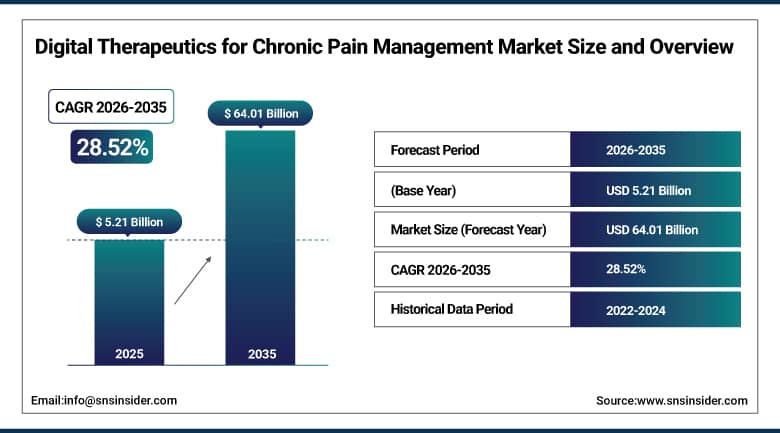
The Digital Therapeutics for Chronic Pain Management Market was valued at USD 5.21 Billion in 2025 and is projected to reach USD 64.01 Billion by 2035, expanding at a CAGR of 28.52% during the forecast period 2026–2035.
Commercialization is taking place at a fast pace within the market with healthcare organizations increasingly using software-based evidence-driven interventions for enhancing chronic pain management without reliance on opioid medicines. Digital therapeutics have been advancing from traditional health apps by incorporating artificial intelligence, behavioral therapy, wearable technologies, and real-time monitoring of patients as part of clinically supported treatment platforms. The use of digital pain management technology by healthcare organizations to provide treatment adherence, better patient outcomes, and reduced costs of healthcare through continuous remote care has been growing as a result of growing regulatory approvals for prescribing prescription digital therapeutics, initiatives for reimbursement and infrastructure development in the digital health market space.
Commercialization picked up momentum in 2025-2026 with digital health players developing AI-enabled platforms of pain management solutions including personalized treatment pathways, patient engagement and prediction of symptoms, and cloud-based clinician dashboards. The regulatory initiatives for non-opioid chronic pain management solutions and digital health technologies are encouraging investments in the chronic pain therapeutics market environment.
To Get More Information On Digital Therapeutics for Chronic Pain Management Market - Request Free Sample Report
Digital Therapeutics for Chronic Pain Management Market Trends
-
Increasing adoption of AI-enabled digital therapeutics for chronic pain assessment and personalized treatment.
-
Rising integration of wearable-connected pain monitoring and remote patient management platforms.
-
Growing commercialization of prescription digital therapeutics as non-opioid treatment alternatives.
-
Expansion of cloud-based clinical decision support systems for continuous pain management.
-
Increasing investment in behavioral therapy platforms integrated with predictive analytics and real-time patient engagement technologies.
The U.S. Digital Therapeutics for Chronic Pain Management Market Size Outlook
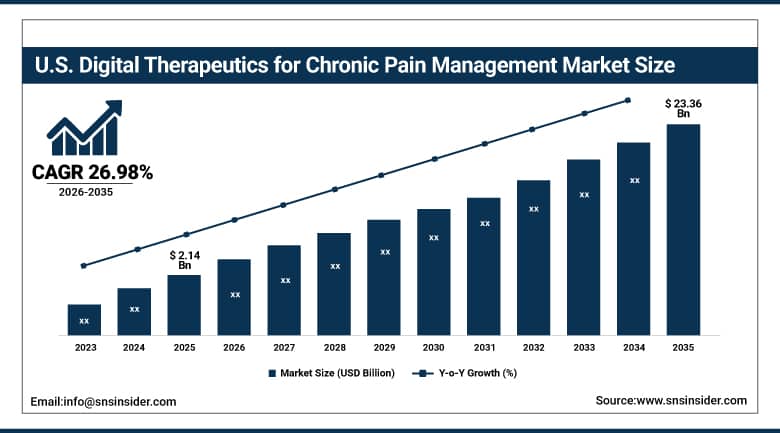
The U.S. Digital Therapeutics for Chronic Pain Management Market was valued at USD 2.14 billion in 2025 and is expected to reach approximately USD 23.36 billion by 2035, expanding at a CAGR of 26.98% during 2026–2035.
The US market remains dominant in the global market due to its superior digital health system, good reimbursement environment, high prevalence of digital therapeutics companies, and increased efforts towards addressing the dependency on opioids using scientifically backed non-medication therapies. Digital therapeutics are being used in hospitals, integrated delivery networks, employers, and insurance providers to manage chronic pain and deliver improved patient outcomes at reduced cost of healthcare provision. The rising use of AI-powered behavioral therapy, virtual physiotherapy, telehealth services, and clinician connected digital systems contributes significantly to the commercialization of the technology in the region. The increasing attention of regulators towards the innovation in digital health and non-opioid pain management is set to drive future market growth in the country.
The FDA TEMPO (Technology-Enabled Meaningful Patient Outcomes) pilot on January 2, 2026, program aims to increase access to digital health technologies for patients with chronic conditions such as musculoskeletal disorders.
Digital Therapeutics for Chronic Pain Management Market Segment Analysis
-
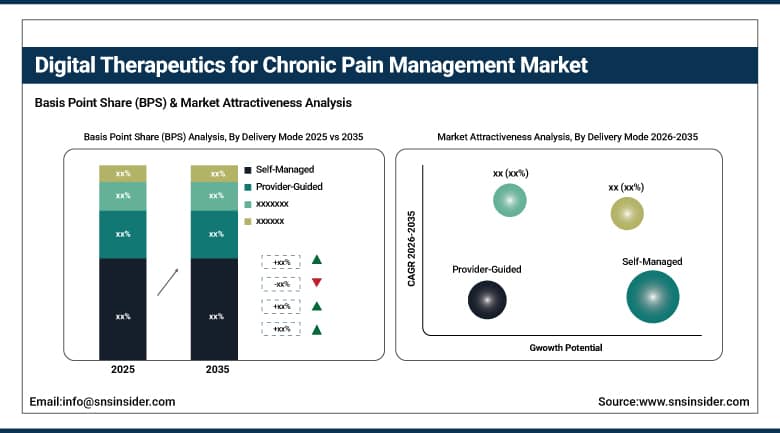
By Delivery Mode, self-managed dominated the market with 57.50% share in 2025, while provider-guided is projected to witness the fastest growth with 28.62% CAGR during the forecast period.
-
By Product Type, software-based digital therapeutics dominated the market with 48.50% share in 2025, while wearable device-integrated therapeutics are projected to witness the fastest growth with 29.69% CAGR during the forecast period.
-
By Application, musculoskeletal pain dominated the market with 38.00% share in 2025, while fibromyalgia is projected to witness the fastest growth with 29.33% CAGR during the forecast period.
-
By End User, patients dominated the market with 63.50% share in 2025, while healthcare providers are projected to witness the fastest growth with 29.40% CAGR during the forecast period.
By Delivery Mode, self-managed dominates, while provider-guided is the grows-fastest.
Self-managed therapy accounted for the biggest market share of 57.50% in 2025 owing to the growing popularity of mobile-based therapy applications among patients for chronic pain management without going to the clinic. These therapy apps having features like exercise, behavioral therapy, mindfulness, medication, and symptom tracking enable patients to be involved in the management of chronic pain without requiring regular visits to hospitals. Such aspects as high smartphone penetration, growing digitization, and increased requirement for convenient home health care drive the uptake of self-managed therapy solutions in mature and developing healthcare markets.
Provider-guided therapy is predicted to register the highest CAGR of 28.62% during the forecast period because of the growing adoption of prescription digital therapy applications in hospitals, pain specialists, physiotherapists, and healthcare organizations. By using the provider-guided therapy platforms, doctors can monitor the progress of the patients remotely, provide personalized treatments, analyze the data about patient compliance, and take preemptive action with the help of artificial intelligence-supported clinical decision making. Reimbursement, value-based care models, and prescription digital therapy recognition will greatly facilitate the adoption process. Additionally, the TEMPO initiative from FDA facilitates advancements in digital health solutions for the management of chronic diseases.
By Product Type, software-based digital therapeutics dominates, while wearable device-integrated therapeutics grows-fastest.
The software-based digital therapeutics segment had the highest market revenue share of 48.50% in 2025 because of its extensive use as the most common platform for providing clinically proven cognitive behavioral therapy (CBT), pain education, personalization of exercises, and behavioral intervention on smartphones and software. Healthcare professionals, businesses, and payers are opting more for the software-based platforms because they provide scalability, low-cost implementations, patient engagement, and clinically proven treatment options. Integrating electronic health records, AI-assisted symptom monitoring, and remote monitoring of clinicians further enhances the commercial adoption of the segment especially as healthcare facilities look for ways of managing pain without opioids, promoting patient compliance and reducing costs.
The wearable device-integrated therapeutics segment is forecasted to grow at the highest CAGR of 29.69% in 2026-2035 due to increased adoption of biosensors, neuromodulation devices using AI, wearable TENS, and continuous physiological monitoring systems. These technologies help in conducting pain evaluations, individualizing treatment options, remote monitoring, and digital biomarker production for precision pain management. The future growth will be driven by innovations in the field of AI-enabled wearables and remote therapy monitoring technologies. Real world 2025 study suggests that utilization of AI-based neuromodulation and remote monitoring technology can lead to better results for chronic pain patients.
By Application, musculoskeletal pain dominates, while fibromyalgia grows-fastest.
Revenue from the musculoskeletal pain category was the highest share of 38.00% in 2025 due to the rising incidence of chronic lower back pain, osteoarthritis, neck pain, and occupational musculoskeletal pain. There is an increase in the use of digital therapeutics that include exercise therapy, behavioral intervention, artificial intelligence-based movement analysis, and remote physiotherapy to help in improving the functional outcomes. Organizations are using such digital therapeutics in order to prevent any disability claims, increasing their workforce productivity and reducing healthcare costs. As a result, this application is the biggest contributor of revenue to the total market.
Digital therapeutics for fibromyalgia is anticipated to register the fastest growth of CAGR 29.33% during 2026–2035 due to increased focus on multidisciplinary digital therapies for managing chronic pain, fatigue, sleep disorders, and associated psychological symptoms at the same time. The applications of AI behavioral therapy, digital cognitive behavioral therapy, exercise programs, and patient engagement platforms for the treatment of fibromyalgia have become more clinically valuable over the past few years. Increasing awareness among healthcare professionals and the rising number of personalized digital therapeutics for the management of complex chronic pain conditions will fuel the market growth over the forecast period.
Regional Analysis
|
Region |
Major Country |
Share within Region, 2025 (%) |
|---|---|---|
|
North America |
United States |
89.50% |
|
Europe |
Germany |
28.00% |
|
Asia Pacific |
China |
17.00% |
|
Middle East & Africa |
UAE |
4.00% |
|
Latin America |
Brazil |
5.00% |
North America Digital Therapeutics for Chronic Pain Management Market Insights
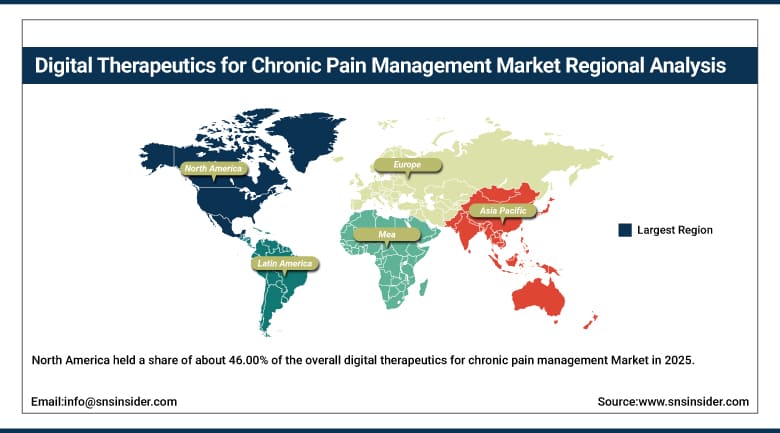
North America held a share of about 46.00% of the overall digital therapeutics for chronic pain management Market in 2025 and retained its supremacy based on the highly developed healthcare IT framework, reimbursement strength, rising usage of prescription digital therapeutics, and efforts towards opioid reduction. Digital pain management systems enabled by AI, dCBT, remote monitoring of patients, and cloud-based clinical decision support systems have been increasingly adopted by healthcare providers, payers, employers, and integrated delivery networks in chronic pain management programs. Value-based care strategies, high penetration of smartphones, and favorable regulations have increased the prospects for commercialization in the United States and Canada.
The TEMPO (Technology-Enabled Meaningful Patient Outcomes) pilot on January 2, 2026, program of the U.S. FDA extended its scope to expedite the development and assessment of digital health technology for chronic disease management, which includes chronic pain.
Get Customized Report as Per Your Business Requirement - Enquiry Now
Europe Digital Therapeutics for Chronic Pain Management Market Insights
Europe was an illustration of support in terms of increased digitalization of healthcare services, favorable regulatory environment, and greater involvement of digital therapeutics in pain management multidisciplinary initiatives. Increasing use of software-based platforms for behavioral therapy, rehabilitation using artificial intelligence, and digital treatment plans under clinician supervision for managing chronic musculoskeletal and neuropathic pain are observed in Germany, the United Kingdom, France, and Nordic countries. Healthcare spending by the government, development of telehealth services, and a focus on personalized and evidence-based healthcare continue to speed up commercialization in the area. During 2025, a number of healthcare service providers in Europe extended their digital musculoskeletal rehabilitation and pain management initiatives through the use of AI-based patient engagement platforms.
Asia Pacific Digital Therapeutics for Chronic Pain Management Market Insights
The Asia Pacific region will experience the highest growth rate with CAGR 33.03% because of the rise in investments in the digital health infrastructure, usage of smartphones, healthcare expenditure, and musculoskeletal diseases in the region involving China, Japan, India, South Korea, and other Southeast Asian nations. The investment in the technologies of AI-powered healthcare, remote patient monitoring, and digital rehabilitation is done to improve access to healthcare despite the shortage of doctors.
Awareness of non-pharmacological treatments for chronic pain and collaboration between the digital health firms and hospitals will drive commercialization in the next decade. Commercialization of AI-driven chronic pain management systems, including wearable devices, predictive analytics, multilingual coaching services, and patient engagement software, is evident among many digital health companies in the Asia Pacific region in 2026.
Middle East & Africa and Latin America Digital Therapeutics for Chronic Pain Management Market Insights
The MEA region will experience stable growth as countries will continue investing in digital health transformation, telemedicine and AI-based healthcare delivery programs. The UAE, Saudi Arabia and South Africa are expanding their smart hospitals program and introducing remote patient monitoring systems in the framework of their chronic disease management systems. Higher usage of cloud-based healthcare ecosystems, digital health strategies and investment in healthcare systems modernization will create attractive commercialization prospects for digital therapeutics vendors within the region.
The LA region supported by ongoing improvements in digitalization of healthcare systems, mobile healthcare penetration and telehealth infrastructure development in Brazil, Mexico, Argentina and Chile. Healthcare companies will deploy more often digital pain management platforms, AI-based rehabilitation applications and remote therapeutic monitoring technologies to improve access to chronic pain management in underprivileged areas. Growing smartphone adoption, health insurance penetration and digital health investments will drive further market growth within the region. During 2025-2026 several Middle Eastern healthcare systems will accelerate their digital health transformation programs based on remote patient monitoring and connected chronic disease management systems, while Latin American healthcare companies will develop telehealth-based rehabilitation services powered by digital therapeutics technologies.
Market Dynamics
Growth Drivers: Adoption of non-opioid digital therapeutics and chronic pain management using artificial intelligence (AI).
Increasingly being used to manage pain without the need to use opioids is one of the key drivers of growth in the digital therapeutics for chronic pain management market. Clinically validated digital therapeutics are increasingly being integrated into multidisciplinary pain management programs by healthcare organizations with the aim of minimizing opioid usage as well as improving the long-term health of patients. AI-driven behavior therapies, dCBT, customized rehabilitation therapies, wearable devices used for monitoring pain, and cloud-based remote patient management systems are some of the advanced technologies that have helped create a platform for continuous therapy.
Reimbursement strategies, prevalence of chronic musculoskeletal conditions, and funding for digital health infrastructure have been fueling the use of digital health solutions in hospitals, specialty pain clinics, employers, and home healthcare services. During 2025-2026, the U.S. FDA introduced the TEMPO program, which is helping develop innovative digital health solutions that will prove beneficial in the management of chronic diseases, including chronic pain.
Restraints: Inconsistent reimbursement, complex regulation, and patient engagement.
Although technology is rapidly evolving, there still exist multiple constraints that hinder the broad application of digital therapeutics for the treatment of chronic pain conditions. First, reimbursement practices vary from one healthcare system to another, which prevents healthcare providers from implementing prescription digital therapeutics into their routine work. Second, complex regulatory requirements for SaMD, cyber security compliance, EHR compatibility, and evidence generation make development more expensive for companies.
Moreover, long-term adherence of patients to treatment, lack of digital literacy, lack of awareness among doctors, and implementation in the workflow of existing healthcare providers remain significant implementation barriers in particular in emerging healthcare markets and smaller healthcare organizations due to lack of investments in digital solutions. In 2025, regulations for software-based medical products were amended to cover such aspects as cyber security, lifecycle management, and interoperability.
Opportunities: Growth in AI-enabled personal therapy and connected remote patient monitoring ecosystems.
Several significant long-term growth opportunities are associated with the fast growth of AI-enabled personalized medicine, remote therapeutic monitoring, and connected digital health ecosystems. Healthcare organizations are constantly investing in the development of predictive analytics, digital biomarkers, therapeutics that are combined with wearables, virtual rehabilitation systems, and cloud-based clinical decision support systems providing personalized chronic pain treatment. The application of generative AI, machine learning, and patient-reported outcomes facilitates the continuous improvement of the therapy and delivery of value-based care.
The growing number of collaborations between digital therapeutic vendors, pharma companies, healthcare organizations, employers, and insurance companies is expected to accelerate the commercialization and reimbursement prospects of digital pain management solutions in global healthcare ecosystems. In 2025, several healthcare technology companies have developed AI-driven musculoskeletal rehabilitation systems with wearable sensors, virtual coaching, predictive analytics, and clinician dashboards.
Recent Developments
-
2026 – AppliedVR expanded commercialization of its FDA-authorized RelieVRx virtual reality digital therapeutic by strengthening partnerships with healthcare providers and payers to improve access to non-opioid chronic lower back pain treatment across the United States.
-
2025 – Hinge Health introduced new AI-powered motion tracking and personalized care capabilities designed to enhance digital musculoskeletal rehabilitation, improve patient engagement, and optimize clinical outcomes for chronic pain management.
-
2025 – Sword Health expanded its AI Care platform by integrating advanced predictive analytics and real-time clinician support to deliver personalized digital pain management and musculoskeletal rehabilitation programs for employers and health plans.
-
2025 – Click Therapeutics continued expanding its prescription digital therapeutics pipeline through strategic collaborations focused on software-based treatments for neurological and chronic health conditions, reinforcing the broader adoption of evidence-based digital therapeutics.
Digital Therapeutics for Chronic Pain Management Market Key Players are:
-
AppliedVR Inc.
-
Hinge Health Inc.
-
Sword Health
-
Kaia Health
-
Click Therapeutics Inc.
-
Limber Health Inc.
-
BehaVR LLC
-
Fern Health
-
Vori Health
-
CogniHab
-
Kaliber Labs
-
RxWell
-
Cognalys
-
NeuroMetrix Inc.
-
Mahana Therapeutics
-
Reflexion Health
-
Axon Therapies
-
Swing Therapeutics
-
Cala Health Inc.
-
Vori Health
Digital Therapeutics for Chronic Pain Management Market Report Scope:
| Report Attributes | Details |
|---|---|
| Market Size in 2025 | USD 5.21 Billion |
| Market Size by 2035 | USD 64.01 Billion |
| CAGR | CAGR of 28.52% From 2026 to 2035 |
| Base Year | 2025 |
| Forecast Period | 2026-2035 |
| Historical Data | 2022-2024 |
| Report Scope & Coverage | Market Size Analysis, Revenue Forecasting, Segment Analysis, Competitive Landscape, Regional Analysis, Retail Automation Assessment, Smart Checkout Technology Trends, AI-Enabled Retail Infrastructure Analysis, DROC & SWOT Analysis, Investment Trends, Supply Chain Evaluation, Consumer Transaction Technology Assessment, and Future Market Opportunity EvaluationChain Evaluation, Industrial Packaging Demand Analysis, Sustainability Assessment, DROC & SWOT Analysis, Regulatory Framework Analysis, Innovation Benchmarking, and Future Market Opportunity Evaluation |
| Key Segments | • By Product Type (Software-Based Digital Therapeutics, Mobile Application Therapeutics, Wearable Device-Integrated Therapeutics) • By Delivery Mode (Self-Managed, Provider-Guided) • By Application (Neuropathic Pain, Musculoskeletal Pain, Fibromyalgia, Post-Surgical Pain) • By End User (Patients, Healthcare Providers) |
| Regional Analysis/Coverage | North America (US, Canada), Europe (Germany, UK, France, Italy, Spain, Russia, Poland, Rest of Europe), Asia Pacific (China, India, Japan, South Korea, Australia, ASEAN Countries, Rest of Asia Pacific), Middle East & Africa (UAE, Saudi Arabia, Qatar, South Africa, Rest of Middle East & Africa), Latin America (Brazil, Argentina, Mexico, Colombia, Rest of Latin America). |
| Company Profiles | AppliedVR Inc., Hinge Health Inc., Sword Health, Kaia Health, Click Therapeutics Inc., Limber Health Inc., BehaVR LLC, Fern Health, Vori Health, CogniHab, Kaliber Labs, RxWell, Cognalys, NeuroMetrix Inc., Mahana Therapeutics, Reflexion Health, Axon Therapies, Swing Therapeutics, Cala Health Inc., Vori Health |

Frequently Asked Questions
The market is expected to expand at a CAGR of 28.50% during the forecast period.
The market is projected to reach USD 64.01 Billion by 2035.
North America dominated the global market.
