
Prostate Cancer Therapeutics Market Report Scope & Overview:
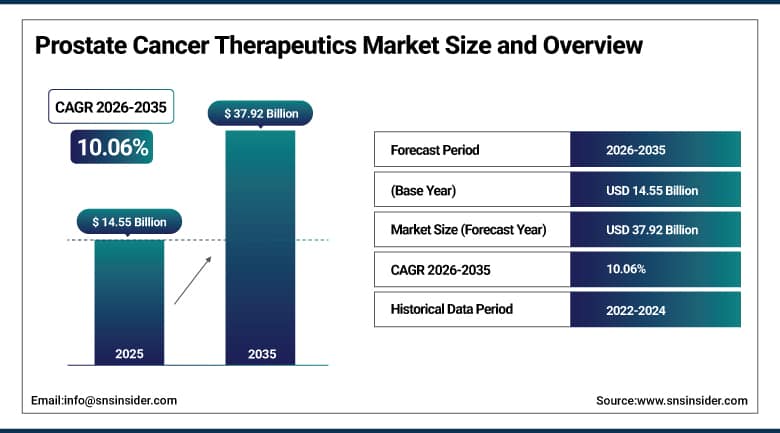
The Prostate Cancer Therapeutics Market was valued at USD 14.55 Billion in 2025 and is projected to reach USD 37.92 Billion by 2035, expanding at a CAGR of 10.06% during the forecast period 2026–2035.
The market of prostate cancer therapeutics is continuously growing owing to an increasing global incidence of prostate cancer, life expectancy of people, greater availability of PSA testing, and the launch of new and innovative precision oncology therapies. The greater use of androgen receptor pathway inhibitors, PARP inhibitors, radioligand therapy, and combination approaches has resulted in the transformation in the treatment of advanced prostate cancers, especially metastatic prostate cancer. Various pharmaceutical firms are continuously developing next-generation precision oncology therapeutics, companion diagnostics, and biomarker-based treatment modalities, which increase progression-free survival but decrease the toxicities associated with treatment.
Moreover, there are several technological advancements in the field of precision medicine, molecular diagnostics, artificial intelligence-assisted treatment plans, genomic sequencing, and theranostics imaging that also favor this market. In March 2025, the Novartis Company made an announcement about positive expansion activities of its PSMA radioligand therapy manufacturing facility in the US.
Market Size and Forecast
-
Market Size 2026E: USD 16.01 Billion
-
Market Size 2035: USD 37.92 Billion
-
CAGR: 10.06% from 2026 to 2035
-
Fastest Growing Region: Asia Pacific
-
Largest Region: North America
To Get More Information On Prostate Cancer Therapeutics Market - Request Free Sample Report
Prostate Cancer Therapeutics Market Trends
-
Increasing clinical adoption of PSMA-targeted radioligand therapy worldwide.
-
Rising utilization of PARP inhibitors for biomarker-driven prostate cancer treatment.
-
Expanding precision oncology supported by genomic and molecular diagnostics.
-
Growing combination therapy strategies improving long-term patient survival outcomes.
-
AI-assisted treatment planning enhancing personalized prostate cancer management.
The U.S. Prostate Cancer Therapeutics Market Size Outlook
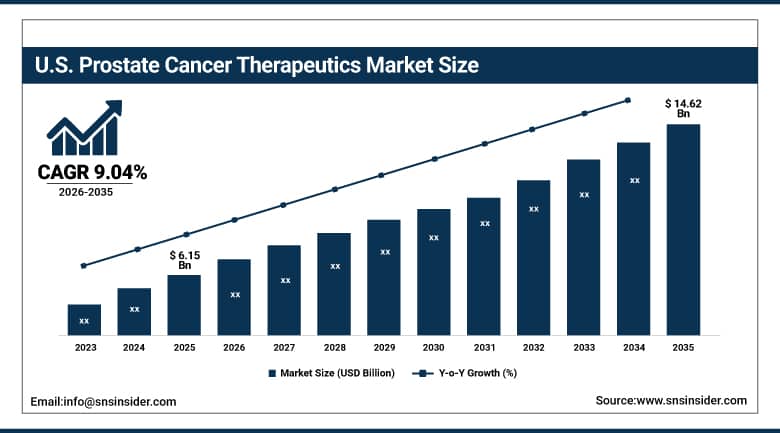
The U.S. Prostate Cancer Therapeutics Market was valued at USD 6.15 billion in 2025 and is expected to reach approximately USD 14.62 billion by 2035, expanding at a CAGR of 9.04% during 2026–2035.
The United States retains the market leadership in terms of North American prostate cancer therapeutics due to advanced oncology framework, innovative therapeutic uptake, and strong presence of major pharmaceutical companies. The rising incidence rate of prostate cancer among men above the age of 50 years, widespread PSA screenings, genome testing programs, and favorable reimbursement framework have continued to drive the uptake of hormonal therapies, targeted drugs, and radioligand therapies. Cancer treatment centers are becoming more inclined towards the use of molecular diagnostics, precision imaging, and multidisciplinary care pathways that ensure better health outcomes and support the introduction of novel therapies.
Moreover, the increasing uptake of PSMA PET imaging, artificial intelligence decision-making systems for oncology treatment, and personalized treatment protocols for the patients, based on the genomic markers, is another trend driving the U.S. prostate cancer therapeutics market. In 2025, the U.S. Food and Drug Administration has expanded indications of clinical use of PSMA-targeted imaging and therapy for the treatment of prostate cancer, which in turn will support the adoption of precision oncology.
Prostate Cancer Therapeutics Market Segmentation Analysis
-
By Therapy Class, hormonal therapy & androgen-receptor pathway inhibitors dominated the market with 40.00% share in 2025, while radioligand & radiopharmaceutical therapy is projected to witness the fastest growth with 15.35% CAGR during the forecast period.
-
By Disease Stage, metastatic castration-resistant prostate cancer dominated the market with 34.00% share in 2025, while non-metastatic castration-resistant prostate cancer is projected to witness the fastest growth with 12.81% CAGR during the forecast period.
-
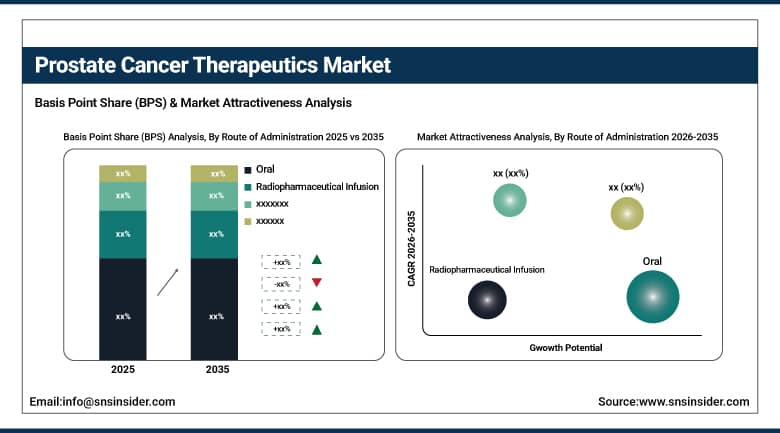
By Route of Administration, oral dominated the market with 64.00% share in 2025, while radiopharmaceutical infusion is projected to witness the fastest growth with 15.35% CAGR during the forecast period.
-
By End User, hospitals & cancer centers dominated the market with 40.00% share in 2025, while nuclear medicine & radioligand centers are projected to witness the fastest growth with 11.36% CAGR during the forecast period.
By Route of Administration, oral dominated, while radiopharmaceutical infusion grows fastest.
Oral administration accounted for 64.00% of the global market share in 2025 owing to the heavy usage of oral androgen receptor inhibitors, hormone drugs, and targeted drugs which provide improved convenience, greater compliance and fewer trips to hospitals. Physicians favor oral treatments since these help manage diseases effectively without causing any resource utilization for infusions. Further development of more efficient oral targeted agents, favorable reimbursement structure, and increasing patient preference of treating themselves at home will help maintain this segment dominance in both developed and developing countries.
Radiopharmaceutical infusion is expected to grow at a 15.35% CAGR between 2025 and 2035 on account of the rapid commercialization of PSMA-targeted radioligand therapy and expansion of dedicated nuclear medicine clinics around the world. There are considerable investments made in the healthcare system towards building the necessary infrastructure for radiopharmaceuticals, production of isotopes, and clinical personnel for providing very personalized radionuclides therapy. Adoption of a theranostic treatment modality using advanced molecular imaging and targeted delivery of therapy will result in increased utilization in the coming years. In 2025, Bayer AG continued growing their capabilities in precision oncology and radiopharmaceuticals through strategic investments for development of advanced cancer therapies utilizing radionuclides.
By Therapy Class, hormonal therapy & androgen-receptor pathway inhibitors dominated, while radioligand & radiopharmaceutical therapy grows fastest.
Androgen receptor inhibitors & hormonal therapy comprised 40.00% of the global prostate cancer therapeutics market in 2025, and continued to lead owing to their established positioning as the gold standard of care across various prostate cancer stages. The significant advancements in androgen deprivation therapy (ADT), second-generation androgen receptor inhibitors, and combination therapies have immensely benefitted the patient outcomes in terms of progression-free survival. The wide applicability, high level of physician familiarity, good reimbursement scenario, and presence in the international guidelines have further strengthened their usage. Expansion in label and use of combination therapies with chemotherapy and targeted agents continue to drive the commercial success of this segment.
The segment of radioligand & radiopharmaceutical therapy is estimated to grow with the highest CAGR of 15.35% over 2026-2035. The segment is growing tremendously owing to rapid developments in PSMA-targeted radioligands, increasing spending on the infrastructure of nuclear medicine, and growing body of evidence of their effectiveness in the management of metastatic prostate cancer. In March 2025, Novartis announced its plan of expanding its radioligand manufacturing capacity to augment the global capacity of PSMA-targeted prostate cancer therapies.
By Disease Stage, metastatic castration-resistant prostate cancer dominated, while non-metastatic castration-resistant prostate cancer grows fastest.
Metastatic castration-resistant prostate cancer (mCRPC) contributed to 34.00% of overall market share in 2025 due to high treatment burden, longer therapy period, and an increase in the use of multiple lines of treatments like androgen receptor inhibitors, chemotherapy, PARP inhibitors, immunotherapy, and radioligand therapy. Those patients with advanced disease status need multi-modal treatment options along with disease surveillance; thus, spending more money on treatment than those at other stages of the disease. Introduction of novel medicines along with evolving treatment guidelines continuously sustains the leading market share of this segment.
Non-metastatic castration-resistant prostate cancer (nmCRPC) will be experiencing the highest CAGR of 12.81% during the forecast period. Awareness about early-stage disease, availability of new imaging technology, and early intervention with next-generation androgen receptor inhibitors will fuel the market growth. Precision diagnostic tests, biomarker test, and attention of physicians to prevent metastatic progression have led to therapeutic interventions. Combination of therapies in ongoing clinical trials will enhance outcomes and help adopt more therapies among this patient group. In 2025, Johnson & Johnson provided more clinical data for advanced androgen receptor inhibitors in early prostate cancer stage, helping with better treatment options before metastatic progression.
Regional Analysis
|
Region |
Major Country |
Share within Region, 2025 (%) |
|---|---|---|
|
North America |
United States |
94.00% |
|
Europe |
Germany |
29.00% |
|
Asia Pacific |
China |
19.00% |
|
Middle East & Africa |
UAE |
4.00% |
|
Latin America |
Brazil |
3.00% |
North America Prostate Cancer Therapeutics Market Insights
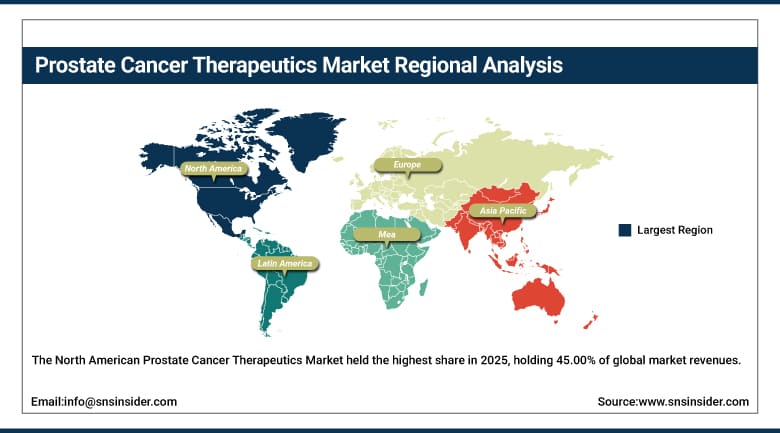
The North American Prostate Cancer Therapeutics Market held the highest share in 2025, holding 45.00% of global market revenues. North America is likely to dominate the prostate cancer therapeutics market on account of advanced oncology infrastructure, high rate of prostate cancer screening, good reimbursement scenario, and adoption of advanced therapeutics. North America has access to next generation androgen receptor inhibitors, PARP inhibitors, radioligand therapies, and advanced diagnosis techniques like PSMA PET imaging. High levels of pharmaceutical research & development, quick regulatory approvals, and availability of cancer centers of international repute will help in the commercialization of new therapies.
Investment in the field of nuclear medicine, genomic tests, and multi-disciplinary oncology treatments will help in the further growth of regional market during the forecast period. High clinical trial activity for combinations, biomarker-guided therapies, and next-generation radiopharmaceutical products is seen in the region. PSMA-targeted imaging and therapeutics have received approval through expanded approvals of FDA in 2025.
Get Customized Report as Per Your Business Requirement - Enquiry Now
Europe Prostate Cancer Therapeutics Market Insights
Europe continues to be one of the largest markets for prostate cancer treatments on account of established public health care systems, increasing precision oncology usage, and rising funding for cancer studies in countries such as Germany, France, Italy, Spain, and the UK. Heightened awareness on early detection of prostate cancer, increasing PSA testing programs, and rising reimbursement for advanced oncology drugs keep fueling market growth within the region. Increasing adoption of genomic profiling, molecular diagnostic tests, and multidisciplinary treatment planning is becoming common among European health care facilities.
Continuous expansion of nuclear medicine services and use of targeted medicines add strength to the European market position. There are also rising numbers of multinational clinical trials in the oncology segment testing new hormone treatments, PARP inhibitors, and radioligand therapies for treating advanced prostate cancer. Novartis extended manufacturing facilities for radioligand therapies in Europe in 2025 in order to increase supply and cater to growing patient demands in leading oncology centers.
Asia Pacific Prostate Cancer Therapeutics Market Insights
The fastest CAGR of 13.12% is anticipated from the Asia Pacific owing to fast improvement in healthcare infrastructure, growing awareness about cancer, improved access to advanced treatments, and healthcare spending increase in China, Japan, India, South Korea, and Australia. Aging populations and improved prostate cancer diagnosis rate have increased the demand for hormone treatment, targeted treatment, and radiopharmaceutical treatments. Governments in the region are making substantial investments in the oncology infrastructure, precision medicine program, and nuclear medicine infrastructure while promoting local innovation in the pharmaceutical sector.
Participation in international clinical trials, growing number of cancer hospitals, and growing use of molecular diagnostics are other factors that will drive the growth of the market. In 2025, Telix Pharmaceuticals extended its PSMA imaging collaboration in Asia-Pacific for improving diagnostics and future radioligand therapy use in the region.
Middle East & Africa and Latin America Prostate Cancer Therapeutics Market Insights
Market in the Middle East & Africa region is constantly expanding owing to growing investments in oncology hospitals, better cancer awareness campaigns, and modernization of the healthcare facilities infrastructure in Saudi Arabia, UAE, South Africa, and neighboring countries. There is an increase in implementation of national cancer control strategies along with access to advanced diagnostic imaging systems and new systemic treatments.
In Latin America, the market for cancer drugs is experiencing good growth rates due to growing infrastructure for oncology treatments, growing public access to healthcare facilities, and increased adoption of targeted cancer medicines in Brazil, Mexico, Argentina, and Chile. Growing availability of precision diagnostics, changes in the reimbursement system, and investments in specialized cancer care centers are boosting access to advanced therapies. In 2025, Bayer AG expanded cooperation with oncologists in Latin America and the Middle East to provide access to advanced prostate cancer treatment therapies and training programs for doctors.
Growth Drivers: Increasing acceptance of precision oncology and next-generation target therapies.
There has been considerable growth in the Prostate cancer therapeutics market owing to the increasing acceptance of Precision oncology, biomarker driven therapies and novel target therapies. The increasing use of androgen receptor pathway inhibitors, PARP inhibitors and PSMA-targeted radioligand therapy has revolutionized the treatment strategies for advanced prostate cancers through improvement in progression free survival and other favorable clinical outcomes. The advancements in genomic profiling, companion diagnostics, and molecular imaging techniques allow physicians to personalize treatments according to the biology of tumor, which helps in increasing the efficacy of treatment while reducing unnecessary exposure to treatments. The U.S. Food and Drug Administration (FDA) has allowed clinical applications of PSMA-targeted imaging technique for improving the treatment of precision prostate cancer.
Restraints: Expensive treatment and lack of advanced treatment infrastructure.
In spite of innovative therapies in the area, the industry keeps facing difficulties related to expensive advanced prostate cancer treatment and unequal distribution of healthcare infrastructure in developing areas. Advanced prostate cancer drugs like novel androgen receptor inhibitors, PARP inhibitors, radioligand therapy, genomics, and PSMA PET imaging usually include high costs of treatment which can reduce the accessibility of therapy for some people. In addition, some radiopharmaceuticals need specialized facilities to manufacture, isotope supply, radiation protection infrastructure, and nuclear medicine specialists. Novartis further extended its global production of radioligands to overcome the shortage of supply and provide access to advanced PSMA-targeting therapy for cancer patients around the world.
Opportunities: Radioligand therapy expansion, AI diagnostics, and early disease intervention.
The opportunities for growth in the future of the prostate cancer therapeutics market will be more and more linked to the development of radioligand therapy applications, AI-based diagnostics, and early treatment intervention at various stages of the disease. Advances in PSMA-targeted molecular imaging technologies enable doctors to discover the disease progression earlier and to select the patients who can be best treated with precision drugs. AI helps in improving radiology interpretations, treatment planning, and analysis of genomic data, providing better patient personalization. Johnson & Johnson stated the further development of combination therapy clinical trials testing earlier interventions for advanced prostate cancer patients.
Recent Developments
-
2026: Novartis announced expansion of its global radioligand manufacturing network to strengthen production capacity and improve worldwide access to PSMA-targeted prostate cancer therapies.
-
2025: Johnson & Johnson reported positive clinical data supporting expanded use of androgen receptor pathway inhibitor combinations in advanced prostate cancer treatment across multiple disease stages.
-
2025: AstraZeneca continued advancing clinical development of PARP inhibitor-based combination therapies targeting biomarker-selected metastatic prostate cancer patients through ongoing global Phase III studies.
-
2025: Bayer AG expanded investments in precision oncology and radiopharmaceutical research programs focused on next-generation targeted treatments for advanced prostate cancer.
Prostate Cancer Therapeutics Market Key Players are:
-
Johnson & Johnson
-
Bayer AG
-
AstraZeneca PLC
-
Sanofi
-
Merck & Co., Inc.
-
Tolmar Inc.
-
Ferring Pharmaceuticals
-
Ipsen
-
Bristol Myers Squibb
-
Clarity Pharmaceuticals
-
Telix Pharmaceuticals
-
Eli Lilly and Company
-
Lantheus Holdings, Inc.
-
Blue Earth Therapeutics
-
Curium Pharma
-
Amgen Inc.
-
Exelixis, Inc
Prostate Cancer Therapeutics Market Report Scope:
| Report Attributes | Details |
|---|---|
| Market Size in 2025 | USD 14.55 Billion |
| Market Size by 2035 | USD 37.92 Billion |
| CAGR | CAGR of 10.06% From 2026 to 2035 |
| Base Year | 2025 |
| Forecast Period | 2026-2035 |
| Historical Data | 2022-2024 |
| Report Scope & Coverage | Market Size, Segments Analysis, Competitive Landscape, Regional Analysis, DROC & SWOT Analysis, Forecast Outlook |
| Key Segments | • By Therapy Class (Hormonal Therapy & Androgen-Receptor Pathway Inhibitors, Chemotherapy, Targeted Therapy & PARP Inhibitors, Radioligand & Radiopharmaceutical Therapy, Immunotherapy) • By Disease Stage (Metastatic Castration-Resistant Prostate Cancer, Metastatic Hormone-Sensitive Prostate Cancer, Non-Metastatic Castration-Resistant Prostate Cancer, Localized High-Risk & Biochemical Recurrent Disease) • By Route of Administration (Oral, Intravenous Infusion, Radiopharmaceutical Infusion, Subcutaneous & Intramuscular Injection) • By End User (Hospitals & Cancer Centers, Specialty Oncology & Urology Clinics, Retail & Specialty Pharmacies, Nuclear Medicine & Radioligand Centers, Others) |
| Regional Analysis/Coverage | North America (US, Canada), Europe (Germany, UK, France, Italy, Spain, Russia, Poland, Rest of Europe), Asia Pacific (China, India, Japan, South Korea, Australia, ASEAN Countries, Rest of Asia Pacific), Middle East & Africa (UAE, Saudi Arabia, Qatar, South Africa, Rest of Middle East & Africa), Latin America (Brazil, Argentina, Mexico, Colombia, Rest of Latin America). |
| Company Profiles | Johnson & Johnson, Astellas Pharma Inc., Pfizer Inc., Bayer AG, AstraZeneca PLC, Novartis AG, Sanofi, Merck & Co., Inc., Tolmar Inc., Ferring Pharmaceuticals, Ipsen, Bristol Myers Squibb, Clarity Pharmaceuticals, Telix Pharmaceuticals, Eli Lilly and Company, Lantheus Holdings, Inc., Blue Earth Therapeutics, Curium Pharma, Amgen Inc., Exelixis, Inc. |
Frequently Asked Questions
The Prostate Cancer Therapeutics Market was valued at USD 14.55 Billion in 2025.
The market is projected to reach USD 37.92 Billion by 2035.
The market is anticipated to expand at a CAGR of 10.06% during the forecast period.
North America dominated the global Prostate Cancer Therapeutics Market in 2025, accounting for 45.00% of total market revenue.
Hormonal Therapy & Androgen-Receptor Pathway Inhibitors accounted for the largest revenue share of 40.00% in 2025.
