
Protein Bar Market Report Scope & Overview:
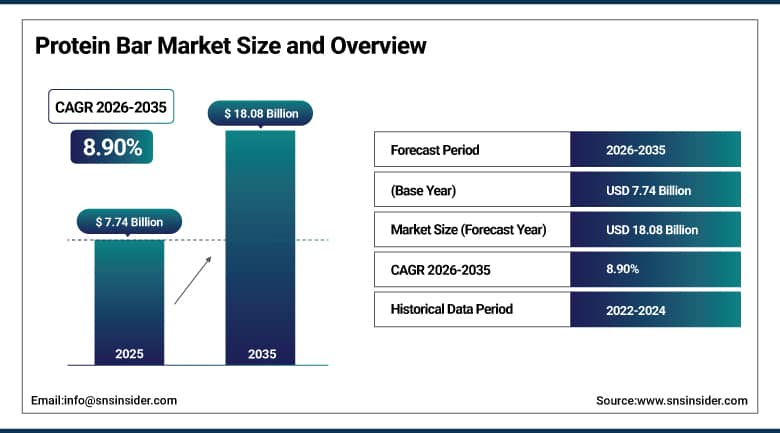
The Global Protein Bar Market size was valued at USD 7.74 billion in 2025 and is expected to reach USD 18.08 billion by 2035, growing at a CAGR of 8.90% from 2026 to 2035.
The increase in the market is caused by increased attention of consumers towards healthy lifestyle, high protein food demands, and use of protein bars as alternatives for meals and snacks. Product diversification through use of plant-based protein sources, clean label products, and unique flavors is being facilitated by the increasing demands in sports, weight management, and general nutrition. In addition, involvement in sports activities, increasing disposable income, and awareness of muscle recovery and wellness benefits is driving the demand in the market. Further, the fast growth of the e-commerce channels and premium nutrition products is making the market more accessible.
In 2025, Ferero Group purchased Bio-Nutritional Research Group Inc., which is the parent company of Power Crunch. This acquisition enhanced the market presence of Ferrero in the segment of high protein and better-for-you nutrition products.
To Get More Information On Protein Bar Market - Request Free Sample Report
Protein Bar Market Trends:
-
Increasing consumer focus on health, fitness, and active lifestyles is driving demand for protein bars as convenient nutrition and meal replacement solutions.
-
Growing adoption of plant-based proteins, clean-label ingredients, and sustainable formulations is encouraging manufacturers to develop innovative protein bar products.
-
Rising demand for functional nutrition products with added benefits such as muscle recovery, weight management, and improved wellness is expanding market opportunities.
-
Expansion of e-commerce platforms and direct-to-consumer channels is improving accessibility of premium protein bars among health-conscious consumers globally.
-
Increasing investments in advanced formulations, high-protein content, and personalized nutrition solutions are accelerating product innovation across sports nutrition and everyday snacking segments.
U.S. Protein Bar Market Outlook:
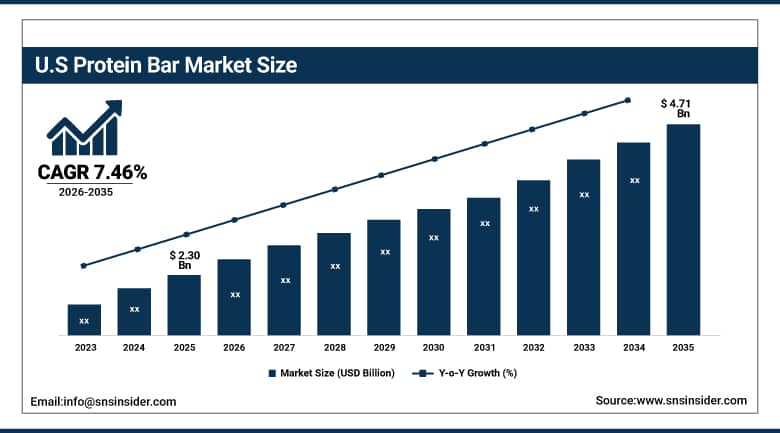
The U.S. Protein Bar Market size was valued at USD 2.30 billion in 2025 and is expected to reach USD 4.71 billion by 2035, growing at a CAGR of 7.46% from 2026 to 2035.
US protein bar market is expected to grow owing to surging demand for convenient and healthy snack options, increasing participation in fitness and wellness activities and growing consumer preference for high-protein diet Plant-based proteins, clean-label formulations and functional ingredients are growing, leading manufacturers to develop new offerings for the sports nutrition, weight-management and everyday markets. The growth of the market is further supported by the increasing retail penetration, strong presence of leading nutrition brands and fast growth in the online sales channel. Moreover, the rising awareness towards muscle recovery, balanced nutrition and active lifestyle is further catalyzing the demand for premium protein bar products across the country.
In 2025, ETi Gıda bought TRUBAR for USD 173 million and expanded its presence in the U.S. protein bar market. The acquisition added TRUBAR’s clean-label, plant-based protein bars to ETi’s portfolio and expanded its international growth across ETi’s global distribution network.
Protein Bar Market Segment Analysis:
-
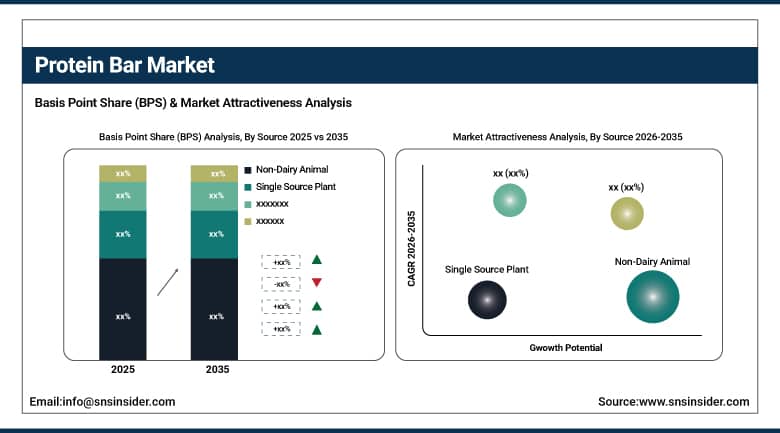
By Source, Non-Dairy Animal dominated the protein bar market with 46.80% share in 2025, while Single Source Plant is the fastest-growing source segment with a CAGR of 12.95% from 2026–2035.
-
By Product Type, Protein Sports Nutrition Bars dominated the protein bar market with 36.50% share in 2025, while Protein Snack Bars are the fastest-growing product type segment with a CAGR of 10.25% from 2026–2035.
-
By Distribution Channel, Supermarket/Hypermarket dominated the protein bar market with 38.60% share in 2025, while Online Retail Stores and Others are the fastest-growing distribution channel segment with a CAGR of 12.22% from 2026–2035.
-
By Price Category, Economy dominated the protein bar market with 58.20% share in 2025, while Premium and Luxury are the fastest-growing price category segment with a CAGR of 10.54% from 2026–2035.
By Source, Non-Dairy Animal dominated the Protein Bar Market, while Single Source Plant is expected to register the fastest CAGR during the forecast period 2026–2035
Non-Dairy Animal dominated the protein bar market in 2025 revenue share of 46.80%. The segment is still led by strong familiarity with whey and other animal-based protein sources with high protein quality, improved muscle recovery benefits and strong acceptance among sports nutrition consumers. The segment is widely accepted by athletes, fitness enthusiasts, and consumers looking for effective protein supplementation. Segment growth continues to be supported by the availability of diverse protein bar formulations using animal-based proteins and strong brand presence across retail channels.
The Single Source Plant is expected to witness the fastest CAGR of 12.95% during the forecast period of 2026-2035. The growth of the market is attributed to increasing consumer preference for plant-based nutrition, rising demand for sustainable food products, and growing awareness regarding clean-label ingredients. Increasingly, producers are introducing protein bars made from pea, soy, rice and other plant-based proteins that appeal to vegan, vegetarian and health-conscious consumers. The global single-source plant protein bars market is expected to experience a faster adoption rate as companies increase their sustainable product portfolios and invest in more innovations in plant-based formulations.
By Product Type, Protein Sports Nutrition Bars dominated the Protein Bar Market, while Protein Snack Bars are expected to register the fastest CAGR during the forecast period 2026–2035
Protein Sports Nutrition Bars dominated the protein bar market with a revenue share of 36.50% in 2025. The dominance of the segment can be attributed to the increasing participation in fitness activities, increasing demand among the athletes, and growing awareness about protein intake for muscle growth and recovery. These bars are a popular pre- and post-workout nutrition product because they are high in protein and convenient. The increasing number of gym memberships, sports participation and demand for functional nutrition products are supporting continued global adoption of sports nutrition protein bars.
Protein Snack Bars are expected to record the fastest CAGR of 10.25% during 2026–2035. Growth is attributed to the rising consumer preference for convenient, healthy and on-the-go snacking options. As consumers work to manage their energy and achieve wellness goals, they are turning away from traditional snack foods and choosing alternatives that are higher in protein. Broader adoption is being driven by product innovation in the form of improved taste profiles, functional ingredients and lower sugar formulations. “The growing availability of protein snack bars through retail outlets and online channels is also contributing to the increasing popularity of the product.
By Distribution Channel, Supermarket/Hypermarket dominated the Protein Bar Market, while Online Retail Stores and Others are expected to register the fastest CAGR during the forecast period 2026–2035
Protein Sports Nutrition Bars dominated the protein bar market with a revenue share of 36.50% in 2025. The segment remains dominant due to strong consumer preference for physical retail purchases, wide product availability and the presence of established nutrition brands in grocery and hypermarket chains. Consumers can easily access multiple varieties of protein bars at supermarkets, including sports nutrition, meal replacement and healthy snack options. The segment’s market position is still backed by strong retail networks and promotional activities by manufacturers.
Online Retail Stores and Others are projected to witness the highest CAGR of 12.22% over the forecast period of 2026-2035. Growth driven by increased e-commerce penetration, direct-to-consumer strategies and growing consumer preference for convenient online purchasing. With digital platforms, consumers can easily compare products, access premium protein bars and buy specialized nutrition products. Increasing penetration of smartphones, digital payments, subscription-based nutrition services and growing online presence of brands are likely to further boost the growth of online distribution.
By Price Category, Economy dominated the Protein Bar Market, while Premium and Luxury are expected to register the fastest CAGR during the forecast period 2026–2035
Protein Sports Nutrition Bars dominated the protein bar market with a revenue share of 36.50% in 2025. The segment’s leadership is supported by affordability, wider accessibility to consumers and strong demand from price-sensitive customers. With their convenient nutritional benefits and competitive prices, economically priced protein bars appeal to a wider consumer base. Growing awareness on protein consumption by mainstream consumers and increased availability via mass retail channels keep driving the segment growth globally.
The market for premium and luxury protein bars is projected to expand at the highest CAGR of 10.54% from 2026 to 2035. Growth is supported by rising consumer willingness to spend on premium nutrition products, clean-label ingredients and advanced functional formulations. Premium products are also featuring organic ingredients, specialized protein blends and added health benefits for fitness-minded and wellness-oriented consumers. Manufacturers are expanding high-value product lines in global markets due to rising demand for customized nutrition and premium snacking experience.
Regional Analysis:
|
Region |
Major Country |
Share within Region, 2025 (%) |
|---|---|---|
|
North America |
United States |
83.21% |
|
Europe |
Germany |
24.50% |
|
Asia Pacific |
China |
32.00% |
|
Latin America |
Brazil |
40.00% |
|
Middle East & Africa |
UAE |
28.00% |
North America Protein Bar Market Insights
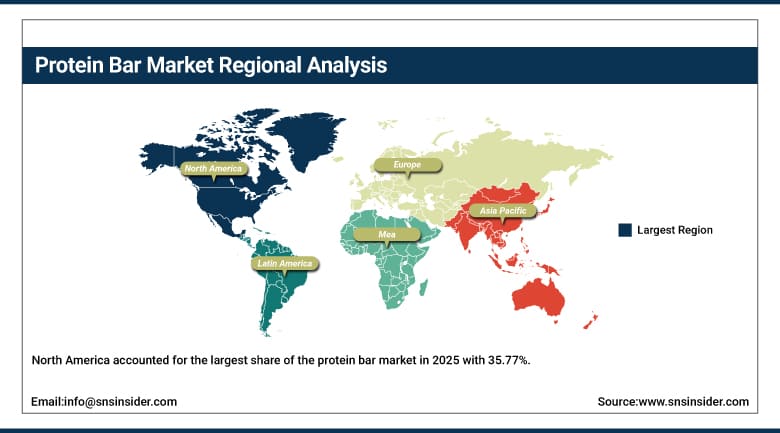
North America accounted for the largest share of the protein bar market in 2025 with 35.77%. The regional growth is attributed to increasing health and fitness awareness, high demand for functional nutrition products, rising adoption of high protein diets, and increasing preference for convenient snack solutions. The region has a well-established sports nutrition industry, a large presence of major protein bar manufacturers, an advanced retail infrastructure and growing consumer spending on wellness products. The United States accounted for around 83.21% of the regional revenue in 2025, attributed to the high demand for premium protein bars, rising participation in fitness activities, and increasing availability through supermarkets, specialty stores, and online channels.
Consumers’ growing interest in muscle recovery, weight management and active lifestyles continue to drive the U.S. as the leading market. Demand for plant-based protein bars, clean label products and functional ingredients is also increasing, helping market growth. The country is also seeing consistent growth driven by increasing health consciousness, increasing adoption of sustainable nutrition products and improved access through digital retail channels. North America market is expected to grow strong during the forecast period due to continuous product innovation, premiumization trends and increasing demand for customized nutrition solutions.
Get Customized Report as Per Your Business Requirement - Enquiry Now
Europe Protein Bar Market Insights
Rising consumer awareness towards healthy eating habits, increasing demand for convenient nutrition products and increasing adoption of functional food solutions are driving the European Protein Bar Market. The region is seeing the benefits of strong health and wellness trends, established retail networks and a growing preference for clean-label, organic and plant-based protein bars. Some of the major contributors are Germany, United Kingdom, France, Italy and Spain owing to high consumer purchasing power, developed food industries and increasing adoption of sports nutrition products.
Germany has a prominent position in the European Protein Bar Market owing to high demand for premium nutrition products, increasing participation in fitness activities, and growing awareness regarding protein-rich diets. In addition, the United Kingdom and France are expected to provide profitable growth opportunities for the global health-focused consumer segment and innovative protein bar products availability. The increasing demand for vegan protein sources, sustainable ingredients, and premium alternatives for snacks is expected to drive the market growth in Europe during the forecast period.
Asia Pacific Protein Bar Market Insights
Asia Pacific is the fastest growing region in the protein bar market with a CAGR of 11.31% for the period 2026-2035. The regional expansion is driven by a rise in health consciousness, increasing disposable income, increasing fitness culture, and changing dietary preferences of consumers. Urbanization and busy lifestyles are driving consumers to choose protein-based food options, which is leading to strong demand for convenient and nutritious snack products in the region. The market is witnessing a faster growth due to the rapid growth of e-commerce platforms and the growing availability of international nutrition brands.
China is a key player in the Asia Pacific protein bar market owing to growing acceptance of sports nutrition products, increasing health-conscious consumer segments and growing online retail channels. India, Japan, South Korea and Australia are also driving regional development with increased fitness participation, awareness of the benefits of protein and demand for plant-based and functional nutrition products. During the forecast period, the position of Asia Pacific is expected to be further strengthened by the rising investments by global nutrition companies and the use of innovative protein bar formulations.
Middle East & Africa and Latin America Protein Bar Market Insights
The Middle East & Africa and Latin America protein bar market is gradually increasing with the increasing health awareness, increasing fitness participation, increasing retail accessibility and increasing consumer interest towards functional nutrition products. In Latin America, the demand for protein bars is on the rise, due to changes in the eating habits, the growing middle class, and increasing acceptance of sports and wellness lifestyles. Brazil and Mexico are significant contributors with the growth of modern retail chains, rise in consumer awareness, and the growing presence of international nutrition brands.
The Middle East & Africa region is driven by the increase in health & wellness trends, rise in gym memberships and increasing demand for premium nutrition products among urban consumers. In countries such as UAE and Saudi Arabia, protein bars are increasingly being adopted in supermarkets, specialty stores and online platforms. However, premium pricing, lower awareness in some of the developing markets and lower accessibility can impact the market penetration. Growth of investments by global nutrition companies, growth of e-commerce platforms and launch of affordable protein products is expected to create new opportunities for growth in these regions.
Market Dynamics:
Growth Drivers: Increasing health awareness and rising demand for functional nutrition products driving market expansion
The protein bar market is driven by rising consumer awareness of healthy lifestyles, fitness, weight management and nutritional supplementation. With a greater number of people participating in sports and fitness activities and need for convenient nutrition solutions on-the-go, consumers are turning to protein bars as a healthy snack alternative. The rising demand for high-protein diets among athletes, working professionals and health-conscious consumers is also driving the market growth. Moreover, the increasing demand for clean-label, plant-based, and low-sugar protein bars is pushing the manufacturers to innovate the formulations.
Furthermore, the increasing demand for functional foods and personalized nutrition products is also boosting the market growth. Consumers are seeking protein bars with added natural ingredients, vitamins, minerals, fiber and specialty proteins that provide energy, help muscle recovery and support overall wellness. The increase in retail penetration, e-commerce penetration, and investments by food and nutrition companies in product innovation further drive the adoption of the market. The demand for protein bars is expected to be driven by the continuous launch of new flavors, premium formulations and sustainable sources of ingredients over the forecast period.
Restraints: High product costs and availability of alternative nutritional products limiting adoption
One of the major barriers to market growth is the high price of premium protein bars, which are protein bars that contain advanced proteins, organic ingredients and functional additives. High prices may also make consumers in developing countries more likely to turn to regular snacks or other sources of protein. Additionally, low consumer awareness about the nutritional value of protein bars may hinder their consumption.
Some of the alternative products competing with manufacturers of protein bars are protein powder, dietary supplements, energy bars and regular protein-rich foods. Moreover, consumer concerns on artificial ingredients, sugar content, preservatives and claims on product properties could be taken into account. Another thing companies should consider is the price fluctuations of proteins, nuts and other specialized raw materials.
Opportunities: Expansion of plant-based nutrition and innovation in functional protein bar formulations
The protein bar market has plenty of opportunities for growth because of the growing demand for products that have natural protein content, a clean label, and are functional in nature. The emphasis of the company’s manufacturing protein bars has been on the development of novel formulations of protein bars based on plant-based proteins, other alternatives, and sustainable sources. Vegan and flexitarian diets are gaining more popularity and hence there are opportunities in single-source plant protein bars, hybrid protein bars, and sustainable protein bars.
Opportunities in emerging markets like those of Asia Pacific, Latin America, and the Middle East & Africa can be seen because of the increase in health awareness, disposable income levels, urbanization, and fitness trends in the market. Companies are building up their presence in the market through online retail channels and nutrition stores. In addition to this, innovations in food science, personalized nutrition, and functional ingredients have enabled companies to bring out novel protein bars to cater to the needs of consumers for weight management, sports performance, breakfast replacement, and clinical nutrition.
Recent Developments:
-
February 2026: UFC partnered with FoodStory Brands to develop a high-performance protein bar line under the UFC Performance Institute. The products focus on athlete recovery and metabolic health using research-backed functional ingredients and are planned for global retail and e-commerce expansion.
-
April 2025: The U.S. FDA updated its “healthy” food labeling criteria, causing several protein bar products to lose eligibility. Manufacturers accelerated reformulation efforts by adopting alternatives such as allulose, monk fruit, and fiber-based ingredients to maintain health-focused positioning.
-
April 2025: Pure Protein launched its AMMAZE bar line to target the growing demand for convenient breakfast and nutrition solutions. The product expansion through convenience retailers reflects the shift of protein bars beyond fitness consumers toward everyday snacking occasions.
-
April 2025: Trek introduced an upgraded range of plant-based, high-protein, and low-sugar bars across Europe. The launch uses pea and soy protein systems to address rising flexitarian demand and growing consumer preference for sustainable nutrition products.
Protein Bar Market key players are:
-
The Simply Good Foods Company
-
General Mills
-
Kellanova
-
Mars Incorporated
-
Mondelēz International
-
Nestlé Health Science
-
Abbott Laboratories
-
The Hershey Company
-
PepsiCo
-
Clif Bar & Company
-
Quest Nutrition
-
RXBAR
-
ONE Brands
-
KIND Snacks
-
Barebells Functional Foods AB
-
Grenade (Grenade Carb Killa)
-
Fulfil Nutrition
-
No Cow
-
Perfect Snacks
-
Trek (Natural Balance Foods)
Protein Bar Market Report Scope:
| Report Attributes | Details |
|---|---|
| Market Size in 2025 | USD 8.39 Billion |
| Market Size by 2035 | USD 18.08 Billion |
| CAGR | CAGR of 8.90% From 2026 to 2035 |
| Base Year | 2025 |
| Forecast Period | 2026-2035 |
| Historical Data | 2022-2024 |
| Report Scope & Coverage | Market Size, Segments Analysis, Competitive Landscape, Regional Analysis, DROC & SWOT Analysis, Forecast Outlook |
| Key Segments | • By Technology (Hydroponics, Aeroponics, Other Substrate/Soil-Based Systems) • By Component (Hardware, Software, Services) • By Crop Type (Vegetables/Leafy Greens, Herbs & Berries, Vine Crops, Other Crops) • By Facility Type (Greenhouses, Vertical/Indoor Farms, Hybrid Models) |
| Regional Analysis/Coverage | North America (US, Canada), Europe (Germany, UK, France, Italy, Spain, Russia, Poland, Rest of Europe), Asia Pacific (China, India, Japan, South Korea, Australia, ASEAN Countries, Rest of Asia Pacific), Middle East & Africa (UAE, Saudi Arabia, Qatar, South Africa, Rest of Middle East & Africa), Latin America (Brazil, Argentina, Mexico, Colombia, Rest of Latin America). |
| Company Profiles | The Simply Good Foods Company, General Mills, Kellanova, Mars Incorporated, Mondelēz International, Nestlé Health Science, Abbott Laboratories, The Hershey Company, PepsiCo, Clif Bar & Company, Quest Nutrition, RXBAR, ONE Brands, KIND Snacks, Barebells Functional Foods AB, Grenade (Grenade Carb Killa), Fulfil Nutrition, No Cow, Perfect Snacks, Trek (Natural Balance Foods) |

Frequently Asked Questions
The Protein Bar Market is expected to grow at a CAGR of 8.90% from 2026 to 2035.
North America dominated the Protein Bar Market in 2025, accounting for approximately 35.77% market share.
The major growth factor driving the Protein Bar Market is increasing health and fitness awareness, rising demand for convenient nutritional snacks, growing adoption of high-protein diets, and increasing preference for functional, plant-based, and clean-label protein products.
The Non-Dairy Animal segment dominated the Protein Bar Market in 2025, accounting for approximately 46.80% market share.
The major growth factor driving the Protein Bar Market is increasing health and fitness awareness, rising demand for convenient nutritional snacks, growing adoption of high-protein diets, and increasing preference for functional, plant-based, and clean-label protein products.
The Protein Bar Market was valued at USD 7.74 billion in 2025.
