
Organic Beverages Market Report Scope & Overview:
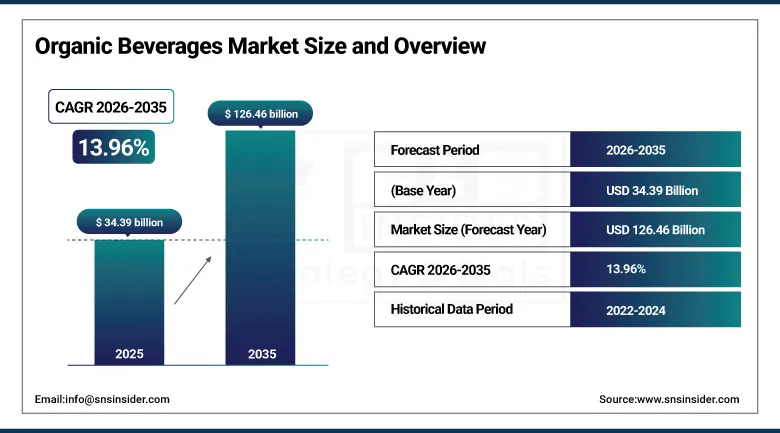
The Organic Beverages Market size was valued at USD 34.39 billion in 2025 and is expected to reach USD 126.46 billion by 2035, growing at a CAGR of 13.96% from 2026–2035.
There are several factors that will support the growth of the global organic beverages market, including consumers' growing preference for organic products, increasing consumer focus on health and wellness, and increasing consumer demand for pesticide-free and sustainable beverages. There is significant uptake in the global organic beverages market owing to consumers' increasing preference for organic teas, coffees, juices, and functional beverages which are produced without using any chemicals and pesticides. Investments in organic farming practices, green packaging materials, and organic beverages innovation are set to boost growth in the global organic beverages market from 2025 to 2026.
A recent survey found 42% of consumers aged 18–24 purchased organic products at least once per month during 2025, highlighting strong interest in health-conscious consumption and supporting growth in organic beverage demand.
To Get more information on Organic Beverages Market - Request Free Sample Report
Organic Beverages Market Trends
-
Rising consumer preference for clean-label and chemical-free beverages is driving organic product adoption.
-
Growing demand for functional organic drinks is accelerating innovation across wellness beverage categories.
-
Expansion of organic farming activities is strengthening sustainable ingredient supply chains globally.
-
Increasing adoption of eco-friendly packaging solutions is supporting sustainability-focused beverage development.
-
Growth of online grocery platforms and direct-to-consumer channels is expanding organic beverage accessibility.
U.S. Organic Beverages Market Size Outlook
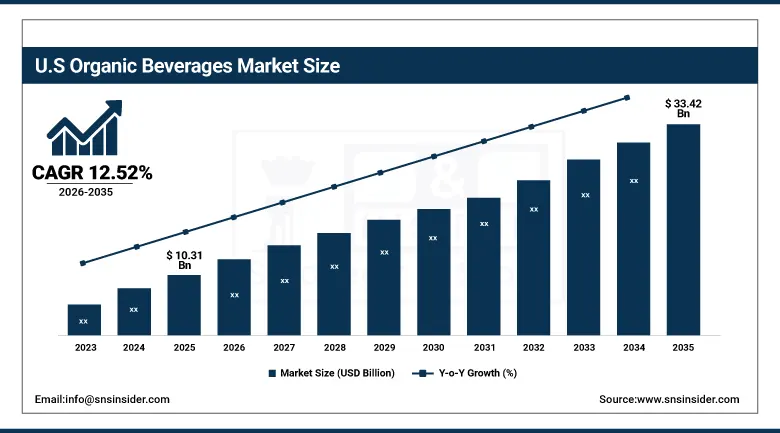
The U.S. Organic Beverages Market was valued at USD 10.31 billion in 2025 and is expected to reach USD 33.42 billion by 2035 at a CAGR of 12.52%.
The U.S. organic beverages market is growing owing to high consumer demand for clean label products, growing consciousness about health and wellness, and growing popularity of organic tea, organic coffee, juices, and functional drinks. High adoption rate in the U.S. market for organic beverages can be attributed to consumers' high preference for beverages that are not produced using any kind of artificial additives and do not contain any GMOs or synthetic pesticides. Availability of organic beverages in the supermarket, specialist store, and e-commerce channels is driving market growth over the forecast period 2025-2026.
The United States maintained more than 17,000 certified organic farms during 2025, strengthening the supply of organic tea, coffee, fruits, and other ingredients while supporting continued growth of the organic beverages market.
Organic Beverages Market Segment Analysis
-
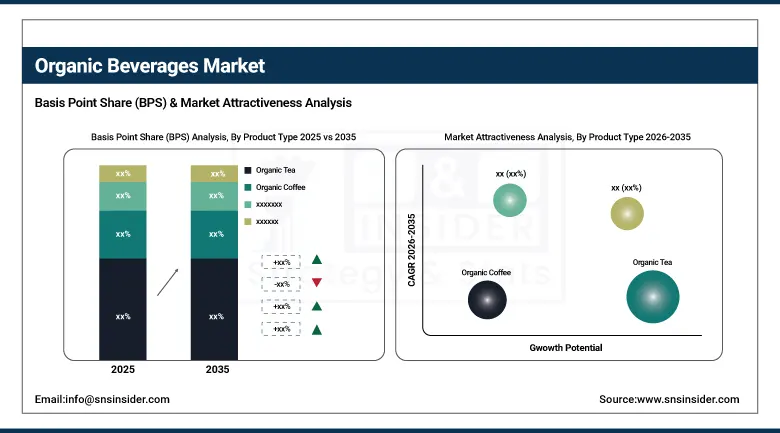
By Product Type, organic tea dominated with approximately 49.36% revenue share in 2025; organic juice is expected to be the fastest-growing type segment at approximately 15.40% CAGR from 2026 to 2035.
-
By Distribution Channel, supermarkets & hypermarkets dominated with approximately 48.36% revenue share in 2025; online retails expected to be the fastest-growing type segment at approximately 17.68% CAGR from 2026 to 2035.
-
By Packaging Type, bottles dominated with approximately 46.28% revenue share in 2025; cartons are expected to be the fastest-growing type segment at approximately 15.76% CAGR from 2026 to 2035.
-
By End User, household consumers dominated with approximately 61.42% revenue share in 2025; corporate & institutional buyers are expected to be the fastest-growing type segment at approximately 16.87% CAGR from 2026 to 2035.
By Product Type, organic tea dominating while organic juice emerging as the fastest-growing
The organic tea segment held about 49.36% share of the revenue in 2025 as there was an increase in preference for healthy beverages that contain antioxidants and improve general well-being among the consumers. Consumers still drink organic tea for its health properties such as aiding in digestion, providing relaxation, hydrating, and improving their well-being. The growth of the organic beverages market was fueled by awareness about clean-label products along with increasing demand for drinks without any artificial ingredients or preservatives. The growth of high-end teas, herbal teas, and wellness beverages played a role in the dominance of the organic segment.
The organic juice segment is projected to grow at the highest CAGR of around 15.40% during the forecast period of 2026-2035, driven by the growing consumer demand for healthy beverages prepared using organic fruits and vegetables. The trend of choosing healthier options over unhealthy beverages is gaining momentum, thanks to the increasing consumer health awareness. The rise in the consumption of cold pressed juices, functional nutritional beverages, and immunity boosting drinks is fueling the growth of this segment. Growth in investments in organic fruits, development of innovative juices, and eco-friendly packaging options are other factors contributing to the growth of this market.
By Distribution Channel, supermarkets & hypermarkets dominating while online retail emerging as the fastest-growing
The share held by supermarkets and hypermarkets in 2025 was about 48.36% as consumers find extensive product offerings, brand presence, and easy availability of organic beverages in supermarkets. Supermarkets remain a preferred channel for buying organic beverages as consumers enjoy promotional deals on organic tea, coffee, and juice and can compare multiple products at ease. The growth in the organic beverages market was driven by the increase in shelf space for organic and healthy beverages in supermarkets. Consumer confidence in traditional stores and increasing organic certification have played important roles in making this segment dominant.
The online retail segment is projected to record the highest rate of growth at a compound annual growth rate of around 17.68% over the period of 2026 to 2035 due to the rising adoption of e-commerce and consumers' inclination towards doorstep deliveries. The availability of a variety of organic beverages on digital platforms along with subscription services and personalized recommendations will boost the growth of the segment. Growth in the usage of the internet and smartphones for shopping and direct-to-customer selling tactics has been fueling the growth of the segment.
By Packaging Type, bottles dominating while cartons emerging as the fastest-growing
The bottles segment held a revenue share of around 46.28% in 2025 because the bottle packaging offers convenience, safety of the content, mobility, and an increased shelf life of organic beverages. Glass and recyclable plastic bottles are extensively used by producers for bottling organic tea, coffee, and juice products because of the capability of these bottles to maintain the taste and nutritional value of organic beverages market. Bottled organic beverages market gained popularity in various sectors including grocery stores, cafes, and food service industries. Increased consumption of ready-to-drink organic beverages played a pivotal role in boosting the leading position of bottles packaging segment.
The carton category is anticipated to grow at the highest rate of about 15.76% from 2026 to 2035 because of the increasing requirement for packaging materials that are environment-friendly and sustainable. Carton is used more frequently because it is relatively lighter, easy to recycle, and efficient during transportation and packaging. The organic beverages market is implementing various eco-packaging processes and technologies to address their sustainability issues. Increasing consumer awareness regarding reducing packaging waste and adopting a more environmentally-friendly approach will increase the adoption of such technologies in the coming years. Growth of organic juices and plant-based beverages will further boost the market growth.
Regional Insights
|
Region |
Major Country |
Share within Region,2025 (%) |
|---|---|---|
|
North America |
United States |
88% |
|
Europe |
Germany |
18% |
|
Asia Pacific |
China |
29% |
|
Middle East & Africa |
UAE |
17% |
|
Latin America |
Brazil |
41% |
North America Organic Beverages Market Insights
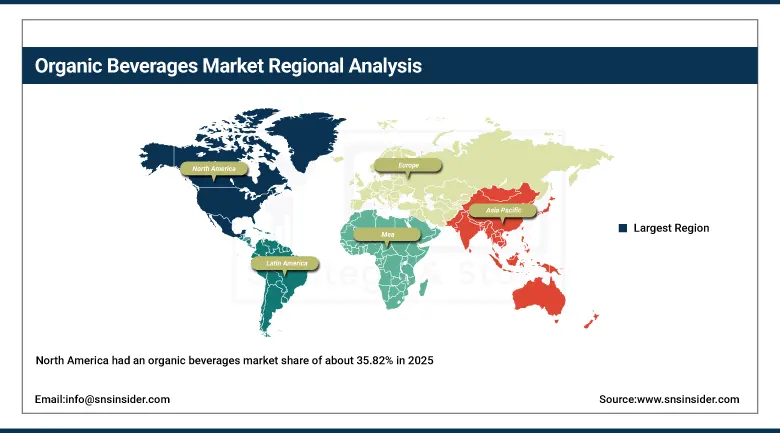
North America had an organic beverages market share of about 35.82% in 2025, with future growth expected at a rate of 12.73% CAGR until 2035. This region is one of the prominent consumers of organic teas, coffees, juices, and functional beverages owing to high levels of health and wellness consciousness among individuals. More than USD 70 billion was spent by the consumers of the US on organic products during the year 2025, along with more than 17,000 organic certified farms within the US for the supply of beverage ingredients. Higher consumption of organic products labeled under clean labels and sustainably packed beverages will continue to fuel the growth of this market.
Get Customized Report as per Your Business Requirement - Enquiry Now
Europe Organic Beverages Market Insights
The organic beverages market share in Europe was around 21.24% in 2025 and is anticipated to grow at a CAGR of 13.05% till 2035. Consumer preference for organic foods and beverages will help continue to drive the growth of the market due to the increasing demand for natural, organic products. Organic foods and beverages in the UK have shown growth of almost 8% in 2025, indicating that there is growing interest amongst consumers towards organic products. The rising demand for organic tea, coffee, and juices is another driving factor behind the organic drinks market due to a healthy lifestyle and sustainability concerns among consumers.
Asia Pacific Organic Beverages Market Insights
Asia Pacific market for organic beverages market was estimated to account for 29.46% market share in 2025 and was expected to exhibit a high growth rate of 15.87% CAGR during 2026-2035 owing to factors like urbanization, rise in disposable incomes, and increased knowledge about healthy living practices. The Indian market for organic beverages generated an estimated value of USD 1.6 billion in 2025 on the back of increasing consumption of organic teas, coffee, and juice drinks. Market players operating in China, India, Japan, and Australia are witnessing a steady growth trend towards organic farming and distribution practices.
Middle East & Africa and Latin America Organic Beverages Market Insights
The organic beverages market in Latin America had a market share of about 7.08% in 2025 and was forecast to grow at a 14.24% CAGR during the same period, while the Middle East & Africa market share stood at about 6.40% with a 13.41% CAGR for the coming decade (2035). The country Brazil is furthering its organic farming sector along with increasing its organic beverage production, which would result in high growth in organic tea, juices, and drinks sectors. There will be rising health consciousness coupled with the increased availability of organic products via retail stores in the Middle East.
Market Dynamics
Growth Drivers: Rising consumer preference for clean-label and health-focused beverages accelerating industry growth
The market for organic beverages is expanding because of the rise in demand for clean-label products, increase in health consciousness among consumers, and increased preference for beverages that do not contain any artificial additives or chemicals. Organic beverages are receiving good adoption because consumers are opting for organic tea, coffee, juices, and functional beverages in order to lead a healthier life. Investments in organic agriculture, sustainable packaging, and beverages made from plants are playing an important role in propelling the market in the forecast period of 2025-2026.
Riverford reported a 6% increase in sales during 2025, highlighting growing consumer interest in organic food and beverage products across health-conscious customer segments.
Restraints: Higher product prices and limited organic raw material availability limiting market growth
The organic beverages market is encountering problems due to high production costs, prices of high-end products, and lack of organic-certified produce in some locations. Organic farming calls for better cultivation procedures and more rigorous certification process, which raises operational costs for the producer. Disruption in supply chains, changes in agricultural output, and reduced production levels when compared to traditional beverages could cause scarcity of the products. The affordability problem for consumers in developing countries and the competition with other beverages that focus on health benefits might hinder market entry.
Opportunities: Expansion of organic farming and digital wellness retail channels creating new opportunities
The market for organic beverages is experiencing a surge of opportunities because of investments in organic farming, the growth of digital grocery stores, and the rising trend of sustainable beverages across the globe. The market for organic beverages is receiving major boosts because of developments in functional organic drinks, eco-packaging, and direct selling channels. The trend toward wellness and high-quality nutrition is fostering innovation at an accelerated pace in the period between 2025 and 2026. Growth is being created for beverage companies through the cultivation of organic products and healthy retail networks.
Approximately 42% of consumers aged 18–24 purchased organic products monthly during 2025, supporting long-term growth opportunities for organic beverages among younger health-focused consumers.
Recent Developments:
-
February 2026: Coca-Cola reported 5% organic revenue growth for full-year 2025, supported by ongoing portfolio expansion and increasing consumer demand for premium, wellness-oriented, and value-added beverages.
-
December 2025: PepsiCo announced plans to accelerate growth in healthier beverages and products with simpler ingredients, enhanced nutrition profiles, and stronger wellness positioning across its portfolio heading into 2026.
-
March 2026: Danone reported broad-based growth across its health-focused beverage and nutrition portfolio during 2025, supported by increasing consumer demand for plant-based, organic, and wellness-oriented products.
Organic Beverages Companies are:
-
PepsiCo, Inc.
-
Danone S.A.
-
Nestlé S.A.
-
Suja Life, LLC
-
Hain Celestial Group, Inc.
-
Lakewood, Inc.
-
The Kraft Heinz Company
-
KeVita, Inc.
-
Reed's, Inc.
-
R.W. Knudsen Family
-
Uncle Matt's Organic, Inc.
-
Vahdam Teas Pvt. Ltd.
-
Organic India Pvt. Ltd.
-
Ito En, Ltd.
-
Traditional Medicinals, Inc.
-
Numi Organic Tea
-
Yogi Tea GmbH
-
Dilmah Ceylon Tea Company PLC.
Organic Beverages Market Report Scope:
| Report Attributes | Details |
|---|---|
| Market Size in 2025 | USD 34.39 Billion |
| Market Size by 2035 | USD 126.46 Billion |
| CAGR | CAGR of 13.96% From 2026 to 2035 |
| Base Year | 2025 |
| Forecast Period | 2026-2035 |
| Historical Data | 2022-2024 |
| Report Scope & Coverage | Market Size, Segments Analysis, Competitive Landscape, Regional Analysis, DROC & SWOT Analysis, Forecast Outlook |
| Key Segments | • By Product Type (Organic Tea, Organic Coffee, Organic Juice) • By Distribution Channel (Supermarkets & Hypermarkets, Online Retail, Specialty Stores) • By Packaging Type (Bottles, Cans, Cartons) • By End User (Household Consumers, Foodservice Industry, Corporate & Institutional Buyers) |
| Regional Analysis/Coverage | North America (US, Canada), Europe (Germany, UK, France, Italy, Spain, Russia, Poland, Rest of Europe), Asia Pacific (China, India, Japan, South Korea, Australia, ASEAN Countries, Rest of Asia Pacific), Middle East & Africa (UAE, Saudi Arabia, Qatar, South Africa, Rest of Middle East & Africa), Latin America (Brazil, Argentina, Mexico, Colombia, Rest of Latin America). |
| Company Profiles | The Coca-Cola Company, PepsiCo, Inc., Danone S.A., Nestlé S.A., Suja Life, LLC, Hain Celestial Group, Inc., Organic Valley, Lakewood, Inc., The Kraft Heinz Company, KeVita, Inc., Reed's, Inc., R.W. Knudsen Family, Uncle Matt's Organic, Inc., Vahdam Teas Pvt. Ltd., Organic India Pvt. Ltd., Ito En, Ltd., Traditional Medicinals, Inc., Numi Organic Tea, Yogi Tea GmbH, Dilmah Ceylon Tea Company PLC. |

Frequently Asked Questions
The Organic Beverages Market is expected to grow at a CAGR of 13.96% from 2026 to 2035.
The Organic Beverages Market was valued at USD 34.39 billion in 2025.
Supermarkets & Hypermarkets dominated the market in 2025 with approximately 48.36% of revenues.
Organic Tea dominated the market in 2025 with approximately 49.36% of revenues.
North America dominated the Organic Beverages Market in 2025 with approximately 35.82% of global revenues.
