
Targeted Alpha Therapy Market Report Scope and Overview:
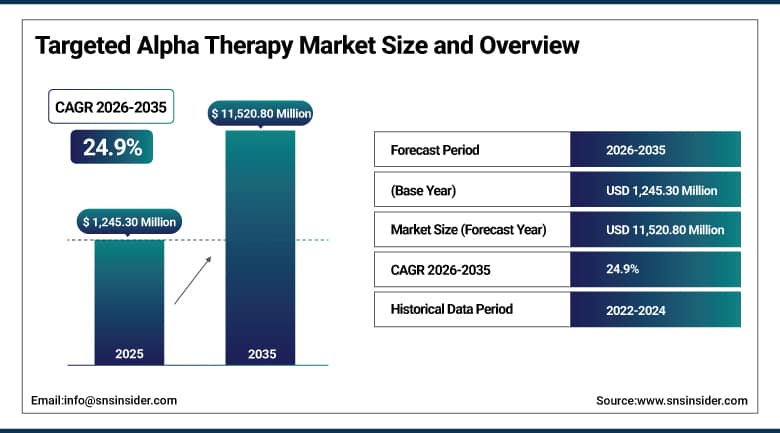
The Targeted Alpha Therapy Market was valued at USD 1,245.30 Million in 2025 and is projected to reach USD 11,520.80 Million by 2035, registering a CAGR of 24.9% from 2026 to 2035.
Targeted Alpha Therapy Market is bringing about transformation in cancer treatment by introducing a high-energy, short-range alpha particle radiation to the tumor sites without damaging the adjacent tissues. Such a market can be seen in the rise in the number of late-stage clinical studies involving actinium-225 and lead-212 labeled radioligands, the rise in the adoption of PSMA-targeted alpha therapies in treating prostate cancer, the increased application of alpha emitters in treating hematologic malignancies, and the increased regulatory approvals of innovative radiopharmaceuticals using alpha emitters. The increase in the number of strategic licensing deals, supply agreements, and manufacturing initiatives has taken place due to the fact that the major players in the field of pharmaceutical industry, biotechnology firms, and radioisotopes manufacturers have invested heavily to create efficient supply chains of alpha emitters.
Convergent Therapeutics advanced its actinium-225 labeled PSMA-targeted radioligand, CONV01-alpha, into a pivotal Phase III trial for metastatic castration-resistant prostate cancer during 2026, marking one of the first late-stage registration trials for an actinium-225 based therapeutic.
To Get More Information On Targeted Alpha Therapy Market - Request Free Sample Report
Targeted Alpha Therapy Market Trends:
-
Expanding late-stage clinical pipeline of actinium-225 and lead-212 labeled radioligands continues accelerating commercial-scale alpha therapy adoption.
-
Growing PSMA-targeted radioligand development continues strengthening prostate cancer as the leading Targeted Alpha Therapy indication.
-
Rising strategic licensing and co-development agreements between biotech innovators and big pharma continue expanding global alpha therapy pipelines.
-
Increasing FDA and EMA regulatory support continues accelerating breakthrough therapy designations for novel alpha-emitter radiopharmaceuticals.
-
Growing investment in dedicated isotope supply chains continues easing production bottlenecks limiting Targeted Alpha Therapy commercialization.
U.S. Targeted Alpha Therapy Market Outlook
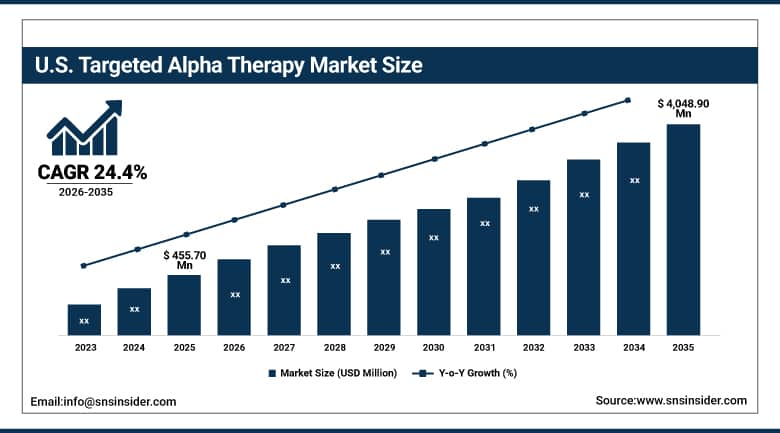
The U.S. Targeted Alpha Therapy Market was valued at approximately USD 455.70 Million in 2025 and is projected to reach approximately USD 4,048.90 Million by 2035, registering a CAGR of approximately 24.4% from 2026 to 2035.
Demand in the U.S. was significantly impacted by the concentration of crucial clinical trials related to radioligand-based radiotherapy using actinium-225 and lead-212, good reimbursement environment for radiopharmaceuticals, both from commercial and government payers, and continued efforts on the part of the Department of Energy to manufacture isotopes to ensure a domestic supply chain. Presence of companies that are at clinical stages such as Convergent Therapeutics, Actinium Pharmaceuticals, and Fusion Pharmaceuticals, along with an already existing framework to support the commercialization of Bayer's Xofigo, has helped to solidify the leading status of the U.S. as not only the largest base of development companies but also as the largest addressable market for TAT globally.
Fusion Pharmaceuticals, a subsidiary of AstraZeneca, reported positive interim data for its actinium-225 labeled PSMA-targeted candidate FPI-2265 in patients with metastatic castration-resistant prostate cancer during 2026, reinforcing continued clinical momentum behind U.S.-based alpha therapy development.
Targeted Alpha Therapy Market Segment Analysis:
-
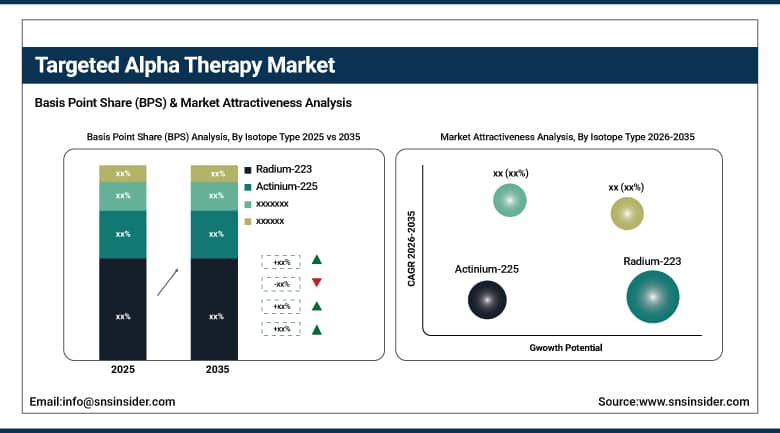
By Isotope Type, Radium-223 segment dominated the Targeted Alpha Therapy Market in 2025 with 39% share; Actinium-225 segment is the fastest growing segment, registering a CAGR of approximately 18.5%.
-
By Therapy Type, Radioligand Therapy segment dominated the market in 2025 with 61% share; Radioimmunotherapy segment is also the fastest growing segment, registering a CAGR of approximately 16.5%.
-
By Indication, Prostate Cancer segment dominated the market in 2025 with 47% share; Leukemia & Hematologic Malignancies segment is the fastest growing segment, registering a CAGR of approximately 17.09%.
-
By End User, Hospitals & Cancer Treatment Centers segment dominated the market in 2025 with 54% share; Specialty Oncology Clinics & Radiopharmacies segment is the fastest growing segment, registering a CAGR of approximately 15.25%.
By Isotope Type, Radium-223 Leads While Actinium-225 Records Fastest Growth
In 2025, Radium-223 occupied the largest share in the Targeted Alpha Therapy Market owing to the proven clinical history of the isotope, with the first-in-class treatment drug, Bayer's Xofigo (radium-223 dichloride), approved by the FDA for bone-metastatic castration-resistant prostate cancer patients. Radium-223 continues to be the sole alpha particle radiopharmaceutical with proven commercialization path and reimbursement process, making its efficacy and safety profile clear, thanks to the real-life data gathered over ten years of its use. The bone-targeting calcium-mimetic mechanism of the therapy makes possible to localize radiation in bone metastases without exposing healthy marrow and soft tissues to radiation.
Actinium-225 is expected to emerge as the fastest growing segment of isotopes in the Targeted Alpha Therapy Market due to the growing number of late-phase development products, PSMA-targeted and CD33-targeted radioligands under pivotal studies. Among these developers of actinium-225-labeled drugs there are Convergent Therapeutics, Novartis, Fusion Pharmaceuticals, and Actinium Pharmaceuticals developing their candidates for the treatment of metastatic castration-resistant prostate cancer and relapsed or refractory acute myeloid leukemia using the high linear energy transfer and the short path of radiation to deliver the dose to the cells around a few cell diameters from the target site. The increasing cooperation of isotope manufacturers, such as NorthStar Medical Radioisotopes and Eckert & Ziegler, and clinical-stage biotech companies solves the supply problems for the isotope.
By Therapy Type, Radioligand Therapy Dominates as Radioimmunotherapy Emerges Fastest-Growing
Radioligand Therapy, consisting of small molecules and peptides conjugated with alpha-emitters, dominated the Targeted Alpha Therapy Market in 2025, due to the clinical advancement of PSMA-targeted and somatostatin receptor-targeted therapies. Small molecule PSMA ligands present excellent pharmacokinetics and fast tumor penetration and renal clearance properties, which have made them a better choice for conjugation with the alpha-emitting isotopes like actinium-225 and lead-212 in the case of prostate and neuroendocrine tumors. The peptide-based somatostatin analogs, which include DOTAMTATE-based therapies, have shown good uptake of tumor cells in case of positive SSTR neuroendocrine tumors.
The Radioimmunotherapy segment of the Targeted Alpha Therapy Market is poised to record the fastest growth due to development of alpha-emitting antibody constructs against targets CD33, CD38, and CD45 for the treatment of hematological cancers, such as Acute Myeloid Leukemia and Multiple Myeloma. The Actimab-A portfolio of Actinium Pharmaceuticals, and similar constructs with CD33 as target have been showing the potentiality of antibody mediated conjugate therapy to exhibit a high degree of specificity in the bone marrow residing blasts of leukemias, where the use of small molecule ligands for targeting has limited scope.
By Indication, Prostate Cancer Leads, Leukemia & Hematologic Malignancies Emerges Fastest-Growing
The indication with the highest share of the Targeted Alpha Therapy Market was prostate cancer in 2025 based on the proven use of radium-223 for treating bone-metastatic castration-resistant prostate cancer and a robust pipeline for PSMA-targeted actinium-225 and lead-212 radioligands at an advanced stage. Prostate cancer is currently the most advanced indication due to its validated PSMA expression profile across all stages and significant patient population that has limited therapeutic options after progression on androgen receptor pathway inhibitors and taxane chemotherapy. Companies such as Novartis, Bayer, Convergent Therapeutics, and Fusion Pharmaceuticals have focused their research efforts on prostate cancer programs due to favorable patient recruitment, presence of imaging biomarker for patient selection and familiarity of physicians with PSMA-targeted radiopharmaceuticals as the previous generation of beta emitters gained commercial success.
The fastest growing segment within the Targeted Alpha Therapy Market is leukemia and hematological malignancies due to increasing clinical development of CD33 and CD38-targeted actinium-225 immunoconjugates for treating relapsed or refractory acute myeloid leukemia and multiple myeloma. The high linear energy transfer and low alpha emitter range makes it an ideal tool for ablating dispersed blasts in bone marrow microenvironment while sparing other hematopoietic stem cells. Increasing numbers of participants in early and mid-stage clinical studies, increasing partnerships between academic medical centers and biotechnological companies and increasing unmet needs of patients who already exhausted conventional chemotherapy and targeted agents are contributing to the fast growth trajectory of the indication.
By End User, Hospitals & Cancer Treatment Centers Dominate, Specialty Oncology Clinics Post Fastest Growth
Hospitals & Cancer treatment centers occupy the largest market share, owing to their availability of radiation safety practices, nuclear medicine departments, and capacity to handle the specific requirements of dosimetry and monitoring in cases of administering alpha emitters. Academic medical centers and comprehensive cancer centers have also been seen to be the prime locations for clinical trials, enabling sponsors to access multidisciplinary oncology groups as well as licensees of radiopharmacy. The need to handle controlled radioactive materials in the context of national regulations has resulted in the consolidation of the administration of alpha therapies within hospitals with specific radiation oncology and nuclear medicine capacities, which has enabled this particular end user to lead the market.
Specialty oncology clinics and radiopharmacies are forecast to be the fastest-growing segments of the Targeted Alpha Therapy Market, driven by the growth of radiopharmacy networks that extend treatment options to communities outside of large academic hospital systems. Some of the key players who will drive this growth include Cardinal Health and Curium Pharma, as they scale regional radiopharmacy networks to facilitate the outpatient administration of approved and investigational alpha emitter therapies to make treatments easier on the patients. This move mimics the distribution practice of radiopharmaceuticals for beta emitter therapies, whereby the decentralization of manufacturing and dose dispensing facilitated greater access to these therapies.
Regional Analysis:
|
Region |
Major Country |
Share within Region, 2025 (%) |
|---|---|---|
|
North America |
United States |
85.90% |
|
Europe |
Germany |
25.40% |
|
Asia Pacific |
Japan |
30.20% |
|
Middle East and Africa |
South Africa |
27.60% |
|
Latin America |
Brazil |
32.40% |
North America Targeted Alpha Therapy Market Insights
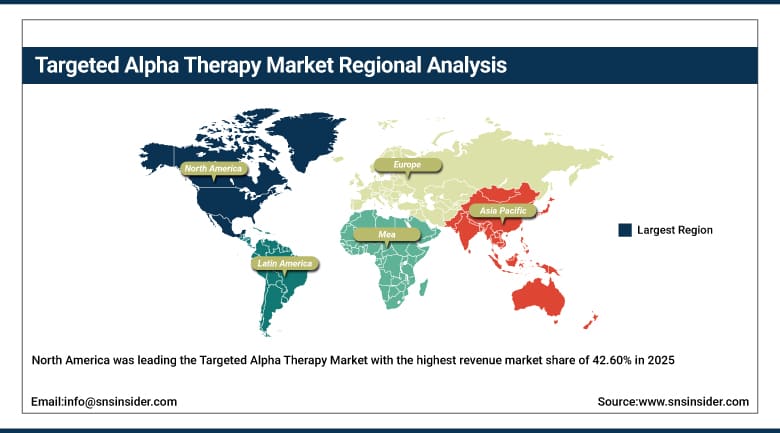
North America was leading the Targeted Alpha Therapy Market with the highest revenue market share of 42.60% in 2025 due to the region's strong late-stage clinical trial activities and infrastructure for nuclear medicines, along with strong presence of radioligand manufacturers like Novartis, Convergent Therapeutics, Fusion Pharmaceuticals, and Actinium Pharmaceuticals. Presence of strong payment and reimbursement mechanisms for radiopharmaceuticals by both governmental and commercial payers, along with active research initiatives by National Cancer Institute, have strengthened the leadership of North America in terms of both FDA-approved and pipeline therapies based on alpha emitter treatments.
In North America, the U.S. was dominating with approximately 85.90% revenue share due to strong late-stage clinical trial activities, isotope manufacturing initiatives supported by the Department of Energy, along with strong availability of Bayer's Xofigo and strong pipeline of actinium-225 drugs. Canada has also added to the strength of the region through strong radioisotopes manufacturing capability by Canadian Nuclear Laboratories and participation in multi-center trials of alpha therapy drugs.
Get Customized Report as Per Your Business Requirement - Enquiry Now
Europe Targeted Alpha Therapy Market Insights
Europe was one of the major regions that had a large share of the global Targeted Alpha Therapy Market in 2025 due to the well-developed nuclear medicine landscape, favorable regulatory paths for radiopharmaceuticals from European Medicines Agency, and regional projects that included isotope supply, such as EU SECURE project designed to improve sustainable production of alpha-emitters. The close cooperation of national laboratories, nuclear medicine departments of universities, and developers of radiopharmaceuticals helped both to run clinical trials and produce isotopes and to be one of the major contributors to global targeted alpha therapies development together with North America.
Germany was the biggest market among other countries of the region of Europe's revenues due to ITM Isotope Technologies Munich's isotope production and development of radioligands. Other Western Europe markets, such as France, generated additional demand thanks to Orano Med and Sanofi's development of AlphaMedix and other drugs on the basis of lead-212.
Asia Pacific Targeted Alpha Therapy Market Insights
The Asia Pacific region is expected to exhibit the highest CAGR of 28.30% amongst all regions in the Targeted Alpha Therapy Market during the forecast period 2026-2035, due to the rising cancer research expenditure in the nation, increased investments toward radiopharmaceuticals manufacturing, and rising number of clinical trials across the vast health infrastructure of the region. Due to the rising incidence of prostate cancer and neuroendocrine tumors in the region along with the increasing infrastructure for nuclear medicine, the Asia Pacific region is expected to grow at the highest rate in this market.
Japan was the leading nation in the region due to the joint efforts of the national research institutes and cancer centers towards developing alpha emitter radioligands domestically. The Asia Pacific region saw contributions by China and South Korea due to an increased number of clinical trial networks and rising investments in radiopharmaceuticals manufacturing.
MEA and Latin America Targeted Alpha Therapy Market Insights
Both the Middle East & Africa and Latin America witnessed consistent growth of the Targeted Alpha Therapy Market on the back of improved nuclear medicine infrastructural set up, increased investments made by the governments to develop treatment capabilities of cancer, and growing cooperation among academia and industry partners regarding radioisotope production in the region. Increased recognition of the use of targeted alpha therapy as an alternative method of treatment of advanced prostate cancer and neuroendocrine tumors that were under-served by traditional systemic therapy methods helped to develop the market gradually.
In the Middle East & Africa region, South Africa was the largest market due to presence of established production capacity of radioisotopes by iThemba LABS. Brazil was the largest market in Latin America in 2025.
Market Dynamics:
Growth Drivers: Rising Late-Stage Pipeline Momentum and Expanding Clinical Adoption of Alpha-Emitter Therapeutics Boost Growth Globally
The growth of the market will be driven by the increased clinical pipeline of late-stage actinium-225, lead-212, and radium-223-based radioligands, growing awareness among physicians about the use of PSMA-targeted and somatostatin receptor-targeted alpha therapies, and growing demand for therapies that provide enhanced efficacy with differentiation in terms of safety over beta-emitter and systemic therapies. The requirement for constant supply of high purity isotopes along with scalable manufacturing capabilities is expected to become an important driver of investment in the target market, as more alpha-emitter programs are advancing towards pivotal studies in prostate cancer, neuroendocrine tumors, and hematological cancers.
Further momentum behind the growing trend will come from the growing number of licensing and co-development deals that are signed between biotechnology companies in the clinical stage and major pharmaceutical companies in an effort to acquire differentiated alpha-emitters prior to regulatory approvals. Research and development in the area is expected to be accelerated due to growing NIH funding along with breakthrough therapy and fast track regulatory designations and all these factors taken together will help increase the interest in the Targeted Alpha Therapy Market.
Restraints: Isotope Supply Constraints and Complex Manufacturing & Regulatory Requirements
The global shortage of key alpha emitters, such as actinium-225 represents another challenge to market growth due to the ongoing dependency on a relatively limited number of national laboratories and special commercial producers that lack scale-up capabilities. Clinical-stage companies may experience difficulties acquiring enough isotope in order to test a greater number of patients even if their therapy shows positive results in terms of efficacy.
The complicated process of manufacturing and licensing of these agents is an additional challenge to market growth because of the special radiation handling requirements, the chemistry of chelating, and short half-lives required by these drugs. The process of obtaining special nuclear material handling licenses and making a Drug Master File submission can be very expensive and difficult for biotech companies venturing into the field.
Opportunities: Expanding Indication Pipelines and Decentralized Radiopharmacy Infrastructure
Extending the pipeline of development for targeted alpha therapy for more oncology indications is an important opportunity, with biotech firms increasingly researching alpha-emitter based drugs for solid tumors, glioblastoma, and additional hematologic malignancies besides the prostate cancer and neuroendocrine tumor indications that have already been well-established in their development pipeline. Those drug developers that are able to prove differentiated efficacy for these new indications can take advantage of the first-mover opportunity in a market where the addressable pool of patients keeps on increasing.
Another opportunity for the future lies in the development of decentralized radiopharmacy infrastructure and production capability, where drug manufacturers that set up large scale distribution and manufacturing capabilities are more likely to have an easier time providing commercial scale access to patients as new alpha-emitter drugs reach the market. Actinium-225 and Lead-212 suppliers that make early investments in increasing the production capacity are expected to capture a large share of this market in the future as it evolves from niche clinical stage opportunity to larger oncology product category.
Recent Developments:
-
2025: Orano Med and Sanofi reported that AlphaMedix (212Pb-DOTAMTATE) achieved all primary efficacy endpoints in its Phase 2 ALPHAMEDIX-02 study in gastroenteropancreatic neuroendocrine tumors.
-
2026: Bristol Myers Squibb advanced RayzeBio's RYZ101 (225Ac-DOTATATE) through expanded enrollment in the pivotal ACTION-1 trial for somatostatin receptor-positive gastroenteropancreatic neuroendocrine tumors.
-
2026: Novartis progressed a next-generation actinium-225 labeled PSMA radioligand candidate into Phase II development, building on its Mariana Oncology radiopharmaceutical platform integration.
Targeted Alpha Therapy Market key players are:
-
Novartis AG
-
Bayer AG
-
Telix Pharmaceuticals Limited
-
Fusion Pharmaceuticals Inc. (AstraZeneca)
-
Eli Lilly and Company
-
Bristol Myers Squibb Company
-
Orano Med
-
Sanofi
-
Convergent Therapeutics, Inc.
-
AdvanCell
-
Actinium Pharmaceuticals, Inc.
-
Perspective Therapeutics, Inc.
-
Ratio Therapeutics
-
Aktis Oncology
-
NorthStar Medical Radioisotopes, LLC
-
Eckert & Ziegler Radiopharma GmbH
-
ITM Isotope Technologies Munich SE
-
Ion Beam Applications SA (IBA)
-
Cardinal Health, Inc.
-
Curium Pharma
Targeted Alpha Therapy Market Report Scope:
| Report Attributes | Details |
|---|---|
| Market Size in 2025 | USD 1,245.30 Million |
| Market Size by 2035 | USD 11,520.80 Million |
| CAGR | CAGR of 24.9% from 2026 to 2035 |
| Base Year | 2025 |
| Forecast Period | 2026-2035 |
| Historical Data | 2022-2024 |
| Report Scope & Coverage | Market Size, Segments Analysis, Competitive Landscape, Regional Analysis, DROC & SWOT Analysis, Forecast Outlook |
| Key Segments | •By Isotope Type, Radium-223 segment dominated the Targeted Alpha Therapy Market in 2025 with 39% share; Actinium-225 segment is the fastest growing segment. •By Therapy Type, Radioligand Therapy segment dominated the market in 2025 with 61% share; Radioimmunotherapy segment is also the fastest growing segment. •By Indication, Prostate Cancer segment dominated the market in 2025 with 47% share; Leukemia & Hematologic Malignancies segment is the fastest growing segment. •By End User, Hospitals & Cancer Treatment Centers segment dominated the market in 2025 with 54% share; Specialty Oncology Clinics & Radiopharmacies segment is the fastest growing segment. |
| Regional Analysis/Coverage | North America (US, Canada), Europe (Germany, UK, France, Italy, Spain, Russia, Poland, Rest of Europe), Asia Pacific (China, India, Japan, South Korea, Australia, ASEAN Countries, Rest of Asia Pacific), Middle East & Africa (UAE, Saudi Arabia, Qatar, South Africa, Rest of Middle East & Africa), Latin America (Brazil, Argentina, Mexico, Colombia, Rest of Latin America). |
| Company Profiles | Novartis AG, Bayer AG, Telix Pharmaceuticals Limited, Fusion Pharmaceuticals Inc. (AstraZeneca), Eli Lilly and Company, Bristol Myers Squibb Company, Orano Med, Sanofi, Convergent Therapeutics, Inc., AdvanCell, Actinium Pharmaceuticals, Inc., Perspective Therapeutics, Inc., Ratio Therapeutics, Aktis Oncology, NorthStar Medical Radioisotopes, LLC, Eckert & Ziegler Radiopharma GmbH, ITM Isotope Technologies Munich SE, Ion Beam Applications SA (IBA), Cardinal Health, Inc., Curium Pharma. |

Frequently Asked Questions
Key Players include Novartis AG, Bayer AG, Telix Pharmaceuticals Limited, Fusion Pharmaceuticals Inc. (AstraZeneca), and Eli Lilly and Company, among others.
Key opportunities include expanding radiopharmaceutical pipelines, increasing adoption of alpha-emitting isotopes, growing cancer indications, theranostic advancements, and investments in commercial-scale isotope production.
The major growth factor is the expanding late-stage clinical pipeline of actinium-225 and lead-212 labeled radioligands, rising PSMA-targeted radioligand adoption, and growing regulatory support for alpha-emitter radiopharmaceuticals.
The Radium-223 segment dominated the Targeted Alpha Therapy Market by isotope type, representing the largest share of revenue in 2025.
North America dominated the Targeted Alpha Therapy Market in 2025, holding an estimated 42.60% share of total global market revenue.
Asia Pacific is expected to register the fastest CAGR of approximately 28.30% from 2026 to 2035, driven by expanding clinical trial infrastructure and rising radiopharmaceutical manufacturing investment.
