
Tea Packaging Market Report Scope & Overview:
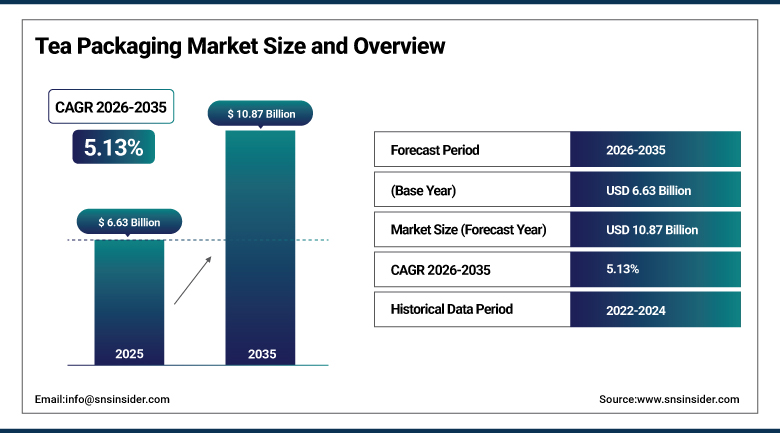
The Tea Packaging Market was valued at USD 6.63 Billion in 2025 and is expected to reach USD 10.87 Billion by 2035, growing at a CAGR of 5.13% from 2026 to 2035.
Packaging Tea represents one of the most innovative sectors within the overall packaging industry of food and beverages. Considering tea is the second most popular beverage after water across the globe, packaging for tea continues to face constant and high demand due to the requirement of an efficient, consumer-oriented, and sustainable approach. The tea packaging sector is driven by the ever-evolving demands of tea consumers around the world, development of luxury teas, premium varieties, and increasing institutional demand from hotels, food and beverages, and online businesses. The innovations in this field are heat-sealing tea bag, loose leaf tea tin, single serve tea pod, stand-up pouch, and biodegradable packaging solutions.
Amcor plc, one of the top packaging companies in the world, announced net sales exceeding USD 14 Billion in the FY2025 for its flexible and rigid packaging offerings that now cater to the global hot beverages industry, including tea.
To Get more information Tea Packaging Market - Request Free Sample Report
Tea Packaging Market Trends
-
Growing demand for eco-friendly and biodegradable materials is reshaping tea packaging choices globally.
-
Rising premium tea consumption is boosting demand for rigid and decorative formats like tins and glass jars.
-
Expansion of single-serve pods and capsules is increasing demand for premium convenience packaging.
-
E-commerce growth is driving adoption of durable, protective flexible packaging for safe delivery.
-
Regulatory pressure in Europe and North America is accelerating shift toward plastic-free and compostable solutions.
The U.S. Tea Packaging Market Outlook
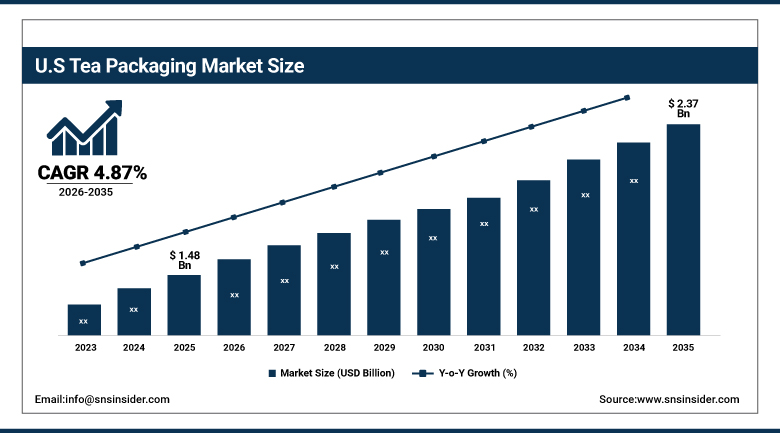
The U.S. Tea Packaging market was valued at USD 1.48 Billion in 2025 and is projected to reach USD 2.37 Billion by 2035, growing at a CAGR of 4.87%.
The USA can be considered one of the most advanced markets for packaging solutions in North America, with an abundance of high-quality tea brands, well-developed sales and distribution channels, and rapidly emerging e-commerce options for the delivery of hot beverages. The USA is also leading when it comes to sustainable packaging adoption, with top tea brands making public pledges regarding the use of eco-friendly and compostable packaging. Biodegradable tea bag products, minimalistic eco-packaging designs, and convenient products such as single-serve capsules and stick packs are gaining popularity among consumers. Additionally, growing consumption of wellness and functional teas, including herbal, matcha, and adaptogenic variants, expands the scope of the packaging market even further.
In 2025, several leading U.S. tea and packaged beverage companies accelerated the rollout of compostable and unbleached fiber-based tea bags across their mainstream product lines, responding to growing retailer sustainability requirements and heightened consumer scrutiny of packaging materials. Additionally, the premium loose-leaf tea segment witnessed significant expansion of resealable pouch formats with custom barrier coatings, providing extended freshness and premium unboxing experiences aligned with direct-to-consumer brand positioning strategies.
Tea Packaging Market Segment Analysis
-
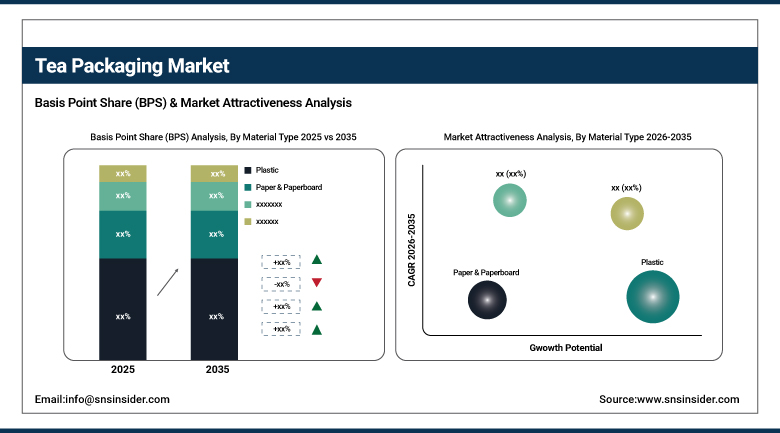
By Material Type, plastic dominated the market with a 42.16% share in 2025, while biodegradable/compostable materials are the fastest-growing segment with a CAGR of 7.73% from 2026 to 2035.
-
By Packaging Format, flexible packaging dominated the market with a 63.45% share in 2025, while rigid packaging is the fastest-growing format with a CAGR of 5.93% from 2026 to 2035.
-
By Packaging Type, tea bags dominated the market with a 51.16% share in 2025, while single-serve pods/capsules are the fastest-growing segment with a CAGR of 6.46% from 2026 to 2035.
-
By Distribution Channel, supermarkets & hypermarkets dominated the market with a 34.45% share in 2025, while online retail/e-commerce is the fastest-growing channel with a CAGR of 6.25% from 2026 to 2035.
By Material Type, plastic dominates the tea packaging market, while biodegradable/compostable materials are the fastest-growing segment.
Plastic segment dominated the tea packaging market with the highest revenue share of 42.16% in 2025, underpinned by its superior moisture barrier properties, cost-effectiveness, manufacturing scalability, and extensive compatibility across flexible and semi-rigid packaging formats. The use of plastic materials continues to dominate as the most common material for making tea bags, overwraps, pillow packs, and multi-ply flexible laminate packages for mass market tea products worldwide. This is in addition to the availability of strong recycling mechanisms, good material sourcing systems, and the ease of automating the filling and sealing operations on production lines.
Biodegradable/Compostable Materials segment is projected to grow at the fastest CAGR of 7.73% during 2026–2035, powered by rapid regulatory pressures to ban single-use plastics, increased adoption of sustainable packaging in retail sectors, and increased consumer acceptance to spend more money on packaging systems that have been eco-certified. The market is experiencing considerable traction especially in the premium and specialty teas segments where the origins and the environmental sustainability of packaging materials play an important part in building brand identity. This growth is further augmented by the increasing availability of compostable films for food contact use, plant fiber non-woven tea bags, and aqueous coatings.
By Packaging Format, flexible packaging dominates the tea packaging market, while rigid packaging is the fastest-growing segment.
Flexible Packaging segment dominated the market with the highest revenue share of approximately 63.45% in 2025, owing to its versatility, cost efficiency, and wide applicability across virtually all tea packaging types including tea bags, sachets, stick packs, and standup pouches. Flexible packaging offers brands significant advantages in terms of design customization, shelf space optimization, and logistics cost reduction through lower packaging-to-product weight ratios. The segment also benefits from rapid technological advances in barrier coating systems, resealable zipper closures, and custom printing capabilities that enable differentiated shelf presence.
Rigid Packaging segment is projected to grow at the fastest CAGR of 5.93% during 2026–2035, driven by accelerating premiumization trends within the global tea market and the growing strategic importance of packaging as a luxury brand communication tool. Decorative tins, glass canisters, and premium cardboard boxes are increasingly used by specialty tea brands to communicate product heritage, craftsmanship, and quality positioning. Rising gifting culture around premium tea products, particularly in Asian and European markets, is providing strong structural demand for rigid formats. Furthermore, the reusability and perceived sustainability of metal and glass rigid packaging is aligning with the eco-conscious preferences of premium consumer segments.
By Packaging Type, tea bags dominate the tea packaging market, while single-serve pods/capsules are the fastest-growing segment.
Tea Bags segment dominated the tea packaging market with the highest revenue share of approximately 51.16% in 2025, reflecting tea bags’ status as the globally dominant tea consumption format across household, foodservice, and institutional channels. Their convenience, standardized dosing, and minimal preparation requirements continue to drive mass-market adoption across mature and emerging markets alike. Continuous product innovation—including the adoption of pyramid mesh bags, string and tag elimination, and compostable non-woven materials—is sustaining consumer interest while enabling manufacturers to differentiate across price tiers. Strong brand recognition and extensive retail distribution infrastructure further reinforce the category’s market leadership.
Single-Serve Pods/Capsules segment is projected to grow at the fastest CAGR of 6.46% during 2026–2035, supported by the expanding penetration of single-serve hot beverage systems in homes and offices globally. Rising consumer appetite for premium, barista-style tea experiences at home, combined with growing product innovation in specialty tea capsule formats compatible with major brewing platforms, is driving strong demand. The segment benefits from premiumization trends, increasing brand investment in capsule-compatible tea SKUs, and the growing influence of younger, convenience-oriented consumer demographics who prioritize quality, speed, and consistency in hot beverage preparation.
By Distribution Channel, supermarkets & hypermarkets dominate the tea packaging market, while online retail/e-commerce is the fastest-growing segment.
Supermarkets & Hypermarkets segment dominated the tea packaging market with the highest revenue share of 34.45% in 2025, owing to their expansive product assortment, high consumer footfall, and strong promotional capabilities that drive impulse purchasing and brand trial across mass-market tea categories. These channels provide unmatched shelf space for a broad range of packaging formats, enabling consumers to physically evaluate packaging quality, compare product offerings, and engage with brand communications at the point of purchase. Structured in-store promotions, private-label tea portfolio expansions, and growing dedicated ‘specialty beverages’ sections within major retail chains are further consolidating the dominance of this channel.
Online Retail/E-commerce segment is projected to grow at the fastest CAGR of 6.25% during 2026–2035, driven by accelerating global digital commerce adoption, the structural shift toward direct-to-consumer brand models, and the superior ability of e-commerce to serve niche specialty and premium tea segments that have limited physical retail penetration. Subscription-based tea delivery models, personalized tea curation services, and growing cross-border e-commerce flows for specialty teas are reshaping purchasing behavior.
Regional Analysis
|
Region |
Major Country |
Share within Region, 2025 (%) |
|---|---|---|
|
North America |
United States |
85.54% |
|
Europe |
Germany |
35.46% |
|
Asia Pacific |
China |
42.05% |
|
Middle East & Africa |
UAE |
32.54% |
|
Latin America |
Brazil |
44.39% |
North America Tea Packaging Market Insights
North America offers a highly evolved and dynamic market in tea packaging in 2025, featuring significant demands for branded packaging, established retail distribution networks, and strict sustainability initiatives on the part of both brand names and leading retailers. The U.S. is the dominant contributor to revenue in North America in tea packaging, contributing about 85.54% of revenue in this region owing to the strength of per capita tea spending, increasing importance of high-end and wellness teas, and strong growth of the e-commerce platform. Compostable tea bags, sustainable packaging, and premium rigid packaging highlight consumer concerns for sustainability, which continues to be a megatrend affecting food and beverage purchases. Canada offers a burgeoning secondary market owing to increased use of specialty teas and the rise of premium packaging in the hands of urban consumers.
Nearly 65% of U.S. specialty tea consumers indicated a preference for brands utilizing compostable or recyclable packaging materials in 2025, reflecting growing environmental consciousness as a mainstream purchase influencer. Concurrently, the premium rigid tea tin and canister segment is estimated to represent over 18% of U.S. specialty tea packaging revenues, driven by premium gift sets and artisanal brand positioning strategies targeting urban millennial and Gen Z consumers.
Europe Tea Packaging Market Insights
Europe is the fastest-growing regional tea packaging market, projected to expand at a CAGR of 5.86% through 2035, backed by strong regulatory requirements for sustainable packaging, an established cultural tradition of tea consumption in countries like the UK, Germany, Russia, and Poland, as well as advanced adoption of premium loose-leaf and specialized tea products. The EU market represents one of the leading global regions when it comes to using plastic-free tea bags due to the EU’s legislation on single-use plastics and retailers’ sustainable initiatives. Major tea-consuming countries such as the UK, Germany, France, Italy, and Russia have a high consumption rate of tea, well-developed retail infrastructure, and increased propensity to purchase sustainable packaging at a premium price.
Nearly 65% of major European tea manufacturers have restructured secondary packaging (boxes, cartons, wraps) to meet EU sustainability compliance requirements under PPWR guidelines. Close to 40% reduction in conventional plastic-based tea packaging usage has been recorded in Northern and Western Europe over the last product transition cycles due to retailer sustainability mandates.
Asia Pacific Tea Packaging Market Insights
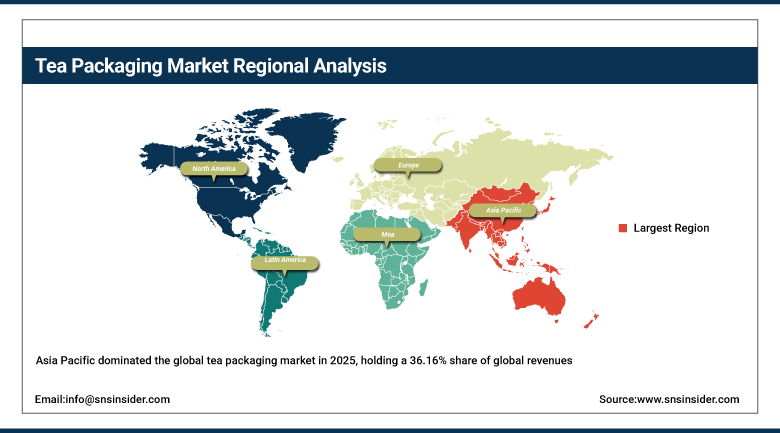
Asia Pacific dominated the global tea packaging market in 2025, holding a 36.16% share of global revenues, fueled by the unique affinity for tea drinking culture, immense production base, burgeoning middle-class consumer base, and increasingly advanced retail and online marketing structure in the region. There is marked market diversity in the region, with China and Japan as the mature markets requiring premium packaging for their tea products, while India, Indonesia, Vietnam, and other ASEAN emerging markets still rely on efficient packaging options. China leads the region in premium tea packaging, driven by high demand for decorative tins, premium pouches, and gift-oriented rigid formats. India remains a volume leader, dominated by flexible sachets and tea bag packaging formats.
Over 55% of global tea production originates from Asia Pacific, with China, India, Kenya, and Sri Lanka accounting for the majority of global output. In China, the premium gift tea packaging segment—characterized by decorative wooden boxes, ceramic containers, and custom tin packaging—is estimated to exceed USD 1 Billion in annual retail value, reflecting deep cultural associations between premium tea presentation and social gifting practices in the Chinese market.
Get Customized Report as per Your Business Requirement - Enquiry Now
Middle East & Africa (MEA) and Latin America Tea Packaging Market Insights
The MEA region along with Latin America is a relatively new but rapidly developing segment in terms of tea packaging needs. Such development is fueled by the increasing number of people, increased urbanization, popularity of tea drinking culture, and development of modern retailing and food services facilities. Among MEA regions, those include GCC countries, South Africa, and Egypt, which have a high level of tea culture with preference for black tea and herbal beverages, leading to steady demand for tea packaging solutions. The hospitality industry in GCC countries serves as a volume factor for institutional tea packaging. Among Latin America, Brazil, Mexico, Argentina, and Colombia are the main market players in terms of tea packaging.
Nearly 45% of premium tea in GCC markets and around 35% of premium tea launches in Brazil use rigid or premium flexible packaging formats such as tins, decorative boxes, and stand-up pouches. Tea packaging in MEA remains highly import-dependent at 55%, while Latin America shows 25–30% innovation driven by global FMCG standardization. Across both regions, flexible packaging dominates the market, accounting for over 60% share in Latin America and nearly 55% of retail tea packaging demand in MEA.
Market Dynamics
Growth Drivers: Premiumization of tea consumption and global sustainability packaging mandates
There is solid structural growth seen within the tea packaging market due to the coinciding development of the premium tea trend and sustainable packaging regulatory pressures throughout the globe. In advanced economies, consumers have become more prone towards purchasing premium, artisanal, and functional teas, where they inherently need high-quality packaging products in order to demonstrate product value and brand legacy. The trend of premium teas creates the need for advanced rigid formats, custom prints, advanced barrier laminates, and innovative structural design solutions. Due to the stricter sustainability regulation requirements in EU, UK, and California, tea brands and packaging suppliers seek sustainable packaging solutions, such as recyclability and lack of plastic materials.
Restraints: Raw material cost volatility and technical complexity of sustainable packaging transitions
The tea packaging industry is significantly affected by substantial fluctuations in material prices due to supply chain disruptions, increased energy costs, and geopolitical uncertainty, with such raw materials as oil-based plastic resin, aluminum foil, specialized paperboard stocks, and plant-derived bioplastics that can be used in compostable packaging. The cost issues associated with the mentioned problems prevent packaging producers from being able to remain competitive and invest in innovation at the same time. In addition, there is an engineering problem of switching from traditional packaging solutions to more sustainable materials. It requires considerable effort and investment to achieve equal performance standards in terms of protective properties, production compatibility, and regulations in multiple markets.
Opportunities: Expansion of e-commerce direct-to-consumer channels and biodegradable material innovation
The tea packaging industry offers attractive growth opportunities driven by the fundamental change in packaging needs caused by the exponential growth of e-commerce and direct-to-consumer delivery channels. The creation of subscription business models demands advanced protective, premium, and sustainable packaging solutions that provide reliable logistics performance as well as excellent consumer unboxing experiences. In addition to requiring the development of entirely new packaging formats, material types, and solutions, these dynamics are generating significant opportunities in markets and applications where conventional retail packaging providers have limited expertise. Advanced technologies in the development of bio-based and compostable materials (PLA-free films, mycelium packaging, seaweed coatings, and fiber-based barriers) are offering early movers a competitive edge in certifying and scaling these solutions in food-grade tea packaging applications before regulatory requirements exist.
Recent Developments:
-
2025: Amcor introduced AmLite Ultra Recyclable monomaterial PET laminate for tea packaging, delivering high-barrier performance while enabling full recyclability to meet EU and North American sustainability regulations such as PPWR and EPR compliance requirements.
-
2025: Mondi expanded its EcoVio compostable packaging portfolio, offering certified industrially compostable tea pouches and overwrap solutions designed to help premium tea brands in Europe transition toward fully sustainable packaging systems.
-
2026: Huhtamaki significantly scaled production of plant-fiber-based compostable tea bag materials across its European facilities, supporting large-scale replacement of polypropylene tea bags in response to retailer-driven plastic-free packaging mandates.
-
2026: Berry Global launched advanced PCR-based flexible packaging structures incorporating up to 50% post-consumer recycled content, specifically engineered for premium and specialty tea applications requiring strong barrier properties and high-quality print aesthetics for retail differentiation.
Tea Packaging Market Key Players are:
-
Amcor plc
-
Mondi Group
-
WestRock Company
-
Smurfit Kappa Group
-
DS Smith plc
-
Huhtamaki Oyj
-
Berry Global Group Inc.
-
Sealed Air Corporation
-
Sonoco Products Company
-
Constantia Flexibles Group
-
ProAmpac LLC
-
Coveris Group
-
Novolex Holdings LLC
-
Winpak Ltd.
-
Uflex Limited
-
ITC Limited (Packaging & Printing Business)
-
Stora Enso Oyj
-
Tetra Pak International S.A.
-
Printpack Inc.
-
TC Transcontinental Packaging
Tea Packaging Market Report Scope:
| Report Attributes | Details |
|---|---|
| Market Size in 2025 | USD 6.63 Billion |
| Market Size by 2035 | USD 10.87 Billion |
| CAGR | CAGR of 5.13% From 2026 to 2035 |
| Base Year | 2025 |
| Forecast Period | 2026-2035 |
| Historical Data | 2022-2024 |
| Report Scope & Coverage | Market Size, Segments Analysis, Competitive Landscape, Regional Analysis, DROC & SWOT Analysis, Forecast Outlook |
| Key Segments | • By Material Type (Plastic (PET, PP, LDPE), Paper & Paperboard, Aluminum Foil, Glass, Biodegradable / Compostable Material) • By Packaging Format (Flexible Packaging, Rigid Packaging, Semi-rigid Packaging) • By Packaging Type (Tea Bags (Heat-sealed, Staple-based, Staple-free), Loose Tea Packaging (Pouches, Tins, Caddies), Single-Serve Pods/Capsules, Sachets & Stick Packs) • By Distribution Channel (Supermarkets & Hypermarkets, Convenience Stores, Specialty Stores, Online Retail / E-commerce, Foodservice / HoReCa) |
| Regional Analysis/Coverage | North America (US, Canada), Europe (Germany, UK, France, Italy, Spain, Russia, Poland, Rest of Europe), Asia Pacific (China, India, Japan, South Korea, Australia, ASEAN Countries, Rest of Asia Pacific), Middle East & Africa (UAE, Saudi Arabia, Qatar, South Africa, Rest of Middle East & Africa), Latin America (Brazil, Argentina, Mexico, Colombia, Rest of Latin America). |
| Company Profiles | Amcor, Mondi, WestRock, Smurfit Kappa, DS Smith, Huhtamaki, Berry Global, Sealed Air, Sonoco Products Company, Constantia Flexibles, ProAmpac, Coveris, Novolex, Winpak Ltd., Uflex Limited, ITC Limited (Packaging & Printing Business), Stora Enso, Tetra Pak, Printpack Inc., TC Transcontinental Packaging. |

Frequently Asked Questions
The tea packaging market is expected to grow at a CAGR of 5.13% from 2026 to 2035.
The tea packaging market was valued at USD 6.63 Billion in 2025.
Key growth factors include rising premium tea consumption driving demand for high-quality packaging, a strong shift toward sustainable and recyclable materials due to regulations and consumer preferences, and rapid e-commerce expansion requiring durable, logistics-optimized packaging solutions.
