
Vulvodynia Treatment Market Report Scope & Overview:
The Vulvodynia Treatment Market size is valued at USD 6.63 Billion in 2025 and is projected to reach USD 12.41 Billion by 2035, growing at a CAGR of 6.53% during the forecast period 2026–2035.
The Vulvodynia Treatment Market analysis report highlights the overall scenario associated with the market dynamics and emerging treatment trends. Increased consciousness toward chronic pain disorders, high rates of diagnoses, increased usage of multidisciplinary treatments, and women’s health care facilities have been driving growth in the market from 2026 to 2035.
In 2025, the share of oral and topical drugs combined was almost 70% of the prescription volume, owing to the strong demand for easily administrable drugs.
Market Size and Forecast:
-
Market Size in 2025: USD 6.63 Billion
-
Market Size by 2035: USD 12.41 Billion
-
CAGR: 6.53% from 2026 to 2035
-
Base Year: 2025
-
Forecast Period: 2026–2035
-
Historical Data: 2022–2024

To Get more information on Vulvodynia Treatment Market - Request Free Sample Report
Vulvodynia Treatment Market Trends:
-
Rising diagnosis rates as awareness campaigns and advocacy reduce underreporting.
-
Strong uptake of topical and oral therapies, with anticonvulsants and antidepressants gaining traction.
-
Expansion of online pharmacies and telemedicine, offering discreet and convenient access.
-
Growth of specialty clinics dedicated to pelvic pain and women’s health.
-
Pipeline innovation in neuropathic pain therapies and novel delivery formats (transdermal patches, intravaginal gels).
-
Increasing adoption of multidisciplinary care models combining medical, psychological, and physical therapy.
-
Rising homecare adoption, supported by self-administered therapies and digital health platforms.
-
Ongoing challenges of cultural stigma and underdiagnosis, particularly in conservative regions.
U.S. Vulvodynia Treatment Market Insights:
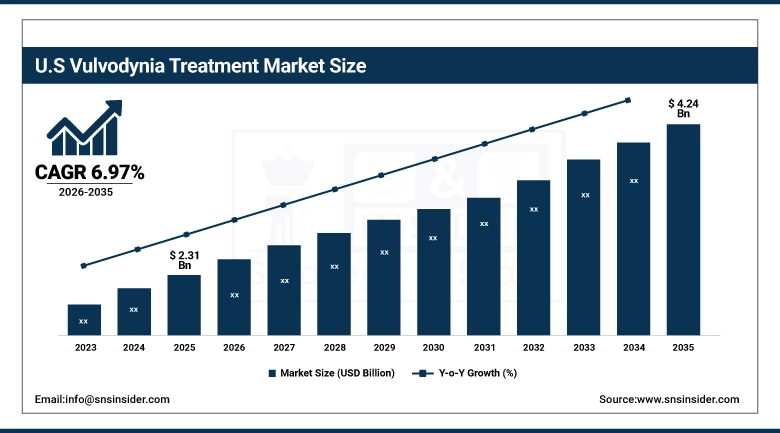
The U.S. Vulvodynia Treatment Market is projected to grow from USD 2.31 Billion in 2025 to USD 4.24 Billion by 2035, at a CAGR of 6.97%. The growth will be fueled by increased awareness and diagnoses of chronic pelvic pain syndromes, increasing popularity of multi-disciplinary therapy, good acceptance of both topical and oral medicines with an increasing trend of using anti-convulsive and anti-depressant medications, and innovations in novel drug delivery systems including oral, topical, injectable, and transdermal drugs.
Vulvodynia Treatment Market Growth Drivers:
-
Rising awareness of chronic pelvic pain disorders and increasing diagnosis rates are key drivers of vulvodynia treatment market growth.
The growing use of novel therapy by hospitals, specialty centers, rehab centers, and home healthcare organizations includes various drug classes which includes local anesthesia, anti-depressants, anti-convulsants, hormonal creams, and muscle relaxers for managing pain and improving quality of life. The advancements in oral dosage forms, transdermal patches, injections, and topicals, along with their efficacy, enhanced safety profile, and increased adherence rates, are fueling this trend even further.
By 2025, over 60% of hospitals, specialty clinics, and homecare providers utilized advanced vulvodynia therapies to address chronic pelvic pain and neuropathic conditions, reflecting strong momentum toward multidisciplinary and patient-centric care models.
Vulvodynia Treatment Market Restraints:
-
Persistent underdiagnosis and cultural stigma surrounding vulvodynia remain key restraints on market growth.
Gynecologists and centers for pelvic pain management have difficulty adopting standardized treatment methods due to a lack of standard guidelines, inconsistency in the response of patients to treatment, and lack of awareness on the part of patients and practitioners. The high cost of treatment, inadequate accessibility to treatment, and disparities in health care facilities across different regions limit the adoption of these treatment methods.
In 2025, fewer than 45% of healthcare providers consistently implemented advanced vulvodynia therapies, reflecting ongoing barriers to widespread adoption and highlighting the need for stronger education, advocacy, and policy support.
Vulvodynia Treatment Market Opportunities:
-
Growing development of innovative topical, oral, and transdermal therapies presents significant opportunities for the vulvodynia treatment market.
Medical facilities, specialty healthcare providers, and homecare facilities are becoming reliant on modern categories of medicines including local anesthetics, antidepressants, anticonvulsants, hormonal creams, and muscle relaxants to provide better medical services and enhance patients' health. In this context, pharmaceutical manufacturers developing safer and innovative forms of these drugs could benefit from the existing scenario. New developments in terms of oral, topical, injectable, and transdermal delivery methods, along with other factors, will facilitate the process of incorporating these drugs.
By 2025, over 55% of healthcare providers had adopted advanced vulvodynia therapies to manage chronic pelvic pain and neuropathic conditions, reflecting strong momentum toward innovation-driven market expansion.
Vulvodynia Treatment Market Segmentation Analysis:
-
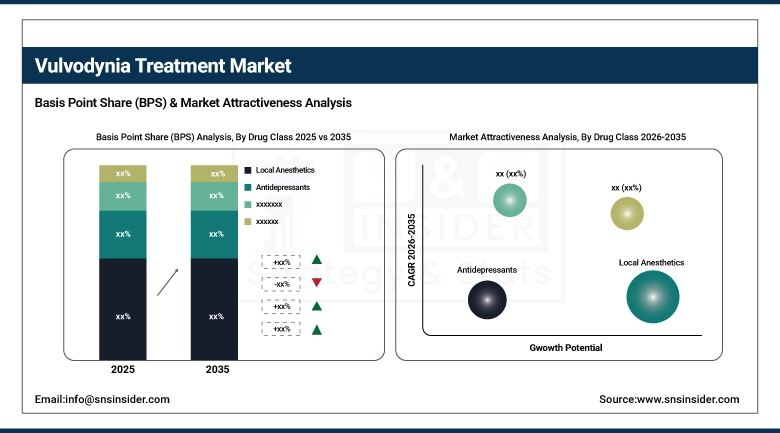
By Drug Class, Local Anesthetics held the largest market share of 25.28% in 2025, while Anticonvulsants are expected to grow at the fastest CAGR of 7.84% during 2026–2035.
-
By Route of Administration, Oral dominated with 35.68% market share in 2025, whereas Topical are projected to record the fastest CAGR of 7.18% through 2026–2035.
-
By End-Users, Hospitals accounted for the highest market share of 41.46% in 2025, while Specialty Clinics are expected to grow at the fastest CAGR of 7.41% during the forecast period.
-
By Distribution Channel, Hospital Pharmacy dominated with a 37.86% share in 2025, while Online Pharmacy are anticipated to expand at the fastest CAGR of 7.41% through 2026–2035.
By Drug Class, Local Anesthetics Dominate While Anticonvulsants Grow Rapidly:
The Local Anesthetics category holds a dominant market share within the Vulvodynia treatment industry owing to its broad usage as a primary treatment approach for controlling localized pain and irritation. These drugs are widely used in various healthcare settings due to their fast-acting nature and effectiveness in alleviating symptoms.
The Anticonvulsants category is fastest growing due to rising drug prescription rates in cases of chronic and neuropathic pain in patients with vulvodynia. Medications such as gabapentin and pregabalin are becoming increasingly popular. Rising awareness of neuropathic mechanisms underlying vulvodynia, along with growing preference for systemic therapies is accelerating the adoption of anticonvulsant-based treatment.
By Route of Administration, Oral Dominates While Topical Grow Rapidly:
The Oral segment dominates in the Vulvodynia Treatment market due to the use of systemic treatment drugs for chronic and neuropathic pain management. This includes oral drugs such as anti-depressants and anticonvulsants that are often administered for effective management of pain symptoms. The ease of administration and proven effectiveness makes the oral segment one of the most widely used segments.
The Topical segment is projected to be the fastest growing due to its increasing popularity. This includes topical creams that act locally to treat pain and have no side effects on the rest of the body. The rising awareness about multi-modal treatment and increasing usage in ambulatory care centers is driving this growth.
By End-Users, Hospitals Dominate While Specialty Clinics Grow Rapidly:
The Hospitals segment dominates the market due to its critical position in diagnosing patients and initiating treatments for moderate to severe cases of vulvodynia. The presence of multi-speciality departments such as gynecology, pain management, and neurology within hospitals attracts more patients and encourages the adoption of treatment modalities.
The Specialty Clinics segment is witnessing fast-paced growth owing to the growing inclination among patients toward specialty clinics that provide specialized expertise in managing cases related to women’s health. The high success rate of treatment at such centers has boosted demand and propelled the growth of this segment.
By Distribution Channel, Hospital Pharmacy Dominates While Online Pharmacy Grows Rapidly:
Hospital Pharmacy constitutes the dominant segment of the Vulvodynia Treatments Market owing to the substantial number of prescriptions written within hospitals and the requirement for prompt availability of pain medications. Hospitals act as the main entry points where patients are diagnosed and treated, and therefore, their pharmacy services continue to be heavily utilized.
Online Pharmacy will account for the fastest growth rate in terms of revenue generation. With the advent of online pharmacies, more and more patients who suffer from chronic diseases are opting to use these channels rather than visit their healthcare providers physically.
Vulvodynia Treatment Market Regional Analysis:
North America Vulvodynia Treatment Market Insights:
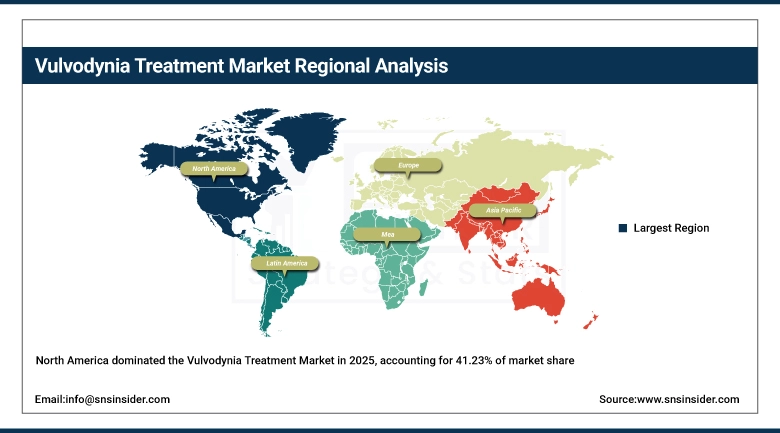
North America is the dominant regional market, responsible for more than 41.23% of global market share in 2025. The development of North America's vulvodynia treatment market is propelled by improved medical facilities, heightened awareness campaigns, and the use of oral and topical drugs. Hospitals, specialized centers, and rehabilitation centers are employing multi-faceted strategies that integrate medication and pelvic floor physical therapy.
Get Customized Report as per Your Business Requirement - Enquiry Now
U.S. Vulvodynia Treatment Market Insights:
United States holds the maximum market share for the North America due to high diagnoses, established healthcare facilities, and high usage of local anesthetics, antidepressants, and anticonvulsants. The majority of treatments take place through specialty clinics and hospitals, and online pharmacies are also on the rise here. Reimbursement policies, well-established clinical practices, and active research into women's health further strengthen this position.
Asia-Pacific Vulvodynia Treatment Market Insights:
The Asia-Pacific region has the fastest growth rate in terms of CAGR at 8.13%, mainly due to an increase in awareness regarding the health problems of women, better infrastructure in terms of health facilities, and the growing use of topical drugs. Nations such as India, Japan, and South Korea are working on developing plans to tackle pelvic pain, while telehealth services have increased accessibility. Despite cultural stigma being an obstacle, the support of government programs and advocacy groups has improved diagnoses. This region holds immense opportunities for growth and will grow at a faster pace till 2035.
China Vulvodynia Treatment Market Insights:
The Chinese vulvodynia market is experiencing increased traction with the growth in health care accessibility, heightened awareness drives, and funding from the government into women’s health care services. Hospitals and specialized centers are utilizing cutting-edge treatments such as local anesthesia and antidepressants, while online pharmacies are ensuring discreet availability for patients. While cultural sensitivities and misdiagnoses are common issues, there are high adoption rates in urban areas.
Europe Vulvodynia Treatment Market Insights:
European countries are home to an appreciable market segment for vulvodynia treatments, driven by a well-developed healthcare infrastructure, patient advocacy groups, and effective insurance coverage. The UK, France, and Italy are among those countries that are at the forefront of adopting a multidisciplinary approach to treatment, while topical and oral treatments continue to dominate the scene. The number of specialty centers for managing pelvic pain is growing, along with the decrease in societal stigma through awareness programs.
Germany Vulvodynia Treatment Market Insights:
The German market is one of the major treatment markets for vulvodynia within Europe due to its extensive healthcare network, effective patient advocacy, and increased use of topically and orally applied medications. Pelvic floor physiotherapy is also gaining more attention from the healthcare sector through partnerships with pharmacotherapy. The government has developed supportive policies and clinical practice guidelines to ensure consistent use of the medications.
Latin America Vulvodynia Treatment Market Insights:
The Latin American vulvodynia treatment market is developing due to incremental progress in the health care sector and increased recognition of the chronic pelvic pain conditions. The nations spearheading the development include Brazil and Mexico, where hospitals and specialized centers have adopted advanced treatments for the disorder. E-pharmacies and telemedicine have improved the availability of the medications, especially in cities.
Middle East & Africa Vulvodynia Treatment Market Insights:
The Middle East and Africa market may be relatively smaller, but it is growing consistently thanks to better access to gynecology-related products and better health infrastructure spending. Nations such as Saudi Arabia, UAE, and South Africa have been at the forefront of adopting topical and oral drug therapy regimens, while hospitals and specialized clinics are slowly embracing new methods of treatment. However, there is still plenty of cultural taboo associated with the condition.
Vulvodynia Treatment Market Competitive Landscape:
Pfizer Inc.
Pfizer Inc. is one of the largest biopharmaceutical firms in the United States, with notable involvement in women’s health issues and pain treatments, which includes medications for the treatment of vulvodynia. The diversified product line focuses on effectiveness, safety, and affordability through robust research and development and manufacturing processes. Pfizer continues to develop advanced medications, novel dosage forms, and collaborations to enhance its presence in the chronic pain and gynecological disorders markets.
-
In September 2025, Pfizer advanced 11 pivotal studies, expanded biosimilar offerings, and strengthened its pipeline in immunology and neurology, positioning itself for long-term growth.
Eli Lilly and Company
Eli Lilly, based in Indianapolis, is a leader in the pharmaceutical industry, which also specializes in women’s healthcare and pain management. Eli Lilly has products in the areas of neurology, immunology, metabolism, and includes anti-depressant and anti-convulsant drugs for the treatment of vulvodynia. Eli Lilly prioritizes innovation with biologicals, oral drugs, and AI-enabled research & development partnerships.
-
In August 2025, Lilly reported a 43% revenue increase in Q4 2025, driven by Mounjaro and Zepbound. Regulatory progress included FDA approval of Kwikpen for tirzepatide and expanded indications for Jaypirca. Pipeline highlights included positive Phase 3 results for Taltz and Zepbound in psoriatic arthritis and obesity, and submissions for orforglipron in obesity and type 2 diabetes.
GlaxoSmithKline (GSK)
GlaxoSmithKline, headquartered in the United Kingdom, is one of the leading multinational drug manufacturers that specialize in specialty drugs, vaccines, and women’s healthcare products. Immunology, neurology, and inflammation, which are of particular importance for the treatment of vulvodynia, fall within the range of competencies possessed by GlaxoSmithKline. The use of strategic alliances and modern drug delivery systems ensures the competitive position of the organization on the international market.
-
In December 2025, GSK delivered strong Q3 2025 results, with specialty medicines sales rising 16% and oncology sales up 39%. The company entered a partnership with Hengrui Pharma to secure COPD drug HRS‑9821 and 11 early-stage programs, reflecting its strategic pivot toward cross-border innovation and pipeline diversification.
Vulvodynia Treatment Market Key Players:
Some of the Vulvodynia Treatment Market Companies are:
-
Pfizer
-
Eli Lilly
-
GlaxoSmithKline
-
Novartis
-
Johnson & Johnson
-
AbbVie
-
Bayer
-
Sanofi
-
AstraZeneca
-
Bristol Myers Squibb
-
Merck & Co.
-
Teva Pharmaceuticals
-
Amgen
-
Takeda
-
Boehringer Ingelheim
-
Ipsen
-
Endo International
-
Mallinckrodt Pharmaceuticals
-
Lupin Pharmaceuticals
-
Sun Pharma
| Report Attributes | Details |
|---|---|
| Market Size in 2025 | USD 6.63 Billion |
| Market Size by 2035 | USD 12.41 Billion |
| CAGR | CAGR of 6.53% From 2026 to 2035 |
| Base Year | 2025 |
| Forecast Period | 2026-2035 |
| Historical Data | 2022-2024 |
| Report Scope & Coverage | Market Size, Segments Analysis, Competitive Landscape, Regional Analysis, DROC & SWOT Analysis, Forecast Outlook |
| Key Segments | • By Drug Class (Local Anesthetics, Antidepressants, Anticonvulsants, Hormonal Therapies, Muscle Relaxants, Others), • By Route of Administration (Oral, Topical, Injectable, Transdermal, Others), • By End-Users (Hospitals, Specialty Clinics, Homecare, Rehabilitation Centers, Others), • By Distribution Channel (Hospital Pharmacy, Online Pharmacy, Retail Pharmacy, Drug Stores, Others) |
| Regional Analysis/Coverage | North America (US, Canada), Europe (Germany, UK, France, Italy, Spain, Russia, Poland, Rest of Europe), Asia Pacific (China, India, Japan, South Korea, Australia, ASEAN Countries, Rest of Asia Pacific), Middle East & Africa (UAE, Saudi Arabia, Qatar, South Africa, Rest of Middle East & Africa), Latin America (Brazil, Argentina, Mexico, Colombia, Rest of Latin America). |
| Company Profiles | Pfizer, Eli Lilly, GlaxoSmithKline, Novartis, Johnson & Johnson, AbbVie, Bayer, Sanofi, AstraZeneca, Bristol Myers Squibb, Merck & Co., Teva Pharmaceuticals, Amgen, Takeda, Boehringer Ingelheim, Ipsen, Endo International, Mallinckrodt Pharmaceuticals, Lupin Pharmaceuticals, Sun Pharma. |
Frequently Asked Questions
North America dominated with a 41.23% share in 2025, while Asia-Pacific is the fastest-growing region, expected to expand at a CAGR of 8.13% during 2026–2035.
Local Anesthetics dominated with a 25.28% share in 2025, while Anticonvulsants are projected to grow at the fastest CAGR of 7.84% during 2026–2035.
Growth driven by increasing awareness and diagnosis of chronic pelvic pain disorders, rising adoption of multidisciplinary treatment approaches (combining medical, physical, and psychological therapies).
The market is valued at USD 6.63 Billion in 2025 and is projected to reach USD 12.41 Billion by 2035.
The Vulvodynia Treatment Market is projected to grow at a CAGR of 6.53% during 2026–2035.
Get in Touch
