
Multiple Sclerosis Drugs Market Report Scope & Overview:
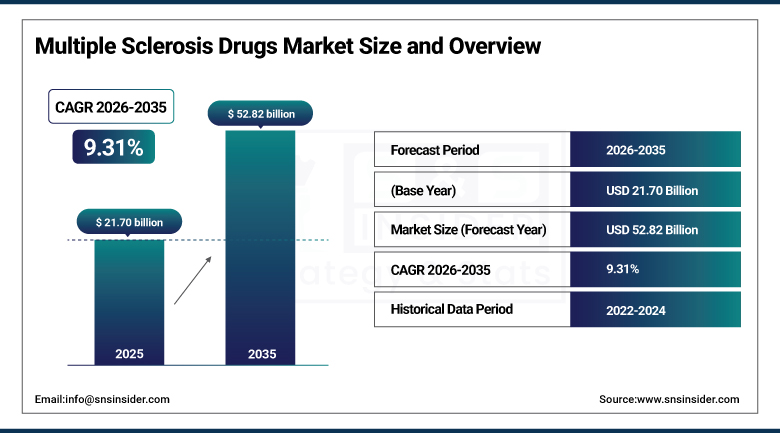
The Multiple Sclerosis Drugs Market was valued at USD 21.70 Billion in 2025 and is projected to reach USD 52.82 Billion by 2035, expanding at a CAGR of 9.31% during the forecast period 2026–2035.
There are several reasons why the MS drugs market continues to grow. First, there is the rising incidence of autoimmune disorders of the neurological system globally, improved diagnosis due to better neuro-imaging techniques, and constant developments in disease-modifying treatments. Physicians are more often utilizing early interventions that target disease progression and not just the symptoms, thus, greatly improving the patient's results. The development of monoclonal antibodies, oral disease-modifying treatments, and new immunotherapies with high efficacy and better convenience and safety is being actively supported by pharmaceutical companies. Rising expenditure in healthcare, higher patient awareness, and favorable reimbursement in developed countries help in market expansion.
There are many developments which transform the market of MS drugs, including the progress in precision medicine, artificial intelligence-based disease monitoring, biomarker-based therapy, and digital neurology. Introduction of artificial intelligence in MRI interpretations, remote patient monitoring, electronic health records, and predictive analytics helps neurologists to personalize treatment plans, increase adherence and surveillance of the disease. There are increasing investments in the treatment of progressive multiple sclerosis in clinical trials and support of regulatory agencies for innovative biologics and biosimilars.
Market Size and Forecast
-
Market Size 2026E: USD 23.71 Billion
-
Market Size 2035: USD 52.82 Billion
-
CAGR: 9.31% from 2026 to 2035
-
Fastest Growing Region: Asia Pacific
-
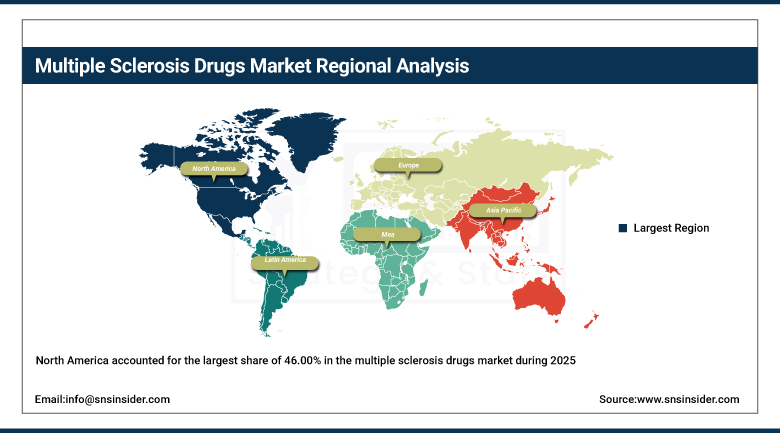
Largest Region: North America
To Get more information Multiple Sclerosis Drugs Market - Request Free Sample Report
Multiple Sclerosis Drugs Market Trends
-
Increasing adoption of high-efficacy monoclonal antibody therapies across relapsing multiple sclerosis treatment.
-
Growing utilization of AI-enabled neurological monitoring and precision medicine platforms.
-
Rising demand for convenient oral disease-modifying therapies improving patient adherence.
-
Expanding clinical research targeting progressive multiple sclerosis and neuroprotective therapeutics.
-
Continuous investment in biomarker-driven personalized treatment and digital neurology solutions.
The U.S. Multiple Sclerosis Drugs Market Size Outlook
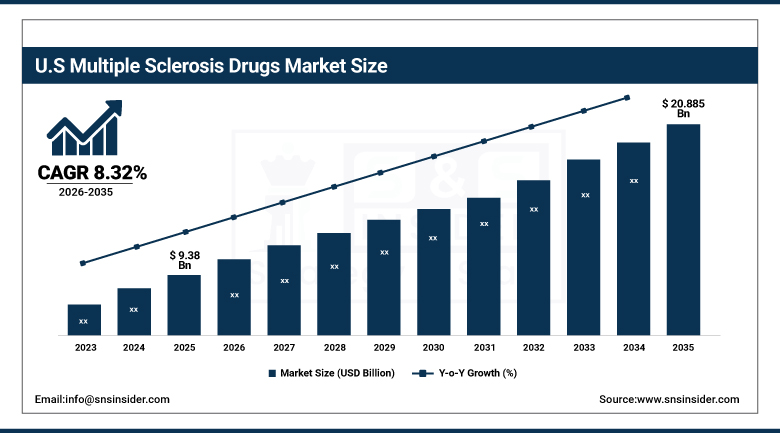
The U.S. Multiple Sclerosis Drugs Market was valued at USD 9.38 billion in 2025 and is expected to reach approximately USD 20.885 billion by 2035, expanding at a CAGR of 8.32% during 2026–2035.
The United States maintains its position as the leading market for North American Multiple Sclerosis Drugs on the back of a highly developed neurological healthcare infrastructure, high disease awareness, positive reimbursement scenarios, and swift uptake of novel therapies for disease modification. Major pharmaceutical players have entered the country owing to their investments in monoclonal antibodies, immunotherapy pills, and the next generation of biologics to decrease the number of relapses and to prevent further disability.
In addition, growing use of precision medicine, MRI analysis with the help of AI technology, biomarker-based therapy choice, and the development of multiple sclerosis centers contributes to treatment efficiency and fast commercialization of advanced neurological solutions in the country. Further development of clinical trials and increase in biologics approvals and neuroimmunology investments are expected to contribute to market growth in the long run. Healthcare professionals are gradually integrating telemedicine, digital therapies, and real-world data into the course of disease management in order to enhance treatment adherence.
Multiple Sclerosis Drugs Market Segmentation Analysis
-
By Drug Class, monoclonal antibodies dominated the market with 39.00% share in 2025, while corticosteroids are projected to witness the fastest growth with 11.20% CAGR during the forecast period.
-
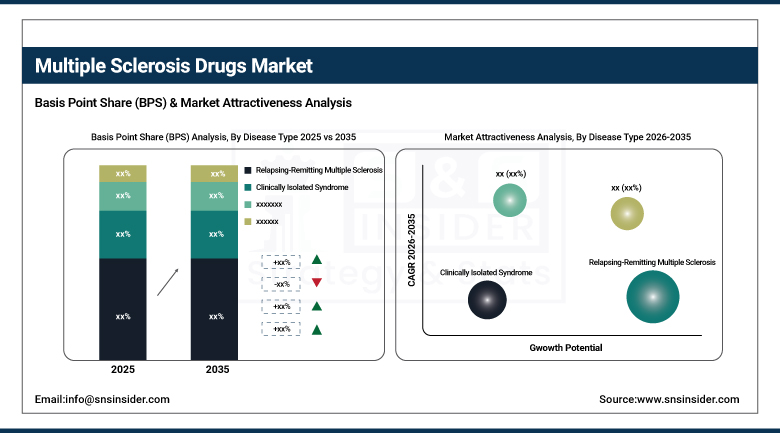
By Disease Type, relapsing-remitting multiple sclerosis (RRMS) dominated the market with 67.00% share in 2025, while primary progressive multiple sclerosis (PPMS) is projected to witness the fastest growth with 12.75% CAGR during the forecast period.
-
By Route of Administration, oral dominated the market with 42.00% share in 2025, while intravenous infusion is projected to witness the fastest growth with 11.85% CAGR during the forecast period.
-
By End User, hospitals dominated the market with 39.00% share in 2025, while retail & specialty pharmacies are projected to witness the fastest growth with 10.60% CAGR during the forecast period.
By Disease Type, relapsing-remitting multiple sclerosis (RRMS) dominated, while primary progressive multiple sclerosis (PPMS) grows fastest.
Relapsing-remitting multiple sclerosis (RRMS) accounted for a 67.00% revenue share in the multiple sclerosis drugs market in 2025, as this disease form constitutes the commonest form of multiple sclerosis among diagnosed multiple sclerosis patients worldwide. This segment capitalizes on high availability of disease-modifying medicines that are approved for use in reducing relapses, control of inflammatory processes, and prevention of neurological impairment. Early diagnosis, increasing awareness regarding symptoms management, and regular MRI examinations have resulted in the initiation of drug treatment among RRMS patients. Additionally, availability of a diverse pipeline of oral drugs, injections, and monoclonal antibodies directed against relapsing multiple sclerosis is enhancing the commercial prospects of this segment.
Primary progressive multiple sclerosis (PPMS) segment is projected to grow at a highest rate of 12.75% in terms of CAGR between 2026 and 2035, driven by increasing emphasis on research on the mechanisms underlying progressive multiple sclerosis and unmet medical need for therapies. Traditionally, treatment of PPMS was very difficult because of its neurodegenerative character; however, recent developments in the field of monoclonal antibody therapies and biomarkers are changing the treatment scenario. Increasing investment in clinical trials that target disease progression, neuroprotection is expected to fuel therapeutic innovations in this segment.
By Route of Administration, oral dominated, while intravenous infusion grows fastest.
Oral therapy held the highest market share at 42.00% of the revenue in 2025, as the majority of MS patients preferred the ease of administration, better adherence to the therapy, and reduction in clinical visits compared to injectable. This form of medication has gained popularity in the market because it can offer effective disease control with flexibility in the therapy management. Approval of various oral immunomodulators, patient compliance, and increasing acceptance by recently diagnosed patients will positively impact the segment's growth. Manufacturers are developing orally administered therapies that are safe and offer better therapeutic effect to the patients.
Intravenous infusion is set to be the fastest-growing segment at a CAGR of 11.85% from 2026 to 2035 on account of the increasing use of highly efficient biologics, especially monoclonal antibodies, which are used to treat aggressive and progressive multiple sclerosis cases. With intravenous delivery of advanced biologics, it allows a more controlled process and remains widely used in specialized neurological centers due to its requirement of physician's oversight. Launch of innovative infusion therapies and increasing demand for highly potent treatments among rapidly advancing cases of multiple sclerosis will fuel segment growth.
By End User, hospitals dominated, while retail & specialty pharmacies grows fastest.
Hospital was the major segment holding a market share of 39.00% in terms of revenue in 2025 owing to its importance in diagnosing the disease and initiating treatments including the administration of infusion therapies. Hospitals and neurological centers play an important role in providing multidisciplinary medical care team that includes specialists, diagnostic tools and infrastructure needed for complicated cases of multiple sclerosis treatment. Growth in multiple sclerosis clinics, presence of neurologist and increasing use of biologic infused therapy in hospitals further drives the segment growth.
Among all segments, retail & specialty pharmacies is anticipated to witness the highest CAGR of 10.60% from 2026 to 2035 owing to increasing adoption of oral therapy and increasing use of specialty pharmacies and need for convenient access to medicines. Specialty pharmacies have been providing support to patients with multiple sclerosis through medication counseling, adherence program, reimbursement assistance, and telemedicine. Increasing trend of patient-centric approach and use of home-based treatment model and increasing availability of specialty medicines will drive the expansion of pharmacy based channels.
Regional Analysis
|
Region |
Major Country |
Share within Region, 2025 (%) |
|---|---|---|
|
North America |
United States |
94.00% |
|
Europe |
Germany |
31.00% |
|
Asia Pacific |
China |
16.00% |
|
Middle East & Africa |
UAE |
4.00% |
|
Latin America |
Brazil |
3.00% |
North America Multiple Sclerosis Drugs Market Insights
North America accounted for the largest share of 46.00% in the multiple sclerosis drugs market during 2025. The region is a key market owing to the higher prevalence of diseases, advanced healthcare infrastructure, presence of major pharmaceutical players, and fast adoption of novel disease modifying drugs. Extensive capabilities in neurological research, reimbursement structures, and the presence of specialized multiple sclerosis centers in North America further help in driving the regional market growth.
Rise in adoption of personalized medicine, conducting clinical trials, and incorporating digital healthcare systems will be beneficial for the management of multiple sclerosis in the North American region. Moreover, government spending on neurological research, increased specialty pharmacy services, and increased access to advanced medicines will help in sustaining the dominance of the region during the forecast period. Awareness campaigns conducted by healthcare organizations and patient organizations have also been increasing the diagnosis rate in the region.
Get Customized Report as per Your Business Requirement - Enquiry Now
Europe Multiple Sclerosis Drugs Market Insights
Europe is a prominent market for multiple sclerosis drugs, owing to factors such as high levels of disease awareness, presence of developed healthcare infrastructures, and the rising use of disease modifying drugs. Various countries within Western Europe have shown good penetration rates with respect to advanced biological and oral treatments due to favorable reimbursement conditions in healthcare as well as widespread availability of neurological care facilities. Personalized medicine, real world evidence, and early interventions have been gaining prominence in the region.
Factors such as supportive regulatory environment for innovative treatments, growing utilization of biosimilars, and rising research activities in neuroimmunology are anticipated to fuel the growth of the market. Collaboration between pharmaceutical firms, academia, and healthcare entities has been facilitating the development of next-generation treatments for multiple sclerosis in Europe.
Asia Pacific Multiple Sclerosis Drugs Market Insights
Asia Pacific region is anticipated to be the fastest growing regional market with a CAGR of 12.84%, throughout the forecast period, due to improvements in healthcare infrastructure, higher awareness regarding neurological diseases, increased accessibility to specialty therapies, and increased healthcare spending. Emerging countries have started adopting advanced diagnostic tools and better training of doctors along with more availability of disease modifying drugs. Increased investments of pharmaceutical companies through clinical trials and commercialization activities in the region are boosting market growth.
Growing number of specialty hospitals, increasing popularity of personalized medicine, and improving coverage of reimbursement are set to generate huge growth opportunities in Asia Pacific region. Healthcare modernization in emerging countries like China, Japan, South Korea, and India is driving the adoption of novel multiple sclerosis treatment options.
Middle East & Africa and Latin America Multiple Sclerosis Drugs Market Insights
The Middle East & africa multiple sclerosis drugs market is forecasted to show steady growth in the forecast period owing to improvements in neurological healthcare infrastructure, increased awareness about multiple sclerosis, and availability of advanced drugs for the condition. Despite representing a small share of the market as opposed to that of developed nations due to low number of diagnoses, limited availability of specialists, and poor reimbursement, healthcare reforms in Gulf countries will help increase accessibility of treatments in the region.
The region is showing steady improvements in multiple sclerosis treatments due to increased accessibility of MRI diagnosis, neurologist education programs, and collaborations between healthcare providers and pharmaceutical companies in the region.
The Latin America multiple sclerosis drugs market is forecasted to show substantial growth in the forecast period owing to growing disease awareness, improved accessibility of healthcare, adoption of disease-modifying drugs, and neurological care infrastructure development. Countries like Brazil, Mexico, Argentina, and Colombia make major contributions towards regional market growth owing to large patient base and improved healthcare systems in those nations. Improved availability of advanced diagnostic tools such as MRI and neurological tools has helped in early detection of the disease among multiple sclerosis patients.
Growth Drivers: Increasing prevalence and higher awareness about multiple sclerosis disease.
Growing prevalence of multiple sclerosis cases is an important driver behind the growing Multiple Sclerosis Drugs Market. Growing diagnosis rate, increased awareness about the disease and development of new neuro-logical diagnostic tools have resulted in increased number of cases of multiple sclerosis that require treatment. Patients and medical experts' higher awareness regarding early intervention has made patients start using treatments at the earliest opportunity possible. Improved availability of diagnosis tools based on MRI tests, neuro-logical diagnosis techniques and centers specializing in multiple sclerosis disease has improved disease detection capabilities in developed as well as developing nations.
High adoption rate of high-efficiency disease modifying treatments, including monoclonal antibodies, oral immunotherapeutic agents and other advanced biological is driving market growth. Increasing focus on adoption of treatments that offer better relapse control and disease progression control is resulting in greater adoption of treatments.
Restraints: Higher costs of multiple sclerosis therapies.
Expensive nature of biologics, monoclonal antibodies, and specialty drugs used for the treatment of multiple sclerosis patients is one of the important barriers for the market growth. Advanced therapies that are used in disease-modification usually require great financial investments due to complicated manufacturing process, clinical research, and monitoring of their safety. Expensive treatments may reduce accessibility in developing countries with insufficient reimbursements programs and lack of healthcare facilities. Although, some developed countries introduced more affordable insurance programs and other initiatives aimed at making treatment more affordable for the population, the price barrier still plays an important role in the choice of treatment and its adherence.
Opportunities: Growing importance of personalized medicines and treatments based on biomarkers.
The rising adoption of personalized medicines is another great potential area for the Multiple Sclerosis Drugs Market. Due to developments in genomics, biomarker discovery, artificial intelligence in disease prediction, and molecular profiling, doctors will be able to provide their patients with more personalized therapies. By using biomarkers in the treatment process, doctors will have the opportunity to enhance the patient selection, increase therapy efficacy, and minimize side effects from the treatment. The further development of the precision medicine application in neurology will lead to the demand for personalized drugs developed with regard to individual characteristics of the disease instead of regular treatment methods.
Growing economies are expected to provide great growth potential due to improved healthcare infrastructure, increased awareness of neurological diseases, and higher levels of expenditure in healthcare. Countries belonging to Asia Pacific, Latin America, and the Middle East regions are experiencing the development of specialized hospitals, better diagnostics, and access to advanced drug treatment.
Recent Developments
-
2026: The U.S. FDA approved Ocrevus Zunovo developed by Roche/Genentech for relapsing and primary progressive multiple sclerosis. The subcutaneous formulation provides a significantly shorter administration time compared with traditional intravenous infusion, improving treatment convenience and patient experience.
-
2026: Pharmaceutical companies continued expanding research activities focused on next-generation multiple sclerosis therapies, including immune-targeted biologics, remyelination approaches, and neuroprotective treatments designed to address disease progression and unmet clinical needs, particularly in progressive multiple sclerosis.
-
2025: Leading biotechnology companies increased investments in clinical trials evaluating advanced disease-modifying therapies, including therapies targeting B-cell activity, immune regulation, and inflammatory pathways associated with multiple sclerosis progression.
-
2025: The adoption of digital healthcare solutions accelerated across multiple sclerosis care, with healthcare providers increasingly integrating remote monitoring platforms, AI-assisted imaging analysis, and digital adherence tools to improve treatment management and patient outcomes.
Multiple Sclerosis Drugs Market Key Players are:
-
Merck KGaA
-
Sanofi
-
Bristol Myers Squibb
-
Johnson & Johnson
-
Teva Pharmaceutical Industries Ltd.
-
Bayer AG
-
Viatris Inc.
-
AbbVie Inc.
-
Pfizer Inc.
-
Alkermes plc
-
TG Therapeutics
-
Actelion Pharmaceuticals Ltd.
-
GlaxoSmithKline plc
-
Acorda Therapeutics Inc.
-
EMD Serono Inc.
-
Genentech, Inc.
-
Horizon Therapeutics plc
Multiple Sclerosis Drugs Market Report Scope:
| Report Attributes | Details |
|---|---|
| Market Size in 2025 | USD 21.70 Billion |
| Market Size by 2035 | USD 52.82 Billion |
| CAGR | CAGR of 9.31% From 2026 to 2035 |
| Base Year | 2025 |
| Forecast Period | 2026-2035 |
| Historical Data | 2022-2024 |
| Report Scope & Coverage | Market Size, Segments Analysis, Competitive Landscape, Regional Analysis, DROC & SWOT Analysis, Forecast Outlook |
| Key Segments | • By Drug Class (Monoclonal Antibodies, Oral Disease-Modifying Therapies, Injectable Disease-Modifying Therapies, Corticosteroids, Others) • By Disease Type (Relapsing-Remitting Multiple Sclerosis (RRMS), Secondary Progressive Multiple Sclerosis (SPMS), Primary Progressive Multiple Sclerosis (PPMS), Clinically Isolated Syndrome (CIS)) • By Route of Administration (Oral, Intravenous Infusion, Subcutaneous Injection, Intramuscular Injection) • By End User (Hospitals, Specialty Neurology Clinics, Retail & Specialty Pharmacies, Homecare, Others) |
| Regional Analysis/Coverage | North America (US, Canada), Europe (Germany, UK, France, Italy, Spain, Russia, Poland, Rest of Europe), Asia Pacific (China, India, Japan, South Korea, Australia, ASEAN Countries, Rest of Asia Pacific), Middle East & Africa (UAE, Saudi Arabia, Qatar, South Africa, Rest of Middle East & Africa), Latin America (Brazil, Argentina, Mexico, Colombia, Rest of Latin America). |
| Company Profiles | Roche Holding AG, Biogen Inc., Novartis AG, Merck KGaA, Sanofi, Bristol Myers Squibb, Johnson & Johnson, Teva Pharmaceutical Industries Ltd., Bayer AG, Viatris Inc., AbbVie Inc., Pfizer Inc., Alkermes plc, TG Therapeutics, Actelion Pharmaceuticals Ltd., GlaxoSmithKline plc, Acorda Therapeutics Inc., EMD Serono Inc., Genentech, Inc., Horizon Therapeutics plc |
Frequently Asked Questions
Monoclonal antibodies dominated the market with a 39.00% share in 2025.
The Others Drug Class segment is expected to witness the fastest growth with a CAGR of 11.96% during 2026–2035.
Relapsing-Remitting Multiple Sclerosis (RRMS) dominated the disease type segment with a 67.00% share in 2025.
North America dominated the global market in 2025.
