
Vyndaqel Market Report Scope & Overview:
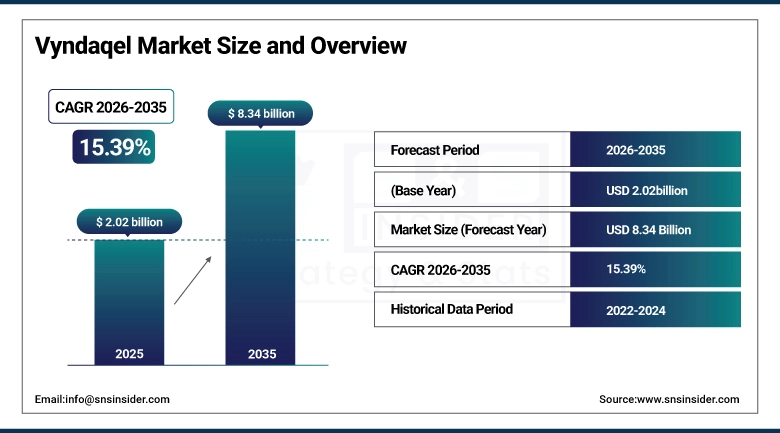
The Vyndaqel Market size is valued at USD 2.02 Billion in 2025 and is projected to reach USD 8.34 Billion by 2035, growing at a CAGR of 15.39% during the forecast period 2026–2035.
The Vyndaqel Market analysis report offers a comprehensive insight into market dynamics, drug advancements, and therapeutics. Growing incidences of transthyretin amyloidosis, increasing prevalence of cardiomyopathy patients, rise in adoption of transthyretin stabilizers, and developing healthcare infrastructure are some of the factors contributing to the market growth between 2026 and 2035.
Adoption of Vyndaqel treatment witnessed over 103 million prescriptions during 2025 owing to the growing incidence of transthyretin amyloidosis and cardiomyopathy patients.
Market Size and Forecast:
-
Market Size in 2025: USD 2.02 Billion
-
Market Size by 2035: USD 8.34 Billion
-
CAGR: 15.39% from 2026 to 2035
-
Base Year: 2025
-
Forecast Period: 2026–2035
-
Historical Data: 2022–2024
To Get more information on Vyndaqel Market - Request Free Sample Report
Vyndaqel Market Trends:
-
The growing number of transthyretin amyloidosis patients is broadening the base for treatment.
-
The rise in patients suffering from ATTR CM and cardiomyopathy supports increased use of disease-modifying therapies.
-
The increasing medical community’s knowledge and diagnostic advancements are enabling quicker diagnosis and initiation of treatment.
-
The development of better healthcare facilities and positive reimbursement policies will enhance patient accessibility.
-
Tafamidis’ wide acceptance and adoption as the standard of care demonstrate the potential for a cornerstone drug in rare diseases.
-
The advancement in RNA-based drugs and antibodies is transforming treatment strategies by using innovative solutions.
-
Biologicals manufacturing and clinical studies investments will ensure sustained growth in the market.
U.S. Vyndaqel Market Insights:
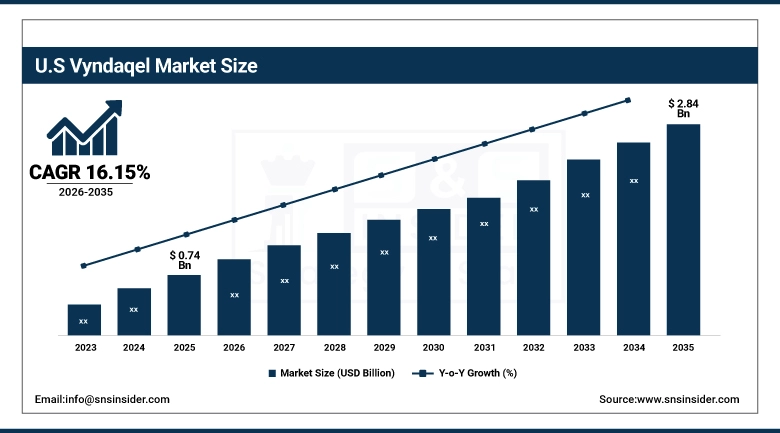
The U.S. Vyndaqel Market is projected to grow from USD 0.74 Billion in 2025 to USD 2.84 Billion by 2035, at a CAGR of 16.15%. The demand for Vyndaqel is influenced by increased diagnosis of transthyretin amyloidosis, growing number of cardiomyopathy patients, high acceptance of transthyretin stabilizer drugs, new RNA-based treatment approaches, and developments in novel oral, parenteral, and intravenous drug delivery systems.
Vyndaqel Market Growth Drivers:
-
Rising diagnosis of transthyretin amyloidosis and increasing prevalence of cardiomyopathy cases are key drivers of Vyndaqel Market growth.
Specialized medical centers and companies offering therapeutic solutions are now implementing advanced treatments, which include TTR stabilizers, RNA-based treatments, and monoclonal antibody therapy, among others, for the effective management of diseases and improving patients' lifespans. In addition, advancements in dosage form, increased safety and efficacy, and higher patient compliance, have played key roles in the growth of adoption, improvements in treatment, and market expansion.
In 2025, more than 61% of all hospitals, specialized clinics, and home health organizations had adopted Vyndaqel for the treatment of TTR amyloidosis and cardiomyopathy.
Vyndaqel Market Restraints:
-
High treatment costs and limited reimbursement coverage in certain regions remain significant restraints for the Vyndaqel Market.
The delayed diagnosis and poor identification of cases of transthyretin amyloidosis and cardiomyopathy reduce patient accessibility and uptake of the drug. The lack of diagnostic equipment in developing countries remains a constraint for early diagnosis and treatment of the conditions. Other forms of competing treatments that include RNA-based drugs, biosimilar agents, and stabilizers might affect the uptake of Vyndaqel in the future. The high cost of treatment and affordability issues in poor regions pose additional constraints for the drug’s widespread use.
In 2025, only 35% of the hospitals and specialist centers in developing countries were using Vyndaqel due to affordability challenges.
Vyndaqel Market Opportunities:
-
Growing development of transthyretin stabilizers, RNA‑based therapies, and personalized treatment approaches presents significant opportunities for the Vyndaqel Market.
Healthcare delivery networks such as hospitals and clinics have increasingly embraced these innovative therapies for the treatment of transthyretin amyloidosis and cardiomyopathy to enhance their chances of survival and overall health quality. These new pharmaceutical manufacturers that launch innovative drugs with safety and convenience to patients can capitalize on this trend to increase market reach and compete effectively. Innovations in oral and injectable therapies and the increased effectiveness of these formulations are fueling this adoption rate.
In 2025, more than 47% of these healthcare providers have adopted Vyndaqel targeted toward these indications due to increased diagnosis and demands.
Vyndaqel Market Segmentation Analysis:
-
By Indication, ATTR‑CM (Transthyretin Amyloid Cardiomyopathy) held the largest market share of 71.34% in 2025, while they are also expected to grow at the fastest CAGR of 15.74% during 2026–2035.
-
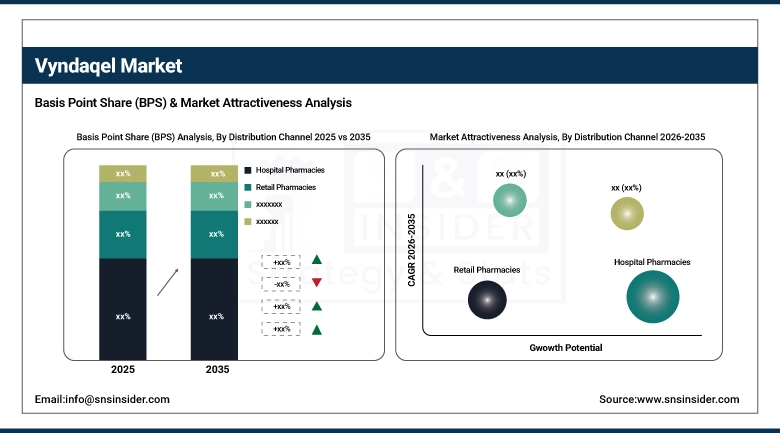
By Distribution Channel, Hospital Pharmacies dominated with 35.41% market share in 2025, whereas Online Pharmacies are projected to record the fastest CAGR of 17.88% through 2026–2035.
-
By Payer / Reimbursement Type, Public insurance accounted for the highest market share of 51.09% in 2025, while Private insurance is expected to grow at the fastest CAGR of 16.34% during the forecast period.
-
By Patient Type / Care Setting, Diagnosed ATTR‑CM patients dominated with a 65.86% share in 2025, while Undiagnosed/late‑diagnosis patients are anticipated to expand at the fastest CAGR of 18.49% through 2026–2035.
By Indication, ATTR‑CM Dominate While it Grow Rapidly:
ATTR-CM (Transthyretin Amyloid Cardiomyopathy) was dominant within the market owing to its greater occurrence rate and the pressing need for an efficient disease-modifying therapy among patients affected by cardiomyopathy. Tafamidis is consistently chosen as a priority treatment option due to its proven efficiency in slowing down the progress of the disease and extending patient lifespan.
Furthermore, ATTR-CM (Transthyretin Amyloid Cardiomyopathy) is also among the fastest growing segment due to growing awareness, improving diagnostics, and wider treatment coverage throughout health systems. It is, therefore, reasonable to conclude that ATTR-CM is going to dominate not only in terms of its occurrence rates but also in terms of its development rates, whereas other indications play a lesser role.
By Distribution Channel, Hospital pharmacies Dominate While Online Pharmacies Grow Rapidly:
The Hospital Pharmacies is the dominant segment in the market can be attributed to their significant contribution toward rare disease management and the involvement of specialists when it comes to prescribing such drugs. Hospitals represent the key platform through which patients can be accessed, and proper coordination between various practitioners involved can be achieved.
Online Pharmacies have been identified as one of the fastest growing segments in this market. This trend can be attributed to the quick acceptance of health technologies and convenient services offered by such pharmacies. Online pharmacies make it easier for patients to receive their prescriptions at home and incorporate telemedicine services into the process.
By Payer / Reimbursement Type, Public insurance Dominate While Private Insurance Grow Rapidly:
The Public Insurance Segment is dominated in market due to the significant impact of government-sponsored insurance in guaranteeing patients’ access to expensive treatments. Government healthcare systems and public funding will continue playing a central role in making medications available, especially within territories where affordability stands out as one of the main concerns.
Private Insurance segment will exhibit the fastest compound annual growth rate (CAGR) driven by growing private health insurances and rare disease drug coverage. Private insurance’s ability to adjust its reimbursement models in response to changes in treatment protocols has contributed to the rapid penetration of new drugs on the market.
By Patient Type / Care Setting, Diagnosed ATTR‑CM patients Dominates While Undiagnosed and late‑diagnosis Grow Rapidly:
ATTR-CM diagnosed patients made up the dominant share of the market, with higher cardiomyopathy patient rates being a contributing factor, along with the wide clinical use of tafamidis as the standard of care. Treatment for these patients is always a top priority for physicians due to its effectiveness in reducing mortality.
Patients who are not diagnosed and diagnosed too late should see the fastest increase in their numbers due to awareness initiatives, advanced diagnostics and screening programs. With growing expertise in early detection, more patients will fall into the category of those receiving treatment and will become one of the key growth drivers in the upcoming years.
Vyndaqel Market Regional Analysis:
North America Vyndaqel Market Insights:
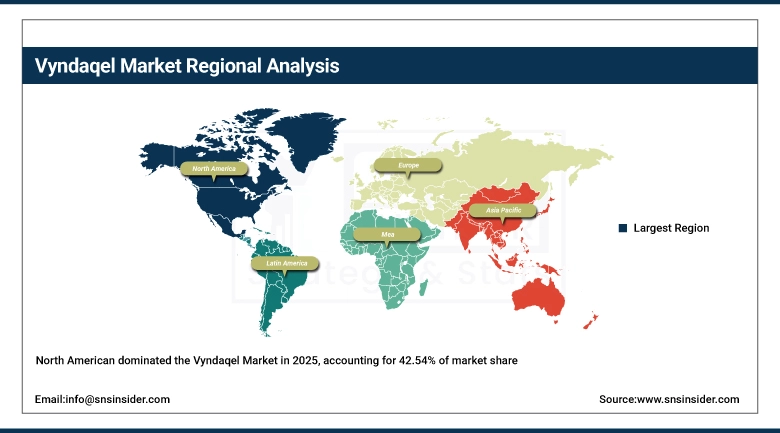
North America holds the highest market share at 42.54%, driven by its well-developed healthcare infrastructure, high acceptance levels of novel treatments, and a sophisticated system of reimbursements. Growing awareness levels, expertise of specialists, and high diagnostic rates are driving North America’s dominance. Hospitals and specialty clinics continue to be crucial in the treatment process. The ongoing development of novel treatments in both oral and injectable forms, along with favorable government policies, further boosts North America’s mature market environment.
Get Customized Report as per Your Business Requirement - Enquiry Now
United States Vyndaqel Market Insights:
The USA is the market leader in North America due to the high incidence of patients being diagnosed, clinical expertise, and widespread insurance cover. With a high degree of physician acceptance of tafamidis, novel therapies, and an ever-growing network of specialties, the USA is the most dominant market in the world. The strong healthcare infrastructure that exists in the USA, in addition to early reimbursement and clinical trials, will ensure the dominance of the market in the future.
Asia Pacific Vyndaqel Market Insights:
Asia-Pacific has become one of the fastest-growing regions, with a CAGR of 17.43%, due to the rising awareness, increased diagnostic capabilities, and investment in the healthcare sector. There are many patients in need, especially from emerging countries. Countries have started investing in rare disease initiatives, and digital health technology is changing everything about the healthcare sector. With various healthcare systems across the Asia-Pacific region, there will be a lot of obstacles, but the region still has great potential for the future.
China Vyndaqel Market Insights:
The Chinese market exhibits tremendous growth potential, backed by government-driven initiatives, the construction of hospitals, and heightened awareness regarding rare diseases. Enhanced screening processes and education among medical practitioners have resulted in increased diagnoses, whereas improved reimbursement policies will eventually improve access for patients. With a large population and significant investments in biotechnology, China is an ideal market for growth. Collaboration with foreign pharmaceutical companies and innovation through local research also contribute to faster adoption.
Europe Vyndaqel Market Insights:
Europe continues to hold a dominant position due to its superior healthcare facilities, systematic reimbursement procedures, and expertise among physicians. The region has been quick to adapt to rare diseases treatments, and it has robust regulations in place to protect patients and guarantee their access. Hospitals and specialized medical centers form an integral part of the industry, whereas international research cooperation further boosts innovations. Growing awareness programs and diagnostics have increased the patient pool, cementing Europe’s significance in the international marketplace.
Germany Vyndaqel Market Insights:
Germany is unique compared to other European countries due to it’s one of the most prominent markets. It has been facilitated by the country's sophisticated healthcare structure, favorable reimbursement policies, and the abundance of clinical know-how. Doctors have a high rate of acceptance for new technologies, backed up by the presence of specialized clinics and testing facilities. The government's involvement in rare diseases and clinical trials reinforces Germany's position even more.
Latin America Vyndaqel Market Insights:
Latin America is slowly becoming a larger market, due to better healthcare facilities, higher recognition of rare disorders, and increased investment in specialist medicine. Brazil and Mexico are currently leading the way, owing to government policies and increasing numbers of hospitals. Issues such as cost and reimbursements are still prevalent; however, patient assistance programs and globl collaborations are assisting with the development process.
Middle East & Africa Vyndaqel Market Insights:
The Middle East and Africa are considered developing regions with potential for growth due to increasing awareness and investments in health facilities, especially in relation to orphan drugs. While wealthy nations such as those in the Gulf states are spearheading progress through government backing and advanced hospital facilities, Africa still faces challenges due to lack of funds and problems associated with diagnostics. Nonetheless, efforts by international organizations and NGOs have started yielding results.
Vyndaqel Market Competitive Landscape:
Pfizer
Pfizer Inc. is an American biopharmaceutical company and one of the leaders of the immunosuppressive and orphan drugs markets, including such drugs as sirolimus (Rapamune), which is applied in the treatment of rejection after transplantation and autoimmune disorders as an mTOR inhibitor. A comprehensive product portfolio of the firm includes efficacious and safe products supported by numerous clinical data and reliable distribution channels. Pfizer's focus on biologics production, research and development of new generations of immunosuppressive medications, and its efforts to minimize complications associated with prolonged drug use, contribute to future success.
-
In June 2025, Pfizer expanded RUXIENCE™ (rituximab‑pvvr) indications to include rheumatoid arthritis and other autoimmune conditions, enhancing patient access to its biosimilar portfolio, while progressing Dekavil (F8‑IL10) in early‑phase development for rheumatoid arthritis.
Novartis
Novartis AG is one of the world’s leading companies involved in the development of novel medicines with extensive expertise in the areas of immunology and rare diseases. The product range consists of calcineurin inhibitors and biologic drugs targeting immunosuppression related to transplant rejection, auto-immune diseases, and inflammation. Precision medicine is at the core of Novartis’ strategy for developing novel medications with the use of state-of-the-art research tools and digital health solutions to improve patient care.
-
In December 2025, Novartis advanced development of Iptacopan (factor B inhibitor) for rare complement‑mediated diseases and expanded Cosentyx® indications in autoimmune conditions, reinforcing its leadership in immunology.
Roche
Roche Holding AG, headquartered in Basel, Switzerland, is a leader in biologic products and monoclonal antibodies, with a strong emphasis on immunology, oncology, and orphan diseases. Biologics form the backbone of its immunosuppressive product line, which targets autoimmune conditions and graft rejections. There is ample evidence in support of these products. Roche’s expertise in both medicines and diagnostic tools helps provide a comprehensive patient treatment regimen. Its efforts in the next generation of biologics and biosimilars contribute to increasing global reach.
-
In August 2025, Roche advanced Ocrevus in multiple sclerosis and expanded Rituxan biosimilar programs, while progressing novel antibody therapies for autoimmune conditions, strengthening its competitive edge in immunology.
Vyndaqel Market Key Players:
Some of the Vyndaqel Market Companies are:
-
Pfizer
-
Novartis
-
Roche
-
Johnson & Johnson
-
Bristol Myers Squibb
-
AstraZeneca
-
Merck & Co.
-
Amgen
-
Sanofi
-
Eli Lilly
-
Takeda
-
Bayer
-
Gilead Sciences
-
AbbVie
-
Biogen
-
CSL Behring
-
Alnylam Pharmaceuticals
-
Ionis Pharmaceuticals
-
Alexion Pharmaceuticals
-
Vertex Pharmaceuticals
| Report Attributes | Details |
|---|---|
| Market Size in 2025 | USD 2.02 Billion |
| Market Size by 2035 | USD 8.34 Billion |
| CAGR | CAGR of 15.39% From 2026 to 2035 |
| Base Year | 2025 |
| Forecast Period | 2026-2035 |
| Historical Data | 2022-2024 |
| Report Scope & Coverage | Market Size, Segments Analysis, Competitive Landscape, Regional Analysis, DROC & SWOT Analysis, Forecast Outlook |
| Key Segments | • By Indication (ATTR‑CM (Transthyretin Amyloid Cardiomyopathy),ATTR‑PN (Transthyretin Amyloid Polyneuropathy), Off label/Expanded Use, Combination Therapy Potential, Others), • By Distribution Channel (Hospital Pharmacies, Retail Pharmacies, Specialty Pharmacies, Online Pharmacies, Others), • By Payer/Reimbursement Type (Public Insurance, Private Insurance, Out of Pocket/Self Pay, Patient Assistance Programs, Others), • By Patient Type/Care Setting (Diagnosed ATTR CM Patients, Diagnosed ATTR PN Patients, Undiagnosed/Late Diagnosis Patients, Clinical Trial Participants/Expanded Access Programs, Others) |
| Regional Analysis/Coverage | North America (US, Canada), Europe (Germany, UK, France, Italy, Spain, Russia, Poland, Rest of Europe), Asia Pacific (China, India, Japan, South Korea, Australia, ASEAN Countries, Rest of Asia Pacific), Middle East & Africa (UAE, Saudi Arabia, Qatar, South Africa, Rest of Middle East & Africa), Latin America (Brazil, Argentina, Mexico, Colombia, Rest of Latin America). |
| Company Profiles | Pfizer, Novartis, Roche, Johnson & Johnson, Bristol Myers Squibb, AstraZeneca, Merck & Co., Amgen, Sanofi, Eli Lilly, Takeda, Bayer, Gilead Sciences, AbbVie, Biogen, CSL Behring, Alnylam Pharmaceuticals, Ionis Pharmaceuticals, Alexion Pharmaceuticals, Vertex Pharmaceuticals. |
Frequently Asked Questions
North America dominated with a 42.54% share in 2025, while Asia-Pacific is the fastest-growing region, expected to expand at a CAGR of 17.43% during 2026–2035.
Diagnosed ATTR‑CM patients dominated with a 65.86% share in 2025, while Undiagnosed/late‑diagnosis patients are projected to grow at the fastest CAGR of 18.49% during 2026–2035.
Growth is driven by rising diagnosis of transthyretin amyloidosis and cardiomyopathy cases and patient advocacy initiatives, strong adoption of transthyretin stabilizers alongside emerging RNA‑based and antibody therapies.
The market is valued at USD 2.02 Billion in 2025 and is projected to reach USD 8.34 Billion by 2035.
The Vyndaqel Market is projected to grow at a CAGR of 15.39% during 2026–2035.
