
Dental Surgical Navigation Systems Market Report Scope & Overview:
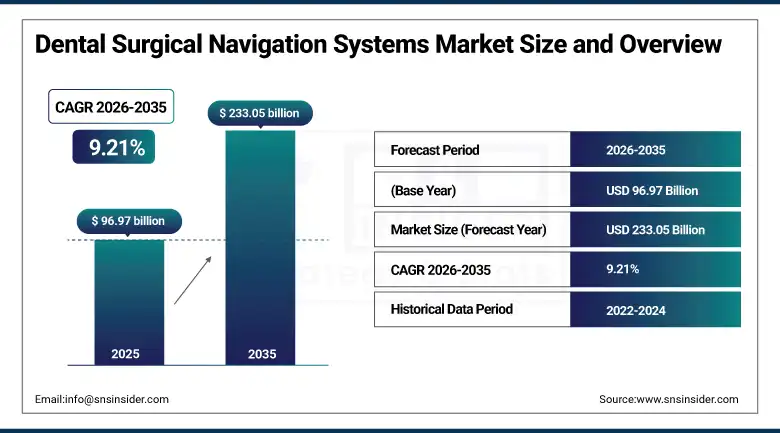
The Dental Surgical Navigation Systems Market was valued at USD 96.97 billion in 2025 and is expected to reach USD 233.05 billion by 2035, growing at a CAGR of 9.21% from 2026–2035.
The dental surgical navigation systems market is seeing an upsurge due to increasing need for minimally invasive dental surgeries, increased adoption of digital dental technology solutions, and the emphasis on precise surgical procedures while implants and maxillofacial surgeries are performed. Dentists and oral surgeons across the globe are now using navigation-assisted dental surgical solutions to ensure accuracy in implants and avoid surgical problems. New developments in 3D imaging, robotic navigation, AI-enabled diagnosis and treatment, and other technologies are adding impetus to the market growth trends. The rise in cosmetic dentistry, incidence of dental diseases, and improvements in advanced dental healthcare infrastructure are also aiding the growth of the dental surgical navigation systems market.
Straumann collaborated with Neocis in April 2025 to build advanced dental surgery robot navigational systems used in implantology procedures. The partnership is aimed at advancing the application of artificial intelligence, cloud-based surgery planning, and robotics-assisted navigational techniques to improve accuracy in implant positioning and eliminate surgical problems. The organizations are upgrading the ability to offer better real-time surgical guidance and workflow automation systems to dental surgeons.
To Get more information On Dental Surgical Navigation Systems Market - Request Free Sample Report
Dental Surgical Navigation Systems Market Trends
-
Increasing adoption of AI-enabled surgical navigation systems to improve implant placement precision and reduce procedural errors.
-
Rising integration of robotic-assisted implant technologies across advanced dental clinics and hospitals worldwide.
-
Growing utilization of 3D imaging and computer-assisted surgery platforms within digital dentistry workflows.
-
Expansion of cloud-based treatment planning and real-time surgical guidance technologies in modern oral healthcare infrastructure.
-
Increasing demand for minimally invasive and cosmetic dental implant procedures driving investment in advanced navigation systems.
The U.S. Dental Surgical Navigation Systems Market Outlook
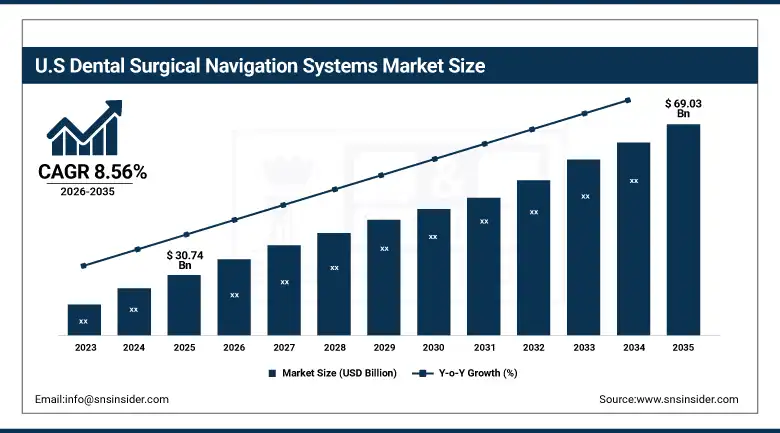
The U.S. Dental Surgical Navigation Systems Market was valued at USD 30.74 billion in 2025 and is expected to reach USD 69.03 billion by 2035 at a CAGR of 8.56%.
The growth of the U.S. dental surgical navigation systems market can be attributed to factors such as increasing application of dental surgeries using digitized technologies, growing popularity of minimally invasive dental implants, and increasing emphasis on precision during surgery. The adoption of artificial intelligence-driven navigation technology, robotics-guided implant surgery, and digital surgical navigations has increased in dental hospitals and specialized dental clinics all over the country. The U.S. dental surgical navigation systems market has also been positively impacted by developments like 3D imaging technologies, computer-aided implantology, and digital cloud-based treatment planning systems. The increasing demand for aesthetic dental surgeries, tooth loss, and dental care facilities equipped with advanced technologies are fueling the adoption of navigation-assisted dental surgery solutions in the country.
In January 2025, Zimmer Biomet launched the AI-driven Z-Nav platform that is intended to make advanced dental implant navigation systems widely available in the USA. The technology was developed to be used by small and medium dental clinics in need of high-tech implanting technologies. AI-based planning, surgical guidance, minimally invasive approach, and improved efficiency are among the major advantages of the technology. This initiative responds to a steadily increasing interest in computer-assisted implants and the need for digital dentistry innovations within current dental care facilities.
Dental Surgical Navigation Systems Market Segment Analysis
-
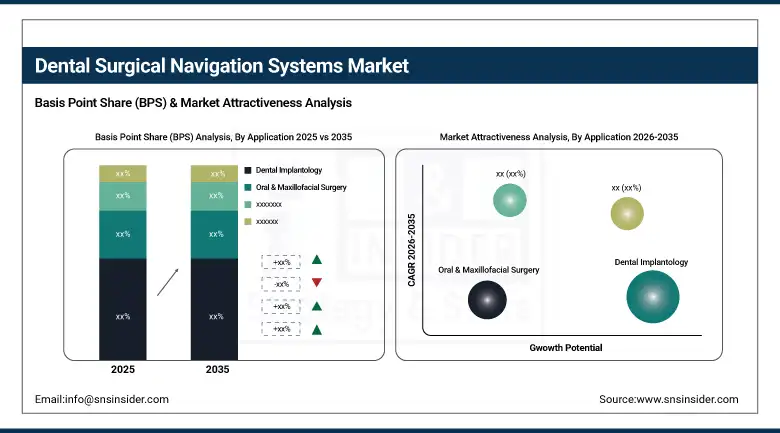
By Product Type, Optical navigation systems dominated with approximately 48.36% revenue share in 2025; Electromagnetic navigation systems are expected to be the fastest-growing type segment at approximately 10.01% CAGR from 2026 to 2035.
-
By Application, Dental implantology dominated with approximately 56.24% revenue share in 2025; Oral & maxillofacial surgery is expected to be the fastest-growing type segment at approximately 10.06% CAGR from 2026 to 2035.
-
By End User, Dental clinics dominated with approximately 52.18% revenue share in 2025; and it is also expected to be the fastest-growing type segment at approximately 9.74% CAGR from 2026 to 2035.
-
By Technology, Dynamic navigation systems dominated with approximately 46.38% revenue share in 2025; Static navigation systems are expected to be the fastest-growing type segment at approximately 9.62% CAGR from 2026 to 2035.
By Product Type, Optical navigation systems dominated and electromagnetic navigation systems fastest growing
The optical navigation systems segment held the majority market share of around 48.36% of the total revenue generated in the dental surgical navigation systems market in 2025 owing to their accurate surgery performance, real-time visualization, and use in various advanced implantology surgical operations. They are increasingly used in dental hospitals as well as specialized clinics for the improvement of surgery accuracy and minimizing errors during dental implants placements. With the increasing use of 3D imaging systems and computer-aided surgery in dentistry, the demand for optical navigation systems is expected to increase further.
Electromagnetic navigation systems are anticipated to account for the largest growth rate of around 10.01% CAGR during the period of 2026–2035 in the dental surgical navigation systems market. This growth will be fueled by the rising demand for advanced navigational systems that can perform surgeries without being constrained with the limitation of line-of-sight. Electromagnetic navigation systems provide ease in navigation, better accessibility in constrained environments, and easy integration with robotic surgical navigation systems. An increased number of patients undergoing complex dental surgeries will also fuel the growth in demand for such systems.
By Application, Dental implantology dominated and oral & maxillofacial surgery fastest growing
The dental implantology sub-segment was estimated to lead the dental surgical navigation systems market in terms of revenue generation with a share of around 56.24% in 2025, due to high demand for accurate dental implant placement surgery procedures and increased acceptance of implant dentistry technologies with digital applications. The need for more accurate and less complication-prone dental implants is driving the growth of navigation-assisted surgical instruments among dental practitioners. Increasing popularity of cosmetic dentistry procedures, higher incidence of tooth loss, and preference among patients for minimal invasive dentistry solutions are other factors contributing to sub-segmental growth.
The oral and maxillofacial surgery segment is estimated to witness the fastest growth in the dental surgical navigation systems market at a CAGR of about 10.06% between 2026 and 2035. There will be high demand for surgical navigation systems owing to rising cases of facial injury, jaw reconstruction surgeries, and complex craniofacial surgeries. Hospitals and surgical clinics are relying more on the usage of navigation systems and robotic systems to improve accuracy of the procedure and increase safety for patients. Technological innovations in the field of computer-assisted surgery and digital surgery are fueling growth in this sector.
By End User, Dental clinics dominated and it’s also the fastest growing
The dental clinic sub-segment captured the highest dental surgical navigation systems market share of around 52.18% in 2025 owing to the rising application of digital dentistry devices, as well as an increased number of implantation surgeries and cosmetic dental treatments in outpatient facilities. With increasing adoption of navigation-guided surgical devices among the clinics in order to increase the precision and effectiveness of the treatments, along with minimizing risks and ensuring good patient outcomes, this segment is expected to witness healthy growth over the coming years. Additionally, heightened patient consciousness toward minimally-invasive dental surgeries, coupled with an increasing availability of technologically advanced dental care solutions, is boosting demand from the dental clinic segment.
The dental clinics market is anticipated to register the highest growth rate at around 9.74% CAGR between 2026 and 2035 owing to increasing demand for customized dental implants, growing investment in digital workflows, and enhanced availability of navigation-assisted surgeries. The adoption of real-time surgery guidance systems, robotic assisted dental implants, and cloud-based dental surgery treatment plans among others has become common in dental clinics to enhance efficiency. The growing need for cosmetic dentistry and the quick expansion of technologically enabled dental clinics have also contributed to growth opportunities in this market segment.
By Technology, Dynamic navigation systems dominated and static navigation systems are fastest growing
The dynamic navigation systems were dominant in the dental surgical navigation systems market, commanding nearly 46.38% of revenue in 2025 because of their capability of providing real-time surgical navigation along with flexibility during the implant and oral surgery procedures. Dynamic navigation systems help the clinicians to track the surgical tools throughout the procedure, and therefore, they can perform the surgery accurately without running any risk of implantation errors. The trend of adopting advanced imaging and AI-enabled computer-assisted surgery platforms is driving the growth of the segment.
Static navigation devices are anticipated to account for the fastest-growing market share among all types of dental surgical navigation market devices in terms of revenue share during the forecast period, 2026 – 2035, growing at a CAGR of nearly 9.62%. The growth of the segment is attributable to increasing demand for technologically efficient and economic surgical guidance technology that enhances the procedural consistency and minimizes learning curves for clinicians involved in dental implant surgery procedures. Growth in digital surgical guide fabrication and awareness regarding precision surgery using implants are other factors driving the growth of static surgical navigation devices.
Regional Insights
|
Region |
Major Country |
Share within Region,2025 (%) |
|---|---|---|
|
North America |
United States |
84% |
|
Europe |
Germany |
26% |
|
Asia Pacific |
China |
53% |
|
Middle East & Africa |
UAE |
24% |
|
Latin America |
Brazil |
41% |
North America Dental Surgical Navigation Systems Market Insights
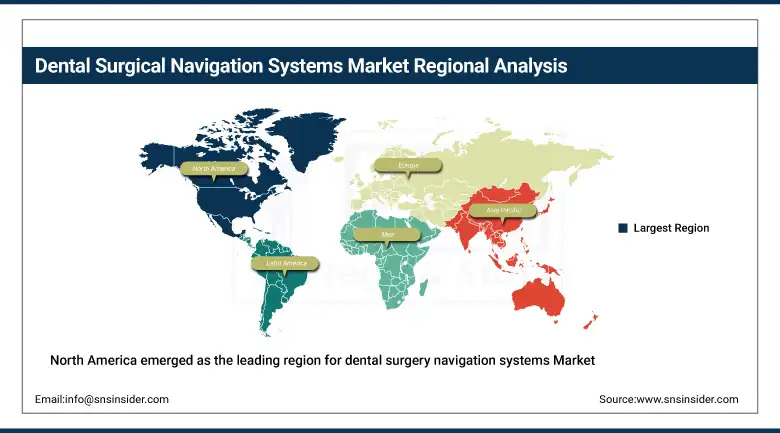
North America emerged as the leading region for dental surgery navigation systems, accounting for around 38.24% market share in 2025. This was driven by factors such as increasing uptake of digital dentistry practices, the presence of advanced dental healthcare infrastructure, and high demand for minimally invasive dental implants. The growing deployment of artificial intelligence-based navigation systems, robotics-based dental surgery equipment, and real-time imaging technology among dental hospitals and specialty centers in the region is expected to boost growth prospects. Increasing investment in cosmetic dentistry and the growing incidence of dental diseases have fueled growth prospects.
Get Customized Report as per Your Business Requirement - Enquiry Now
Europe Dental Surgical Navigation Systems Market Insights
Growth of the dental surgical navigation system market in Europe can be seen to be consistent due to increased use of computer-aided dental surgery technology as well as an increased interest in the application of precise implantology techniques. Increasing investment by various nations in advanced dental infrastructure, imaging technology, and robotic-assisted surgical systems for efficiency and safety in their operations is aiding the expansion of the market. The growing requirement for minimally invasive dental treatments, aging population, and awareness of advanced oral healthcare solutions are contributing to the market’s expansion as well.
Asia Pacific Dental Surgical Navigation Systems Market Insights
The Asia Pacific region is projected to witness the highest growth rate in terms of dental surgical navigation systems market, at around 10.79% CAGR from 2026 to 2035. The quick development of dental healthcare facilities, rise in medical tourism, and adoption of digital dentistry technology are the key factors for the growth of the regional market. Countries such as China, Japan, South Korea, and India are rapidly investing in artificial intelligence-based dental imaging devices, robot-assisted dental implants, and navigation systems in order to enhance surgical accuracy and efficiency.
Middle East & Africa and Latin America Dental Surgical Navigation Systems Market Insights
There are certain factors that can be observed behind the growing dental surgical navigation systems market of the Middle East & Africa and Latin America regions. Investments in the infrastructure of dental healthcare are one such factor. Advancements in dental implantology technology have been another driving force in promoting market growth. Growing awareness about the importance of precision-guided surgeries, growth of private dental clinic practices, and rising demand for minimally invasive oral surgery have been among the other factors promoting the market in both regions. Growing government and private sector focus on adopting advanced technology and AI-powered dental treatment solutions have been among other key trends impacting market growth.
Growth Drivers: Increasing adoption of digital dentistry and AI-enabled surgical precision accelerating market growth
The reasons behind the growth of this industry's market in the international arena include high demand for minimally invasive dental implants surgery, increased usage of digital dentistry solutions, and the greater importance given to the accuracy of surgical processes and their results. The usage of AI technology in surgical navigation, robotic implant placement techniques, and imaging systems is growing among dental care providers as a way of avoiding errors in the process of implants insertion and achieving greater accuracy of positioning. Technical innovations such as 3D imaging, computer-assisted surgery, and cloud-based planning systems will be the driving forces behind market growth in the near future.
The X-Guide dynamic navigation platform continues expanding globally and is currently utilized across more than 35 countries for advanced dental implant procedures. The system provides real-time surgical guidance and dynamic instrument tracking during implant placement surgeries. Increasing adoption of the platform is helping dental professionals improve implant positioning accuracy, reduce surgical deviations, and enhance procedural efficiency. The technology is also supporting minimally invasive implantology workflows and integration with advanced digital dentistry systems across modern dental clinics and surgical centers worldwide.
Restraints: High system costs and technical complexities limiting widespread adoption
The dental surgical navigation systems market has several hurdles as a result of the relatively expensive cost involved in setting up, the need for highly-priced imaging machines, and technical complications in navigating surgery operations. Many smaller and medium dental offices have problems implementing dental navigation technology owing to the huge initial cost and expenses involved in maintenance. Moreover, dentists may need special training to be able to use such dental navigation technology and surgical robots that rely on artificial intelligence technology. Lack of financial backing in several health insurance schemes and issues with compatibility with dental infrastructure are some factors preventing widespread adoption of dental surgical navigation systems.
Opportunities: Robotic-assisted navigation and smart dental infrastructure creating future growth potential
Opportunities exist in the dental surgical navigation systems market due to increased use of robotic assistance in implant surgery, AI-powered treatment planning software, and digitized dentistry solutions. Growing preference for accurate guided procedures and minimally invasive oral surgeries is fueling demand for modern navigation systems, augmented reality surgical assistance, and connected dental operating systems. Increase in demand for cosmetic dental treatments, rise in dental tourism activities, and growing use of computer-assisted techniques in dental surgery are additional factors that are contributing to market opportunities. In addition, technological advancements like automated surgical systems, real-time surgical navigation solutions, and AI-powered assessment technologies are expected to drive adoption of dental surgical navigation systems in the long run.
Augmented reality surgical navigation technologies introduced during 2025 demonstrated improved real-time visualization and instrument tracking capabilities designed to enhance precision during complex dental and craniofacial procedures.
Recent Developments:
-
March 2025: Dentsply Sirona introduced AI-powered digital dentistry and guided implant workflow technologies during IDS 2025 to improve surgical precision and navigation-assisted implant procedures.
-
April 2025: Straumann partnered with Neocis to develop robotic dental navigation systems integrating AI-enabled surgical planning and cloud-connected implant guidance technologies.
-
2026: Zimmer Biomet Holdings, advanced its AI-assisted navigation and robotics-integrated surgical platforms to support precision-guided implant and digital surgery applications.
Dental Surgical Navigation Systems Market Key Players are:
-
Dentsply Sirona Inc.
-
Institut Straumann AG
-
Zimmer Biomet Holdings, Inc.
-
Envista Holdings Corporation
-
Nobel Biocare Services AG
-
Planmeca Oy
-
X-Nav Technologies, LLC
-
Neocis Inc.
-
Image Navigation Ltd.
-
ClaroNav Inc.
-
Materialise NV
-
3Shape A/S
-
Carestream Dental LLC
-
Align Technology, Inc.
-
Midmark Corporation
-
KaVo Dental GmbH
-
Medtronic plc
-
Brainlab AG
-
ZimVie Inc.
-
Acteon Group Ltd
Dental Surgical Navigation Systems Market Report Scope:
| Report Attributes | Details |
|---|---|
| Market Size in 2025 | USD 96.97 Billion |
| Market Size by 2035 | USD 233.05 Billion |
| CAGR | CAGR of 9.21% From 2026 to 2035 |
| Base Year | 2025 |
| Forecast Period | 2026-2035 |
| Historical Data | 2022-2024 |
| Report Scope & Coverage | Market Size, Segments Analysis, Competitive Landscape, Regional Analysis, DROC & SWOT Analysis, Forecast Outlook |
| Key Segments | • By Product Type (Optical Navigation Systems, Electromagnetic Navigation Systems, Hybrid Navigation Systems) • By Technology (Dental Implantology, Oral & Maxillofacial Surgery, Endodontics) • By End User (Hospitals, Dental Clinics, Academic & Research Institutes) • By Technology (Dynamic Navigation Systems, Static Navigation Systems, Robotic-assisted Navigation Systems) |
| Regional Analysis/Coverage | North America (US, Canada), Europe (Germany, UK, France, Italy, Spain, Russia, Poland, Rest of Europe), Asia Pacific (China, India, Japan, South Korea, Australia, ASEAN Countries, Rest of Asia Pacific), Middle East & Africa (UAE, Saudi Arabia, Qatar, South Africa, Rest of Middle East & Africa), Latin America (Brazil, Argentina, Mexico, Colombia, Rest of Latin America). |
| Company Profiles | Dentsply Sirona Inc., Institut Straumann AG, Zimmer Biomet Holdings, Inc., Envista Holdings Corporation, Nobel Biocare Services AG, Planmeca Oy, X-Nav Technologies, LLC, Neocis Inc., Image Navigation Ltd., ClaroNav Inc., Materialise NV, 3Shape A/S, Carestream Dental LLC, Align Technology, Inc., Midmark Corporation, KaVo Dental GmbH, Medtronic plc, Brainlab AG, ZimVie Inc., Acteon Group Ltd. |

Frequently Asked Questions
