
According to the latest SNS Insider report on the global Veterinary Software Market, the industry is experiencing substantial transformation as veterinary practices modernize patient records, automate administrative activities, and adopt artificial intelligence-enabled clinical documentation.
The veterinary software market is moving away from traditional practice management systems installed on local computers to integrated digital platforms that link appointment scheduling, medical records, diagnostic imaging, billing, inventory, and client communication. Investment in software is being driven by increasing companion animal healthcare spending, broader veterinary clinic networks and increased demand for operational efficiency.
Cloud-based subscription platforms are a top buying priority and AI-powered medical scribes are developing solutions to relieve documentation burdens. Corporate veterinary groups are also standardizing software across multiple locations for financial visibility and operational consistency.
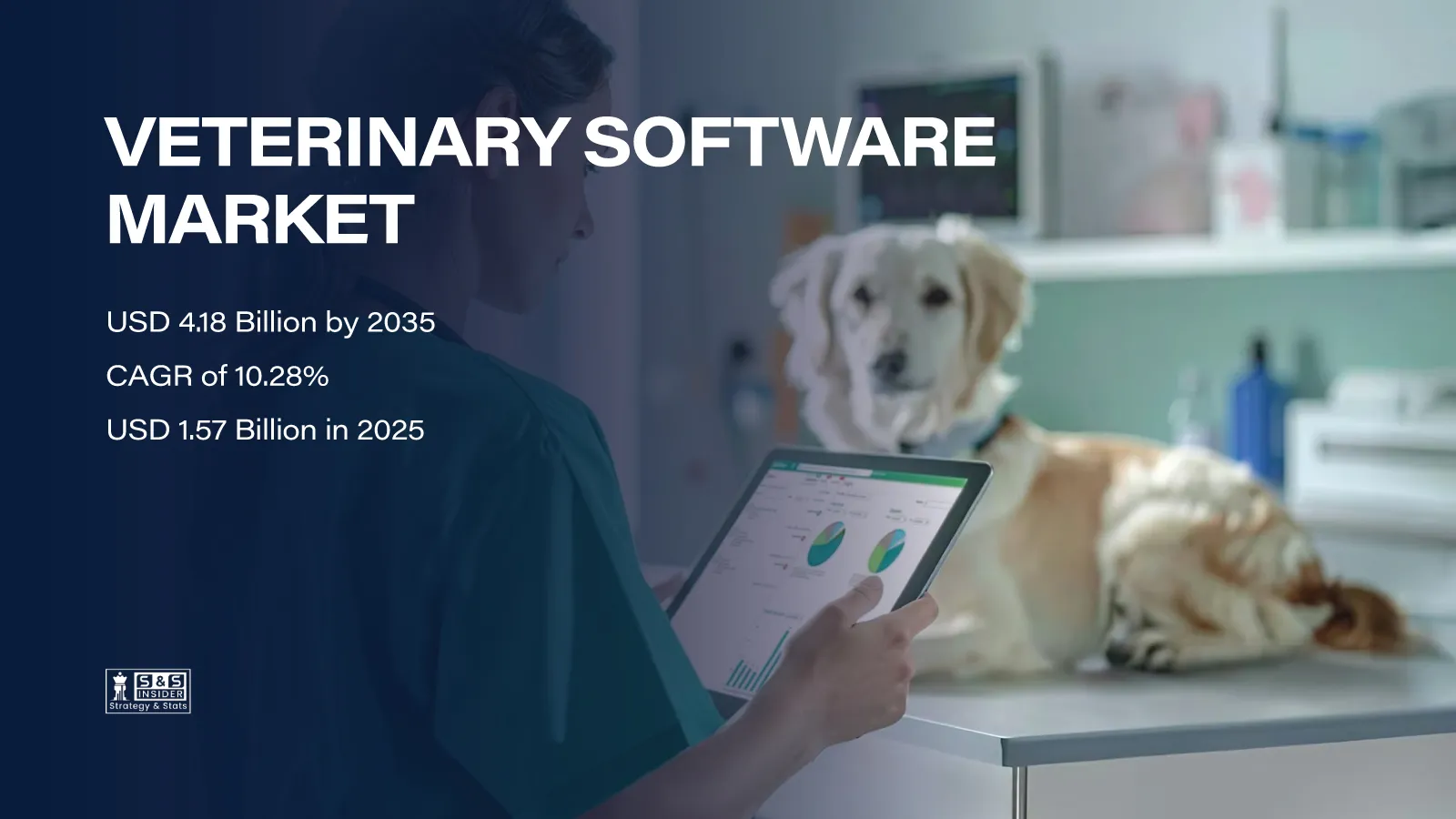
The global veterinary software market was valued at USD 1.57 billion in 2025, is estimated to reach USD 1.73 billion in 2026, and is projected to reach USD 4.18 billion by 2035, registering a CAGR of 10.28% during 2026–2035.
The North America region is leading the market attributed to the well-established veterinary infrastructure and higher adoption of technology. The Asia-Pacific region is anticipated to register the fastest growth owing to increasing urban pet ownership and demand for digital animal healthcare services.
Through 2035, market development will be driven more by cloud migration, AI integration, veterinary workforce efficiency and software interoperability.
Market Size and Forecast
|
Market Indicator |
Value |
|---|---|
|
Market Size, 2025 |
USD 1.57 Billion |
|
Market Size, 2026 |
USD 1.73 Billion |
|
Market Forecast, 2035 |
USD 4.18 Billion |
|
CAGR, 2026–2035 |
10.28% |
|
Largest Region |
North America (40.36%) |
|
Fastest-Growing Region |
Asia-Pacific (12.24% CAGR) |
|
Leading Product |
Practice Management Software (52.37%) |
|
Leading Deployment |
Cloud (62.38%) |
Demand Drivers and Constraints
Primary Demand Drivers
-
Increasing companion animal ownership: Expanding pet populations and higher spending on veterinary services generate demand for efficient patient management and digital health records.
-
AI-powered documentation: Automated medical note generation reduces administrative workloads and supports veterinarians managing increasing appointment volumes.
-
Cloud platform migration: Veterinary practices are replacing legacy systems with subscription-based software offering remote accessibility and centralized information management.
-
Corporate veterinary consolidation: Multisite veterinary groups require standardized platforms for financial reporting, inventory management, and patient information.
-
Growing telehealth adoption: Digital consultations, follow-up appointments, and remote communication create opportunities for integrated veterinary telehealth platforms.
-
Veterinary workforce constraints: Staffing pressures encourage investment in workflow automation, appointment management, and electronic prescription solutions.
Potential Growth Constraints
-
High implementation costs and operational disruption during software migration.
-
Regulatory differences governing remote veterinary consultations and prescriptions.
-
Limited technology budgets among independent veterinary clinics.
-
Data security concerns and compatibility challenges with existing diagnostic equipment.
-
Reduced discretionary pet healthcare spending affecting software purchasing decisions.
Demand Structure by Product
Practice Management Software (2025 Market Share: 52.37%)
The veterinary software market is dominated by the practice management software, and is expected to take up around 52.37% revenue in 2025. These platforms form the backbone of appointment scheduling, patient history, treatment documentation, billing, inventory control and client communication. It is especially the veterinary hospitals and corporate clinic networks requiring standardized operations that are in demand. Integration to diagnostic labs, imaging systems, payment processing and AI documentation boosts vendor retention. Growth through 2035 will be driven by the replacement of old practice management systems and growing demand for integrated veterinary workflows.
Current trend: Increasing adoption of integrated practice management platforms with AI-assisted clinical documentation.
Major trends: Cloud migration, automated scheduling, digital billing, laboratory integration, and centralized patient records.
Telehealth Software (Forecast CAGR: 14.95%)
At the product level, telehealth software is expected to grow at the highest CAGR of 14.95% during the period from 2026 to 2035. Demand is growing as veterinary practices adopt remote consultations, digital triage, follow-up monitoring and online communication services. These platforms are convenient for pet owners and help clinics to manage routine consultations and geographically scattered patients. Remote communication may be useful for rural veterinary practices, but prescribing and diagnosis are still subject to applicable regulations. It will have to be integrated with existing patient management systems to achieve broad acceptance.
Current trend: Growing implementation of virtual veterinary consultations and digital follow-up services.
Major trends: Video consultations, remote patient monitoring, online appointment booking, digital triage, and integrated telehealth payments.
Demand Structure by Deployment
Cloud Software (2025 Market Share: 62.38%)
The cloud deployment segment held a share of about 62.38% of the veterinary software market in 2025. Veterinary professionals are able to access patient information, appointments and financial records from multiple locations without a lot of local server infrastructure with a subscription model. Cloud platforms have automatic updates, centralized backups and AI-based applications integration. For corporate veterinary groups, the upside is that it allows for consistent reporting across multiple locations, and for the independent practice the software capabilities can scale. Demand will be sustained by the continued modernization of the veterinary IT infrastructure through 2035.
Current trend: Accelerating replacement of locally installed systems with cloud-native veterinary platforms.
Major trends: Subscription pricing, remote accessibility, automatic updates, AI integration, and multisite reporting.
Hybrid Deployment (Forecast CAGR: 11.61%)
The CAGR for Hybrid Deployment is predicted to be 11.61% from 2026 to 2035. The model combines operations management in the cloud, with local data storage or selected applications on site. Veterinary facilities with large diagnostic imaging records or in areas where connectivity is unreliable may prefer hybrid solutions.The phased move of systems also allows clinics to maintain existing critical functionality, while bringing in modern digital devices. Specialty hospitals, rural veterinary practices and organizations requiring flexible infrastructure will increase demand.
Current trend: Increasing demand for flexible deployments combining local storage and cloud applications.
Major trends: Data synchronization, phased cloud migration, offline accessibility, imaging storage, and integrated infrastructure.
Demand Structure by Animal Type
Companion Animals (2025 Market Share: 61.93%)
Pets contributed to about 61.93 percent of total revenue from veterinary software in 2025. There is a lot of demand for routine exams, vaccines, preventive care, diagnostics and special treatments for dogs and cats. Veterinary clinics need software to schedule appointments, record patient histories, process payments and communicate with pet owners. The rising demand for advanced animal healthcare and personalized treatment is driving the adoption of digital solutions. “We’ll see more growth opportunities through integration with pet insurance, diagnostic imaging and prescription management.
Current trend: Increasing digitalization of companion animal healthcare services.
Major trends: Preventive care reminders, pet insurance integration, electronic prescriptions, and specialty treatment management.
Livestock Animals (Forecast CAGR: 12.02%)
The livestock animal segment is expected to grow at a CAGR of 12.02% during 2026-2035. Digital veterinary records, herd health monitoring, documentation of medication and animal traceability requirements are fueling demand. Farm veterinarians are increasingly looking for software they can access out in the field, to log treatments and vaccination history on their visits. Accurate digital recordkeeping is also encouraged by expectations of food safety and demand for livestock exports. Integration of veterinary practice software and herd management platforms are likely to be opportunities.
Current trend: Expanding use of digital veterinary records within livestock healthcare operations.
Major trends: Herd health integration, medication tracking, mobile applications, vaccination records, and animal traceability.
Demand Structure by End User
Veterinary Hospitals and Clinics (2025 Market Share: 70.29%)
Veterinary hospitals and clinics held a significant share, about 70.29%, of the market in 2025, reflecting their key role in providing animal healthcare services. These facilities rely on digital platforms for appointment scheduling, clinical documentation, billing, inventory management and diagnostic integration. Independent practices want something cheap and easy to implement; larger hospital networks need enterprise reporting capabilities. Increasing patient volumes, staffing limitations and adoption of advanced treatment services will drive the demand for the software.
Current trend: Increasing investment in integrated clinical and administrative management platforms.
Major trends: AI documentation, automated billing, electronic records, diagnostic integration, and workflow optimization.
Specialty and Referral Centers (Forecast CAGR: 11.91%)
Specialty and referral centers are expected to register the fastest growth in terms of number of end users, at a CAGR of 11.91% by 2035. There is also a growing demand for veterinary oncology, cardiology, neurology, emergency medicine and advanced surgical services that requires sophisticated patient management capabilities. They need software that can manage referral coordination, diagnostic imaging, complex treatment schedules and multidisciplinary clinical records. Demand for interoperable solutions will be driven by the growth of specialty veterinary hospitals.
Current trend: Increasing adoption of specialized clinical management platforms.
Major trends: Referral management, advanced imaging integration, surgery scheduling, inpatient monitoring, and multidisciplinary records.
Regional Market Dynamics
North America (2025 Market Share: 40.36%)
North America dominated the veterinary software market with a 40.36% share in 2025. The United States represents the principal revenue contributor, supported by substantial companion animal healthcare spending, established veterinary hospital networks, and early adoption of AI documentation tools. The U.S. market generated USD 547.60 million in 2025. Canada contributes demand through independent practices and expanding veterinary groups. Cloud migration and corporate clinic standardization will remain important growth drivers.
Direction: Sustained leadership through AI adoption, cloud modernization, and enterprise veterinary software deployment.
Europe (2025 Market Share: 27.19%)
Europe accounted for approximately 27.19% of global market revenue in 2025. The United Kingdom represents a leading national market, followed by Germany, France, and other established European veterinary healthcare economies. Corporate clinic consolidation, growing demand for pet insurance integration, and regulatory documentation requirements support software adoption. Northern European markets demonstrate strong cloud adoption, while other markets offer opportunities to replace legacy systems.
Direction: Steady expansion through clinic consolidation, digital billing, regulatory compliance, and cloud platform replacement.
Asia-Pacific (Forecast CAGR: 12.24%)
Asia-Pacific is expected to register the fastest regional growth, expanding at a CAGR of 12.24% from 2026 to 2035. China leads regional demand, supported by expanding urban pet ownership and veterinary clinic networks. Japan and Australia contribute established demand for advanced practice management and diagnostic integration. India offers significant growth opportunities as urban households increasingly access organized companion animal health. Affordable subscriptions, localized interfaces, and mobile-first applications will support adoption.
Direction: Rapid expansion driven by urban pet ownership, veterinary infrastructure development, and affordable digital platforms.
Latin America (2025 Market Share: 6.47%)
Latin America accounted for approximately 6.47% of the global market in 2025, with Brazil representing the largest national contributor. Mexico, Argentina, Chile, and Colombia are important developing markets as veterinary clinics adopt electronic records, digital scheduling, and billing solutions. Growing urban pet ownership and expanding veterinary service networks support demand. Livestock-intensive economies also create opportunities for animal health documentation and veterinary field applications.
Direction: Gradual growth through cloud adoption, expanding clinic networks, and livestock healthcare digitalization.
Middle East & Africa (2025 Market Share: 5.15%)
The Middle East and Africa represented approximately 5.15% of market revenue in 2025. Saudi Arabia, the UAE, and Qatar offer opportunities associated with premium companion animal services, equine care, and specialized veterinary facilities. South Africa maintains an established veterinary healthcare sector supporting practice management software adoption. Limited connectivity and technology budgets constrain expansion in some developing markets, encouraging demand for affordable mobile solutions.
Direction: Emerging expansion through veterinary infrastructure investment, mobile software, and specialized animal healthcare services.
Competitive Landscape
The veterinary software market includes established animal health technology suppliers and specialized cloud software developers.
Key participants include IDEXX Laboratories, Covetrus, Nordhealth, Patterson Veterinary, Instinct Science, Digitail, Otto, Herdwatch, Cencora (MWI Animal Health), and DaySmart Software.
Competition increasingly centers on AI-powered medical documentation, seamless diagnostic integration, cloud migration support, and enterprise clinic management.
Recent developments highlighted in the SNS Insider report include Instinct Science's acquisition of ScribbleVet in January 2026 and IDEXX Laboratories' acquisition of CoVetAI in September 2026, illustrating growing industry interest in AI-enabled veterinary documentation.
Market Outlook (2026–2035)
The global veterinary software market is forecast to reach USD 4.18 billion by 2035, supported by increasing demand for digitally connected veterinary care.
Cloud platforms will remain central to modernization, while AI-powered medical scribes, telehealth, and integrated diagnostic systems create additional revenue opportunities.
Corporate clinic consolidation is expected to encourage enterprise software adoption, while independent practices will prioritize affordability, operational efficiency, and implementation support.
North America is expected to maintain its leading market position, while Asia-Pacific offers the fastest regional expansion.
Overall, veterinary software market growth through 2035 will increasingly depend on automation, integrated clinical workflows, scalable cloud platforms, and vendors' ability to deliver measurable improvements in veterinary practice efficiency.



