
The global wood pellets market is at a critical point of change with energy producers, industrial manufacturers and residential consumers taking a look at the role of biomass fuels in their long term energy plans. Wood pellet makers and distributors are finding opportunities from rising demand for renewable heat, efforts to cut reliance on fossil fuels, and investments in biomass energy infrastructure.
Wood pellets are compressed biomass fuels, typically made from sawdust, wood shavings and other appropriate woody feedstocks. They are suitable for residential heating, commercial boilers, industrial heat production and selected electricity generation applications. Their consistent size, controlled moisture content and compatibility with automated combustion systems.
Adoption of renewable energy, household heating requirements and the use of biomass in industrial energy systems are driving demand, says the SNS Insider Wood Pellets Market report. Commercial issues such as the availability of feedstock, transportation costs, verification of sustainability and competition from other heating technologies are becoming increasingly important.
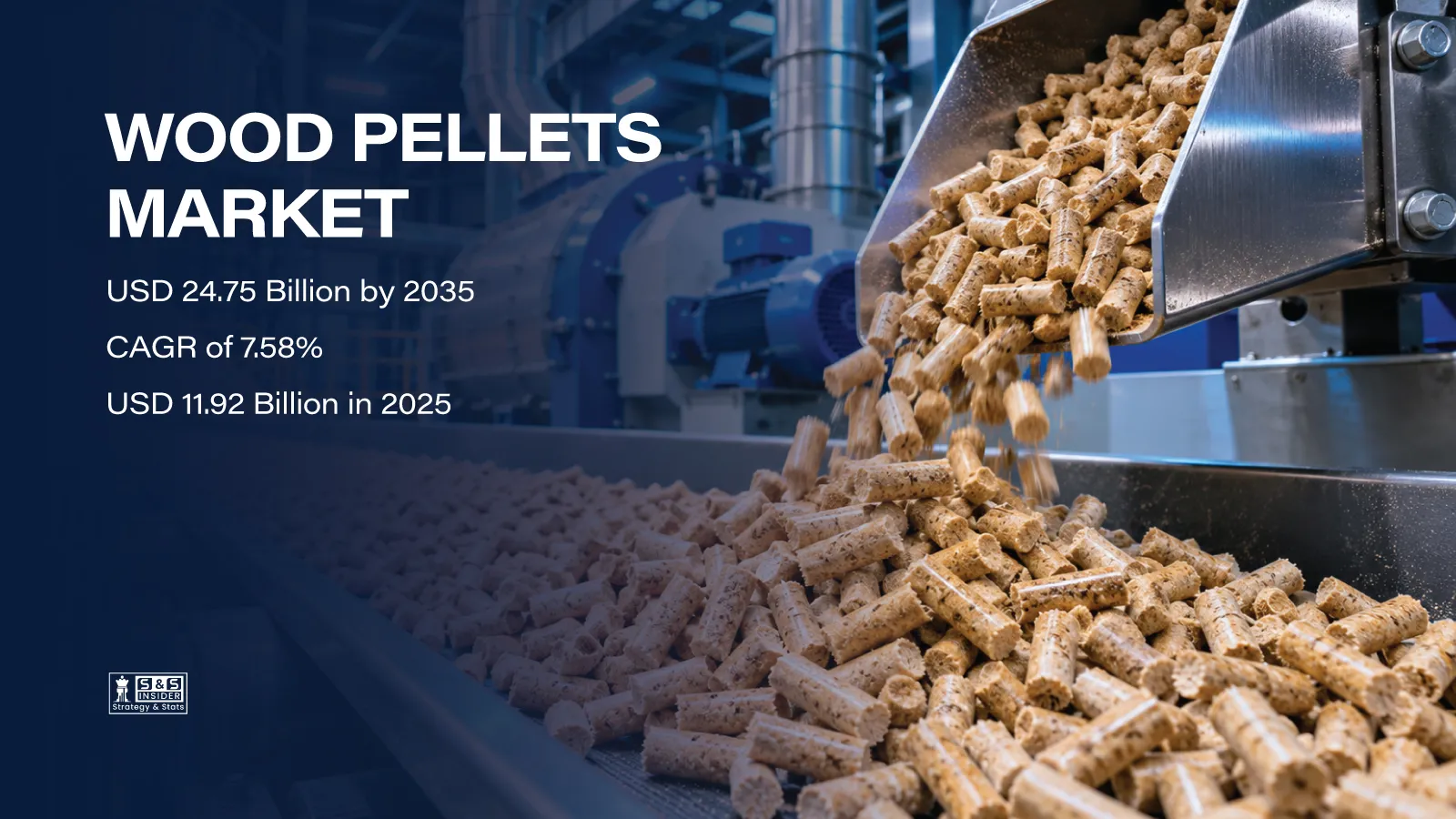
The Wood Pellets Market was valued at USD 11.92 Billion in 2025 and is anticipated to climb to USD 12.82 Billion in 2026 and USD 24.75 Billion by 2035, registering a CAGR of 7.58% over 2026–2035.
Simply increasing production capacity will not be enough to drive the development of the market by 2035. They will need to be able to demonstrate that they can deliver a consistent product quality, have transparent sourcing documentation and can offer cost-competitive products to customers in a range of geographical locations.
Europe is a key consumption hub with a well established pellet heating infrastructure, while Asia-Pacific provides opportunities for industrial biomass demand and selected power generation projects.
Demand Drivers and Constraints
Primary Demand Drivers
- Growing renewable heating demand: Households and commercial facilities are evaluating pellet boilers and stoves as alternatives to conventional fossil fuel heating systems.
- Industrial decarbonization: Manufacturers requiring high-temperature heat are considering suitable biomass fuels to reduce dependence on coal and fuel oil.
- Biomass power generation: Selected electricity producers continue using wood pellets in dedicated biomass facilities and coal co-firing applications.
- Feedstock utilization: Pellet manufacturing provides an additional commercial outlet for sawdust, wood shavings, and other eligible forestry and wood-processing residues.
- Advances in production technology: Improved drying systems, pellet presses, and automated quality monitoring can strengthen manufacturing consistency.
- Energy diversification: Organizations seeking greater fuel flexibility may incorporate biomass alongside other renewable and conventional energy sources.
Potential Growth Constraints
- Fluctuating feedstock availability and procurement costs.
- High transportation and bulk storage expenses.
- Moisture sensitivity and pellet degradation during handling.
- Competition from heat pumps, electrification, natural gas, and other heating technologies.
- Sustainability certification requirements and concerns about forest carbon impacts.
- Policy uncertainty affecting biomass eligibility and investment economics.
Demand Structure by Application
Heating — Established Demand Segment
A key application for the wood pellets industry is heating, where it is widely used in residential buildings, commercial properties and district heating systems. Well-designed pellet-fired heating equipment provides automatic fuel feeding, predictable combustion characteristics and convenient storage of bulk fuel.
Demand is especially relevant in cold regions where building heating accounts for a large share of energy consumption . In countries with developed pellet distribution networks, the advantages are the accessibility of fuel supply, experience of equipment installers and availability of service infrastructure.
But adoption depends on the relative cost of pellets, electricity and traditional heating fuels. Purchasing decisions are also driven by heat pump technology and building electrification. Suppliers will be focusing more on premium fuel quality, dependable delivery arrangements and long-term customer relationships rather than relying solely on new heating system installations through 2035.
Current trend: Continued demand for standardized pellets compatible with automated heating systems.
Major trends: Premium residential pellets, automated boiler systems, district heating integration, and improved fuel distribution networks.
Power Generation — Industrial Biomass Demand
Industrial wood pellets continue to be an important end-use for power generation, especially in markets where utilities have dedicated biomass plants or have converted some coal-fired generating units to use biomass. Wood pellets are a relatively uniform biomass fuel that can be transported, stored and handled with specialized bulk handling infrastructure.
Demand is affected by policies for renewable electricity, plant operating economics, fuel procurement agreements, and sustainability standards. The commercial attractiveness of electricity generation from pellets varies widely from one country to another. Long distance imports, fuel handling requirements and environmental compliance can add to generation costs. Investment opportunities through 2035 are likely to focus on projects with adequate energy policies, existing infrastructure and reliable biomass supply chains in place.
Current trend: Selective deployment of industrial biomass for electricity generation.
Major trends: Biomass co-firing, dedicated generation facilities, long-term fuel agreements, and certified supply chains.
Combined Heat and Power — Efficiency-Led Opportunities
Combined Heat and Power Another market opportunity is CHP, which produces useful heat and electricity in an integrated energy system. CHP installations can be used to supply industrial facilities, district heating networks and institutional energy consumers requiring both forms of energy.
Where locally available biomass resources and appropriate combustion technologies make projects economically feasible, wood pellets could provide an alternative fuel. The economic benefits depend on the use of heat, equipment efficiency, operating costs, and the availability of competing energy sources.
Current trend: Interest in efficient biomass utilization for integrated heat and electricity production.
Major trends: District energy systems, industrial energy optimization, smaller-scale CHP installations, and improved combustion efficiency.
Demand Structure by End Use
Industrial — Large-Scale Fuel Consumption
The industrial sector is a key component of wood pellet demand, as manufacturing and energy production operations can use significant amounts of fuel. Pellet-based boilers may be considered by industries such as paper processing, food manufacturing and selected chemical operations where process temperature requirements and fuel economics are suitable.
Industrial customers tend to look at energy content, moisture specifications, ash characteristics, delivery reliability and total operating costs. Long-term purchase arrangements can offer producers reliable demand and enable customers to limit their exposure to short-term disruptions in fuel supply.
Current trend: Greater emphasis on reliable industrial biomass procurement.
Major trends: Bulk fuel contracts, automated handling equipment, process heat decarbonization, and feedstock traceability.
Residential and Commercial — Distributed Heating Applications
Residential and commercial customers support demand for bagged and bulk wood pellets used in individual heating systems. Convenience, predictable fuel quality, and access to local distributors strongly influence purchasing decisions.
Commercial buildings, hospitality properties, agricultural facilities, and institutional users may adopt pellet heating where annual heat demand justifies installation and maintenance expenses. For producers, retail distribution, seasonal inventory planning, and equipment compatibility remain important competitive factors.
Current trend: Demand for convenient, quality-certified heating fuels.
Major trends: Bagged pellet distribution, automated storage systems, premium combustion performance, and regional dealer partnerships.
Regional Market Dynamics
Europe — Established Wood Pellet Consumption Center
Europe is a leading regional market for wood pellets, supported by developed residential heating networks, biomass energy infrastructure, and longstanding use of solid biomass fuels. Germany, Austria, Sweden, and other European countries maintain established heating equipment markets and pellet supply networks.
Demand is shaped by winter temperatures, consumer heating costs, building energy policies, and renewable energy regulations. European sustainability requirements also place increasing emphasis on feedstock origin, forest management practices, and lifecycle greenhouse gas performance.
Direction: Established demand supported by heating infrastructure and increasingly stringent sustainability expectations.
North America — Production and Export Opportunities
North America plays an important role in global wood pellet manufacturing, supported by forestry resources, wood-processing industries, and established export infrastructure. The United States and Canada supply domestic heating customers as well as international industrial biomass markets.
Production economics depend on feedstock accessibility, manufacturing efficiency, transportation distances, and port infrastructure. Export-oriented manufacturers face additional scrutiny concerning forest sourcing, environmental performance, and supply chain transparency.
Direction: Opportunities in efficient manufacturing, regional heating markets, and certified biomass exports.
Asia-Pacific — Industrial Biomass Opportunities
Asia-Pacific presents growth opportunities associated with industrial energy diversification and biomass use in selected electricity generation markets. Japan and South Korea have historically relied on imported biomass fuels for parts of their renewable electricity portfolios.
China and other regional economies also represent potential opportunities for biomass applications, depending on domestic energy policies, available feedstocks, and project economics. Regional demand remains sensitive to policy changes, imported fuel prices, and competing renewable technologies.
Direction: Selective expansion supported by industrial energy requirements and biomass-related infrastructure.
Latin America and Middle East & Africa
Latin America offers opportunities through forestry resources, agricultural processing activity, and industrial energy requirements. Brazil and other countries with established wood-processing industries may benefit from locally available biomass residues.
In the Middle East and Africa, commercial development is more selective because fuel economics, forestry resources, climate conditions, and energy infrastructure vary widely. Projects that use locally sourced material and serve identifiable industrial customers may offer more practical opportunities than large-scale import-dependent installations.
Direction: Emerging applications centered on local feedstock availability and industrial energy needs.
Competitive Landscape
The wood pellets industry includes integrated forest products companies, specialized pellet manufacturers, industrial biomass suppliers, and regional heating fuel distributors. Companies associated with the market include Enviva, Graanul Invest, Drax, Energex, Highland Pellets, Lignetics, Stora Enso, and The Westervelt Company.
Competition is increasingly influenced by raw material sourcing, production efficiency, delivery capabilities, product certification, and customer contract structures. Industrial buyers typically emphasize large-volume supply reliability and documented sustainability performance, while residential customers place greater importance on combustion consistency, packaging, and local availability.
Technological investment in pelletizing equipment, moisture management, and production monitoring may improve operational economics. Manufacturers able to combine efficient production with reliable logistics and transparent sourcing practices will be better positioned to compete in demanding international markets.
Market Outlook (2026–2035)
The wood pellets market is expected to remain an important component of selected renewable heating and biomass energy supply chains through 2035. Future demand will be influenced by energy security objectives, industrial fuel substitution, heating technology competition, and evolving policies governing sustainable biomass.
For manufacturers, increasing production capacity alone will not guarantee commercial success. Access to economically viable feedstocks, efficient processing facilities, dependable transportation, and suitable customer contracts will remain decisive. Residential markets are likely to emphasize convenience, fuel certification, and heating cost competitiveness. Industrial customers will increasingly evaluate biomass against electrification, alternative fuels, and other decarbonization pathways.
Advanced manufacturing technologies could support lower production costs, reduced energy consumption, and more consistent pellet quality. Meanwhile, sustainability documentation will remain central to accessing markets with stringent biomass sourcing requirements.
Overall, wood pellet suppliers that prioritize responsible feedstock procurement, operational efficiency, product reliability, and diversified customer relationships will be better positioned to capture opportunities across the 2026–2035 forecast period.



