
Influenza Therapeutics Market Report Scope & Overview:
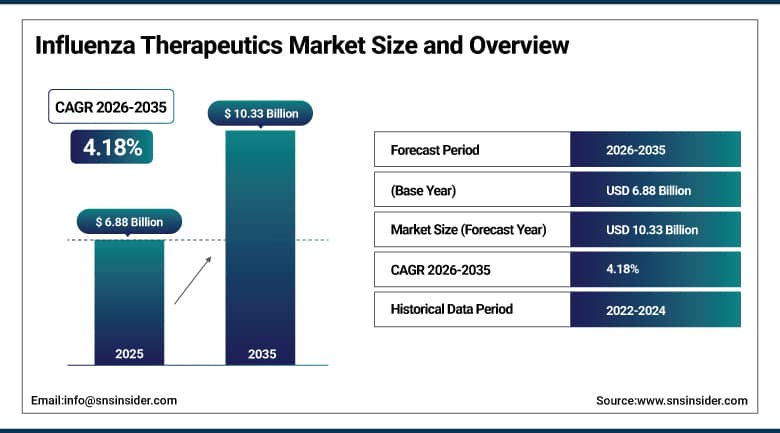
Influenza Therapeutics Market was valued at USD 6.88 billion in 2025 and is expected to reach USD 10.33 billion by 2035, growing at a CAGR of 4.18% from 2026-2035.
The Influenza Therapeutics Market is witnessing steady growth as a result of the constant global threat posed by season and emergent influenza infections and the ongoing need for efficacious treatment. The growing awareness about the prevention and treatment of influenza infections, combined with an increase in healthcare spending, will drive the growth in demand for antiviral drugs. Increased fear about resistance of influenza viruses to available drugs will encourage the development of innovative antiviral drugs with higher efficacy and wider spectrum of activity. Advances in the development of antiviral drugs, increased access to healthcare services, and investment in infectious diseases research will drive market growth.
WHO's 2025 global influenza surveillance activities emphasize research and development of new therapeutics and countermeasures alongside outbreak response and surveillance.
To Get More Information On Influenza Therapeutics Market - Request Free Sample Report
Influenza Therapeutics Market Trends
-
Rising global influenza incidence is driving demand for effective antiviral therapies to reduce disease severity, complications, and treatment duration.
-
Increasing emphasis on early influenza diagnosis and treatment is supporting adoption of antiviral therapies, particularly among high-risk populations.
-
Growing concerns regarding antiviral resistance are encouraging development of novel therapies with alternative mechanisms and broader antiviral activity.
-
Advancements in antiviral drug development are improving treatment options through novel mechanisms, formulations, delivery methods, and combination therapeutic approaches.
The U.S. Influenza Therapeutics Market Outlook
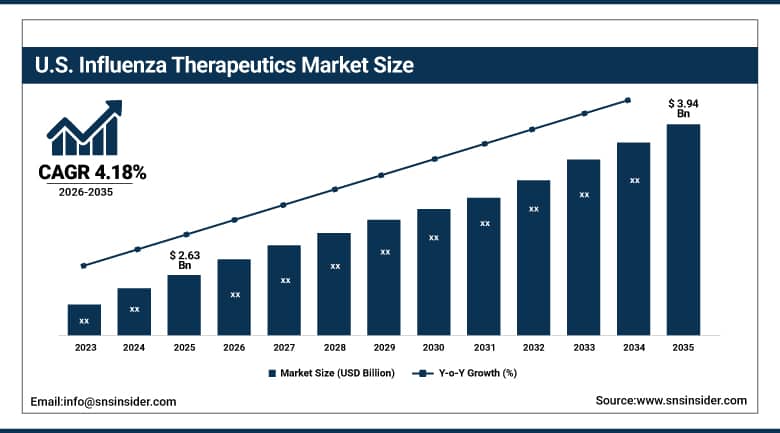
The U.S. Influenza Therapeutics Market was valued at USD 2.63 billion in 2025 and is expected to reach USD 3.94 billion by 2035, growing at a CAGR of 4.16% from 2026-2035.
The U.S. Influenza Therapeutics Market is witnessing steady growth As a result of the prevalence of seasonal flu along with the demand for appropriate antiviral therapy solutions. Growing interest in the early diagnosis and treatment of influenza will drive the demand for medicinal products, especially among high-risk individuals. The growing issues of antiviral resistance have resulted in developing new drug products with higher effectiveness and wider applicability. Moreover, the development of the healthcare sector, growing expenditures on healthcare, and funding for infectious diseases research are fueling the growth of the market. The necessity to manage influenza effectively and to be prepared for new influenza strains is also driving market growth.
CDC states that influenza viruses continually change and that genetic changes can reduce susceptibility to antiviral drugs. CDC continuously monitors U.S. viruses for antiviral resistance.
Influenza Therapeutics Market Segment Analysis
-
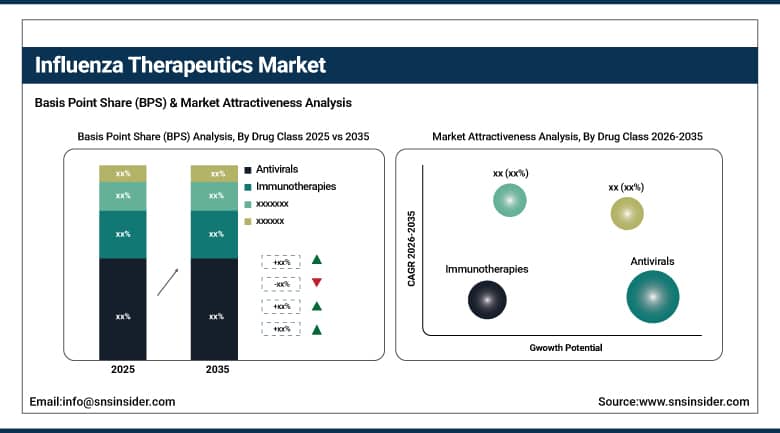
By Drug Class, Antivirals dominate the Influenza Therapeutics Market with 63% share in 2025; Immunotherapies are expected to grow at the fastest CAGR of 6.59% from 2026–2035.
-
By Route of Administration, Oral dominates the Influenza Therapeutics Market with 76% share in 2025; Parenteral is expected to grow at the fastest CAGR of 6.84% from 2026–2035.
-
By Distribution Channel, Hospital Pharmacies dominate the Influenza Therapeutics Market with 48% share in 2025; Online Pharmacies are expected to grow at the fastest CAGR of 5.38% from 2026–2035.
-
By End-User, Hospitals dominate the Influenza Therapeutics Market with 52% share in 2025; Homecare Settings are expected to grow at the fastest CAGR of 5.48% from 2026–2035.
By Drug Class, Antivirals dominates the Influenza Therapeutics Market, Immunotherapies grows fastest.
Antivirals segment dominated the Influenza Therapeutics Market with the highest revenue share of about 63% in 2025 Because of their proven efficacy in the treatment of influenza infection, as well as their efficacy in reducing the severity and duration of the illness. The wide usage of the drug by physicians, proven guidelines for treatment, availability of several antiviral drugs, and increasing incidences of influenza infections add to their success.
Immunotherapies segment is expected to grow at the fastest CAGR of 6.59% from 2026-2035 due to the ongoing increase in research being conducted on treatments that improve and regulate immunity response against influenza viruses. There are increasing issues related to antiviral drug resistance as well as limitations in current treatments, which is leading to new developments in this field.
By Route of Administration, Oral dominates the Influenza Therapeutics Market, Parenteral grows fastest.
Oral segment dominated the Influenza Therapeutics Market with the highest revenue share of about 76% in 2025 due to their convenience, ease of administration, and patient acceptance. Antiviral drugs can be administered orally without the need for special equipment, making them ideal for outpatient care. Well-established preparations, widespread availability, medical personnel experience with them, and convenience of distribution from drug stores make oral influenza medications even more attractive.
Parenteral segment is expected to grow at the fastest CAGR of 6.84% from 2026-2035 This is owing to the growing need for fast and precise delivery of drugs to patients who have severe forms of the flu or are not able to consume oral medications. Hospital administration, advancements in injectable delivery of the drug, and development of new medicines are helping in adoption. Hospitalization of patients at risk increases the demand.
By Distribution Channel, Hospital Pharmacies dominates the Influenza Therapeutics Market, Online Pharmacies grows fastest.
Hospital Pharmacies segment dominated the Influenza Therapeutics Market with the highest revenue share of about 48% in 2025 They can capitalize on this advantage owing to their association with hospitals, emergency departments, and inpatient care centers. Their ability to deliver the required medicines in a timely fashion, as well as manage severe cases of infection, helps enhance their competitive edge even more.
Online Pharmacies segment is expected to grow at the fastest CAGR of 5.38% from 2026-2035 Due to the growing digitalization in the healthcare sector and the rising consumer preference for easy procurement of medicines. Internet pharmacies offer easy availability, home delivery, increased product range, and easier prescription fulfillment. Growth in internet usage, growth in e-commerce infrastructure, and acceptance of digital healthcare solutions are fueling the growth of online pharmacies.
By End-User, Hospitals dominates the Influenza Therapeutics Market, Homecare Settings grows fastest.
Hospitals segment dominated the Influenza Therapeutics Market with the highest revenue share of about 52% in 2025 because of the large number of flu cases that need to be diagnosed and treated. Hospitals have the capability to handle critical cases and high-risk groups like elderly and critically ill patients. Specialized personnel for healthcare and treatment facilities contribute even more to the efficacy of hospitals in dealing with influenza cases.
Homecare Settings segment is expected to grow at the fastest CAGR of 5.48% from 2026-2035 as a result of the rise in the preference for convenient treatment outside hospitals, and an increased availability of oral influenza treatments. Treatment from home reduces the number of visits to healthcare facilities and facilitates the treatment of people with either mild or moderate symptoms. Telemedicine and healthcare accessibility also promote its use.
Regional Analysis
|
Region |
Major Country |
Share within Region, 2025 (%) |
|---|---|---|
|
North America |
United States |
90.0% |
|
Europe |
Germany |
27.0% |
|
Asia Pacific |
China |
18.0% |
|
Middle East & Africa |
UAE |
16.0% |
|
Latin America |
Brazil |
42.0% |
North America Influenza Therapeutics Market Insights
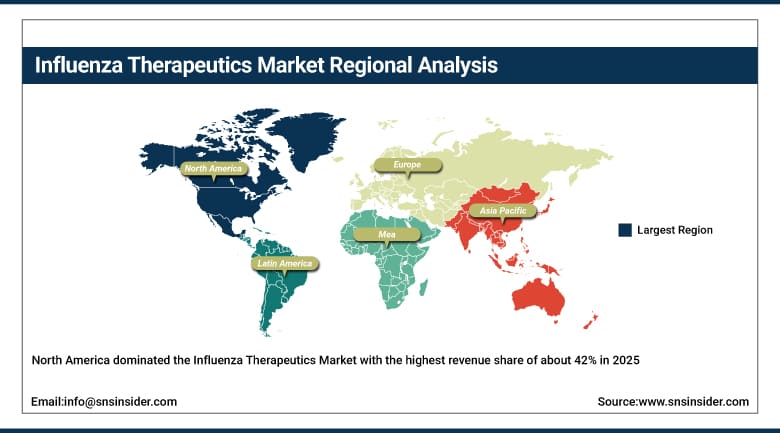
North America dominated the Influenza Therapeutics Market with the highest revenue share of about 42% in 2025, backed by state-of-the-art health care infrastructure, robust pharmaceutical capabilities, and easy availability of antiviral medicines. Influenza awareness, well-established diagnosis channels, high expenditure on health care, and continual investment in the development of drugs contribute to the use of therapies. Dominance of leading pharmaceutical companies bolsters market growth in the region.
The U.S. Influenza Therapeutics Market accounted for a market share of 90.0%, backed up by their well-developed healthcare system, thriving pharmaceutical sector, and availability of antiviral medicines. Awareness about influenza, diagnostic capacity, and expenditure on healthcare are some of the factors that are leading to the uptake of treatment in the market. Investments in research & development, disease surveillance, and government readiness programs have helped the market.
Get Customized Report as Per Your Business Requirement - Enquiry Now
Europe Influenza Therapeutics Market Insights
Europe’s influenza therapeutics market is supported by well-established healthcare systems, strong pharmaceutical research capabilities, and widespread access to antiviral treatments. The government-driven influenza monitoring programs, immunization campaigns, and pandemic preparations help promote early diagnosis and treatment. The growing seasonality of influenza, better healthcare access, and sustained funding for advanced antivirals help drive market growth within major European countries.
The Germany Influenza Therapeutics Market accounted for a market share of 27.0%, fueled by the sophisticated healthcare infrastructure, strong pharmaceutical industry and flu management system. Availability of healthcare facilities, increase in the demand for antiviral drugs and disease surveillance contribute to market growth. Preparedness plans from the government, pharmaceutical research and increasing awareness regarding influenza help to maintain Germany’s presence in the European market.
Asia Pacific Influenza Therapeutics Market Insights
Asia Pacific is expected to grow at the fastest CAGR of about 5.20% from 2026–2035, Influenced by increasing cases of influenza, expansion of healthcare services, and availability of antivirals. Increase in healthcare spending, growing knowledge about the diagnosis and treatment of influenza, preparedness efforts by the government, and pharmaceutical spending drive the market. Expansion of healthcare services in countries such as China, India, Japan, and Southeast Asia drives growth.
The China Influenza Therapeutics Market accounted for a market share of 18.0%, backed by an increased healthcare infrastructure, greater public awareness about influenza and better availability of anti-viral drugs. Increased health care spending and improved diagnostic technologies have led to early diagnosis. Government programs for disease control, improved drug production capacity, and enhanced healthcare preparedness also aid in development and adoption of influenza medicines in China.
Middle East & Africa and Latin America Influenza Therapeutics Market Insights
The Middle East & Africa and Latin America influenza therapeutics markets These are driven by improved healthcare infrastructure, awareness of management of influenza, and availability of antivirals. Increased investment in healthcare, disease control programs by governments, and better diagnosis is encouraging treatment uptake. Higher incidences of seasonal influenza and strengthened drug distribution networks in developing nations also drive the market potential.
The UAE Influenza Therapeutics Market accounted for a market share of 16.0%, Backed by improved healthcare infrastructure, increased healthcare expenditure, and availability of advanced medicines. Increased awareness about the preventive measures and treatments of flu encourages the use of therapeutics. Government healthcare initiatives, improved disease surveillance, advanced healthcare facilities, and collaboration with international pharmaceutical companies aid in the growth of the market in UAE.
Market Dynamics
Growth Drivers: Increasing prevalence of influenza and rising burden of seasonal infections are driving demand for influenza therapeutics
The recurring incidence of seasonal influenza and the associated risk of severe respiratory complications are increasing demand for effective therapeutic interventions. Influenza may result in various complications including pneumonia, respiratory failure, hospitalizations, and even death, especially for older populations, infants, and people who have chronic diseases. Thus, more and more medical professionals pay attention to antiviral treatments among their patients who are more prone to developing complications or have a serious form of the disease. As per CDC guidelines, antiviral treatment should be administered immediately to patients with severe or worsening influenza, hospitalizations, and those at increased risk for influenza-related complications.
Restraints: Development of antiviral resistance can reduce treatment effectiveness and create challenges for influenza therapeutic manufacturers
The ability of influenza viruses to develop reduced susceptibility or resistance to antiviral medicines represents a major challenge for the market. Mutations in viruses may reduce the efficacy of particular treatments, necessitating constant monitoring and finding new ways to treat the patient. Previous resistance of the flu A virus has already led to the reduced usage of earlier adamantanes such as amantadine and rimantadine. Resistance issues may cause the increased research and development efforts in searching for new methods of therapy that have a different mechanism of action and are active against various viruses. Moreover, resistance has been recorded with newer antivirals such as baloxavir.
Opportunities: Expansion of generic antiviral availability is creating opportunities to improve accessibility and broaden treatment adoption
Increasing availability of generic influenza antivirals is creating opportunities for wider patient access and greater competition within the therapeutics market. The first generic of baloxavir marboxil was approved by the FDA in June 2026. This will allow patients to get an affordable generic drug that is a single dose treatment for acute uncomplicated flu and post-exposure prophylaxis. Availability of cheaper generics will increase usage and affordability of the drug. Competing in pricing and manufacturing of the drug before the seasons of influenza will be another benefit of generics competition.
Recent Developments:
-
2026 : Roche Holding AG expanded access to Xofluza (baloxavir marboxil) through a licensing agreement with the Medicines Patent Pool, enabling generic manufacturers to develop and supply the influenza antiviral across 129 low- and middle-income countries.
-
2026 : GSK plc announced that it will advance its mRNA-based seasonal influenza vaccine candidate into a late-stage clinical trial following positive mid-stage results, strengthening its next-generation influenza treatment and prevention pipeline.
-
2026 : Roche Holding AG’s Xofluza received further market expansion momentum after the U.S. FDA approved the first generic version of baloxavir marboxil, supporting broader availability of the single-dose influenza antiviral.
-
2025 : Roche Holding AG launched direct-to-consumer U.S. sales of Xofluza at a discounted cash price of $50, expanding access to its influenza antiviral through online pharmacy channels.
Influenza Therapeutics Market key players are:
-
Roche Holding AG
-
GSK plc
-
Takeda Pharmaceutical Company Limited
-
Gilead Sciences, Inc.
-
BioCryst Pharmaceuticals, Inc.
-
Shionogi & Co., Ltd.
-
Viatris Inc.
-
Teva Pharmaceutical Industries Ltd.
-
Sun Pharmaceutical Industries Limited
-
Cipla Limited
-
Dr. Reddy’s Laboratories Ltd.
-
Lupin Limited
-
NATCO Pharma Limited
-
Aurobindo Pharma Limited
-
Zydus Lifesciences Limited
-
Torrent Pharmaceuticals Ltd.
-
Hetero Drugs Limited
-
Chugai Pharmaceutical Co., Ltd.
-
Alkem Laboratories Limited
-
Genentech, Inc.
Influenza Therapeutics Market Report Scope:
| Report Attributes | Details |
|---|---|
| Market Size in 2025 | USD 6.88 Billion |
| Market Size by 2035 | USD 10.33 Billion |
| CAGR | CAGR of 4.18% From 2026 to 2035 |
| Base Year | 2025 |
| Forecast Period | 2026-2035 |
| Historical Data | 2022-2024 |
| Report Scope & Coverage | Market Size, Segments Analysis, Competitive Landscape, Regional Analysis, DROC & SWOT Analysis, Forecast Outlook |
| Key Segments | • By Drug Class (Antivirals, Immunotherapies, Vaccines) • By Route of Administration (Oral, Parenteral, Inhalation) • By Distribution Channel (Hospital Pharmacies, Retail Pharmacies, Online Pharmacies) • By End-User (Hospitals, Clinics, Homecare Settings) |
| Regional Analysis/Coverage | North America (US, Canada), Europe (Germany, UK, France, Italy, Spain, Russia, Poland, Rest of Europe), Asia Pacific (China, India, Japan, South Korea, Australia, ASEAN Countries, Rest of Asia Pacific), Middle East & Africa (UAE, Saudi Arabia, Qatar, South Africa, Rest of Middle East & Africa), Latin America (Brazil, Argentina, Mexico, Colombia, Rest of Latin America). |
| Company Profiles | Roche Holding AG, GSK plc, Takeda Pharmaceutical Company Limited, Gilead Sciences, Inc., BioCryst Pharmaceuticals, Inc., Shionogi & Co., Ltd., Viatris Inc., Teva Pharmaceutical Industries Ltd., Sun Pharmaceutical Industries Limited, Cipla Limited, Dr. Reddy’s Laboratories Ltd., Lupin Limited, NATCO Pharma Limited, Aurobindo Pharma Limited, Zydus Lifesciences Limited, Torrent Pharmaceuticals Ltd., Hetero Drugs Limited, Chugai Pharmaceutical Co., Ltd., Alkem Laboratories Limited, and Genentech, Inc. |

Frequently Asked Questions
Key players in the Influenza Therapeutics Market include Roche Holding AG, Gilead Sciences, Inc., Shionogi & Co., Ltd., BioCryst Pharmaceuticals, Inc., and Shionogi, Inc., among others.
Key opportunities in the Influenza Therapeutics Market include development of novel antiviral therapies, expansion of pandemic preparedness programs, and growing demand for effective treatments against emerging influenza strains.
The market is driven by increasing influenza prevalence, rising demand for effective antiviral treatments, along with growing investments in novel therapeutics and pandemic preparedness programs.
The Antivirals segment dominated the Influenza Therapeutics Market, accounting for approximately 63.00% market share.
