
Lipid Nanoparticle CDMO Market Report Scope & Overview:
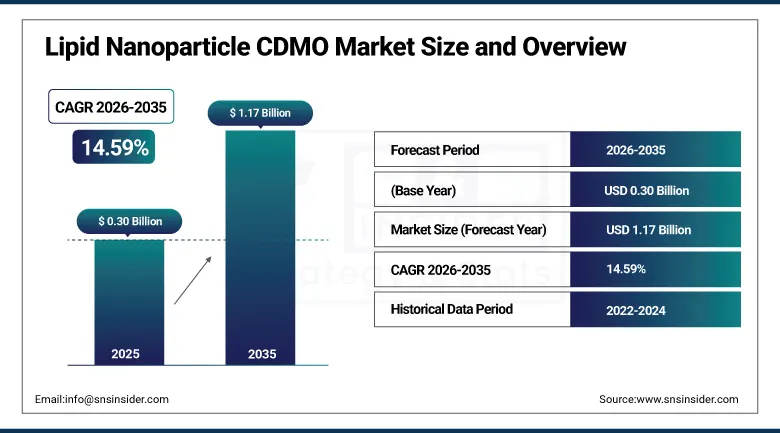
The Lipid Nanoparticle CDMO Market was valued at USD 0.30 Billion in 2025 and is projected to reach USD 1.17 Billion by 2035, expanding at a CAGR of 14.59% during the forecast period 2026–2035.
There is strong growth in the market as the lipid nanoparticle delivery system gains popularity in delivering nucleic acid therapeutic drugs such as messenger RNA (mRNA), small interfering RNA (siRNA), and gene-editing cargos. Significant advances in the field of RNA therapeutics, precision medicine, and novel biologics have created a high demand for specific contract development and manufacturing organizations (CDMOs) that specialize in the development of scalable, reproducible, and GMP compliant lipid nanoparticle drug formulations. There is an increase in the trend among pharmaceutical companies and biotech firms to partner with expert CDMOs to outsource the process of development, manufacturing, and analysis.
Future growth in the market will be fueled by increasing application of mRNA vaccine platforms in other areas than infectious diseases, increasing pipeline of RNA therapeutics, and increasing commercialization of nucleic acid therapies. Microfluidic formulation technology, automated manufacturing systems, advancement in lipid chemistry, and improved analytical characterizations are enhancing the product quality, manufacturing consistency, and scalability. Also, strategic collaborations among biotech firms, pharmaceutical companies, and expert CDMOs are building the capability of manufacturing lipid nanoparticles globally. Next generation lipid formulation technology, commercial GMP manufacturing plants, and development services are enhancing the capabilities of CDMOs.
To Get more information On Lipid Nanoparticle CDMO Market - Request Free Sample Report
Lipid Nanoparticle CDMO Market Trends
-
Rapid expansion of mRNA therapeutic and vaccine manufacturing programs worldwide.
-
Growing outsourcing of lipid nanoparticle formulation development and GMP manufacturing services.
-
Increasing adoption of microfluidic formulation technologies for scalable LNP production.
-
Rising investments in next-generation ionizable lipid development for improved therapeutic delivery.
-
Expansion of integrated CDMO services covering formulation, analytical testing, manufacturing, and fill-finish operations.
The U.S. Lipid Nanoparticle CDMO Market Size Outlook
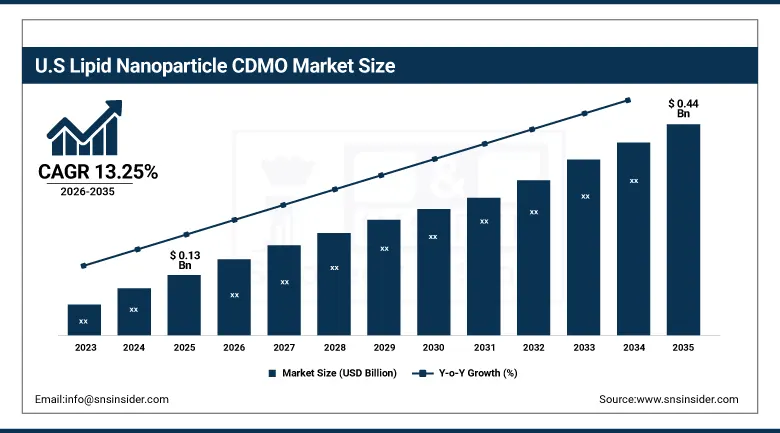
The U.S. Lipid Nanoparticle CDMO Market was valued at USD 0.13 billion in 2025 and is expected to reach approximately USD 0.44 billion by 2035, expanding at a CAGR of 13.25% during 2026–2035.
The U.S. represents about 94.00% of the North American market and is a leading country in terms of manufacturing of lipid nanoparticles because of its advanced biotech environment, strong pipeline of RNA therapeutics, solid regulatory framework, and significant investments into pharmaceutical innovations. Increased commercialization of mRNA-based drugs, increased clinical development of siRNA drugs, and ongoing investments in precision medicine are boosting the demand for the services of specialized CDMOs. Outsourcing of formulation development, process development, analytical characterization, and GMP manufacturing of lipid nanoparticles becomes more common practice for pharmaceutical and biotech companies.
Additionally, the market of the U.S. gets benefits from increased investments into advanced bioprocess technologies, automation of manufacturing processes, lipid chemistry innovations, and commercial-scale manufacturing of RNA. Ongoing collaboration between biotechnology companies, academic organizations, and specialized CDMOs contributes to the acceleration of product development and improvements of manufacturing scalability and compliance. Increased approval of nucleic acid-based therapeutics and research in personalized medicines are anticipated to drive the demand for lipid nanoparticles manufacturing in the long-term perspective. Several CDMOs located in the U.S. have announced expansion of their GMP facilities used for manufacturing of lipid nanoparticles during 2026.
Lipid Nanoparticle CDMO Market Segment Analysis
-
By Service Type, formulation development dominated the market with a 24.00% share in 2025, while fill-finish & packaging is projected to register the fastest CAGR of 16.47% during the forecast period.
-
By Payload Type, mRNA therapeutics & vaccines dominated the market with a 48.00% share in 2025, while siRNA therapeutics are projected to register the fastest CAGR of 17.71% during the forecast period.
-
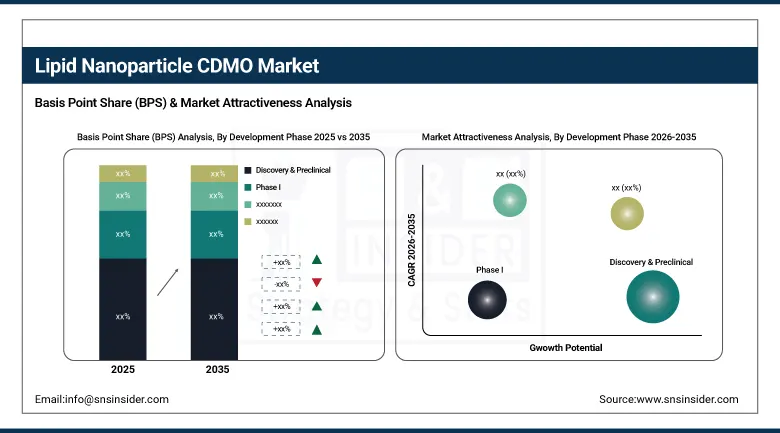
By Development phase, discovery & preclinical dominated the market with a 28.00% share in 2025, while commercial manufacturing is projected to witness the fastest CAGR of 18.44% during the forecast period.
-
By End User, biotechnology companies dominated the market with a 36.00% share in 2025, while academic & research institutes are projected to witness the fastest CAGR of 15.25% during the forecast period.
By Service Type, formulation development dominated the market, while fill-finish & packaging is fastest-growing.
Formulation development emerged as the dominant segment of the lipid nanoparticle CDMO Market in 2025 owing to the importance of formulation optimization that influences the effectiveness, encapsulation efficiency, stability, bio distribution, and drug targeting. Formulation development in lipid nanoparticles demands the accurate choice of ionizable lipids, phospholipids, cholesterol, and PEGylated lipids to optimize performance of various nucleic acid therapeutics. Today biotechnology and pharmaceutical firms turn to CDMOs having extensive knowledge in microfluidic formulation technologies, lipid chemistry, analytical characterization, and scalable manufacturing. Several major CDMOs implemented advanced microfluidic formulation technology platforms to enhance lipid nanoparticle reproducibility, scalability, and manufacturing process during 2025-2026 for next-generation RNA therapeutics.
Fill-finish & packaging is estimated to witness the fastest CAGR of 16.47% during the forecast period owing to the rising number of commercialized products based on lipid nanoparticles and increasing regulatory attention towards sterile manufacturing processes and product quality. The process of fill-finish involves specific aseptic manufacturing technologies, automated filling systems, container closure integrity test, and cold chain packaging systems to guarantee product stability. As the number of commercialized RNA therapeutics increases. During 2026 several global CDMOs launched new sterile fill-finish manufacturing units featuring automated aseptic filling systems for the commercial production of lipid nanoparticle-based therapeutics.
By Payload Type, mRNA therapeutics & vaccines dominated the market, while siRNA therapeutics are fastest-growing.
mRNA therapeutics & vaccines held the largest market share by revenue at 48.00% in 2025 because lipid nanoparticles serve as the most preferred carrier for delivering messenger RNA-based therapeutics. Clinical and commercial success of mRNA vaccines showed that lipid nanoparticles can effectively protect sensitive nucleic acids, deliver drugs into cells, and increase therapeutic effectiveness. Apart from vaccinations, pharmaceutical and biotech firms are actively developing mRNA-based therapeutics against oncological, cardiovascular, autoimmune, protein replacement and rare genetic diseases. In 2025–2026, numerous biotech companies concluded agreements with specialized CDMOs to boost commercial capacity to manufacture mRNA therapeutics against oncological and rare genetic diseases.
siRNA therapeutics segment is estimated to demonstrate the highest CAGR of 17.71% throughout the forecast period due to increased number of regulatory approvals and growing pipelines of RNA interference-based therapeutics. Lipid nanoparticles became an essential part of the process of drug delivery since it allows effective intracellular delivery and protection of therapeutic payloads from degradation. Research on liver diseases, cardiovascular disorders, metabolic disorders, neurological disorders and rare genetic diseases further contributes to R&D of siRNA-based therapeutics. In 2026, numerous global CDMOs launched dedicated laboratories for next-generation siRNA therapeutics through advanced lipid nanoparticle engineering.
By Development Phase, discovery & preclinical dominated the market, while commercial manufacturing is fastest-growing.
The discovery & preclinical service category dominated the lipid nanoparticle CDMO market in 2025 contributing 28.00% of the total market size, due to the vast pipeline of RNA therapeutic candidates being researched and evaluated in the preclinical stage of development. Many pharmaceutical and biotech companies, as well as universities, collaborate with Contract Development Manufacturing Organizations (CDMOs) for the purposes of formulation screening, lipid optimization, characterization, proof-of-concept studies, and process development at early stages of product development. The vast pipeline of mRNA therapeutics, gene-editing payload drugs, siRNA products, and precision medicine pipelines generated significant demand for discovery and preclinical development services.
The commercial manufacturing service category is expected to demonstrate the highest CAGR of 18.44% throughout the forecast period, driven by growing commercialization of RNA therapeutics and increasing approval of drugs based on lipid nanoparticles. As more RNA therapeutic products complete clinical development and begin commercial production, demand for large-scale GMP manufacture, process validation, quality control, regulatory compliance, and global supply chain services is growing rapidly. CDMOs are heavily investing in manufacturing capacity and automation of commercial production facilities and quality management solutions.
Regional Analysis
|
Region |
Major Country |
Share within Region, 2025 (%) |
|---|---|---|
|
North America |
United States |
94.00% |
|
Europe |
Germany |
29.00% |
|
Asia Pacific |
China |
19.00% |
|
Middle East & Africa |
UAE |
3.00% |
|
Latin America |
Brazil |
4.00% |
North America Lipid Nanoparticle CDMO Market Insights
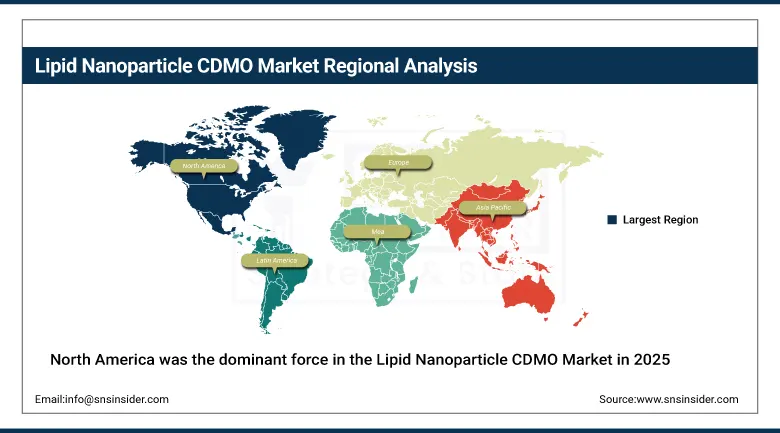
North America was the dominant force in the Lipid Nanoparticle CDMO Market in 2025, contributing about 45.00% to the global market share and expected to lead the same trend throughout the forecast period. Factors driving the regional dominance include well-established biotech environment, significant investment in RNA therapeutics, and presence of leading CDMOs for Lipid nanoparticle formulations and GMP manufacture. The US is the key driving force owing to the abundance of biotech firms, pharmaceutical firms, research institutes, and advanced manufacturing facilities.
The continuous investments in microfluidic formulation technology, advanced automated manufacturing facilities, and commercial GMP facilities are strengthening the competitive position of the region. Clinical trial scenario and increased outsourcing trends by the pharmaceutical firms to leverage the integration of development and manufacturing services offered by expert CDMOs is another factor. For example, in 2026, several North American CDMOs made announcements for their capacity expansion for lipid nanoparticle formulations, analysis characterization, and GMP manufacture.
Get Customized Report as per Your Business Requirement - Enquiry Now
Europe Lipid Nanoparticle CDMO Market Insights
The second largest regional market in 2025 was Europe due to its pharmaceutical manufacturing strength, advancing biotech research, and rising investments in ATMPs. Countries like Germany, the UK, France, Switzerland, and Belgium are continuously developing their RNA therapeutics environment with the help of collaboration between public and private sectors, increased funding for innovation and increased number of specialized CDMO facilities.
Increased regulatory harmonization in EU countries and growing clinical development of gene therapy drugs, mRNA therapeutics, and personalized medicines are forecasted to drive market growth. The presence of international pharmaceutical manufacturers along with growing investments in manufacturing infrastructure will also contribute to the market's position in global lipid nanoparticle CDMO industry. For instance, in 2026, a number of European CDMOs increased their GMP manufacturing capacities devoted to production of lipid nanoparticles for therapeutics.
Asia Pacific Lipid Nanoparticle CDMO Market Insights
The Asia Pacific represented a significant share in the overall global Lipid Nanoparticle CDMO market with 19.12% CAGR and is experiencing significant growth because of investment in drug manufacturing, growing biotechnology industries, and government policies in favor of producing advanced biologics. Countries such as China, Japan, South Korea, Singapore, and India are developing expertise in RNA therapeutics development and manufacturing and are drawing international outsourcing projects.
Rising number of clinical studies, reduced manufacturing cost, expert scientific workforce, and investment in biopharmaceuticals infrastructure are helping in driving growth in the region. Strategic partnership between international pharmaceutical companies and CDMOs in the region is also aiding technology transfer and commercial manufacturing. Growing demand for mRNA vaccines, gene therapy, and precision medicine is likely to drive the significance of the region in the global lipid nanoparticle manufacturing market. For example, several biotech manufacturers from the Asia Pacific have invested in building lipid nanoparticle manufacturing plants in 2026.
Middle East & Africa and Latin America Lipid Nanoparticle CDMO Market Insights
The Middle East & Africa region is slowly developing within the lipid nanoparticle CDMO market due to rising investments in biotechnological research and pharmaceutical manufacturing as well as healthcare modernization. The Gulf Cooperation Council (GCC) countries have been working actively on developing the biotech sector through healthcare diversification strategies and investments in advanced life sciences. The governments of South Africa and certain Middle Eastern countries have been improving their research capacities by collaborating with international pharmaceutical organizations and academia. For example, during 2026, there have been many collaborations between healthcare organizations from the Middle East related to biotechnology and expansion of regional manufacturing capabilities for advanced biologics and RNA medicines.
Latin America rises investments in biotechnological infrastructure, pharmaceutical manufacturing and healthcare innovations encouraged by government initiatives. Countries such as Brazil, Mexico, Argentina and Chile are observing gradual improvement in their clinical research capabilities and manufacturing of biologics while engaging in international collaborations related to advanced treatments. For example, during 2026, international biotechnological organizations expanded their manufacturing partnerships within Latin America to develop regional capacities in RNA medicines production.
Market Dynamics
Growth Drivers: Expansion in RNA therapeutics pipeline and increase in outsourcing of lipid nanoparticles manufacturing.
The significant growth in RNA therapies, including mRNA vaccine, RNA interference, gene editing drugs, and precision medicine, is the major factor driving the Lipid Nanoparticle CDMO Market. Lipid nanoparticles have been the preferred mode of non-viral delivery systems because of their efficacy in protecting the nucleic acid cargo against degradation and ensuring efficient intracellular delivery.
Outsourcing helps in reducing capital expenditure, getting access to specialized manufacturing skills, improving regulatory compliance, and development time frame. Advancements in lipid chemistry, microfluidic formulation technologies, and manufacturing process help in growing the market due to the efficient production of next generation RNA medicines. For example, during 2026, several global CDMOs expanded their lipid nanoparticles formulation and GMP manufacturing capabilities in order to handle the increasing commercial pipeline of mRNA based therapeutics and precision medicines.
Restraints: Complex formulation, expensive manufacturing, and regulatory issues.
Even though Lipid Nanoparticle CDMO Market is set to see substantial growth rates, there are multiple problems related to complex formulations, costly manufacturing, and demanding regulatory environment that this market will be experiencing. Manufacturing of lipid nanoparticles involves unique formulating skills, microfluidic technology, controlled production process, sophisticated analytical characterization and quality control.
Moreover, shortage of the necessary equipment and skilled professionals raises the cost of the manufacturing process and makes the projects longer. The regulatory authorities demand full analytical validation and consistency of the manufacturing process before approval of the commercial drug. In 2025-2026, multiple biotech companies signed long-term manufacturing contracts with experienced CDMOs to solve production issues and have access to the GMP grade formulations.
Opportunities: Commercialization of the next-generation RNA drugs and build-up of the CDMO network in the global market.
Increasing commercialization of RNA-based drugs can be seen as one of the greatest long-term opportunities for the Lipid Nanoparticle CDMO Market. In addition to infectious disease vaccines, pharmaceutical companies are making rapid advancements in the development of drugs utilizing lipid nanoparticles for the treatment of oncological, cardiovascular diseases, rare genetic diseases, metabolic diseases, neurodegenerative diseases, and personal medicine.
CDMOs are preparing for the opportunity by making investments in automated manufacturing technologies, digital quality management systems, commercial-scale GMP production facilities, and next generation lipid-based formulations for delivery of a wide variety of therapeutic payload. For example, during 2026, multiple international CDMOs made announcements about their facility expansion projects aimed at building up capacities for commercial-scale lipid nanoparticle production for RNA-based drugs.
Recent Developments
-
2026: Precision NanoSystems (Cytiva) expanded its lipid nanoparticle technology capabilities by introducing advanced microfluidic formulation platforms designed to accelerate clinical and commercial RNA therapeutic manufacturing.
-
2026: Evonik Industries AG strengthened its lipid nanoparticle CDMO services through investments in GMP manufacturing capacity supporting mRNA, siRNA, and gene-editing therapeutics.
-
2025: Curia Global expanded its formulation development and analytical testing capabilities for lipid nanoparticle-based therapeutics to support increasing customer demand for RNA medicine manufacturing.
-
2025: CordenPharma announced additional investments in commercial-scale lipid nanoparticle manufacturing infrastructure to support the growing global pipeline of nucleic acid therapeutics.
Lipid Nanoparticle CDMO Market Key Players are:
-
Evonik Industries AG
-
CordenPharma International
-
Curia Global, Inc.
-
Precision NanoSystems (Cytiva)
-
Polypeptide Group
-
Exelead Inc.
-
Recipharm AB
-
Ascend Advanced Therapies
-
Samsung Biologics
-
Lonza Group AG
-
AGC Biologics
-
FUJIFILM Diosynth Biotechnologies
-
Catalent Inc.
-
Thermo Fisher Scientific Inc.
-
WuXi AppTec
-
Genevant Sciences
-
Acuitas Therapeutics
-
Vernal Biosciences
-
eTheRNA Manufacturing
-
NanoImaging Service
Lipid Nanoparticle CDMO Market Report Scope:
| Report Attributes | Details |
|---|---|
| Market Size in 2025 | USD 0.30 Billion |
| Market Size by 2035 | USD 1.17 Billion |
| CAGR | CAGR of 14.59% From 2026 to 2035 |
| Base Year | 2025 |
| Forecast Period | 2026-2035 |
| Historical Data | 2022-2024 |
| Report Scope & Coverage | Market Size, Segments Analysis, Competitive Landscape, Regional Analysis, DROC & SWOT Analysis, Forecast Outlook |
| Key Segments | • By Service Type (Formulation Development, Process Development & Scale-Up, Analytical Testing & Characterization, GMP Manufacturing, Fill-Finish & Packaging. • By Payload Type (mRNA Therapeutics & Vaccines, siRNA Therapeutics, Gene Editing Payloads (CRISPR/Cas, gRNA), DNA, Peptides & Protein Payloads, Others) • By Development Phase (Discovery & Preclinical, Phase I, Phase II, Phase III, Commercial Manufacturing) • By End User (Biotechnology Companies, Pharmaceutical Companies, Academic & Research Institutes, Gene Therapy Developers, Vaccine Developers, Others) |
| Regional Analysis/Coverage | North America (US, Canada), Europe (Germany, UK, France, Italy, Spain, Russia, Poland, Rest of Europe), Asia Pacific (China, India, Japan, South Korea, Australia, ASEAN Countries, Rest of Asia Pacific), Middle East & Africa (UAE, Saudi Arabia, Qatar, South Africa, Rest of Middle East & Africa), Latin America (Brazil, Argentina, Mexico, Colombia, Rest of Latin America). |
| Company Profiles | Evonik Industries AG, CordenPharma International, Curia Global, Inc., Precision NanoSystems (Cytiva), Polypeptide Group, Exelead Inc., Recipharm AB, Ascend Advanced Therapies, Samsung Biologics, Lonza Group AG, AGC Biologics, FUJIFILM Diosynth Biotechnologies, Catalent Inc., Thermo Fisher Scientific Inc., WuXi AppTec, Genevant Sciences, Acuitas Therapeutics, Vernal Biosciences, eTheRNA Manufacturing, NanoImaging Services |
Frequently Asked Questions
The Lipid Nanoparticle CDMO Market was valued at USD 0.30 billion in 2025.
The market is projected to reach USD 1.17 billion by 2035.
The Lipid Nanoparticle CDMO Market is expected to grow at a CAGR of 14.59% during the forecast period.
North America dominated the market in 2025 with a 45.00% share.
Asia Pacific is projected to register the fastest CAGR of 19.12% during the forecast period.
