
Vitamin Deficiency Treatment Market Report Scope & Overview:
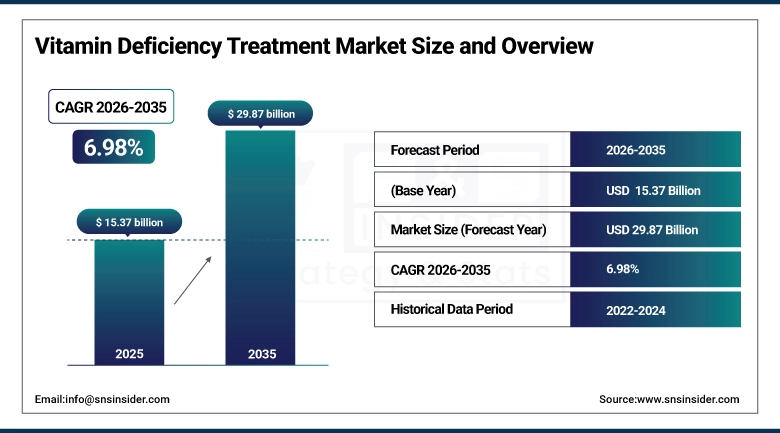
The Vitamin Deficiency Treatment Market was valued at USD 15.37 Billion in 2025 and is expected to reach USD 29.87 Billion by 2035, growing at a CAGR of 6.98% from 2026–2035.
The Vitamin Deficiency Treatment Market is recording a stable growth pattern due to the growing incidences of nutritional deficiencies, heightened awareness on preventive care, and increased consumption of dietary supplements and fortified foods. Sedentary lifestyles, unhealthy dietary practices, aging demographics, and lack of sunlight exposure, which contribute to deficiencies in Vitamins D and B12, are among the factors that have fueled market demand. Innovation in formulations including bioavailable supplements, liposomes, and vitamin injections is improving efficacy and compliance.
Supporting this trend, the World Health Organization continues to highlight the widespread burden of micronutrient deficiencies, estimating that billions of people globally are affected by deficiencies in essential vitamins such as Vitamin D, Vitamin A, and B-complex.
In addition, regulatory and scientific advancements are strengthening market expansion. The U.S. Food and Drug Administration has been increasingly supporting innovation in nutraceuticals and clinical nutrition, including streamlined pathways for certain over-the-counter vitamin products and fortified formulations.
Market Size and Forecast:
-
Market Size in 2025: USD 15.37 Billion
-
Market Size by 2035: USD 29.87 Billion
-
CAGR: 6.98% from 2026 to 2035
-
Base Year: 2025
-
Forecast Period: 2026–2035
-
Historical Data: 2022–2024
To Get more information on Vitamin Deficiency Treatment Market - Request Free Sample Report
Vitamin Deficiency Treatment Market Trends:
-
Rising adoption of preventive healthcare and daily supplementation is increasing demand for vitamins to manage lifestyle-related deficiencies.
-
Increasing awareness of Vitamin D, B12, and micronutrient deficiencies is driving routine screening and early-stage treatment uptake.
-
Rapid growth of personalized nutrition and DNA-based supplementation is enabling targeted and more effective deficiency management.
-
Expanding use of high-bioavailability formulations such as liposomal, time-release, and nano-encapsulated vitamins is improving absorption and clinical outcomes.
-
Growing demand for convenient formats including gummies, powders, and ready-to-drink fortified beverages is enhancing consumer compliance and accessibility.
-
Increasing penetration of e-commerce and direct-to-consumer supplement brands is accelerating global product reach and sales growth.
-
Rising popularity of IV vitamin therapy and injectable solutions in wellness clinics is boosting demand for rapid replenishment treatments.
-
Integration of digital health tools, wearable devices, and mobile apps is supporting real-time nutrient tracking and personalized dosage optimization.
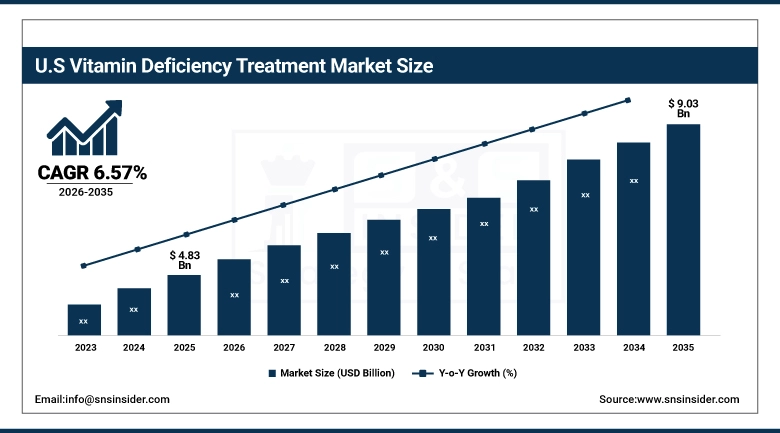
U.S. Vitamin Deficiency Treatment Market was valued at USD 4.83 billion in 2025 and is expected to reach USD 9.03 billion by 2035, growing at a CAGR of 6.57% from 2026–2035.
The United States Vitamin Deficiency Treatment Market occupies the largest share globally owing to factors like high consumer awareness about vitamin deficiency treatments, prevalence of dietary supplements, and a well-developed over-the-counter (OTC) and clinical nutrition infrastructure. The presence of prominent firms like Abbott Laboratories, Pfizer Inc., Nestle Health Science, and Amway Corporation is further fueling innovation and the supply of products. Moreover, the growing emphasis on preventive healthcare and testing for vitamin deficiencies is boosting demand.
Supporting this trend, the Centers for Disease Control and Prevention highlights that a significant portion of the U.S. population has insufficient levels of key nutrients such as Vitamin D and B12, particularly among older adults and individuals with limited sun exposure—expanding the addressable treatment population.
In addition, the U.S. Food and Drug Administration continues to facilitate innovation in dietary supplements and clinical nutrition products. Recent developments include expansion of personalized nutrition solutions by Nestlé Health Science and the introduction of high-bioavailability vitamin formulations by DSM-Firmenich, reflecting the growing shift toward more effective and targeted vitamin deficiency management solutions in the U.S. market.
Vitamin Deficiency Treatment Market Segment Highlights:
-
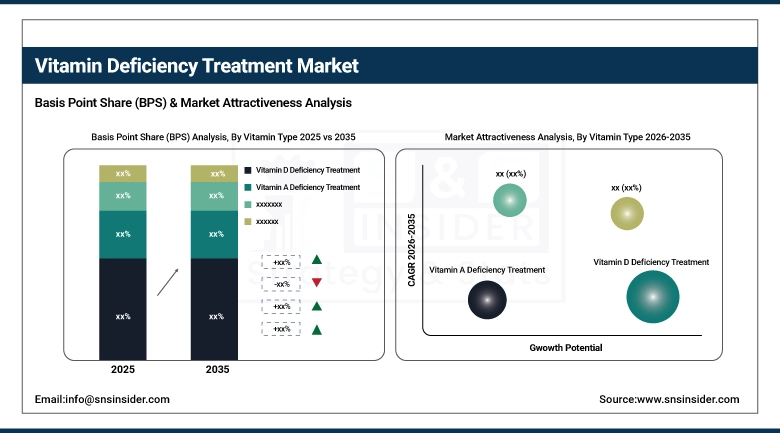
By Vitamin Type, Vitamin D Deficiency Treatment dominated the Vitamin Deficiency Treatment Market with 30.36% share in 2025; Vitamin B-Complex Deficiency Treatment (B12, B6, Folate) fastest growing CAGR
-
By Treatment Type, Oral Supplements (Tablets, Capsules, Gummies, Powders) dominated the Vitamin Deficiency Treatment Market with 65.45% share in 2025; Intravenous (IV) Vitamin Therapy (Wellness & Clinical) fastest growing CAGR
-
By Route of Administration, Oral dominated the Vitamin Deficiency Treatment Market with 71.85% share in 2025; Parenteral (Injectable / IV) fastest growing CAGR
-
By End User, Hospitals & Clinics dominated the Vitamin Deficiency Treatment Market with 40.24% share in 2025; Specialty Nutrition & Wellness Clinics fastest growing CAGR
-
By Distribution Channel, Hospital Pharmacies dominated the Vitamin Deficiency Treatment Market with 38.51% share in 2025; Online Pharmacies / E-commerce fastest growing CAGR
Vitamin Deficiency Treatment Market Segment Analysis:
By Vitamin Type, Vitamin D Deficiency Treatment segment dominates the Vitamin Deficiency Treatment Market, Vitamin B-Complex Deficiency Treatment segment expected to grow fastest
In 2025, the Vitamin D Deficiency Treatment segment maintained its dominant position in the Vitamin Deficiency Treatment Market, accounting for 30.36% of total revenue. This category consists of oral, fortified, and injectable products designed to address vitamin D deficiency associated with physical inactivity, insufficient sunlight, and an aging population. The high clinical recognition and routine screening have made it dominant in the market.
From 2026 to 2035, the Vitamin B-Complex Deficiency Treatment (B12, B6, Folate) segment is projected to record the highest CAGR. The increasing occurrence of disorders such as neurological problems, anemia, as well as deficiencies caused by certain lifestyle habits, especially among vegans and seniors, has increased demand. The increased use of high-dose oral supplements, sublingual preparations, and injections of B12 has driven growth.
By Treatment Type, Oral Supplements segment dominates the Vitamin Deficiency Treatment Market, Intravenous (IV) Vitamin Therapy segment expected to grow fastest
The Oral Supplements (Tablets, Capsules, Gummies, Powders) segment held the largest share of 65.45% in 2025, driven by its affordability, ease of administration, and widespread over-the-counter availability. Continuous product innovation in flavored gummies, effervescent tablets, and convenient powder formats has significantly improved consumer compliance.
The Intravenous (IV) Vitamin Therapy (Wellness & Clinical) segment is expected to register the highest CAGR of during the 2026–2035 forecast period. The rising trend in the use of intravenous nutrient drips in wellness spas, sports recovery facilities, and urban hospitals has led to quick adoption. The possibility of providing instant nutrition with high bioavailability over oral intake is one of the important factors driving growth.
By Route of Administration, Oral segment dominates the Vitamin Deficiency Treatment Market, Parenteral (Injectable / IV) segment expected to grow fastest
The Oral segment maintained the highest share of 71.85% in the Vitamin Deficiency Treatment Market till 2025. The success of this segment is owed to its convenience, affordability, as well as the consumer inclination towards self-medication. Common oral medications in forms of tablets, capsules, gummies, and powders can be easily purchased over-the-counter and are popular in use for preventative and curative purposes. Good adherence rates of patients, easy-to-use nature, and constant product development in palatable and rapidly absorbed forms help maintain dominance of the segment.
The Parenteral (Injectable / IV) segment is projected to register the highest CAGR of during the 2026–2035 forecast period.
By End User, Hospitals & Clinics segment dominates the Vitamin Deficiency Treatment Market, Specialty Nutrition & Wellness Clinics segment expected to grow fastest
The Hospitals & Clinics segment maintained the highest end-user share of 40.24% in 2025. These facilities serve as the primary point of diagnosis and treatment for moderate to severe deficiencies, particularly cases requiring injectable or intravenous interventions.
The Specialty Nutrition & Wellness Clinics segment is projected to achieve the highest growth rate with a CAGR during 2026–2035. The fast growth in preventive medicine clinics, customized nutritional supplements, and IV therapy centers is reshaping the healthcare paradigm. The centers target urban health-aware individuals who demand custom-made supplements and quick recovery options.
By Distribution Channel, Hospital Pharmacies segment dominates the Vitamin Deficiency Treatment Market, Online Pharmacies / E-commerce segment expected to grow fastest
The Hospital Pharmacies segment accounted for the largest share of 38.51% in the Vitamin Deficiency Treatment Market till 2025. This is mainly attributed to the high correlation of diagnosis with treatment in hospitals, especially for those who require medication through prescription and injection. Clinically tested drugs are only available in hospitals, coupled with professional supervision and holistic treatment approach, making hospitals the best distribution channels for moderately and seriously deficient individuals.
The Online Pharmacies / E-commerce segment is projected to register the highest CAGR of during the 2026–2035 forecast period.
Regional Analysis:
|
Region |
Major Country |
Share within Region (%) |
|---|---|---|
|
North America |
United States |
36.43% |
|
Europe |
Germany |
26.14% |
|
Asia Pacific |
China |
23.75% |
|
Middle East & Africa |
UAE |
7.04% |
|
Latin America |
Brazil |
6.64% |
North America Vitamin Deficiency Treatment Market Insights
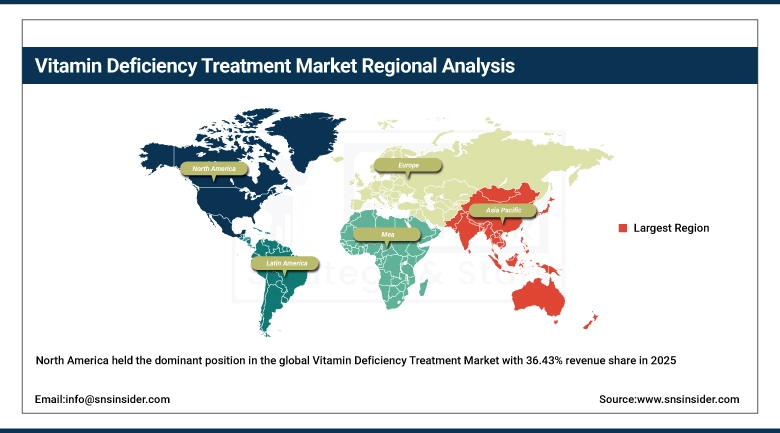
North America held the dominant position in the global Vitamin Deficiency Treatment Market with 36.43% revenue share in 2025, powered by high awareness of preventive care, strong penetration of dietary supplements, and the existence of a matured clinical nutrition environment. The US tops the regional performance through its intra-regional share of the pie, which is fueled by the high consumption of OTC vitamins, routine diagnostics, and the dominance of key nutraceuticals/pharmaceuticals companies in the region. Additionally, the region enjoys high consumer expenditure in wellness/personalized nutrition applications.
Supporting this dominance, the Centers for Disease Control and Prevention continue to report a high prevalence of Vitamin D and B12 deficiencies across key population groups, including elderly individuals and those with limited sun exposure.
Additionally, the U.S. Food and Drug Administration has strengthened regulatory oversight while enabling innovation in OTC supplements and fortified products, encouraging companies to launch high-quality, clinically validated formulations.
Get Customized Report as per Your Business Requirement - Enquiry Now
Asia Pacific Vitamin Deficiency Treatment Market Insights
The Asia Pacific region is anticipated to register the highest CAGR of 8.03% over the forecast period of 2026–2035, driven by a large deficiency-affected population, rising healthcare awareness, and increasing disposable incomes. Key markets such as China, India, Japan, South Korea, and Australia are witnessing strong demand for both therapeutic and preventive supplementation, with China of regional revenue.
Supporting this growth, national initiatives such as India’s Food Safety and Standards Authority of India fortification programs and China’s public health campaigns targeting micronutrient deficiencies are driving large-scale adoption of fortified foods and supplements.
Europe Vitamin Deficiency Treatment Market Insights
The Europe region was ranked second in terms of revenues generated in the Vitamin Deficiency Treatment Market because of the presence of robust healthcare facilities, high awareness of nutrient deficiency problems, and strict regulations regarding the quality of supplements available. Key markets include Germany, UK, France, and Italy, which are influenced by aging populations and the need for preventive healthcare measures.
Supporting this position, the European Commission continues to promote nutrition and health initiatives through regulatory harmonization and public health campaigns aimed at addressing micronutrient deficiencies.
Additionally, strict compliance requirements under EU food supplement regulations ensure high product quality, enhancing consumer trust. The growing adoption of personalized nutrition, supported by digital health platforms and pharmacy-led supplementation programs, is further driving steady market growth across the region.
Middle East & Africa and Latin America Vitamin Deficiency Treatment Market Insights
MEA and Latin American regions are witnessing growth in the Vitamin Deficiency Treatment Market owing to improvements in the healthcare system, rising awareness regarding malnutrition, and nutritional programs initiated by governments. The MEA region is led by countries like Saudi Arabia, UAE, and South Africa, whereas the Latin American region is dominated by Brazil and Mexico. Both regions have a significant number of people suffering from micronutrient deficiencies, which drives the need for treatment and prevention.
Supporting regional development, national health strategies such as Saudi Arabia’s Vision 2030 include initiatives to improve nutrition awareness and healthcare accessibility.
In Latin America, regulatory bodies like ANVISA are enhancing frameworks for dietary supplements and fortified foods, facilitating faster product approvals and market entry. Increasing penetration of affordable supplements, expansion of retail and pharmacy networks, and rising focus on public health nutrition programs are collectively driving long-term growth in these emerging regions.
Vitamin Deficiency Treatment Market Growth Drivers:
-
Rising consumer shift toward preventive healthcare and routine supplementation driving global adoption of vitamin deficiency treatments
The basic shift from the treatment of deficiency to the management of health is the strongest structural factor influencing the Vitamin Deficiency Treatment Market. With people becoming more concerned about nutrition, boosting their immune system, and staying healthy overall, there is increased consumption of vitamins even before any medical deficiency arises. This trend is highly driven by health consciousness, elderly populations, sedentary behavior, and poor dietary choices that lack sufficient nutrients. Consequently, there have been more preventive tests being offered by physicians as well as fortified foods by the manufacturers.
Supporting this growth, the Centers for Disease Control and Prevention reports that a significant proportion of the U.S. population has inadequate intake of essential vitamins such as Vitamin D and B12, with deficiency rates particularly high among older adults and individuals with limited dietary diversity.
In response, recent industry developments such as advanced high-bioavailability formulations introduced by DSM-Firmenich and the expansion of personalized nutrition platforms by Nestlé Health Science demonstrate how innovation and targeted interventions are strengthening treatment effectiveness and accelerating global market adoption.
Vitamin Deficiency Treatment Market Restraints:
-
Inconsistent product quality, regulatory variability, and risk of over-supplementation creating barriers to widespread adoption of vitamin deficiency treatments
The fragmentation of the regulatory environment and differences in the quality of the products form an important constraint on the Vitamin Deficiency Treatment Market, especially for over-the-counter vitamins and nutraceuticals. Unlike the prescription medicines, the vitamins do not fall under strict regulatory oversight in some nations, thus creating doubts about their dosage, effectiveness, and labeling. As a result, physicians are often reluctant to prescribe them due to possible complications that might arise. Moreover, the problem of overdose, especially for the fat-soluble vitamins like A and D, poses potential hazards to health without any medical intervention.
Vitamin Deficiency Treatment Market Opportunities:
-
Rapid expansion of personalized nutrition, digital health integration, and targeted micronutrient solutions creating new growth pathways for vitamin deficiency treatment across consumer and clinical ecosystems
Future Growth Stages in the Vitamin Deficiency Treatment Market are Expected to be Powered by the Shift from Standardized Nutrition to Personalized Nutrition. Biomarker analysis, genetics testing, and advanced dietary analysis through AI are becoming critical factors in pinpointing deficiencies and creating a personalized nutrition plan. There are tremendous opportunities for market participants in the fields of prevention, chronic diseases, and peak performance. Digital health platforms, mobile apps, and wearable technology have become instrumental in extending treatment outside of clinical care into personal health management systems.
Recent Developments:
-
2026: DSM-Firmenich expanded its portfolio of next-generation micronutrient solutions with advanced bioavailability-enhanced vitamin formulations, targeting improved absorption rates for Vitamin D and B-complex. The company also strengthened partnerships with global food and supplement manufacturers to scale fortified product adoption across emerging markets.
-
2025: Nestlé Health Science accelerated its personalized nutrition platform expansion, introducing targeted vitamin deficiency solutions based on biomarker testing and digital health integration. The initiative focuses on condition-specific supplementation, particularly for immunity, bone health, and metabolic wellness.
-
2026: Abbott Laboratories advanced its clinical nutrition segment by launching specialized adult nutrition products enriched with essential vitamins, aimed at addressing deficiencies in aging populations and patients with chronic conditions, while expanding distribution across hospital and retail channels globally.
-
2025: Bayer AG expanded its OTC vitamin and supplement portfolio with new combination formulations and convenient delivery formats such as gummies and effervescent tablets, strengthening its consumer health segment and increasing accessibility through e-commerce and retail pharmacy networks.
Vitamin Deficiency Treatment Market Key Players:
-
F. Hoffmann-La Roche Ltd.
-
GlaxoSmithKline plc
-
Bayer AG
-
Sanofi S.A.
-
Nestlé Health Science
-
Herbalife Nutrition Ltd.
-
DSM-Firmenich
-
Glanbia plc
-
Lonza Group AG
-
Nature’s Bounty Co.
-
NOW Health Group, Inc.
-
Church & Dwight Co., Inc.
-
Otsuka Pharmaceutical Co., Ltd.
-
Merck & Co., Inc.
-
BASF SE
-
Reckitt Benckiser Group plc
-
Himalaya Wellness Company
Vitamin Deficiency Treatment Market Report Scope:
| Report Attributes | Details |
|---|---|
| Market Size in 2025 | USD 15.37 Billion |
| Market Size by 2035 | USD 29.87 Billion |
| CAGR | CAGR of 6.98% From 2026 to 2035 |
| Base Year | 2025 |
| Forecast Period | 2026-2035 |
| Historical Data | 2022-2024 |
| Report Scope & Coverage | Market Size, Segments Analysis, Competitive Landscape, Regional Analysis, DROC & SWOT Analysis, Forecast Outlook |
| Key Segments | • By Vitamin Type (Vitamin D Deficiency Treatment, Vitamin B-Complex Deficiency Treatment (B12, B6, Folate), Vitamin A Deficiency Treatment, Vitamin C Deficiency Treatment, Vitamin E & K Deficiency Treatment, Multivitamin / Combined Deficiency Treatment) • By Treatment Type (Oral Supplements (Tablets, Capsules, Gummies, Powders), Injectable Therapies (IM/IV Vitamin Shots), Intravenous (IV) Vitamin Therapy (Wellness & Clinical), Fortified Foods & Functional Beverages, Prescription Vitamin Drugs) • By Route of Administration (Oral, Parenteral (Injectable / IV), Others) • By End User (Hospitals & Clinics, Homecare / Self-medication (OTC Users), Specialty Nutrition & Wellness Clinics, Others) • By Distribution Channel (Hospital Pharmacies, Retail Pharmacies, Online Pharmacies / E-commerce, Supermarkets / Health Stores) |
| Regional Analysis/Coverage | North America (US, Canada), Europe (Germany, UK, France, Italy, Spain, Russia, Poland, Rest of Europe), Asia Pacific (China, India, Japan, South Korea, Australia, ASEAN Countries, Rest of Asia Pacific), Middle East & Africa (UAE, Saudi Arabia, Qatar, South Africa, Rest of Middle East & Africa), Latin America (Brazil, Argentina, Mexico, Colombia, Rest of Latin America). |
| Company Profiles | Pfizer Inc., F. Hoffmann-La Roche Ltd., Abbott Laboratories, GlaxoSmithKline plc, Bayer AG, Sanofi S.A., Amway Corporation, Nestlé Health Science, Herbalife Nutrition Ltd., DSM-Firmenich, Glanbia plc, Lonza Group AG, Nature’s Bounty Co., NOW Health Group, Inc., Church & Dwight Co., Inc., Otsuka Pharmaceutical Co., Ltd., Merck & Co., Inc., BASF SE, Reckitt Benckiser Group plc, Himalaya Wellness Company |
Frequently Asked Questions
North America dominated the Vitamin Deficiency Treatment Market in 2025.
The Vitamin D Deficiency Treatment Type dominated the Vitamin Deficiency Treatment Market in 2025.
Rising consumer preference for preventive healthcare, improved immunity, and daily nutritional supplementation is the primary growth driver of the Vitamin Deficiency Treatment Market.
The Vitamin Deficiency Treatment Market was valued at USD 15.37 billion in 2025.
The Vitamin Deficiency Treatment Market is expected to grow at a CAGR of 6.98% from 2026 to 2035.
Get in Touch
