
The global aerospace materials market is entering a transformative period as aircraft manufacturers increase their use of lightweight composites, high-performance alloys and advanced manufacturing technologies. Growing commercial aviation requirements, expanding defense aircraft programs and continuous improvements in aircraft efficiency are creating demand for materials offering superior strength, durability and thermal resistance.
The market encompasses aluminum alloys, titanium alloys, steel alloys, superalloys, composites and other specialized materials used in aircraft structures, propulsion systems and interior components. Aerospace manufacturers increasingly prioritize material combinations that reduce structural weight while maintaining demanding mechanical and safety standards.
Carbon fiber-reinforced composites and advanced metallic alloys are becoming particularly important in next-generation aircraft development. Their applications extend across fuselage structures, wings, engine components and specialized aerospace assemblies.
North America remains an established aerospace manufacturing center, while Asia-Pacific offers significant expansion opportunities through aircraft fleet development and increasing domestic manufacturing capabilities.
During 2026–2035, the industry's development will depend on aircraft production, material innovation, supply chain resilience and manufacturers' ability to deliver certified aerospace-grade materials at competitive costs.
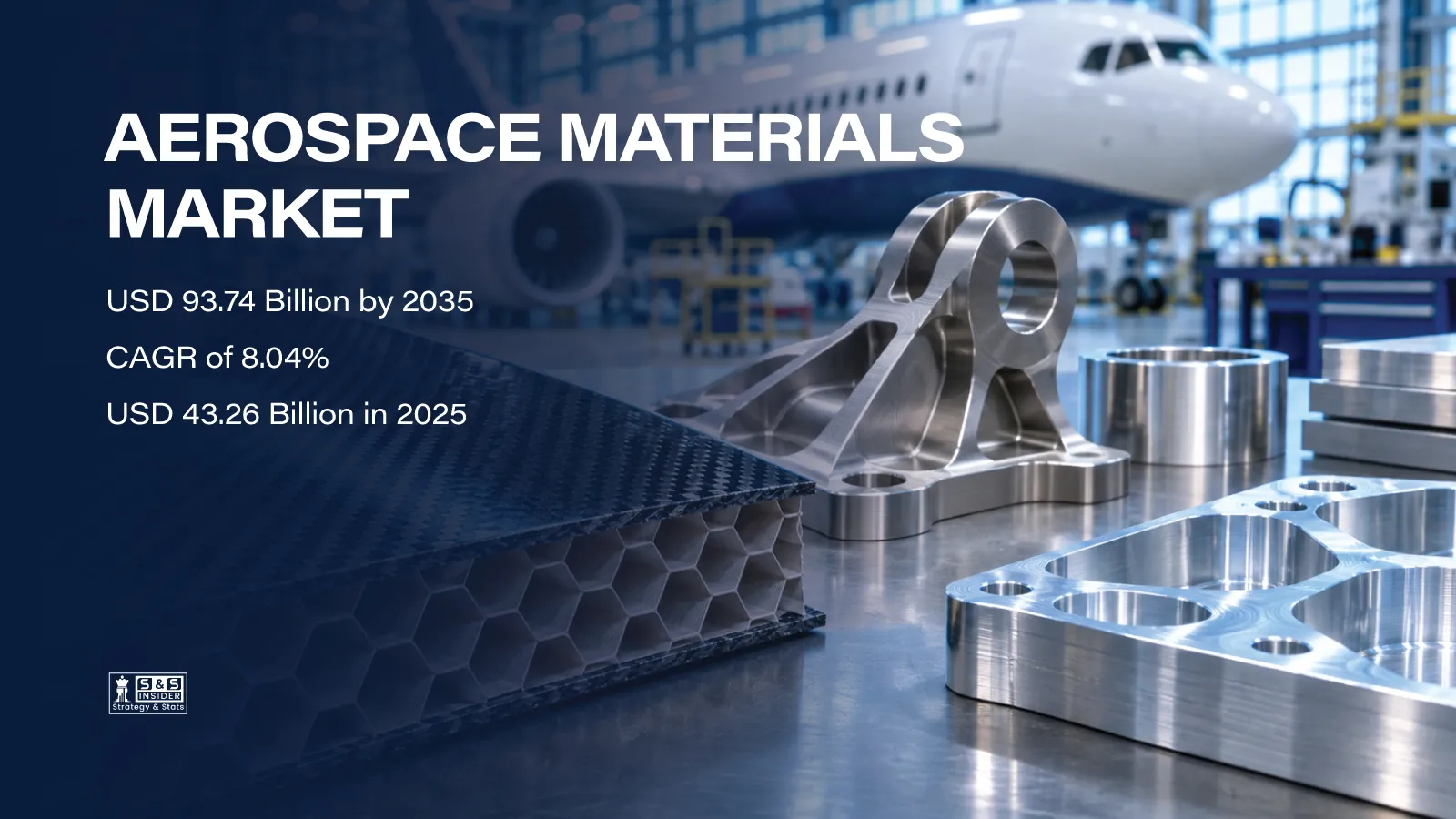
Market Size and Forecast
The aerospace materials market is positioned for long-term expansion as commercial airlines renew aging fleets, aerospace manufacturers introduce more efficient aircraft designs and defense organizations invest in advanced aviation platforms. Aircraft manufacturers increasingly require materials that combine high structural strength with reduced weight, improved fatigue resistance and reliable performance under demanding operating conditions.
The transition toward advanced composites and specialized alloys is expected to support material demand throughout the forecast period. Nevertheless, production capacity limitations, certification requirements and fluctuations in raw material availability could influence the pace of market expansion. The outlook for 2026–2035 indicates growing opportunities for suppliers specializing in lightweight structures, high-temperature components, advanced metal processing and composite manufacturing.
Demand Drivers and Constraints
Primary Demand Drivers
-
Expansion of commercial aviation: Aircraft fleet modernization and replacement requirements are strengthening demand for aerospace-grade metals, composites and structural materials.
-
Increasing adoption of lightweight materials: Manufacturers are using carbon fiber composites, titanium alloys and advanced aluminum products to reduce aircraft weight and improve fuel efficiency.
-
Technological improvements in aircraft engines: More demanding operating temperatures and performance requirements are encouraging the development of advanced superalloys and ceramic-based materials.
-
Growth in defense and space applications: Military aircraft, unmanned aerial vehicles, satellites and spacecraft require specialized materials with high durability and performance characteristics.
-
Advancement of additive manufacturing: Metal 3D printing and advanced component fabrication technologies are expanding opportunities for material optimization and complex aerospace designs.
-
Focus on sustainable aircraft manufacturing: Manufacturers are exploring recyclable composites, material-efficient production methods and lower-emission manufacturing processes.
Potential Growth Constraints
-
High production and qualification costs for advanced aerospace materials.
-
Fluctuating prices and availability of titanium, aluminum and specialty alloys.
-
Complex certification requirements for newly developed materials.
-
Supply chain disruptions affecting aerospace manufacturing schedules.
-
Limited recycling infrastructure for certain thermoset composite materials.
Demand Structure by Material Type
Composites — Lightweight Structural Materials
Composites represent a strategically important material category in aerospace manufacturing because they offer high strength-to-weight ratios, corrosion resistance and considerable design flexibility. Carbon fiber-reinforced polymers and glass fiber-reinforced composites are widely used in aircraft structures, including fuselage sections, wing components, fairings and interior assemblies.
Aircraft platforms such as the Boeing 787 Dreamliner and Airbus A350 demonstrate the extensive application of advanced composite structures in modern commercial aviation. Demand is supported by efforts to reduce aircraft operating weight and improve structural efficiency. However, manufacturing complexity, material costs and repair requirements remain important considerations.
Current trend: Increasing integration of carbon fiber composites into primary aircraft structures.
Major trends: Automated fiber placement, thermoplastic composites, lightweight sandwich structures and improved composite recycling technologies.
Aluminum Alloys — Established Aerospace Manufacturing Materials
Weight, strength, manufacturability and mature supply chain ensure that aluminum alloys are still indispensable for aerospace manufacturing. They are extensively used in fuselages of aircraft, wing structures, frames and other load bearing components.
Advanced aluminum-lithium alloys hold promise for weight savings and improved structural performance in some aerospace applications. Composite materials are gaining ground but aluminum still offers advantages in terms of manufacturing familiarity, repairability, existing qualification processes and cost effectiveness.
Current trend: Continued demand for high-strength and lightweight aluminum alloys.
Major trends: Aluminum-lithium development, corrosion-resistant alloys, precision forming and improved material utilization.
Titanium Alloys and Superalloys — High-Performance Applications
Titanium alloys are becoming increasingly important for aerospace applications where high strength, corrosion resistance and reliable performance at elevated temperatures are needed. They are used in aircraft engines, structural fittings, landing gear components and specialty fasteners.
Nickel-base superalloys are still important for turbine components and other high-temperature engine uses. Additional opportunities are arising to produce complex aerospace components while reducing material waste thanks to advances in additive manufacturing and precision processing.
Current trend: Growing emphasis on high-performance alloys for engines and critical structural applications.
Major trends: Advanced titanium processing, nickel-based superalloys, metal additive manufacturing and enhanced thermal resistance.
Demand Structure by Aircraft Type
Commercial Aircraft — Fleet Modernization Supports Material Demand
Aerospace materials are heavily used in commercial aviation because of aircraft replacement programs and the need for more efficient passenger and cargo aircraft. Large volumes of aluminum, titanium, composite materials and specialty alloys are required by manufacturers for airframes, wings, engines and cabin components.
The airlines’ emphasis on fuel efficiency and operating economics is driving the use of aircraft with lighter structural materials. Aircraft production rates and supplier capacity will remain the main drivers of material demand through 2035.
Current trend: Increasing use of lightweight materials in modern commercial aircraft production.
Major trends: Composite-intensive airframes, advanced aluminum alloys, fuel-efficient engine materials and supply chain localization.
Military Aircraft and Business Aviation
Military aircraft require materials to meet demanding structural, thermal and operation requirements. Fighter aircraft, transport platforms, helicopters and unmanned aerial systems are being supported by high-performance composites, titanium alloys and specialty metals.
Business and general aviation manufacturers also emphasize lightweight construction, cabin performance and durability. Suppliers of high-performance materials may also benefit from next-generation military aircraft and niche aviation platforms.
Current trend: Growing demand for specialized materials in advanced aviation platforms.
Major trends: High-temperature materials, lightweight structural assemblies, additive manufacturing and advanced composite systems.
Demand Structure by Application
Propulsion Systems — Advanced Engine Materials
Propulsion systems represent an important application category because aircraft engines operate under demanding thermal and mechanical conditions. High-performance alloys, titanium and advanced composite materials are used across engine structures, compressor components and turbine assemblies.
Manufacturers continually seek materials that support higher operating efficiency, lower component weight and improved service life. Ceramic matrix composites are particularly relevant to selected high-temperature engine applications because they can offer reduced weight compared with conventional metallic alternatives.
Current trend: Increasing development of advanced materials for more efficient aircraft propulsion.
Major trends: Ceramic matrix composites, high-temperature superalloys, optimized engine components and additive manufacturing.
Aircraft Interiors and Structural Components
Seating structures, cabin panels, galleys and other interior assemblies are typical applications where weight reduction, fire performance and durability are important.
Structural applications include airframes, wings, tail sections and supporting components where reliable mechanical performance is required. Manufacturers are increasingly considering combinations of materials to find the right balance between weight, production efficiency, maintenance requirements and certification costs.
Current trend: Greater emphasis on lightweight and durable aircraft component design.
Major trends: Advanced polymers, composite panels, automated fabrication and improved structural material efficiency.
Regional Market Dynamics
North America — Established Aerospace Manufacturing Leadership
North America is a strong producer of aerospace materials, supported by long-established aircraft makers, engine makers, defense programs and specialized material suppliers. The US has strong capabilities in advanced aerospace research, composite manufacturing and titanium processing.
Canada also contributes through aircraft manufacturing, component production and the development of aerospace technology. Continued investment in commercial aviation, defense modernization and manufacturing innovation supports regional material demand.
Direction: Sustained demand supported by aerospace manufacturing capabilities and advanced material development.
Europe — Innovation in Composites and Sustainable Aviation
Europe represents an important aerospace materials market due to established aircraft manufacturing and specialized materials engineering.
France, Germany, the United Kingdom and other European countries support aerospace production through structural components, engines, composites and specialty metal processing. European manufacturers are increasingly investigating recyclable materials, automated manufacturing and more efficient aircraft structures.
Direction: Continued growth opportunities through aircraft manufacturing, material innovation and sustainability initiatives.
Asia-Pacific — Expanding Aerospace Manufacturing Opportunities
Asia-Pacific region offers long-term opportunities with the growth of commercial aviation and countries developing domestic aerospace manufacturing capabilities. China, India, Japan and South Korea are improving aerospace supply chains, aircraft component manufacturing and materials engineering expertise.
Demand for advanced aerospace materials is driven by increasing aircraft fleet requirements, and investment in aviation infrastructure. Regional suppliers also have opportunities to expand participation in international aircraft manufacturing programs.
Direction: Strong expansion potential supported by aviation development and domestic manufacturing investment.
Latin America and Middle East & Africa
Latin America benefits from aircraft manufacturing activities, especially in Brazil, as well as from aviation maintenance and component production.
Commercial fleet development, aviation maintenance and defence-related activities in the Middle East are driving the demand for aerospace materials. While manufacturing capabilities vary by country, increasing investment in aerospace infrastructure and support industries creates opportunities for material suppliers.
Direction: Gradual development supported by aviation investment and industrial diversification.
Competitive Landscape
The aerospace materials market includes established producers of advanced composites, specialty alloys, aluminum products and high-performance polymers. Important industry participants include Hexcel Corporation, Toray Industries, Alcoa Corporation, Constellium, ATI Inc., Teijin Limited, Kobe Steel, Carpenter Technology, Solvay, Mitsubishi Chemical Group and SGL Carbon.
Competition is influenced by material performance, qualification expertise, manufacturing capacity, customer relationships and supply chain reliability. Suppliers capable of supporting aircraft manufacturers with certified materials, consistent quality and advanced processing technologies are positioned to benefit from long-term aerospace production requirements. Strategic investment in composite production, specialty metal processing and sustainable manufacturing is expected to shape industry competitiveness.
Market Outlook (2026–2035)
Aerospace materials markets are expected to grow through 2035 as aircraft makers adopt lighter structures, advanced propulsion materials and more efficient production technologies.
The modernization of the commercial aviation fleet will continue to be a major driver of demand growth, and defense aircraft and space applications will add further demand for specialty materials. Automation in manufacturing and better performance of materials are expected to provide support for using the advanced composites more in structural applications. Titanium alloys and high-temperature superalloys will continue to be used in key aircraft and engine components.
Purchasing decisions across the industry will be driven by supply chain resilience, material certification, production costs, and recycling capabilities. North America and Europe will continue to produce at current levels of capacity. There are opportunities in aerospace industrialization and growing aviation demands in Asia-Pacific.
Overall, the aerospace materials market is positioned for long-term growth through 2035, with competitive advantage increasingly shaped by lightweight material innovation, manufacturing efficiency, certified material performance and reliable aerospace supply chains.



