
Monoethylene Glycol Market Report Scope & Overview:
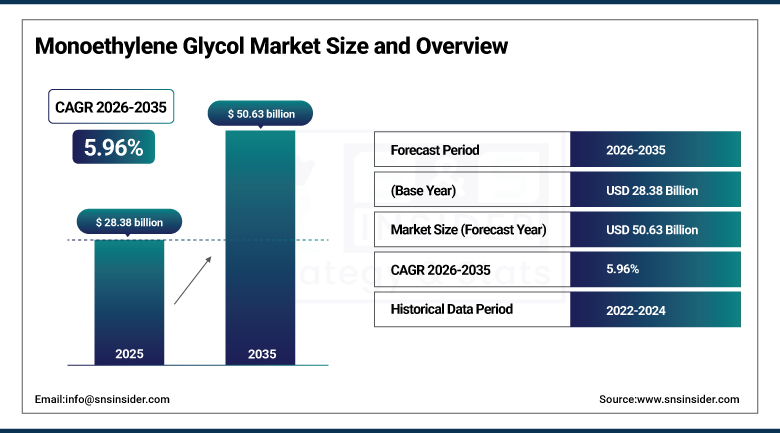
The Monoethylene Glycol Market was valued at USD 28.38 Billion in 2025 and is expected to reach USD 50.63 Billion by 2035, growing at a CAGR of 5.96% from 2026–2035.
Monoethylene glycol is one of the most important feedstocks in two of the largest value chains in the world - polyethylene terephthalate manufacturing. Increasing demand from the textile industry has kept adding to the growth of the market as MEG is one of the key raw materials for production of polyester fibers and resins used in manufacturing of clothes and industrial fabrics. Demand for PET packaging materials from the food and beverages industry has been another key driver as MEG is a key raw material in the production of PET, which is known for its strength, lightweight properties, and recyclable nature.
There have been high rates of growth experienced within the Indian textile industry due to the increase of 7% witnessed in the export of textile and garments, including handicrafts, between April and December 2024 as compared to the same period last year. Government schemes such as the Production Linked Incentive Scheme for Textiles amount to investments of USD 128 million.
To Get more information on Monoethylene Glycol Market - Request Free Sample Report
Monoethylene Glycol Market Trends
-
Rising demand for polyester fibers in textiles and home furnishings continues to drive monoethylene glycol consumption across global manufacturing industries.
-
Rapid industrialization and expanding polyester production capacities in Asia Pacific are strengthening demand for monoethylene glycol across emerging economies.
-
Increasing commercialization of bio-based monoethylene glycol is supporting sustainability goals and reducing dependence on conventional fossil-based feedstocks.
-
Growing electric vehicle production is accelerating demand for monoethylene glycol-based coolants used in advanced battery thermal management systems.
-
Expanding recycled PET manufacturing is increasing monoethylene glycol utilization as producers incorporate higher recycled content into packaging and textile applications.
U.S. Monoethylene Glycol Market Outlook
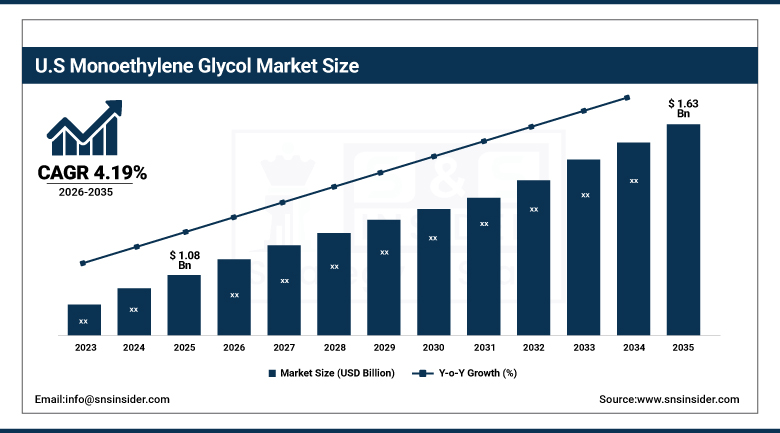
The U.S. Monoethylene Glycol Market was valued at approximately USD 1.08 Billion in 2025 and is expected to reach approximately USD 1.63 Billion by 2035, growing at a CAGR of approximately 4.19%.
The U.S. market for monoethylene glycol is positively impacted by economies of scale in the petrochemical industry, technological innovations, and the increase in domestic demand in the major end-use industries such as packaging, textiles, and automotive. The shale gas deposits in the U.S. offer a natural resource advantage, especially in terms of ethylene availability. As reported by the U.S. Energy Information Administration, ethylene capacity in the U.S. was above 45 million tons in 2023.
Technip Energies and Shell Catalysts & Technologies announced in June 2024 a technology transfer deal to develop Bio-2-Glycols that will allow the use of glucose as a feedstock for the production of bio-based monoethylene glycol and thus reduce greenhouse gas emissions in relation to the traditional production of fossil-based MEG. This is one of many deals that are currently made due to the development of sustainable production methods of MEG.
Monoethylene Glycol Market Segment Analysis
-
By Grade, the fiber segment dominated the monoethylene glycol market with approximately 61% share in 2025, while the antifreeze segment is the fastest growing during the forecast period.
-
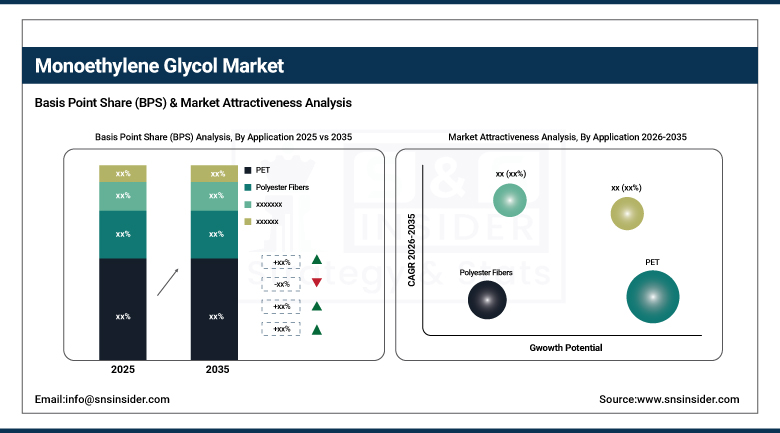
By Application, the PET segment dominated the monoethylene glycol market with approximately 68% share in 2025, and is expected to continue growing rapidly.
-
By End-use Industry, the textile segment dominated the monoethylene glycol market with approximately 42% share in 2025, while the packaging segment held a significant secondary position.
-
By Distribution Channel, the direct sale segment dominated the monoethylene glycol market with approximately 68% share in 2025, while the indirect sale segment is the fastest growing during the forecast period.
By Application, PET dominates the market and grows fastest
In 2025, PET was the largest consumer of monoethylene glycol (MEG), with a market share of about 68% owing to the variety of end-uses in packaging and textile industries. Monoethylene glycol is an important constituent in the production of PET as it forms the main ingredient in the production of bottles, containers, films, and fibers. Production of PET has greatly increased due to the rising demand for light weight and reusable packages, particularly in the food and beverages industry.
Polyester fibers had a substantial share of the secondary market because of their widespread applications in the textile industry and apparel manufacturing. MEG plays a very important role in making polyester fibers because of its properties like durability and high tensile strength as well as its inexpensive nature to manufacture. The polyester fibers are used to make clothes, upholstery, home textiles, and linen products.
By End-use Industry, textile leads the market, packaging holds significant share
In terms of industry usage share, the textile industry was ranked first accounting for about 42% of the industry share in 2025 as polyester is one of the commonly used synthetic fiber in the textile industry. As one of the key raw material used to manufacture polyester fibers and fabrics, MEG is used in manufacturing clothes, home furnishings like curtains and bedsheets as well as industrial textiles. The growth of the textile industry in emerging economies like China, India and Bangladesh is mainly population and urbanization driven.
The packaging industry was an important market segment, based largely on PET's robustness, light weight, and transparency attributes, which made it a very suitable raw material for use in packaging bottles for the food, beverages, personal care, and pharmaceutical sectors. With the growing need for packaged foods by consumers in urban areas and developing countries, the consumption of PET packaging material has been growing significantly due to high demand for PET bottles, especially in the bottled water and carbonated drinks industries.
Regional Analysis
|
Region |
Major Country |
Share within Region, 2025 (%) |
|---|---|---|
|
Asia Pacific |
China |
44.0% |
|
North America |
United States |
82.0% |
|
Europe |
Germany |
25.0% |
|
Latin America |
Brazil |
37.0% |
|
Middle East & Africa |
Saudi Arabia |
30.0% |
North America Monoethylene Glycol Market Insights
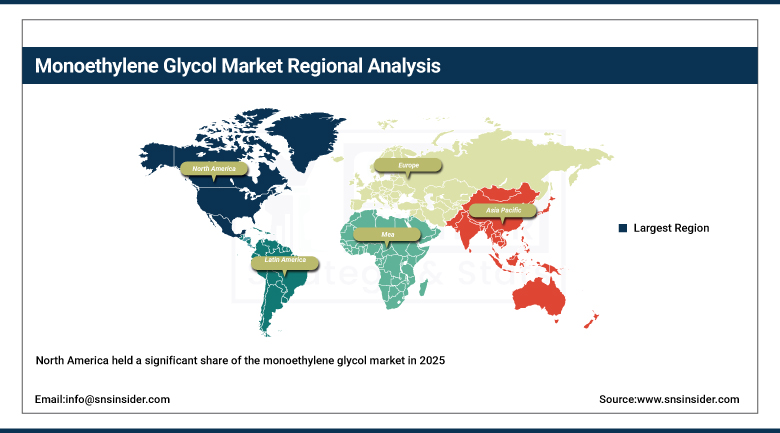
North America held a significant share of the monoethylene glycol market in 2025 and is projected to register the fastest growth over the forecast period, with a CAGR of approximately 5.2% from 2026 to 2035, driven by high demand for sustainable and recyclable packaging solutions within the food and beverage industry, alongside stringent quality and environmental regulation that continues to drive MEG application innovation. The region benefits from a unique combination of global chemical industry leadership and continued multi-billion-dollar capacity expansion investment underpinning its strategic role in the global MEG supply chain.
The United States makes up the large majority of regional consumption thanks to large-scale production of petrochemicals, technological innovations, and increasing domestic demand from end-use industries like packaging, textiles, and automobiles. Canada has contributed a relatively minor but steady amount to regional consumption due to its manufacturing facilities and increasing needs for sustainable packaging.
Get Customized Report as per Your Business Requirement - Enquiry Now
Europe Monoethylene Glycol Market Insights
European countries were able to hold a considerable market share during the forecast period due to the presence of a mature base of chemical production, stringent regulations for sustainability, and increasing demand from various sectors such as automotive, textiles, and food packaging. One thing which has been specifically focused on by the European countries is the eco-friendly nature of the packaging materials, thus setting a path for PET packaging products and increasing MEG consumption.
In September 2024, UPM Biochemicals named Brenntag SE as its exclusive distributor for UPM BioPura, a sustainable bio-based monoethylene glycol product, across Europe. This joint venture will ensure an increased availability of sustainable MEG substitutes in the regional market, further strengthening the dominance of Europe in the field of using bio-based raw materials in the MEG industry.
Asia Pacific Monoethylene Glycol Market Insights
Asia Pacific emerged as the dominant market segment in 2025, occupying around 42% of the market share due to the rising demand for MEG from the textile and packaging industries within the region and also due to the presence of key MEG suppliers in the value chain of the market. China, India, South Korea, and Japan are some of the major buyers and manufacturers of polyester fiber and PET resin products, which require large quantities of MEG.
China enjoys a unique dominance within the global manufacture of polyesters, owing to its extensive textile manufacturing capacity and high demand, both domestic and for exports. Growth in the middle classes in addition to urbanization within the Asia Pacific region is set to increase demand for packaged consumer goods and apparel.
Europe Monoethylene Glycol Market Insights
Europe held a significant market share over the forecast period, supported by a mature chemical manufacturing base, stringent regulatory frameworks promoting sustainability, and high demand from end-use industries including automotive, textiles, and food packaging. Eco-friendliness and recyclability of the packaging material have especially been emphasized by European countries, which would lead to greater use of PET-based packaging materials commercially and create great demands for MEG.
Brenntag SE has become the official distributor of UPM BioPura (monoethylene glycol product from sustainable bio sources) of UPM Biochemicals in Europe starting from September 2024. The cooperation would make more available the bio-based MEG substitutes on the market, confirming the leadership of Europe in the field of bio-based feedstocks in MEG industry.
MEA & Latin America Monoethylene Glycol Market Insights
The Middle East and Africa represent a growing monoethylene glycol market, supported by Saudi Arabia's substantial petrochemical production capacity and access to low-cost natural gas feedstock, giving Middle Eastern producers a meaningful cost advantage in global MEG export markets. Continued investment in downstream polyester and packaging manufacturing capacity across the UAE and broader Gulf region continues to support regional demand growth.
Latin America is following a similar growth trajectory, led by Brazil, where robust production of PET containers and strong demand for vehicle engine coolant continue to drive MEG consumption. Rising construction activity and growing consumer demand for home furnishings across the region continue to support steady, incremental market expansion throughout the forecast period.
Market Dynamics
Growth Drivers: PET packaging growth and textile industry expansion sustain demand
An increase in the use of PET packaging material for foods and drinks is among the major factors fueling the market for monoethylene glycol. Monoethylene glycol is used in the manufacture of polyethylene terephthalate (PET), which is a polymer that has both strength and low density, thus making it suitable for use in bottles, containers, and packaging films. The preference by consumers for packaged foods and drinks together with the high rate of urbanization is fueling demand for PET packaging.
The U.S. Environmental Protection Agency reports that PET bottles and jars achieved a recycling rate of approximately 29.1% in recent years, an emphasis on recycling and sustainability that continues to encourage broader PET packaging adoption and indirectly influence MEG demand. Concurrently, increase in the use of polyester fiber, fueled by demands from fast fashion and quick industrialization in developing nations, ensures that another equally important path for growing MEG consumption is maintained.
Restraints: Raw material price volatility constrains market growth
Volatility in raw material prices represents a key hindrance to monoethylene glycol market growth. Traditionally, ethylene-based feedstock has been utilized by MEG manufacturers, making the industry dependent on hydrocarbon prices, although there has been a gradual trend towards more environmentally friendly oils and natural gases. Crude oil price fluctuations, due to geopolitical tensions and other market dynamics, have made ethylene pricing and by extension MEG pricing uncertain.
The price fluctuations are having an impact on the margins of MEG producers and also making it difficult for downstream industries such as textiles, automobiles, and packaging, which require cheap raw materials, to plan. The constant price fluctuations make it difficult for the downstream industries to plan, and thus they opt for conservative purchasing policies in MEG.
Opportunities: Bio-based MEG and emerging application areas create growth potential
Development of new MEG application areas, including battery manufacturing and green solvent production, presents substantial growth opportunity for the market. In 2024, the manufacture of bio-based MEG achieved a production volume of 850,000 metric tons, which represents an obvious structural change from complete reliance on feedstocks derived from fossil fuel sources to one where new generation manufacturing plants have incorporated carbon capture technology.
Electric vehicle thermal management represents a particularly promising emerging opportunity, as modern battery management systems require specialized MEG-based coolant formulations, driving structurally high-growth demand for specification-critical MEG grades. In light of the increasing efforts by producers towards producing specialty grades of MEG and making acquisitions for sustaining their competitive edge, those companies that are capable of capitalizing on such a trend can reap rich rewards during the forecast period.
Recent Developments:
-
2026: SABIC expanded its portfolio of certified circular monoethylene glycol products by increasing the use of recycled and renewable feedstocks to support sustainable polyester manufacturing.
-
2026: India Glycols Limited announced capacity optimization initiatives for bio-based monoethylene glycol production to meet rising demand from packaging and textile applications.
-
2025: LyondellBasell Industries N.V. advanced low-carbon ethylene and derivative production projects, strengthening the sustainability profile of its monoethylene glycol value chain.
-
2025: Shell Chemicals expanded strategic investments in petrochemical integration and process efficiency to enhance monoethylene glycol production capacity and improve operational performance.
Monoethylene Glycol Market key players are:
-
SABIC
-
Dow Inc.
-
LyondellBasell Industries N.V.
-
India Glycols Limited
-
Reliance Industries Limited
-
Shell Chemicals
-
MEGlobal
-
BASF SE
-
Huntsman Corporation
-
ExxonMobil Chemical
-
Mitsubishi Chemical Corporation
-
Indian Oil Corporation Limited
-
Lotte Chemical Corporation
-
Nan Ya Plastics Corporation
-
China Petroleum & Chemical Corporation (Sinopec)
-
EQUATE Petrochemical Company
-
INEOS Group Limited
-
Formosa Plastics Corporation
-
PTT Global Chemical Public Company Limited
-
Saudi International Petrochemical Company (Sipchem)
Monoethylene Glycol Market Report Scope:
| Report Attributes | Details |
|---|---|
| Market Size in 2025 | USD 28.38 Billion |
| Market Size by 2035 | USD 50.63 Billion |
| CAGR | CAGR of 5.96% From 2026 to 2035 |
| Base Year | 2025 |
| Forecast Period | 2026-2035 |
| Historical Data | 2022-2024 |
| Report Scope & Coverage | Market Size, Segments Analysis, Competitive Landscape, Regional Analysis, DROC & SWOT Analysis, Forecast Outlook |
| Key Segments | • By Grade (Fiber, Industrial, Antifreeze) • By Application (PET, Polyester Fibers, Antifreeze, Others) • By End-use Industry (Packaging, Textile, Automotive, Plastics, Others) • By Distribution Channel (Direct Sale, Indirect Sale) |
| Regional Analysis/Coverage | North America (US, Canada), Europe (Germany, UK, France, Italy, Spain, Russia, Poland, Rest of Europe), Asia Pacific (China, India, Japan, South Korea, Australia, ASEAN Countries, Rest of Asia Pacific), Middle East & Africa (UAE, Saudi Arabia, Qatar, South Africa, Rest of Middle East & Africa), Latin America (Brazil, Argentina, Mexico, Colombia, Rest of Latin America). |
| Company Profiles | SABIC, Dow Inc., LyondellBasell Industries N.V., India Glycols Limited, Reliance Industries Limited, Shell Chemicals, MEGlobal, BASF SE, Huntsman Corporation, ExxonMobil Chemical, Mitsubishi Chemical Corporation, Indian Oil Corporation Limited, Lotte Chemical Corporation, Nan Ya Plastics Corporation, China Petroleum & Chemical Corporation (Sinopec), EQUATE Petrochemical Company, INEOS Group Limited, Formosa Plastics Corporation, PTT Global Chemical Public Company Limited, Saudi International Petrochemical Company (Sipchem) |
Frequently Asked Questions
PET dominated with approximately 68% share in 2025.
The Monoethylene Glycol Market was valued at USD 28.38 Billion in 2025.
The Monoethylene Glycol Market is expected to grow at a CAGR of 5.96% from 2026 to 2035.
Asia Pacific dominated the Monoethylene Glycol Market in 2025 with approximately 42% market share.
