
Treatment-Resistant Depression (TRD) Treatment Market Report Scope & Overview:
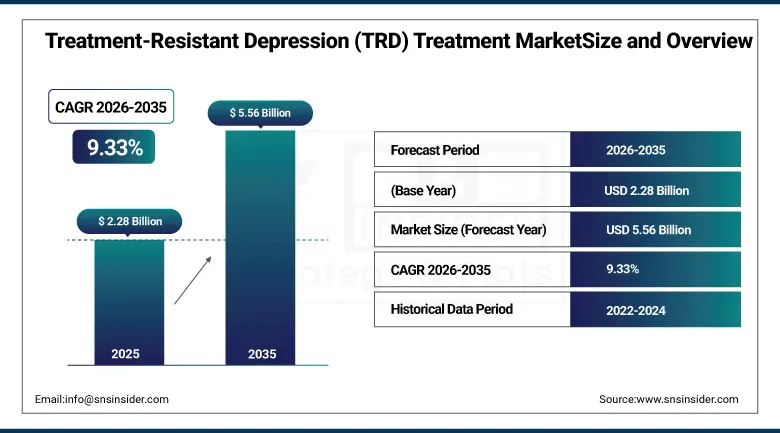
The Treatment-Resistant Depression (TRD) Treatment Market was valued at USD 2.28 Billion in 2025 and is projected to reach USD 5.56 Billion by 2035, expanding at a CAGR of 9.33% during the forecast period 2026–2035.
Global market for treatment-resistant depression treatments is witnessing considerable growth owing to rising prevalence of major depressive disorders, awareness of treatment-resistant ailments, and ongoing developments in modern psychiatric treatments. Personalized care regimens using new medicines, ketamine therapies, neuromodulation, and digital mental health services are being employed more by medical professionals to enhance results in their patients. Increased activities within clinical research, greater funding for neuroscience innovation, and rising demands for treatment solutions in those who do not respond to conventional anti-depressants are driving the growth of the market. Improvements in the availability of mental healthcare and heightened awareness about treatment-resistant depression add value to future commercial prospects.
In 2026, several drug makers increased late stage clinical development programs for treatment-resistant depression and major depressive disorders.
To Get more information On Treatment-Resistant Depression (TRD) Treatment Market - Request Free Sample Report
Treatment-Resistant Depression (TRD) Treatment Market Trends
-
Increasing adoption of ketamine and esketamine-based treatment approaches.
-
Growing clinical utilization of transcranial magnetic stimulation (TMS) technologies.
-
Rising investments in psychedelic-assisted mental health research programs.
-
Expansion of digital mental healthcare and remote psychiatric support platforms.
-
Growing focus on personalized depression treatment strategies and biomarker-driven therapies.
The U.S. Treatment-Resistant Depression (TRD) Treatment Market Size Outlook
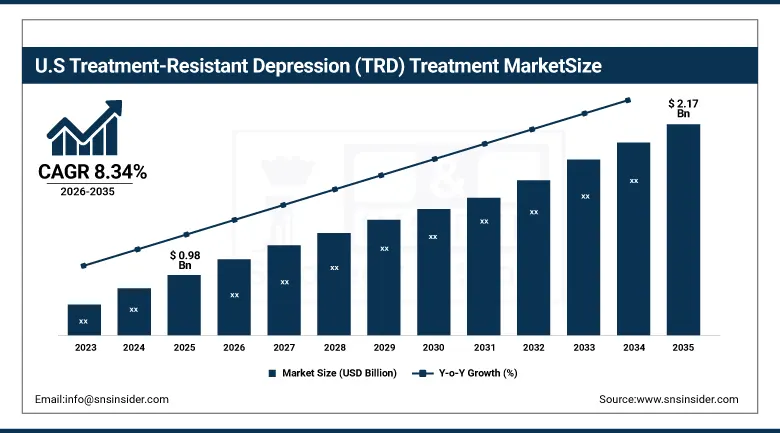
The U.S. Treatment-Resistant Depression (TRD) Treatment Market was valued at USD 0.98 billion in 2025 and is expected to reach approximately USD 2.17 billion by 2035, expanding at a CAGR of 8.34% during 2026–2035.
The United States still continues to be the major market for treatment-resistant depression therapy because of the presence of well-established infrastructure for psychiatric care, growing awareness about mental health problems, and increasing accessibility of innovative treatments. Ketamine treatments, neuromodulation therapy, and individualized psychiatry solutions have been widely introduced by healthcare organizations to help people who did not respond positively to traditional antidepressants. Increased insurance coverage of new treatments in psychiatry and increased investment into neuroscience studies further stimulate the commercialization activities. Increased prevalence of disorders associated with depression and growing demands from patients for alternative therapies contribute to further market development.
In 2026, some U.S.-based healthcare systems broadened their access to advanced neuromodulation and ketamine treatments for severely depressed patients.
Treatment-Resistant Depression (TRD) Treatment Market Segment Analysis
-
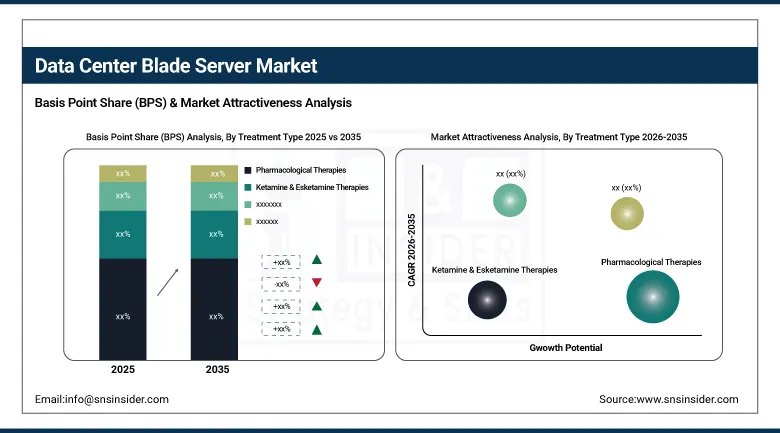
By Treatment Type, pharmacological therapies dominated the market with 42.00% share in 2025, while neuromodulation therapies (TMS, DBS, VNS) are projected to witness the fastest growth with 13.96% CAGR during the forecast period.
-
By Drug / Therapy Class, SSRIs & SNRIs augmentation dominated the market with 28.00% share in 2025, while NMDA receptor modulators are projected to witness the fastest growth with 14.44% CAGR during the forecast period.
-
By Route of Administration, oral dominated the market with 52.00% share in 2025, while intravenous is projected to witness the fastest growth with 11.79% CAGR during the forecast period.
-
By End User, hospitals dominated the market with 28.00% share in 2025, while home-based & digital care providers are projected to witness the fastest growth with 11.34% CAGR during the forecast period.
By Treatment Type, pharmacological therapies dominated the market, while neuromodulation therapies are the fastest-growing segment.
The largest revenue share was occupied by the segment of pharmacological therapies accounting for 42.00% in 2025 due to high prevalence of the use of augmentation therapies, treatment guidelines, and familiarity of physicians with medication therapy. The use of pharmacological solutions still remains the most common treatment method used by healthcare providers until further advancement to more sophisticated treatments is needed. Availability of combination therapy options, improvements in medications, and usage of innovative antidepressant solutions promote growth in the segment. In 2026, Companies active in the pharmaceutical industry increased their efforts in developing combination therapies that would help to treat patients suffering from depression symptoms persistently.
The fastest CAGR of 13.96% is expected to be registered by the segment of neuromodulation therapies due to high acceptance of transracial magnetic stimulation, deep brain stimulation, and vagus nerve stimulation solutions. Healthcare providers use increasingly more non-pharmacological interventions for treating patients that respond badly to traditional antidepressants. Device technology advancements, clinical evidence growth, and reimbursement increase are contributing to the higher usage of neuromodulation therapies in psychiatric treatment centers. In 2025 several mental health centers increased usage of transracial magnetic stimulation to meet the rising demand for non-invasive depression treatment methods.
By Drug / Therapy Class, SSRIs & SNRIs augmentation dominated the market, while NMDA receptor modulators are the fastest-growing segment.
The SSRIs & SNRIs augmentation market segment accounted for the maximum market share of 28.00% in 2025 owing to the prevalent practice of augmenting treatment in patients of resistant depression. Antidepressants are often combined with adjunctive medications to achieve desired treatment outcomes in depressed patients. Well-established clinical evidence, widespread awareness among physicians, and guidelines for treatment help fuel adoption of the approach around the world. Presence of many options in the market and increase in individualized therapy add up to the leadership of the segment in the market space. In 2026, Guidelines related to mental health continued stressing on optimum augmentation methods with antidepressants for patients unresponsive to immunotherapy treatments.
NMDA receptor modulators is expected to register the highest CAGR of 14.44% through 2030 due to growing usage of rapid acting antidepressants and increasing evidence for modulating the glutamatergic pathway. More use of ketamine and esketamine-based treatments is revolutionizing the field of treatment for those suffering from severe and consistent depression symptoms. Companies are developing novel NMDA receptor targeting molecules for improved efficacy without side-effects. In 2025, several pharmaceutical firms have advanced their NMDA targeted molecules in the late-stage of clinical development for treatment-resistant depression indications.
Regional Analysis
|
Region |
Major Country |
Share within Region, 2025 (%) |
|---|---|---|
|
North America |
United States |
93.00% |
|
Europe |
Germany |
27.00% |
|
Asia Pacific |
China |
18.00% |
|
Middle East & Africa |
UAE |
5.00% |
|
Latin America |
Brazil |
4.00% |
North America Treatment-Resistant Depression (TRD) Treatment Market Insights
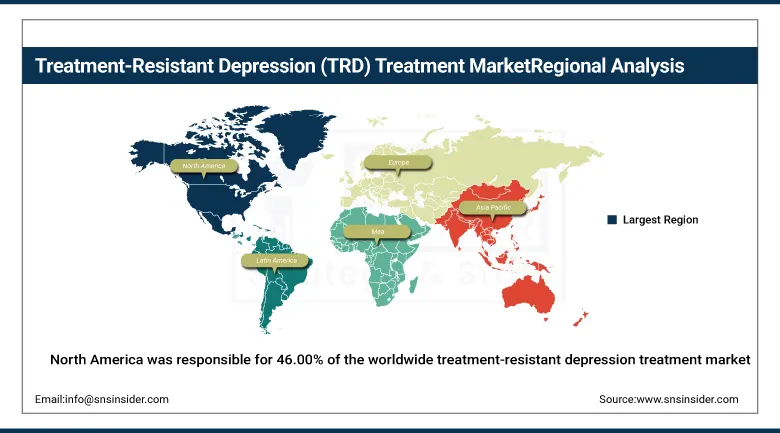
North America was responsible for 46.00% of the worldwide treatment-resistant depression treatment market share in 2025 and was the dominant regional market. The region has an advanced system of psychiatric healthcare infrastructure, high mental well-being awareness, strong reimbursement coverage, and widespread adoption of innovative treatment methods. Ketamine therapy, neuromodulation, and personalized treatment for patients suffering from severe depression are becoming more popular among healthcare providers. Presence of major pharmaceutical companies, investments in neuroscience research, and provision of advanced specialized psychiatric care will continue driving the market forward. Increasing incidence of major depressive disorders adds up to the treatment demand.
In 2026, a number of healthcare networks in North America launched advanced depression treatment programs including neuromodulation and rapid-acting therapeutic intervention.
Get Customized Report as per Your Business Requirement - Enquiry Now
Europe Treatment-Resistant Depression (TRD) Treatment Market Insights
Europe held nearly 27.00% of the global treatment-resistant depression treatment market in 2025. Market growth is driven by increasing mental well-being awareness, growing availability of psychiatric care, and increasing use of innovative methods of depression treatment in major European countries. Providers invest in advanced depression treatment programs using ketamine therapy, neuromodulation technology, and behavioral health care. Government-supported mental health initiatives and expanding clinical research activities continue to strengthen market development. Increasing diagnosis rates and growing focus on treatment outcomes are encouraging healthcare systems to adopt more specialized therapeutic interventions for treatment-resistant depression patients.
In2025, European psychiatric care providers launched clinical programs assessing novel depression treatment methods for persisting depression disorders.
Asia Pacific Treatment-Resistant Depression (TRD) Treatment Market Insights
APAC will have the highest CAGR of 12.98% from 2020 to 2027 owing to the increasing awareness on mental disorders, development of health infrastructure and increase in investment in mental health treatment services. APAC countries such as China, Japan, South Korea, India, and Australia have reported increasing demands for better mental health treatment due to the continuous improvement in diagnosis rates of the disease. Advanced mental health and innovative technologies as well as psychiatry treatment programs are being increasingly adopted by health care organizations. Increased healthcare expenditure, acceptance of mental health treatment and clinical studies will play a key role in driving growth of the market in the region.
In 2026, numerous healthcare providers in APAC region increased accessibility of advanced psychiatry treatment programs for treatment-resistant depression patients.
Middle East & Africa and Latin America Treatment-Resistant Depression (TRD) Treatment Market Insights
The Middle East & Africa market is growing steadily thanks to the improvement in the mental health facilities, increased knowledge about the depressive disorders, and enhanced psychiatric care. The governments and the healthcare providers are developing programs that can help to provide better diagnostic and treatment services related to the mental health. Innovative methods of therapy are being adopted slowly by the major healthcare markets in the region.
Latin America was responsible for generating around 5.00% of global revenue in 2025 due to the increase in the mental health awareness, rise in the psychiatric care services, and improvement in healthcare access. The healthcare service providers are increasingly adopting early diagnosis and effective treatment for depression. Increased public health measures and investment in healthcare sector will help the market to grow in the coming years. In 2025, various mental health organizations from both the regions have developed campaigns to improve the depression treatment services.
Market Dynamics
Growth Drivers: Increasing incidences of treatment-resistant depression and need for novel treatments.
An increase in the incidence of treatment-resistant depression around the world is a major factor that drives the need for advanced treatments in the field. A large number of patients do not respond effectively to current treatments for depression through antidepressants, leading to the demand for alternate treatments for the disease. The adoption of ketamine-based treatment techniques, neuromodulation technologies, combined drug therapies, and personal psychiatric treatment is on the rise in the healthcare industry. An increased focus on mental illnesses, availability of psychiatric care, and innovations in neuroscience are likely to boost the market. The continuous innovation in the field for novel drugs is expected to support the long-term growth of the market.
In 2026, numerous pharmaceutical companies have progressed innovative depression therapy drugs through clinical trials.
Restraints: High cost of treatment and restricted access to specialized healthcare.
In spite of the rising need, treatment-resistant depression solutions encounter several problems related to the high cost of treatment and restricted access to specialized mental healthcare. Modern solutions like ketamine infusion, neuromodulation, and new technologies usually require large healthcare expenditures and special expertise from healthcare specialists. The availability of these treatment options is also rather limited due to different geographical areas, especially lower resource-based healthcare environments. In addition, problems with the reimbursement and scarcity of skilled mental healthcare professionals can also lead to the lack of treatment accessibility. This can affect diagnosis and treatment process, as well as commercialization of modern depression solutions.
In 2025, mental healthcare organizations highlighted the importance of expanded coverage for innovative solutions for treatment-resistant depression.
Opportunities: Expanding the range of innovative neuropsychiatric treatments and digital mental health solutions.
Innovations in the field of neuropsychiatric treatments and digital mental health have provided plenty of opportunities for businesses in this area. The pharmaceutical companies are developing novel treatments such as next generation antidepressants, NMDA receptor modulators, psychedelic therapy and personalized medicine that could improve the results of treatment. At the same time, digital mental health platforms, telepsychiatry, and digital patient support programs are increasing the treatment availability and improving patients' engagement. The combination of digital health technologies with psychiatric treatment paths allows treating depression with greater personalization and consistency. Growing investments into neuroscience research and digital health infrastructure will provide considerable growth opportunities during the forecasted period.
In 2026, several companies in the mental health industry are expanding their digital therapeutic solutions to treat depression remotely.
Recent Developments
-
2026: Several healthcare systems across North America expanded transcranial magnetic stimulation (TMS) treatment programs to improve access to non-invasive therapies for patients with treatment-resistant depression.
-
2026: Multiple pharmaceutical companies reported advancement of next-generation NMDA receptor modulators into late-stage clinical evaluation for major depressive disorder and treatment-resistant depression indications.
-
2025: Digital mental health providers introduced expanded telepsychiatry and remote depression management platforms integrating AI-assisted patient monitoring and behavioral health support tools.
-
2025: Healthcare organizations increased adoption of ketamine and esketamine treatment programs as demand for rapid-acting depression therapies continued to rise across specialized psychiatric treatment centers.
Treatment-Resistant Depression (TRD) Treatment Market Key Players are:
-
Johnson & Johnson
-
AbbVie Inc.
-
Otsuka Pharmaceutical Co., Ltd.
-
Bristol Myers Squibb
-
Sage Therapeutics, Inc.
-
COMPASS Pathways plc
-
MindMed Inc.
-
Neuronetics, Inc.
-
Magstim
-
BrainsWay Ltd.
-
Neurocrine Biosciences, Inc.
-
Relmada Therapeutics, Inc.
-
Alto Neuroscience, Inc.
-
Delix Therapeutics
-
Beckley Psytech
-
GH Research PLC
-
ATAI Life Sciences N.V.
-
Intra-Cellular Therapies, Inc.
-
Acadia Pharmaceuticals Inc.
-
Eisai Co., Ltd.
Treatment-Resistant Depression (TRD) Treatment Market Report Scope:
| Report Attributes | Details |
|---|---|
| Market Size in 2025 | USD 2.28 Billion |
| Market Size by 2035 | USD 5.56 Billion |
| CAGR | CAGR of 9.33% From 2026 to 2035 |
| Base Year | 2025 |
| Forecast Period | 2026-2035 |
| Historical Data | 2022-2024 |
| Report Scope & Coverage | Market Size, Segments Analysis, Competitive Landscape, Regional Analysis, DROC & SWOT Analysis, Forecast Outlook |
| Key Segments | • By Treatment Type (Pharmacological Therapies, Ketamine & Esketamine Therapies, Neuromodulation Therapies (TMS, DBS, VNS), Psychedelic-Assisted Therapies, Digital & Combination Therapies) • By Drug / Therapy Class (SSRIs & SNRIs Augmentation, Atypical Antipsychotic Augmentation, NMDA Receptor Modulators, Neuromodulation Therapies, Emerging Novel Therapies) • By Route of Administration (Oral, Intranasal, Intravenous, Device-Based Treatment, Others) • By End User (Hospitals, Psychiatric Clinics, Specialty Mental Health Centers, Academic & Research Institutes, Home-Based & Digital Care Providers, Others |
| Regional Analysis/Coverage | North America (US, Canada), Europe (Germany, UK, France, Italy, Spain, Russia, Poland, Rest of Europe), Asia Pacific (China, India, Japan, South Korea, Australia, ASEAN Countries, Rest of Asia Pacific), Middle East & Africa (UAE, Saudi Arabia, Qatar, South Africa, Rest of Middle East & Africa), Latin America (Brazil, Argentina, Mexico, Colombia, Rest of Latin America). |
| Company Profiles | Johnson & Johnson, AbbVie Inc., Otsuka Pharmaceutical Co., Ltd., Bristol Myers Squibb, Sage Therapeutics, Inc., COMPASS Pathways plc, MindMed Inc., Neuronetics, Inc., Magstim, BrainsWay Ltd., Neurocrine Biosciences, Inc., Relmada Therapeutics, Inc., Alto Neuroscience, Inc., Delix Therapeutics, Beckley Psytech, GH Research PLC, ATAI Life Sciences N.V., Intra-Cellular Therapies, Inc., Acadia Pharmaceuticals Inc., Eisai Co., Ltd. |
Frequently Asked Questions
The Treatment-Resistant Depression (TRD) Treatment Market was valued at USD 2.28 billion in 2025.
The market is projected to reach USD 5.56 billion by 2035.
The market is expected to expand at a CAGR of 9.33% during the forecast period.
North America dominated the global market in 2025.
Asia Pacific is expected to register the fastest CAGR during the forecast period.
