
Fuel Card Market Report Scope & Overview:
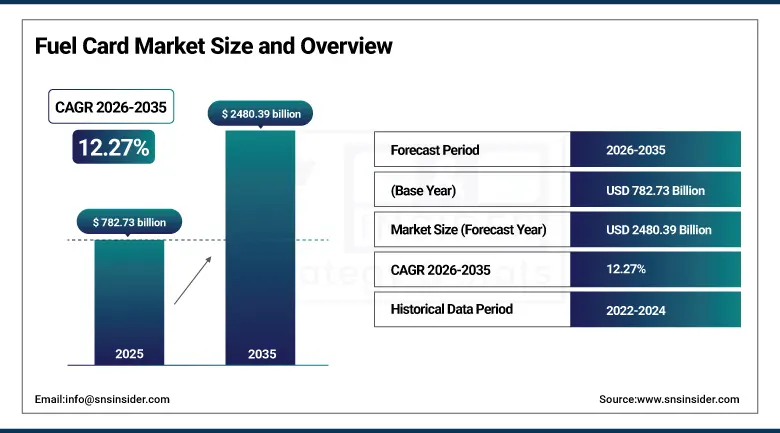
The Fuel Card Market was valued at USD 782.73 billion in 2025 and is expected to reach USD 2480.39 billion by 2035, growing at a CAGR of 12.27% from 2026–2035.
The growth in the fuel card market can be attributed to increasing adoption of cashless payment methods for fuels, enhanced fleet management techniques, and efficient expense management software solutions by transportation & logistics companies across the world. There is a rising requirement for fuel cards among fleet operators, commercial transportation companies, and government-owned vehicles looking for advanced tools to monitor fuel usage and payment management. Increasing activities in the logistics and transportation sector is also aiding market growth. Advancements in telematics, AI-enabled analytics for fleet management, real-time transaction management, and automatic toll payments are expected to fuel the adoption of advanced fuel card systems during the period 2025-26.
Fleet operators across Europe are increasingly adopting digital fuel card platforms integrated with GPS tracking systems, telematics software, and AI-based fleet monitoring technologies to improve fuel efficiency, optimize driver routes, and reduce operational expenses across large commercial vehicle fleets.
To Get more information on Fuel Card Market - Request Free Sample Report
Fuel Card Market Trends
-
Rising adoption of cashless fuel payment systems and AI-enabled fleet expense management platforms is significantly accelerating digital transformation across commercial transportation operations.
-
Increasing integration of telematics, GPS tracking, and real-time fuel monitoring technologies is improving fleet efficiency, route optimization, and fuel consumption management globally.
-
Growing deployment of connected fleet ecosystems and unified mobility payment platforms is enabling centralized management of fuel, EV charging, tolls, parking, and maintenance expenses.
-
Expansion of e-commerce logistics networks and commercial transportation activities is significantly increasing demand for advanced fuel card solutions and automated fleet payment technologies during 2025–2026.
-
Increasing adoption of smart fleet management systems, EV fleet technologies, and automated toll payment platforms is driving innovation across commercial mobility and digital transportation ecosystems worldwide.
The U.S. Fuel Card Market Outlook
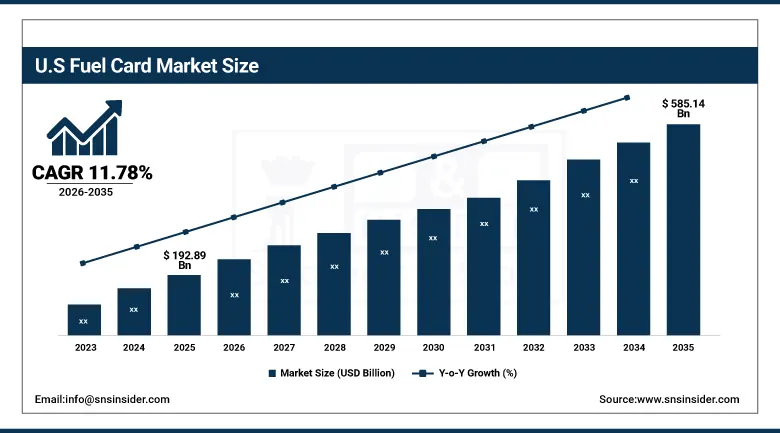
The U.S. Fuel Card Market was valued at USD 192.89 billion in 2025 and is expected to reach USD 585.14 billion by 2035 at a CAGR of 11.78%.
The U.S. fuel card market is expected to grow due to the rising number of digital payment systems in commercial fleets, increasing transportation services, and high demand for effective fuel cost management solutions by various logistics and company vehicles. High demand for fuel cards among fleet companies who require better control over fuel management and driver management can be witnessed in the U.S. fuel card market. The expansion of e-commerce delivery networks, AI integration into fleet analytics solutions, and increasing use of telematics solutions for fuel management are further aiding the growth of the industry. Increasing importance being placed on operational efficiency, automation of expenses, and integrated tolls payment solutions are further propelling the use of advanced fuel card solutions in 2025-2026.
Major fleet payment providers across the United States are increasingly integrating fuel card systems with AI-powered telematics platforms capable of tracking driver behavior, fuel consumption patterns, idle time, route efficiency, and vehicle maintenance schedules in real time. These advanced fleet monitoring systems are helping transportation companies reduce operational costs and improve fuel efficiency across large commercial fleets.
Fuel Card Market Segment Analysis
-
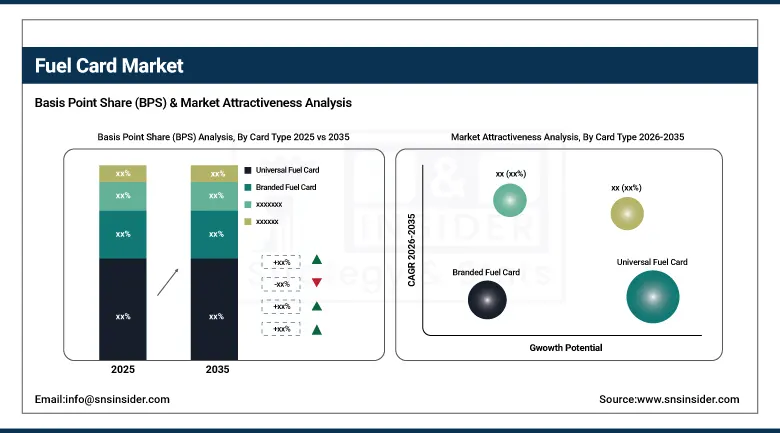
By Card Type, Universal fuel card battery dominated with approximately 46.24% revenue share in 2025; Branded fuel card is expected to be the fastest-growing type segment at approximately 13.11% CAGR from 2026 to 2035.
-
By Vehicle Type, Commercial vehicles dominated with approximately 48.36% revenue share in 2025; it is also expected to be the fastest-growing type segment at approximately 13.03% CAGR from 2026 to 2035.
-
By End User, Transportation & logistics dominated with approximately 49.28% revenue share in 2025; and it is also expected to be the fastest-growing type segment at approximately 12.84% CAGR from 2026 to 2035.
-
By Application, Fuel refill dominated with approximately 58.42% revenue share in 2025; Toll & parking payments providers are expected to be the fastest-growing type segment at approximately 13.62% CAGR from 2026 to 2035.
By Card Type, Universal fuel card dominating while branded fuel card emerging as the fastest-growing
Revenue generated by the universal fuel card category made up around 46.24% in 2025 due to businesses having a preference for flexible payment methods that can facilitate payments for fuel at different fueling stations. Universal fuel cards gained significant popularity in the fuel card market due to their capability to simplify expenses related to fuel operations, as well as their convenience and ease of use, in the year 2025.
The branded fuel card market is predicted to grow at the highest rate with a CAGR of around 13.11% during 2026-2035 due to rising collaborations between fuel companies and fleets that desire loyalty schemes, discounts on fuel prices, and seamless payments. Customer retention policies along with branded payment systems for fleets are rapidly driving segment growth.
By Vehicle Type, Commercial vehicles dominating while also emerging as the fastest-growing
In 2025, commercial vehicles were responsible for generating roughly 48.36% revenue share in the market owing to the growing trend towards adoption of electronic fuel payment solutions by transport firms, logistic service providers, and fleet managers to effectively control high fuel use and cost associated with their operation. The commercial sector of the global fuel card market was in high demand owing to factors such as increased delivery services in e-commerce and growth in freight transportation networks.
The commercial vehicles category is also anticipated to register the highest growth at a CAGR of about 13.03% from 2026 to 2035, attributed to the swift growth in logistics operations, rising long-distance transport services, and high usage of AI-based fleet management solutions. Increasing spending on connected fleets as well as automated fuel cost-tracking systems is playing an important role in facilitating this growth.
By End User, Transportation & logistics dominating while also emerging as the fastest-growing
The transportation & logistics category was responsible for around 49.28% of the revenue share in 2025 since logistics companies utilized fuel cards to streamline their business operations, manage fuel costs, and control their fleet of commercial vehicles efficiently. The use of fuel cards has been on the rise due to the high demand for efficient payments for commercial vehicles and effective monitoring of their fuel transactions.
This segment too will see the fastest growth of around 12.84% during the forecast period 2026-2035, driven by rapid developments in e-commerce logistics, growing commercial vehicle fleets, and the increased use of fleet payment solutions using digital technologies. Increasing application of AI-enabled analytics solutions, telematics platforms, and automated expense management solutions is rapidly propelling the growth in this segment globally.
By Application, Fuel refill dominating while toll & parking payments emerging as the fastest-growing
The fuel refill category held around 58.42% revenue share in 2025 since fleet owners and transportation businesses relied on fuel cards to purchase fuel, manage expenses, and carry out transactions with their extensive vehicle fleets. There was high demand from the fuel refill category in the fuel card market due to increased transportation activity, fuel usage in logistics processes, and fleet payments solutions in 2025.
The toll and parking fees category will see the highest growth rate of about 13.62% during the forecast period of 2026 to 2035 due to the growing use of mobility payment solutions. The demand for automated toll collection solutions, contactless parking payment systems, and digital transaction management solutions for fleet management is driving growth in this market segment.
Regional Insights:
|
Region |
Major Country |
Share within Region,2025 (%) |
|---|---|---|
|
North America |
United States |
84% |
|
Europe |
Germany |
27% |
|
Asia Pacific |
China |
52% |
|
Middle East & Africa |
UAE |
23% |
|
Latin America |
Brazil |
42% |
Asia Pacific Fuel Card Market Insights
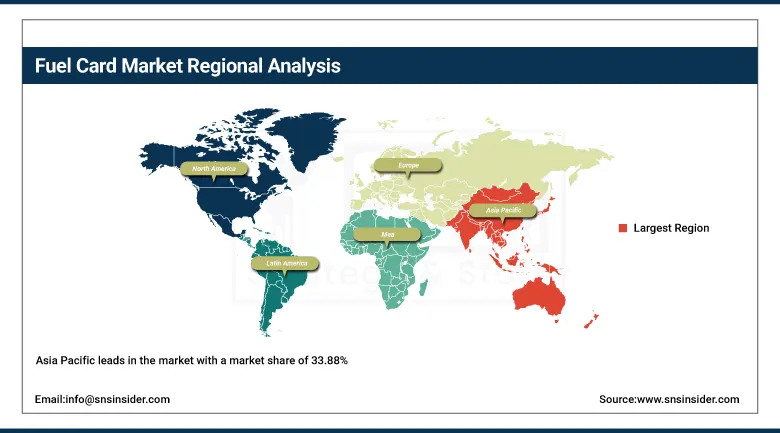
Asia Pacific leads in the market with a market share of 33.88% and will also witness the fastest growth of 13.18% in the forecast period due to the fast-paced development in transportation infrastructure, rising logistics activities, and commercial vehicle penetration in China, India, Japan, and countries of Southeast Asia. Digital payments, fleet modernization efforts, and growing use of e-commerce services for delivery purposes are adding wings to the regional market. Companies are focusing on using AI-based fuel monitoring and tracking software, fleet payment solutions, and telematics-based fuel card solutions during the forecast period.
Get Customized Report as per Your Business Requirement - Enquiry Now
North America Fuel Card Market Insights
The growth in the fuel card market in North America was fueled by the increased uptake of electronic fleet payment systems, growth in logistics activities, and implementation of telematics-based fuel management technologies in the United States and Canada. The need for integration of fuel payments systems that enable monitoring of fuel usage, cost tracking, drivers' management, and transaction analysis drove fleet operators toward adoption of fuel payment systems in their operations. E-commerce transport services and increased use of advanced AI-based fleet analytics tools were other factors propelling demand for fuel cards in 2025–2026. Growth in contactless payment solutions and expense report automation tools is also driving the growth in the sector.
Europe Fuel Card Market Insights
Fuel card market in Europe has grown substantially due to the widespread adoption of smart technology in mobility payments, fleet cost management and integration of fuel cards with telematics and AI-enabled fleet monitoring systems. Companies engaged in commercial transport operations have resorted to centralized payment systems in order to increase efficiency, decrease administrative costs and minimize fuel consumption in vehicle fleets. Growth in cross-border transportation activity, digitalization of fleet management and introduction of electronic tolling systems have been additional factors boosting market growth in 2025-2026. Demand for high-end fuel cards is being driven by greater emphasis on connected mobility, fleet automation and transaction monitoring.
Middle East & Africa and Latin America Fuel Card Market Insights
Middle East & Africa and Latin American fuel card market experienced constant growth due to growing number of commercial transport activities, expanding networks of fuel stations, and rising usage of online fuel payment services in the transport and logistics industries. Development of infrastructure projects, increased number of vehicles used by fleets, and growing interest in managing fuel expenses are greatly driving demand for innovative solutions offered by fuel cards in both regions. Companies are increasingly turning to fleet tracking solutions, unified payment methods, and advanced fuel transaction management solutions to increase their efficiency and cut expenses related to transport operations. Increased logistics activities and commercial fleet expansion contribute to market growth as well.
Market Dynamics:
Growth Drivers: Rising adoption of digital fleet payment systems and fuel expense management technologies accelerating industry growth
The fuel card market is witnessing substantial growth owing to growing demand for systems for making cashless fuel payments, centralized systems for managing expenses in relation to the use of fleets, and real-time monitoring solutions for fuel. Companies are increasingly using fuel cards in order to control expenses related to fuel consumption, manage drivers, and simplify all fleet management processes financially. The expansion of logistics networks for online commerce, transportation services, and artificial intelligence-based fleet analytics solutions is largely contributing to the growth in the industry over 2025–2026.
The use of AI-enabled fuel card solutions in conjunction with GPS tracking systems and telematics has become more prevalent among fleet managers in both Europe and North America. This technology can help manage fuel consumption, streamline vehicle routing, minimize vehicle idling time, and increase fleet efficiency.
Restraints: Increasing cybersecurity risks and fluctuating fuel prices limiting industry expansion
The industry of fuel card market could be encountering some problems due to the occurrence of cybersecurity threats with regard to digital payment system, fuel card frauds, and illegal transactions within the commercial fleets. The instability in fuel pricing, changes in fuel policy regulations, and rising costs can affect the financial performance of the operators of commercial fleets as well as the entities focused on fuel payment technology. In addition, the fuel card market is the issue of dependency on the fuel retail network as well as the growing competition in the form of other digital payment systems for the fleets by 2025-2026.
Opportunities: Expansion of connected fleet ecosystems and integrated mobility payment platforms creating new opportunities
The fuel card market is expected to have huge potential because of rising usage of connected fleet ecosystem, AI-based mobility payment systems, and integrated transport management technologies. The growing use of intelligent fleet management, EV fleet management technology, and automated toll payment systems is expected to play a significant role in expanding the fuel card market. Increased interest in improved efficiency and intelligent digital fleets is playing a key role in driving innovation in commercial transport in 2025-2026. The development of unified mobility payment platform that enables handling all the transactions such as fuel, EV charging, tolls, parking, and maintenance costs will create huge opportunities for long-term growth.
More commercial transport companies are turning towards adopting telematics-enabled fleet management solutions, which involve the integration of fuel cost analysis, preventive vehicle maintenance, driver behavior management, and electronic payments management to enhance fleet efficiency and reduce transportation costs.
Recent Developments:
-
March 2026: WEX highlighted increasing demand for digital fleet management technologies, AI-enabled fuel monitoring systems, and advanced transaction analytics platforms as commercial transportation companies increasingly focused on operational efficiency and fuel expense optimization across large vehicle fleets.
-
March 2025: FLEETCOR Technologies introduced an AI-powered analytics platform designed to detect fuel fraud, optimize fleet routing efficiency, and improve commercial fleet expense management operations. The company focused on strengthening transaction security, improving fuel monitoring accuracy, and enhancing operational visibility for transportation and logistics companies operating large commercial vehicle fleets.
-
2025: BP continued expanding its EV charging infrastructure and integrated mobility operations through BP Pulse while supporting development of advanced fleet fueling and mobility services for commercial transportation networks. The company increasingly focused on rapid and ultra-fast EV charging technologies integrated with commercial fleet operations and mobility payment ecosystems.
Fuel Card Market Key Players are:
- WEX Inc.
- FLEETCOR Technologies, Inc.
- BP p.l.c.
- Shell plc
- Exxon Mobil Corporation
- Chevron Corporation
- TotalEnergies SE
- Edenred S.A.
- U.S. Bancorp
- Radius Payment Solutions Limited
- Comdata Inc.
- E100 International Trade Sp. z o.o.
- DKV Mobility Group SE
- Fleetcor Europe Ltd.
- Petrobras Distribuidora S.A.
- ENGEN Petroleum Ltd.
- Indian Oil Corporation Ltd.
- Hindustan Petroleum Corporation Limited
- Bharat Petroleum Corporation Limited
- P97 Networks, Inc.
Fuel Card Market Report Scope:
| Report Attributes | Details |
|---|---|
| Market Size in 2025 | USD 782.73 Billion |
| Market Size by 2035 | USD 2480.39 Billion |
| CAGR | CAGR of 12.27% From 2026 to 2035 |
| Base Year | 2025 |
| Forecast Period | 2026-2035 |
| Historical Data | 2022-2024 |
| Report Scope & Coverage | Market Size, Segments Analysis, Competitive Landscape, Regional Analysis, DROC & SWOT Analysis, Forecast Outlook |
| Key Segments | • By Card Type (Universal Fuel Card, Branded Fuel Card, Prepaid Fuel Card) • By Vehicle Type (Passenger Vehicles, Commercial Vehicles, Fleet Vehicles) • By Application (Fuel Refill, Toll & Parking Payments, Vehicle Maintenance) • By End User (Transportation & Logistics, Corporate Fleets, Government & Public Sector) |
| Regional Analysis/Coverage | North America (US, Canada), Europe (Germany, UK, France, Italy, Spain, Russia, Poland, Rest of Europe), Asia Pacific (China, India, Japan, South Korea, Australia, ASEAN Countries, Rest of Asia Pacific), Middle East & Africa (UAE, Saudi Arabia, Qatar, South Africa, Rest of Middle East & Africa), Latin America (Brazil, Argentina, Mexico, Colombia, Rest of Latin America). |
| Company Profiles | WEX Inc., FLEETCOR Technologies, Inc., BP p.l.c., Shell plc, Exxon Mobil Corporation, Chevron Corporation, TotalEnergies SE, Edenred S.A., U.S. Bancorp, Radius Payment Solutions Limited, Comdata Inc., E100 International Trade Sp. z o.o., DKV Mobility Group SE, Fleetcor Europe Ltd., Petrobras Distribuidora S.A., ENGEN Petroleum Ltd., Indian Oil Corporation Ltd., Hindustan Petroleum Corporation Limited, Bharat Petroleum Corporation Limited, P97 Networks, Inc. |

Frequently Asked Questions
The Fuel Card Market is expected to grow at a CAGR of 12.27% from 2026 to 2035.
The Fuel Card Market was valued at USD 782.73 billion in 2025.
Commercial Vehicles dominated the market in 2025 with approximately 44.82% of revenues.
Universal Fuel Card Battery dominated the market in 2025 with approximately 46.24% of revenues.
Asia Pacific dominated the Fuel Card Market in 2025 with approximately 33.88% of global revenues.
