
Specialty Pharmaceuticals Market Report Scope & Overview:
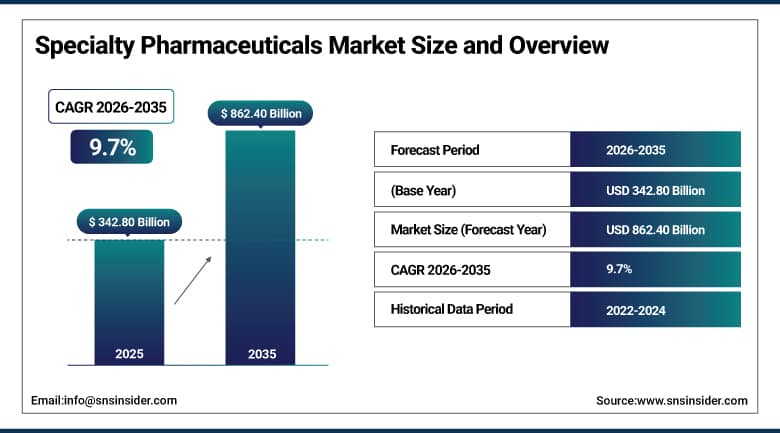
The Specialty Pharmaceuticals Market was valued at USD 342.80 Billion in 2025 and is expected to reach USD 862.40 Billion by 2035, growing at a CAGR of 9.7% from 2026–2035.
The Specialty Pharmaceuticals are advanced medicinal products intended for the treatment of complex, chronic, and rare ailments like cancers, autoimmune diseases, and genetic disorders and distinguished from general small molecule drugs by demanding unique production methods, strict cold chain logistics requirements, and rigorous patient administration controls. The category spans biologics, biosimilars, orphan drugs, and an expanding pipeline of gene and cell therapies, most of which are developed to address diseases with limited or no other effective treatment options. Because these therapies command premium pricing and depend on specialized distribution through hospital and specialty pharmacy channels, growth in this market has consistently outpaced the broader pharmaceutical industry even as it has matured into one of healthcare's largest single spending categories.
⮞July 2026: The U.S. FDA approved Jideytro (zidesamtinib), associated with Nuvalent, for adults with previously treated ROS1-positive locally advanced or metastatic non-small cell lung cancer. The approval adds another targeted therapy to the specialty oncology market.
To Get More Information On Specialty Pharmaceuticals Market - Request Free Sample Report
Specialty Pharmaceuticals Market Trends:
-
Biologics and gene therapies are dominating an increasing share of new FDA drug approvals.
-
Oral biologics are emerging as a convenient alternative to injectable treatments.
-
Specialty pharmacy channels are capturing a growing share of complex drug dispensing.
-
Cell and gene therapy review faces closer FDA scrutiny following 2026 leadership changes.
-
Rare disease drug development continues accelerating under orphan drug incentives.
U.S. Specialty Pharmaceuticals Market Outlook:
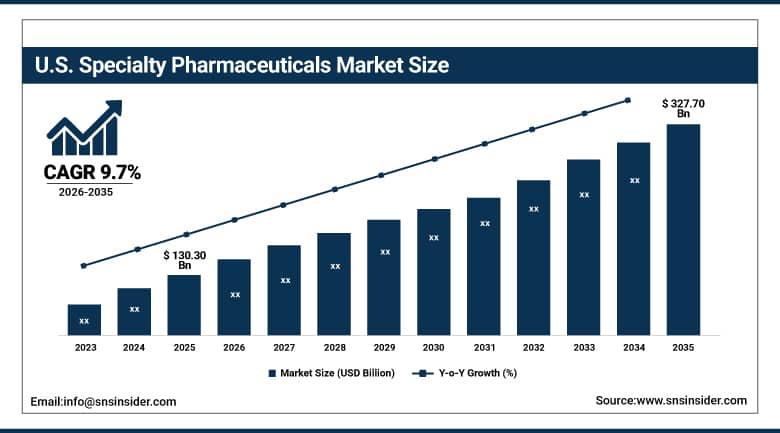
The U.S. Specialty Pharmaceuticals Market was valued at approximately USD 130.30 Billion in 2025 and is expected to reach approximately USD 327.70 Billion by 2035, growing at a CAGR of 9.7% from 2026–2035.
The United States remains the largest single national market for specialty pharmaceuticals, anchored by its concentration of leading biologics and gene therapy developers, the world's most active FDA approval pipeline for novel specialty drugs, and a well-established, if increasingly strained, specialty pharmacy distribution infrastructure. The rising incidence of cancer, autoimmune disease, and rare genetic conditions across an aging population continues to expand the addressable patient base for specialty treatments faster than in most other national markets.
⮞June 2026: The FDA approved Tregzi (Orca Bio), an allogeneic regulatory T-cell-based immunotherapy used in matched-donor hematopoietic stem-cell transplantation for adults with hematological malignancies. The decision illustrates the U.S. market’s continued development of complex cell-based specialty treatments.
Specialty Pharmaceuticals Market Segment Analysis:
-
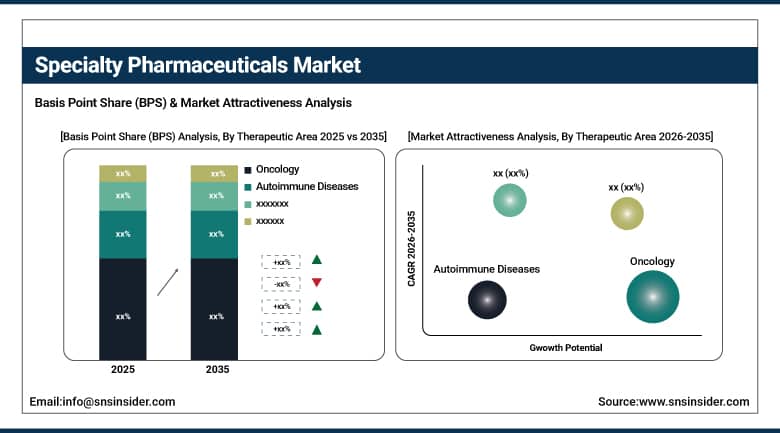
By Therapeutic Area, the Oncology segment dominated the Specialty Pharmaceuticals Market with approximately 40.20% share in 2025, while the Autoimmune Diseases segment is the fastest growing with a CAGR of approximately 11.8%.
-
By Product Type, the Biologics segment dominated the Specialty Pharmaceuticals Market with approximately 51.60% share in 2025, while the Gene Therapies segment is the fastest growing with a CAGR of approximately 15.4%.
-
By Route of Administration, the Injectable segment dominated the Specialty Pharmaceuticals Market with approximately 63.40% share in 2025, while the Oral segment is the fastest growing with a CAGR of approximately 10.8%.
-
By Distribution Channel, the Hospital Pharmacies segment dominated the Specialty Pharmaceuticals Market with approximately 38.60% share in 2025, while the Specialty Pharmacies segment is the fastest growing with a CAGR of approximately 13.2%.
By Therapeutic Area, Oncology dominates, Autoimmune Diseases grow fastest
Oncology held the largest therapeutic-area share in 2025, reflecting both the sheer global scale of cancer incidence and the pharmaceutical industry's sustained, decades-long concentration of research and development spending on the category. Continued advancement of targeted therapies, antibody-drug conjugates, and immunotherapies has kept oncology at the center of specialty pharmaceutical innovation even as competition among treatments for the most common cancer types has intensified.
Autoimmune diseases are growing fastest as rising diagnosis rates, expanding biologic and emerging oral biologic treatment options, and growing awareness of conditions such as psoriasis, rheumatoid arthritis, and inflammatory bowel disease continue widening the treated patient population. The 2026 regulatory progress of oral IL-23-targeted therapies illustrates how manufacturers are working to make autoimmune treatment more convenient without sacrificing the efficacy biologics have established over the past decade.
⮞August 2026: The FDA granted accelerated approval to Tudriqev (vusolimogene oderparepvec-wtpg), a genetically modified oncolytic viral therapy, in combination with nivolumab for certain adults with advanced melanoma that progressed after PD-1-based treatment. The decision adds a specialized oncology immunotherapy option.
By Product Type, Biologics dominate, Gene Therapies grow fastest
Biologics held the largest product-type share in 2025, due to state-of-the-art manufacturing processes and the proven efficacy of these medications in treating complex conditions unattainable through small molecule chemistry. Their capacity to address specific disease pathways with high precision has made biologics the preferred foundation for new specialty drug development across oncology, autoimmune disease, and rare disorders alike.
Gene therapies are growing fastest as advances in vector design, manufacturing scale-up, and post-market safety monitoring continue expanding the range of conditions treatable with a single administration rather than chronic ongoing therapy. Despite a more cautious FDA review posture toward certain gene therapy applications during 2026, the number of rolling BLA submissions for conditions such as Glycogen Storage Disease and Sanfilippo syndrome shows the segment's underlying momentum remains intact.
⮞August 2026: The FDA granted accelerated approval to Genglycos (pariglasgene brecaparvovec-opnr), an AAV-based gene therapy for patients aged eight years and older with glycogen storage disease type Ia. The approval replaced the report’s outdated description of DTX401 as merely awaiting review.
By Route of Administration, Injectable dominates, Oral grows fastest
Injectable administration held the largest route-of-administration share in 2025, since most biologics and virtually all currently approved gene and cell therapies require injectable or intravenous delivery to preserve their molecular structure and ensure reliable bioavailability. That requirement has made injectable administration the default route for the large majority of specialty treatments developed to date.
Oral administration is growing fastest as manufacturers increasingly develop small-molecule and, more recently, oral biologic alternatives that reduce the treatment burden associated with regular injections. Icotrokinra's 2026 regulatory progress as a first-in-class oral IL-23 receptor therapy exemplifies this shift, offering a preview of how oral formulations may reshape patient preference and adherence across additional specialty indications over the coming decade.
⮞March 2026: Johnson & Johnson announced FDA approval of ICOTYDE (icotrokinra), an oral IL-23 receptor-targeted peptide for eligible adults and adolescents with moderate-to-severe plaque psoriasis. The milestone reflects expansion of targeted noninjectable specialty treatments; it should not be described as only under FDA review.
By Distribution Channel, Hospital Pharmacies dominate, Specialty Pharmacies grow fastest
The hospital pharmacies segment was the leading distribution channel in 2025, considering its pivotal position in managing the administration of complicated infusions and dealing with critical oncology and orphan diseases as well as handling the cold chain that some biologic specialties require. Hospitals also serve as the primary sites where new specialty drugs are first introduced to clinical practice, reinforcing their leading position in the channel.
Specialty pharmacies are growing fastest as more complex biologics, orphan drugs, and cell and gene therapies move toward outpatient and home-administration models that require dedicated prior-authorization support, patient counseling, and adherence management beyond what traditional retail or hospital pharmacy operations typically provide. That shift is reinforced by payers increasingly steering high-cost specialty prescriptions toward accredited specialty pharmacy networks to manage both cost and clinical outcomes.
⮞July 2026: The Centers for Medicare & Medicaid Services issued draft guidance on how manufacturers would effectuate Medicare negotiated maximum fair prices in 2028, including processes affecting dispensing entities and Part B providers. The proposal underscores the increasing operational complexity of specialty-drug reimbursement and dispensing.
Regional Analysis:
|
Region |
Major Country |
Share within Region, 2025 (%) |
|
North America |
United States |
84.0% |
|
Europe |
Germany |
23.0% |
|
Asia Pacific |
China |
32.0% |
|
Latin America |
Brazil |
37.0% |
|
Middle East & Africa |
Saudi Arabia |
28.0% |
North America Specialty Pharmaceuticals Market Insights
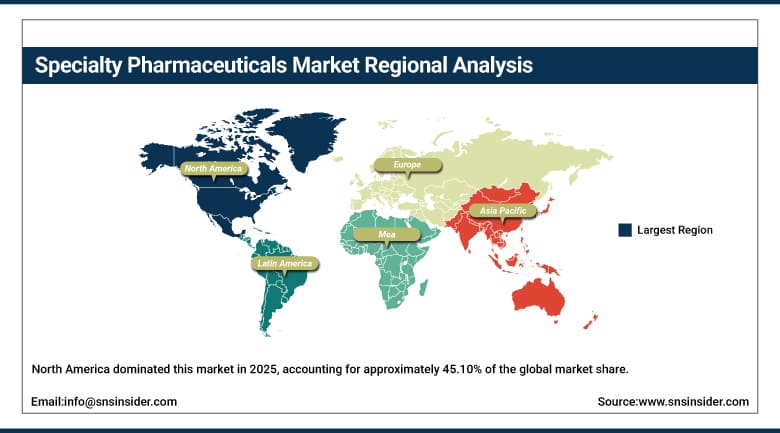
North America dominated the Specialty Pharmaceuticals Market in 2025, accounting for approximately 45.10% of the global market share. This leadership was primarily driven by the United States’ strong concentration of leading biopharmaceutical companies, substantial contribution to global specialty drug R&D investment, and sustained FDA approval activity for innovative biologics, gene therapies, and orphan drugs. In addition, well-established reimbursement frameworks and a mature specialty pharmacy distribution infrastructure further strengthened the region’s market position.
Canada represents a smaller but steadily expanding share, supported by Health Canada’s increasing alignment with FDA approval timelines for many specialty therapies. Mexico’s contribution remains more limited, reflecting the pace of national reimbursement policy expansion for high-cost specialty medicines. Meanwhile, cross-border clinical trial activity and physician training initiatives continue to strengthen collaboration between the U.S. and other markets across the region.
⮞May 2026: Health Canada’s Drug Product Database recorded HEMGENIX (etranacogene dezaparvovec), a gene therapy for hemophilia B, as marketed in Canada from May 13. The listing illustrates the regional expansion of highly specialized one-time treatment options.
Get Customized Report as Per Your Business Requirement - Enquiry Now
Asia Pacific Specialty Pharmaceuticals Market Insights
Asia Pacific is expected to register the fastest regional growth through 2035, growing at a CAGR of approximately 12.4%, propelled by robust health care infrastructure development, rising incidences of chronic disease and rare disorders, and national-level efforts to enhance homegrown biopharmaceutical innovation within key APAC countries. China will emerge as a prominent growth market due to the NMPA’s accelerated drug approval timelines and increased governmental funding for indigenous biotechnology innovations.
Japan, South Korea, India, and Australia represent further growth opportunities as regulatory harmonization with Western markets improves and international biopharmaceutical companies expand regional partnerships and distribution agreements. Rising healthcare expenditure and growing diagnostic capacity across the region are expected to continue widening the treated patient population for specialty pharmaceuticals through the forecast period.
⮞January 2026: China published revised implementing regulations for its Drug Administration Law, introducing refined clinical-trial rules, accelerated review pathways and market-exclusivity provisions for eligible pediatric and rare-disease medicines. The changes are designed to support innovation while strengthening drug-safety oversight.
Europe Specialty Pharmaceuticals Market Insights
Europe represents a technically specialized segment of the global ecosystem, anchored by the Netherlands' ASML, the sole global supplier of extreme ultraviolet lithography systems that every leading-edge fab in the world depends on, and Germany's strong position in automotive and industrial power semiconductors. The EU Chips Act continues channeling public and private capital toward expanding regional manufacturing capacity, though Europe's overall share of global wafer output remains modest relative to Asia Pacific.
Europe represents a mature and clinically influential segment of the global market, anchored by Germany's dense network of high-volume cardiac centers and supported by a comparatively fast CE mark regulatory pathway that has allowed several PFA catheter platforms to reach European electrophysiologists well ahead of equivalent FDA approvals. Academic and cardiac research centers across the region have played an outsized role in the pivotal first-in-human and early feasibility studies that shaped the category's clinical evidence base.
As Germany, France, and the UK form a major part of the regional spending on specialty pharmaceuticals due to their robust healthcare facilities, Italy, Spain, and Netherlands are furthering their reimbursement coverage for the expensive biologicals and orphan drugs. Increasing penetration of biosimilars in the region is affecting the competitive environment of off-patent biologicals in particular in oncology and immunology.
⮞June 2026: The European Medicines Agency’s CHMP recommended authorization of two biosimilars, Denosumab Ascend for specified bone-related oncology indications and Nylaspeg (pegfilgrastim) for chemotherapy-associated neutropenia. These were positive regulatory opinions, not yet European Commission marketing authorizations at the time of the announcement.
MEA & Latin America Specialty Pharmaceuticals Market Insights
The Middle East and Africa host a smaller but rapidly developing share of the global specialty pharmaceuticals market, with Saudi Arabia leading regional growth through its Vision 2030 healthcare modernization program, which has expanded funding and access to biologics and gene therapies alongside broader investment in domestic pharmaceutical manufacturing capacity. Growth elsewhere in the region remains closely tied to the pace of national healthcare infrastructure investment.
Latin America remains an emerging but meaningful market for specialty pharmaceuticals, with Brazil showing the most visible growth given its Unified Health System's expanding reimbursement coverage for expensive biologic and targeted therapies and its comparatively well-developed domestic pharmaceutical industry. Argentina, Mexico, and Colombia continue following developments in more advanced Latin American markets, with growth expected to accelerate as regional biotechnology investment and strategic manufacturer partnerships continue building out.
⮞August 2026: Saudi Arabia’s Food and Drug Authority launched the New Accelerator Program for Drugs in Rare Diseases (NADR), intended to streamline the development, evaluation and authorization of medicines for rare diseases. The initiative is a regulatory access program, not a product approval.
Market Dynamics:
Growth Drivers: Rising chronic disease burden and biotechnology innovation fueling adoption
The rising global prevalence of chronic and complex diseases, including cancer, autoimmune disorders, and rare genetic conditions, is the foundational driver behind specialty pharmaceutical demand, with the World Health Organization estimating that chronic diseases account for over 74% of global deaths. As diagnostic capacity improves and disease awareness grows worldwide, the addressable patient population for advanced, targeted specialty treatments continues expanding faster than for conventional pharmaceuticals.
Sustained biotechnology innovation adds a second major driver, as continued advancement in monoclonal antibodies, gene and cell therapy platforms, and precision medicine techniques enables treatment of conditions that were previously unaddressable. Regulatory incentives such as the FDA's Orphan Drug Act, which offers development and market exclusivity incentives for rare disease treatments, continue encouraging sustained pharmaceutical company investment in this high-growth category.
⮞February 2025: China’s NMPA reported conditional marketing approval of Carvykti (ciltacabtagene autoleucel), a BCMA-directed CAR-T therapy for eligible adults with relapsed or refractory multiple myeloma. The decision illustrates continuing regulatory acceptance of advanced cell-based oncology products outside the United States.
Restraints: High treatment costs and specialized handling requirements limiting broader access
The high cost of specialty drugs is a real constraint because biological products, gene therapy products, and orphan drugs usually come at an expense of hundreds of thousands of dollars per year, even in developed economies. The cost of such treatments limits the use of specialty drugs in developing nations due to their high cost in public healthcare and health insurance.
In addition to the cost constraint, the need for special storage, handling, and administration facilities for some specialty pharmaceutical products makes them difficult to access as it is hard to get all of these facilities even in the most developed countries. It means that specialty drug distribution usually comes after regulation approval.
Opportunities: Oral biologics and emerging-market access expansion opening new growth avenues
The emergence of oral biologic alternatives to traditional injectable therapies represents a substantial commercial opportunity, as demonstrated by icotrokinra's 2026 regulatory progress as a first-in-class oral IL-23 receptor-targeted treatment for plaque psoriasis. Successfully extending this approach to additional autoimmune and inflammatory indications would meaningfully improve treatment convenience and could expand the addressable patient population for manufacturers able to bring oral formulations to market.
Expanding access in emerging markets represents a second significant opportunity, as rising healthcare expenditure, improving regulatory harmonization, and growing domestic biotechnology investment in markets such as China, India, and Saudi Arabia continue building the infrastructure needed to support specialty drug adoption. Manufacturers able to secure distribution agreements and local manufacturing collaborations early on will find themselves capturing an increasingly large percentage of the worldwide demand for specialty pharmaceuticals as these healthcare infrastructures develop further.
⮞November 2025: Brazil’s Anvisa authorized a clinical study of an investigational gene therapy developed by Gemma Biotherapeutics in partnership with Fiocruz for spinal muscular atrophy type 1. The related technology-transfer arrangement could support future local production if the therapy proves safe, effective and is subsequently approved.
Recent Developments:
-
July 2026: The FDA approved Meitheal Pharmaceuticals' Jideytro (zidesamtinib), a ROS1-selective kinase inhibitor, for previously treated ROS1-positive non-small cell lung cancer.
-
June 2026: Orca Bio's Tregzi (Orca-T) received FDA approval as the first and only precision-engineered cell therapy for allogeneic transplant in adults with hematological malignancies.
-
2026: Johnson & Johnson and Protagonist Therapeutics advanced icotrokinra, a first-in-class oral IL-23 receptor-targeted therapy, through FDA review for plaque psoriasis based on positive Phase 3 ICONIC program results.
-
January 2026: Ultragenyx completed its rolling Biologics License Application submission to the FDA for DTX401, an AAV8 gene therapy for Glycogen Storage Disease Type Ia, with a PDUFA date set for March 28, 2026.
Specialty Pharmaceuticals Market Key Players:
-
Bristol-Myers Squibb Company
-
Vertex Pharmaceuticals Incorporated
-
Regeneron Pharmaceuticals, Inc.
-
Biogen Inc.
-
Novartis AG
-
F. Hoffmann-La Roche Ltd. (Genentech)
-
Sanofi S.A.
-
Eli Lilly and Company
-
GlaxoSmithKline plc
-
Incyte Corporation
-
Merck & Co., Inc.
-
Pfizer Inc.
-
Johnson & Johnson
-
Teva Pharmaceutical Industries Ltd.
-
Viatris Inc.
Specialty Pharmaceuticals Market Report Scope:
| Report Attributes | Details |
|---|---|
| Market Size in 2025 | USD 342.80 Billion |
| Market Size by 2035 | USD 862.40 Billion |
| CAGR | CAGR of 9.7% From 2026 to 2035 |
| Base Year | 2025 |
| Forecast Period | 2026-2035 |
| Historical Data | 2022-2024 |
| Report Scope & Coverage | Market Size, Segments Analysis, Competitive Landscape, Regional Analysis, DROC & SWOT Analysis, Forecast Outlook |
| Key Segments | • By Therapeutic Area (Oncology, Autoimmune Diseases, Central Nervous System Disorders, Infectious Diseases, Rare & Genetic Disorders) • By Product Type (Biologics, Biosimilars, Orphan Drugs, Gene Therapies, Small Molecules) • By Route of Administration (Injectable, Oral, Intravenous, Transdermal) • By Distribution Channel (Hospital Pharmacies, Retail Pharmacies, Specialty Pharmacies, Online Pharmacies) |
| Regional Analysis/Coverage | North America (US, Canada), Europe (Germany, UK, France, Italy, Spain, Russia, Poland, Rest of Europe), Asia Pacific (China, India, Japan, South Korea, Australia, ASEAN Countries, Rest of Asia Pacific), Middle East & Africa (UAE, Saudi Arabia, Qatar, South Africa, Rest of Middle East & Africa), Latin America (Brazil, Argentina, Mexico, Colombia, Rest of Latin America). |
| Company Profiles | AbbVie Inc., Amgen Inc., Gilead Sciences, Inc., Bristol-Myers Squibb Company, Vertex Pharmaceuticals Incorporated, Regeneron Pharmaceuticals, Inc., Biogen Inc., Novartis AG, F. Hoffmann-La Roche Ltd. (Genentech), Sanofi S.A., Eli Lilly and Company, GlaxoSmithKline plc, Incyte Corporation, Merck & Co., Inc., Pfizer Inc., Johnson & Johnson, Teva Pharmaceutical Industries Ltd., Viatris Inc. |

Frequently Asked Questions
Key players in the Specialty Pharmaceuticals Market include AbbVie Inc., Amgen Inc., Gilead Sciences, Inc., Bristol-Myers Squibb Company, and Vertex Pharmaceuticals Incorporated, among others.
Key opportunities in the Specialty Pharmaceuticals Market include the emergence of oral biologic alternatives to injectable therapies and expanding access in emerging markets such as China, India, and Saudi Arabia.
The market is driven by the rising global burden of chronic and complex diseases and sustained biotechnology innovation across biologics, gene therapies, and precision medicine platforms.
The Biologics segment dominated the Specialty Pharmaceuticals Market, accounting for approximately 51.60% market share.
North America dominated the Specialty Pharmaceuticals Market in 2025 with approximately 45.10% share, driven by the United States' concentration of leading biopharmaceutical companies and consistently active FDA approval activity.
