
RNA Polymerase Inhibitor Market Report Scope & Overview:
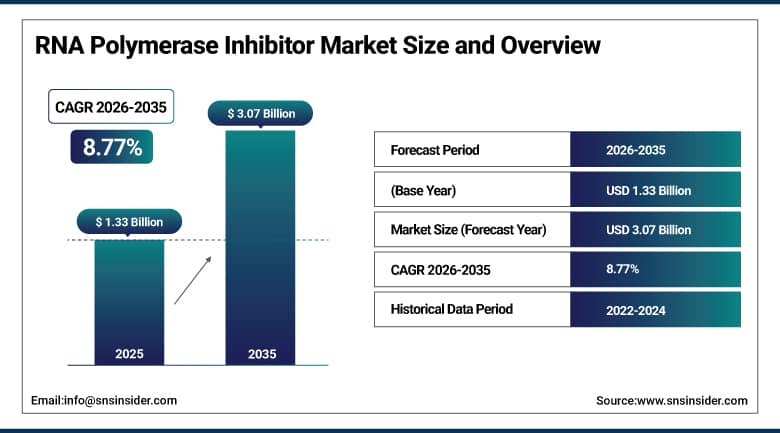
The RNA Polymerase Inhibitor Market was valued at USD 1.33 billion in 2025 and is expected to reach USD 3.07 billion by 2035, growing at a CAGR of 8.77% from 2026-2035.
The RNA Polymerase Inhibitor Market is witnessing strong growth due to increasing demand for effective antiviral therapies targeting viral replication mechanisms. Inhibitors of RNA polymerases inhibit viral RNA synthesis, thus forming one of the essential classes of drugs for the treatment of RNA viruses. Growing incidence of infection such as influenza, COVID-19, hepatitis C, among others, is contributing to the growing market demand. Moreover, increasing awareness regarding emerging viral strains and antiviral resistance is fueling the need for developing innovative inhibitors of RNA polymerases. In addition, growing investments in antiviral drugs, innovations in drug discovery tools, and increasing treatment options for infectious diseases are also contributing to the growth of this market.
⮞In April 2025, Roche reported Phase III CENTERSTONE trial results showing that a single oral dose of Xofluza (baloxavir marboxil), an influenza polymerase-complex inhibitor, reduced the odds of household influenza transmission by 32%. The findings strengthened the clinical evidence for polymerase-targeting antiviral therapy beyond symptom management.
To Get More Information On RNA Polymerase Inhibitor Market - Request Free Sample Report
RNA Polymerase Inhibitor Market Trends
-
Rising prevalence of RNA virus infections is driving demand for polymerase inhibitors targeting essential viral replication mechanisms across therapeutic applications.
-
Increasing concerns about antiviral resistance are encouraging development of novel polymerase inhibitors with alternative mechanisms and improved resistance profiles.
-
Growing focus on influenza therapeutics is accelerating development of inhibitors targeting PB1, PB2, and PA polymerase subunits.
-
Advancements in structure-based drug design are improving identification of potent nucleoside and non-nucleoside polymerase inhibitor candidates.
-
Increasing pandemic preparedness efforts are supporting investments in broad-spectrum polymerase inhibitors targeting emerging and re-emerging RNA viral infections.
U.S. RNA Polymerase Inhibitor Market Outlook
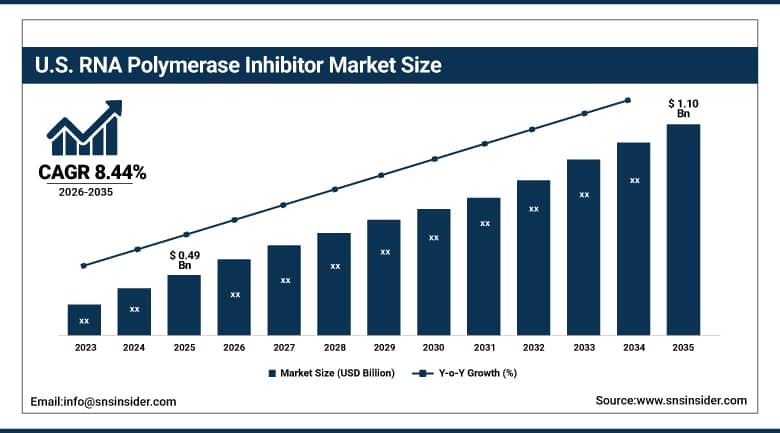
The U.S. RNA Polymerase Inhibitor Market was valued at USD 0.49 billion in 2025 and is expected to reach USD 1.10 billion by 2035, growing at a CAGR of 8.44% from 2026-2035.
The U.S. RNA Polymerase Inhibitor Market is witnessing strong growth due to increasing demand for targeted antiviral therapies and the persistent burden of RNA virus infections. Inhibitors of RNA polymerases inhibit viral RNA synthesis, thus forming one of the essential classes of drugs for the treatment of RNA viruses. Growing incidence of infection such as influenza, COVID-19, hepatitis C, among others, is contributing to the growing market demand. Moreover, increasing awareness regarding emerging viral strains and antiviral resistance is fueling the need for developing innovative inhibitors of RNA polymerases. In addition, growing investments in antiviral drugs, innovations in drug discovery tools, and increasing treatment options for infectious diseases are also contributing to the growth of this market.
⮞In May 2025, U.S.-based Cocrystal Pharma reported that its investigational influenza A PB2 inhibitor CC-42344 demonstrated strong antiviral activity against the highly pathogenic H5N1 strain A/Texas/37/2024 in laboratory testing. The findings supported further investigation of polymerase-targeting treatments for emerging influenza strains.
RNA Polymerase Inhibitor Market Segment Analysis
-
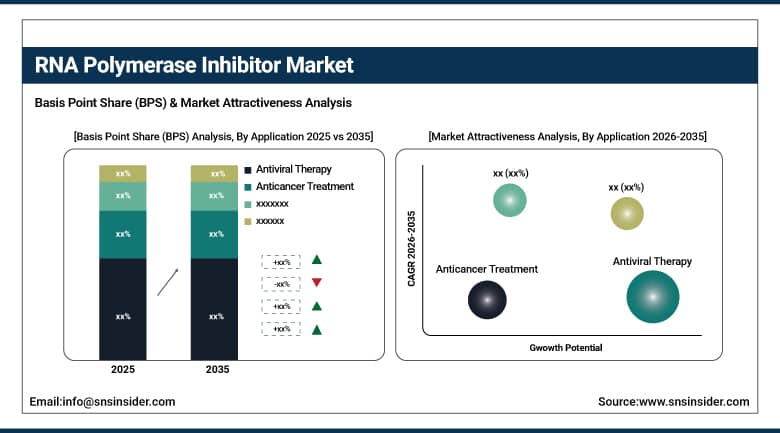
By Application, Antiviral Therapy dominates the RNA Polymerase Inhibitor Market with 58% share in 2025; Research and Development is expected to grow at the fastest CAGR of 10.70% from 2026–2035.
-
By Type, Nucleoside RNA Polymerase Inhibitors dominate the RNA Polymerase Inhibitor Market with 38% share in 2025; Non-nucleoside RNA Polymerase Inhibitors are expected to grow at the fastest CAGR of 10.00% from 2026–2035.
-
By Route of Administration, Oral dominates the RNA Polymerase Inhibitor Market with 52% share in 2025; Inhalation is expected to grow at the fastest CAGR of 11.47% from 2026–2035.
-
By End User, Hospitals dominate the RNA Polymerase Inhibitor Market with 31% share in 2025; Contract Research Organizations are expected to grow at the fastest CAGR of 10.91% from 2026–2035.
-
By Technology, Small Molecule Inhibitors dominate the RNA Polymerase Inhibitor Market with 72% share in 2025; RNA Interference is expected to grow at the fastest CAGR of 11.69% from 2026–2035.
By Application, Antiviral Therapy dominates the RNA Polymerase Inhibitor Market, Research and Development grows fastest.
Antiviral Therapy segment dominated the RNA Polymerase Inhibitor Market with the highest revenue share of about 58% in 2025 because RNA polymerase inhibitors play an important part in inhibiting the replication of viruses and controlling RNA viruses. The rising burden of diseases, use of RNA polymerase inhibitors in clinics, increased demands for specific antivirals, and new emerging viruses justify their global usage.
Research and Development segment is expected to grow at the fastest CAGR of 10.70% from 2026-2035 In addition to this, due to increased emphasis on finding new RNA polymerase inhibitors with better efficiency and antiviral activity, studies related to RNA virus are getting accelerated. Increased focus on developing antiviral drugs, better screening techniques, and more studies related to new RNA viruses are some of the factors responsible for this acceleration.
⮞In October 2025, Cocrystal Pharma received an approximately USD 500,000 NIH/NIAID Small Business Innovation Research Phase I award to advance an oral antiviral candidate targeting the influenza A and B polymerase complex. The funding supports early-stage discovery of broad-spectrum antiviral compounds.
By Type, Nucleoside RNA Polymerase Inhibitors dominate the RNA Polymerase Inhibitor Market, Non-nucleoside RNA Polymerase Inhibitors grow fastest.
Nucleoside RNA Polymerase Inhibitors segment dominated the RNA Polymerase Inhibitor Market with the highest revenue share of about 38% in 2025 because of their antiviral activity and capability to inhibit viral RNA replication. The wide range of applications for RNA viruses, clinical provenance, well-established pathways for development, and increased need for antivirals all add to the reason for using these agents.
Non-nucleoside RNA Polymerase Inhibitors segment is expected to grow at the fastest CAGR of 10.00% from 2026-2035 because of their capacity to prevent viral polymerase function in a way that differs from that of nucleoside analogs. The interest in looking at new approaches for antivirals, resistance management, and targeted therapies is aiding the development of such drugs. Improvements in drug discovery and antiviral pipelines are helping too.
⮞In 2025, a clinical pharmacology study published results for EDP-323, an investigational non-nucleoside inhibitor of the respiratory syncytial virus L polymerase. The Phase I study reported tolerability at evaluated doses and pharmacokinetic characteristics supporting continued development of once-daily oral dosing.
By Route of Administration, Oral dominates the RNA Polymerase Inhibitor Market, Inhalation grows fastest.
Oral segment dominated the RNA Polymerase Inhibitor Market with the highest revenue share of about 52% in 2025 because of its convenience, easy administration, and good acceptance among patients. Oral medications are appropriate for treatment as outpatients and are more easily distributed via pharmacies and health care institutions. The availability of already established products, familiarity among doctors, and oral antiviral drugs make the option very popular.
Inhalation segment is expected to grow at the fastest CAGR of 11.47% from 2026-2035 due to its ability to provide direct antiviral therapy to the respiratory tract. Pulmonary targeting therapy can help facilitate localized delivery of drugs and increase efficacy for RNA virus infection in the respiratory tract. Increasing interest in antiviral agents for the respiratory tract, inhalation technology, and convenient localized therapy options has also spurred further development.
⮞In May 2026, Cocrystal Pharma confirmed completion of preclinical toxicology studies for its investigational dry-powder inhaled formulation of CC-42344, an influenza A PB2 inhibitor. The formulation is being developed to deliver the compound directly to the respiratory tract and remains at the preclinical stage.
By End User, Hospitals dominate the RNA Polymerase Inhibitor Market, Contract Research Organizations grow fastest.
Hospitals segment dominated the RNA Polymerase Inhibitor Market with the highest revenue share of about 31% in 2025 because of their ability to detect and treat individuals who suffer from critical viral diseases that need special treatment and monitoring. Hospitals offer the benefit of having health professionals, diagnostic services, antivirals, and supportive care. The rising trend of hospitalizations due to severe infections is another factor that adds to hospital demand.
Contract Research Organizations segment is expected to grow at the fastest CAGR of 10.91% from 2026-2035 This is due to the trend of outsourcing of the discovery of antiviral, pre-clinical trials, clinical trials, and regulatory activities. CROs have specialized expertise, research facilities, and development capabilities. The increasing interest of the pharmaceutical industry in RNA virus therapeutics and need for cost-effective development is driving CRO involvement.
⮞In November 2025, Cocrystal Pharma disclosed the completion of its initial UK Phase IIa human influenza challenge study involving oral PB2 inhibitor CC-42344. No serious adverse events or drug-related discontinuations were reported; however, low infection rates limited efficacy analysis, highlighting the operational challenges of antiviral clinical research.
By Technology, Small Molecule Inhibitors dominate the RNA Polymerase Inhibitor Market, RNA Interference grows fastest.
Small Molecule Inhibitors segment dominated the RNA Polymerase Inhibitor Market with the highest revenue share of about 72% in 2025 because of their known modes of development, good druglike characteristics, and selective action on viral polymerases. The oral administration capabilities, scalable production, knowledge about pharmacology, and wide use for antiviral drugs development are additional arguments for their adoption by various therapeutic programs.
RNA Interference segment is expected to grow at the fastest CAGR of 11.69% from 2026-2035 Due to its capacity to selectively target viral RNA and interfere with viral replication. Increasing research into RNA-based therapies, improved delivery methods, increased interest in precise antivirals, and increased investment in nucleic acid technology platforms will be some factors that can boost the use of RNA interference technology.
⮞In May 2026, Cocrystal Pharma announced the discovery of investigational direct-acting compounds targeting conserved regions of viral replication enzymes, including the hantavirus L-protein. Laboratory findings demonstrated activity against hantaan virus, supporting continued exploration of structure-guided small-molecule antiviral development.
Regional Analysis
|
Region |
Major Country |
Share within Region, 2025 (%) |
|---|---|---|
|
North America |
United States |
91.0% |
|
Europe |
Germany |
28.0% |
|
Asia Pacific |
China |
38.0% |
|
Middle East & Africa |
UAE |
20.0% |
|
Latin America |
Brazil |
46.0% |
North America RNA Polymerase Inhibitor Market Insights
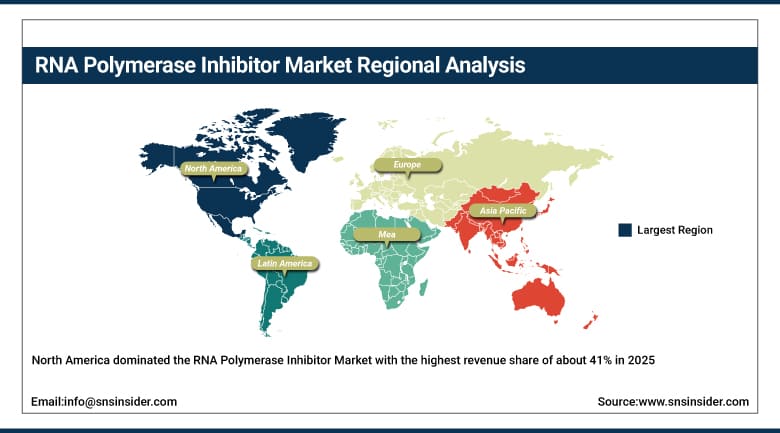
North America dominated the RNA Polymerase Inhibitor Market with the highest revenue share of about 41% in 2025, backed by robust health care infrastructure, excellent drug and biotech R&D, and significant utilization of innovative antiviral drugs. Also, the region’s considerable expenditure on drug discovery and clinical trials, regulatory structure, and presence of major pharmaceutical companies increase the demand for RNA polymerase inhibitors.
The U.S. RNA Polymerase Inhibitor Market accounted for a market share of 91.0%, backed up by its superior health care facilities, robust pharmaceuticals and biotech environment, and capability in developing antiviral drugs. High demand for targeted antiviral drugs, clinical studies spending, and concentration on viral infections will drive the growth of the market. The presence of major pharmaceutical players makes it even better for the U.S. market.
⮞In March 2026, the U.S. Centers for Disease Control and Prevention estimated that the 2024–2025 influenza season resulted in approximately 51 million illnesses, 710,000 hospitalizations, and 45,000 deaths. These findings illustrate the substantial disease burden supporting continued interest in effective antiviral therapies, including polymerase inhibitors.
Get Customized Report as Per Your Business Requirement - Enquiry Now
Europe RNA Polymerase Inhibitor Market Insights
Europe’s RNA polymerase inhibitor market is supported by advanced healthcare infrastructure, strong pharmaceutical and biotechnology research, and increasing demand for innovative antiviral therapies. The established regulations, substantial clinical research capacity, and increased investment in anti-infective agents are helping the growth of the market. Growing worries over newly emerging viruses and the development of antiviral resistance are also boosting research on polymerase inhibitors.
The Germany RNA Polymerase Inhibitor Market accounted for a market share of 28.0%, Backed by its highly developed healthcare system, robust pharmaceutical sector, and high infectious disease research capabilities. Rising need for novel antiviral drugs, well-developed clinical research networks, and increased spending on drug development is expected to drive market growth. Various government healthcare programs and cooperation between pharmaceutical companies and research institutes enhance Germany’s regional standing.
⮞In April 2025, Switzerland-based Roche announced the publication of detailed CENTERSTONE Phase III results in the New England Journal of Medicine, demonstrating the household transmission-reduction benefit of baloxavir marboxil. This provided further clinical evidence for an established influenza polymerase inhibitor developed through a multinational research program.
Asia Pacific RNA Polymerase Inhibitor Market Insights
Asia Pacific is expected to grow at the fastest CAGR of about 10.01% from 2026–2035, due to an increase in viral infections, healthcare infrastructure expansion, and growing need for efficient antiviral drugs. Pharmaceutical R&D expenditure, better clinical research facilities, government healthcare programs, and greater availability of advanced treatment options in China, India, Japan, and South Korea are contributing to the faster growth of the regional market.
The China RNA Polymerase Inhibitor Market accounted for a market share of 38.0%, backed up by enhanced pharmaceutical research and development capacity, increased healthcare spending, and high demand for antiviral drugs. Concerns about infectious diseases and developments in clinical research are driving the development and use of polymerase-targeting therapies. Support from the government for pharmaceutical innovation and enhanced biotechnology, along with domestic drug development, are also driving China’s market growth.
⮞In January 2026, Roche reported strong commercial uptake of Xofluza in China, identifying the influenza antiviral among the contributors to its pharmaceutical sales growth in the country during 2025. The performance indicates continued commercial demand for polymerase-targeting influenza treatment in the Chinese market.
Middle East & Africa and Latin America RNA Polymerase Inhibitor Market Insights
The Middle East & Africa and Latin America RNA polymerase inhibitor markets These developments are being backed up by improved healthcare infrastructure, higher incidence of infectious diseases, and increased availability of antivirals. The rise in healthcare investment, improvement in diagnostic ability, and government efforts at disease control are motivating people to adopt treatments. Pharmaceutical partnerships and emphasis on therapy development are also providing additional opportunities for market development.
The UAE RNA Polymerase Inhibitor Market accounted for a market share of 20.0%, Backed by the improvements in healthcare infrastructure, the increasing investments made in advanced drugs, and the emphasis placed on infectious diseases management. Innovative treatments for antiviral drugs and the improvement in diagnostics are helping drive growth in the market. Some other factors include the government's healthcare programs, international collaborations in the pharmaceutical industry, and healthcare modernization.
Market Dynamics
Growth Drivers: Rising prevalence of RNA virus infections is increasing demand for RNA polymerase inhibitors
The growing burden of RNA virus infections is driving demand for antiviral therapies that directly interfere with viral replication. RNA-dependent RNA polymerase (RdRp) is a crucial enzyme involved in RNA synthesis and reproduction by the virus and, hence, a promising target for the treatment of RNA viruses. Polymerase inhibitors have been studied and used for treating diseases such as influenza, hepatitis C, and coronavirus disease (SARS-CoV-2). Nucleoside and nucleotide analogs may inhibit viral RNA synthesis by acting on it through mechanisms like chain termination and lethal mutagenesis, whereas non-nucleoside inhibitors act on different regulatory and allosteric sites. The emergence and spread of respiratory RNA viruses and others have been motivating the pharmaceutical industry to explore polymerase inhibitors.
⮞In July 2026, WHO estimated that 47 million people worldwide were living with chronic hepatitis C, with approximately 900,000 new infections annually. The organization reaffirmed that direct-acting antiviral treatments can cure more than 95% of cases, emphasizing the continuing clinical importance of antiviral regimens containing RNA polymerase inhibitors.
Restraints: Complex drug development and safety challenges can limit commercialization of novel polymerase inhibitors
The development of RNA polymerase inhibitors can be constrained by difficulties in achieving high antiviral activity while maintaining acceptable pharmacokinetic and safety profiles. The interaction of nucleoside and nucleotide analogs with cellular processes in the host is a possibility since they mimic natural nucleotides and present difficulties regarding selectivity and toxicity. Moreover, certain polymerase inhibitors are activated inside cells for their pharmacological activity. Furthermore, clinical development may pose difficulties in cases where there are variances in viral replication and the severity of the disease and other factors between different infections. All these obstacles make the development more costly and time-consuming, reducing the amount of drugs developed.
Opportunities: Development of next-generation and combination polymerase therapies offers opportunities to overcome antiviral resistance
Advances in structure-based drug design, screening technologies, and combination therapy are creating opportunities for the development of more effective RNA polymerase inhibitors. Studies are increasingly focusing on inhibitors that can act on various sites of polymerases or those that can be used in combination with polymerase inhibitors along with antivirals with complementary modes of action. With regards to the influenza virus, there have been observations of synergy among polymerase inhibitors when combined with neuraminidase inhibitors, which would allow an improvement in antiviral efficacy along with the prevention of resistance. Likewise, the use of nucleoside and non-nucleoside inhibitors with various binding sites will aid in combination therapies.
⮞In May 2026, Cocrystal Pharma reported preclinical activity of newly discovered compounds directed against highly conserved viral replication-enzyme regions associated with hantaviruses and related viruses. The findings demonstrate an emerging research opportunity for antiviral candidates designed to target replication mechanisms shared across multiple viral pathogens.
Recent Developments:
-
In October 2025, Cocrystal Pharma secured an approximately USD 500,000 NIH/NIAID research award to advance a broad-spectrum influenza A and B antiviral program targeting the viral polymerase complex. The funding supports early-stage compound identification and characterization.
-
In January 2026, Roche reported that Xofluza generated CHF 407 million in worldwide sales in 2025, an increase of 184% at constant exchange rates. Strong sales in China contributed to the performance, reflecting commercial momentum for the influenza polymerase inhibitor.
-
In November 2025, Cocrystal Pharma completed an initial Phase IIa human influenza challenge study of investigational oral PB2 inhibitor CC-42344 in the United Kingdom. The candidate showed favorable reported safety and tolerability, although study limitations prevented meaningful efficacy analysis.
-
In May 2026, Cocrystal Pharma disclosed novel investigational compounds targeting viral replication enzymes associated with hantavirus, bunyavirus, and influenza infections. Early laboratory findings demonstrated activity against hantaan virus, supporting further preclinical investigation.
RNA Polymerase Inhibitor Market key players are:
-
Merck & Co., Inc.
-
AbbVie Inc.
-
AstraZeneca plc
-
Genentech, Inc.
-
Bristol Myers Squibb Company
-
PharmaMar S.A.
-
Jazz Pharmaceuticals plc
-
Viatris Inc.
-
Astellas Pharma Inc.
-
Sierra Oncology
-
Repare Therapeutics Inc.
-
Karyopharm Therapeutics Inc.
-
Cocrystal Pharma, Inc.
-
Toyama Chemical Co., Ltd.
-
Shionogi & Co., Ltd.
-
Gilead Sciences, Inc.
-
Roche Holding AG
RNA Polymerase Inhibitor Market Report Scope:
| Report Attributes | Details |
|---|---|
| Market Size in 2025 | USD 1.33 Billion |
| Market Size by 2035 | USD 3.07 Billion |
| CAGR | CAGR of 8.77% From 2026 to 2035 |
| Base Year | 2025 |
| Forecast Period | 2026-2035 |
| Historical Data | 2022-2024 |
| Report Scope & Coverage | Market Size, Segments Analysis, Competitive Landscape, Regional Analysis, DROC & SWOT Analysis, Forecast Outlook |
| Key Segments | • By Type (Nucleoside RNA Polymerase Inhibitors, Non-nucleoside RNA Polymerase Inhibitors, Nucleotide RNA Polymerase Inhibitors, Pyrophosphate Analogues, Others) • By Application (Antiviral Therapy, Anticancer Treatment, Antibacterial Agents, Research and Development, Others) • By Route of Administration (Oral, Intravenous, Topical, Inhalation, Others) • By End User (Hospitals, Pharmaceutical Companies, Research Laboratories, Clinics, Contract Research Organizations) • By Technology (Small Molecule Inhibitors, Monoclonal Antibodies, RNA Interference, CRISPR-based Inhibitors, Others) |
| Regional Analysis/Coverage | North America (US, Canada), Europe (Germany, UK, France, Italy, Spain, Russia, Poland, Rest of Europe), Asia Pacific (China, India, Japan, South Korea, Australia, ASEAN Countries, Rest of Asia Pacific), Middle East & Africa (UAE, Saudi Arabia, Qatar, South Africa, Rest of Middle East & Africa), Latin America (Brazil, Argentina, Mexico, Colombia, Rest of Latin America). |
| Company Profiles | Johnson & Johnson, Merck & Co., Inc., Pfizer Inc., GSK plc, AbbVie Inc., AstraZeneca plc, Genentech, Inc., Bristol Myers Squibb Company, PharmaMar S.A., Jazz Pharmaceuticals plc, Viatris Inc., Astellas Pharma Inc., Sierra Oncology, Repare Therapeutics Inc., Karyopharm Therapeutics Inc., Cocrystal Pharma, Inc., Toyama Chemical Co., Ltd., Shionogi & Co., Ltd., Gilead Sciences, Inc., and Roche Holding AG. |

Frequently Asked Questions
Key players in the RNA Polymerase Inhibitor Market include Gilead Sciences, Inc., Merck & Co., Inc., Pfizer Inc., Roche Holding AG, and Johnson & Johnson, among others.
Key opportunities in the RNA Polymerase Inhibitor Market include development of broad-spectrum antiviral therapies, expansion of treatments for emerging viral infections, and increasing investment in novel polymerase inhibitor research.
The market is driven by increasing prevalence of viral infections, rising demand for targeted antiviral therapies, along with growing investments in novel RNA polymerase inhibitor development.
The North America region dominated the RNA Polymerase Inhibitor Market in 2025 with a 40.50% share, driven by high firearm sales and strong defense procurement.
