
Vertigo Treatment Market Report Scope & Overview:
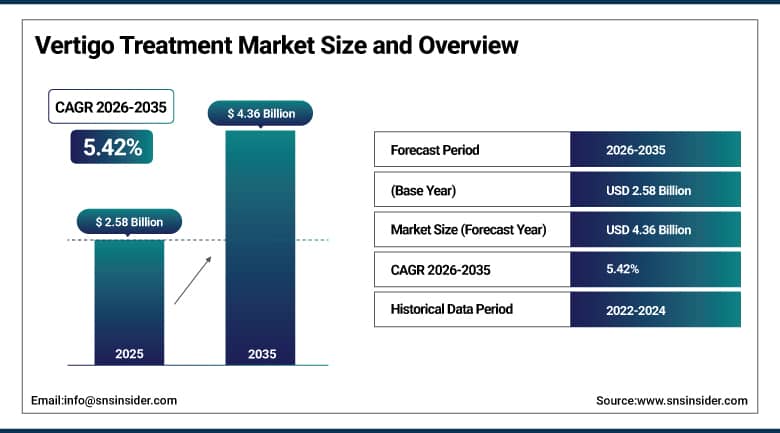
The Vertigo Treatment Market was valued at USD 2.58 Billion in 2025 and is expected to reach USD 4.36 Billion by 2035, growing at a CAGR of 5.42% from 2026 to 2035.
The Vertigo Treatment Market is witnessing constant growth owing to increasing incidence of vestibular disorders amongst the aging population, awareness about fall hazards caused by vertigo, and innovations in pharmacological as well as non-pharmacological treatment methods. Vertigo – a disorienting experience of movement – is usually treated using a multi-step strategy including drugs that suppress the vestibular system, canalith repositioning, rehabilitation, and surgery where applicable. The care process involves general practitioner consultation, ENT specialists and neurologists, and tertiary hospital visits.
⮞In December 2025, Sound Pharmaceuticals announced that the U.S. FDA had granted Breakthrough Therapy Designation to its investigational oral drug SPI-1005 for hearing loss associated with Ménière’s disease. The company reported positive hearing-related results from its pivotal Phase III trial; the designation does not constitute FDA marketing approval.
To Get More Information On Vertigo Treatment Market - Request Free Sample Report
Vertigo Treatment Market Trends:
-
Rising adoption of app-delivered vestibular rehabilitation programs is reshaping post-diagnosis care pathways worldwide.
-
Growing use of intratympanic and sustained-release drug-delivery platforms is expanding treatment options for Meniere's disease.
-
Increasing integration of video head impulse testing and portable videonystagmography is compressing diagnostic timelines in specialist clinics.
-
Expanding reimbursement coverage for prescription digital therapeutics is accelerating adoption of software-based balance rehabilitation.
-
Strategic collaborations between pharmaceutical manufacturers and diagnostic device companies are driving bundled, outcome-based treatment protocols.
U.S. Vertigo Treatment Market Outlook:
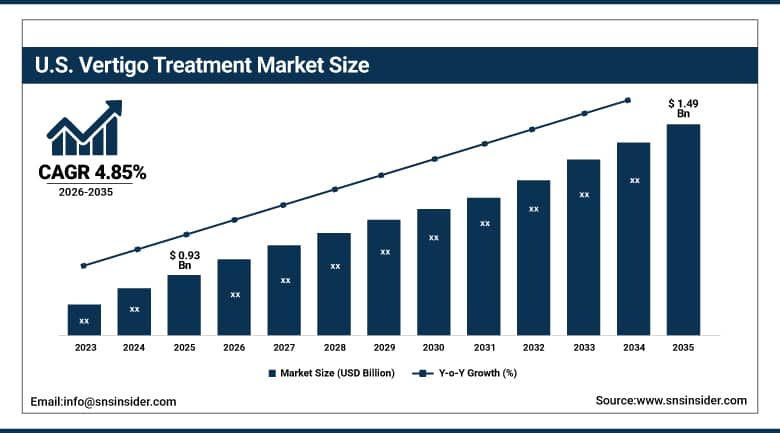
The U.S. Vertigo Treatment Market was valued at USD 0.93 Billion in 2025 and is projected to reach USD 1.49 Billion by 2035, growing at a CAGR of 4.85% during 2026–2035.
Healthcare facilities and clinics specializing in this field are progressively enhancing their capabilities in diagnosing and treating vertigo. Such an increase can be associated with increasing awareness of the costs related to fall injuries among seniors, growing prevalence of vestibular function test devices, as well as ongoing FDA clearances for digital and pharmaceutical treatment options. Establishment of specialized balance and dizziness clinics at large hospitals and expanding Medicare coverage of vestibular rehabilitation therapy involving several visits is driving the demand for standardized approaches to vertigo treatment throughout the United States.
⮞In February 2025, researchers published a U.S. clinical trial evaluating vestibular rehabilitation initiated in emergency departments for patients with dizziness and vertigo. The study examined a structured assessment and treatment pathway, supporting further evaluation of early vestibular rehabilitation in acute-care settings.
Vertigo Treatment Market Segment Analysis:
-
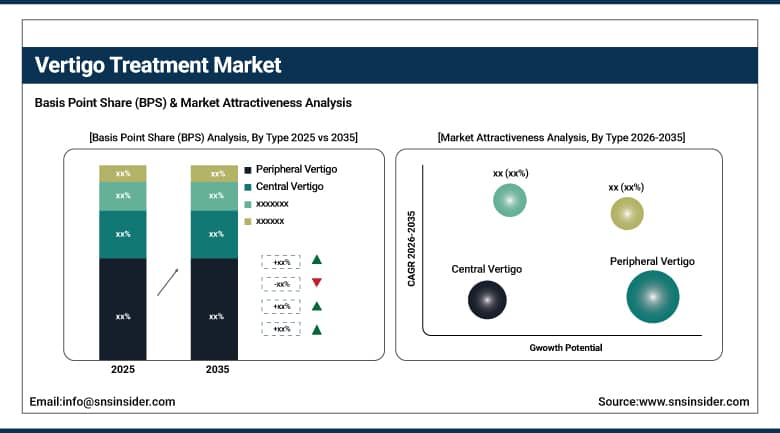
By Type, Peripheral Vertigo dominated the Vertigo Treatment Market with a 61.20% share in 2025, while Central Vertigo is the fastest-growing type segment with a CAGR of 7.35% from 2026–2035.
-
By Treatment Type, Medication dominated the Vertigo Treatment Market with a 66.80% share in 2025, while Surgery is the fastest-growing treatment segment with a CAGR of 7.90% from 2026–2035.
-
By Route of Administration, Oral dominated the Vertigo Treatment Market with a 54.30% share in 2025, while Parenteral is the fastest-growing route segment with a CAGR of 7.60% from 2026–2035.
-
By End User, Hospitals dominated the Vertigo Treatment Market with a 43.40% share in 2025, while Ambulatory Surgical Centres is the fastest-growing end-user segment with a CAGR of 9.75% from 2026–2035.
By Type, Peripheral Vertigo led the market, while Central Vertigo is the fastest-growing segment.
Peripheral Vertigo was the highest revenue generating segment with 61.20% in 2025 Vertigo Treatment Market. The reason behind is that benign paroxysmal positional vertigo, vestibular neuritis, labyrinthitis, and Meniere’s disease are the most common causes of dizziness diagnoses in all clinical practices. Management of peripheral vertigo involves treatment with inexpensive and easily repeatable techniques such as canalith repositioning procedure, temporary use of vestibular suppressants, and habituation training. These methods of management are available in almost all general practitioner clinics, ENT clinics, and physiotherapy centers which make it a leading segment in both developed and developing healthcare markets. High frequency of positional vertigo will also contribute to its repeated visits during the forecasted period.
The Central Vertigo segment is projected to register the fastest CAGR of 7.35% during the forecast period 2026-2035, driven by rising stroke survival rates that leave a growing population of patients with persistent central vestibular deficits requiring long-term, multidisciplinary management. Improved clinical recognition of vestibular migraine as a distinct and treatable subtype, supported by growing use of CGRP-targeted therapies and dedicated neuro-otology referral pathways, is further accelerating diagnosis and treatment initiation among previously underdiagnosed patients. As imaging and differential-diagnosis protocols continue to improve across hospital and specialty-clinic settings, central vertigo cases historically misclassified as benign positional dizziness are increasingly being routed into appropriate, higher-value treatment pathways, supporting above-average segment growth relative to the broader Vertigo Treatment Market.
⮞In March 2026, researchers at the University of California, San Francisco published a retrospective case series evaluating CGRP receptor antagonists in 17 patients with vestibular migraine. Most respondents reported relief of their most troublesome symptoms, providing preliminary evidence for further investigation of targeted migraine therapies in vestibular disorders.
By Treatment Type, Medication dominated the market, while Surgery is the fastest-growing segment.
In 2025, the Medication segment dominated the Vertigo Treatment Market with a 66.80% share of total sales. The reason behind such high share can be attributed to the widespread availability of proven antihistamine, anticholinergic, benzodiazepine, and betahistine medication that keeps on working as a primary line of treatment for all types of vertigo. Medication works as a primary treatment due to its low cost, ease of administration, and extensive prescriber knowledge and generic production capability in both developed and developing countries. In addition, competition in terms of pricing of generics and continuous procurement through tenders in Europe and Asia-Pacific also contribute to the volume lead despite lower value growth compared to other formats of treatment.
The Surgical segment is expected to register the fastest growth rate with a CAGR of 7.90% during 2026-2035. The primary driver behind the growing popularity of surgical procedures is an increase in referrals of refractory Menière’s disease and chronic peripheral vertigo that is resistant to medical treatment. With the progress in minimally invasive procedures, such as intratympanic drug delivery and endolymphatic sac decompression, along with advancements in anesthesia techniques used on an outpatient basis, more procedures can be done out of the hospital theater environment and in more cost-effective surgical facilities. The trend positively impacts the financial aspect of the procedure for both parties and improves access of patients to the surgical treatment.
⮞In July 2026, Sound Pharmaceuticals announced completion of enrollment in its second, open-label Phase III study of SPI-1005 for Ménière’s disease. The continued clinical program reflects investment in investigational pharmacological approaches for difficult-to-treat inner-ear disorders, rather than an expansion of approved surgical treatments.
By Route of Administration, Oral led the market, while Parenteral is the fastest-growing segment.
In 2025, the Oral segment was at the forefront of the Vertigo Treatment market share with 54.30%, due to the ease of administration, self-administration capability, and wide affordability of the oral drugs in comparison to parenteral or expert-administered drugs. Oral antihistamine, anticholinergic, and betahistine medications remain the common first line treatment for acute and continuous vertigo attacks. As such, the patients are able to initiate treatment without any clinical supervision and hence easing the burden of emergency departments and specialized clinics, while achieving high compliance levels. Moreover, an active production infrastructure of generic oral antivertigo drugs in North America, Europe, and Asia Pacific contributes to the continued dominance of this segment in terms of volume.
The Parenteral segment is projected to grow at the fastest CAGR of 7.60% during the forecast period 2026-2035, supported by rising adoption of intratympanic corticosteroid and gentamicin injections for refractory Meniere's disease and vestibular neuritis cases requiring targeted, high-concentration local delivery. Parenteral administration allows clinicians to bypass systemic sedation and first-pass metabolism concerns associated with oral vestibular suppressants, making it an increasingly preferred option for patients with acute, severe presentations requiring rapid symptom control in hospital and specialty-clinic settings. Continued clinical trial activity around sustained-release intratympanic gel formulations is expected to further expand parenteral treatment volumes across the forecast period.
⮞In April 2026, Spiral Therapeutics announced USD 27 million in Series B financing and a strategic partnership with Advanced Bionics to support its inner-ear therapeutic pipeline. Its SPT-2101 program, involving locally administered dexamethasone for Ménière’s disease, illustrates ongoing investment in targeted drug-delivery approaches. The treatment remains investigational.
By End User, Hospitals led the market, while Ambulatory Surgical Centres is the fastest-growing segment.
The Hospitals segment dominated the Vertigo Treatment Market with a 43.40% revenue share in 2025, as hospitals remain the primary entry point for acute vertigo presentations requiring urgent stroke rule-out protocols, advanced imaging, and multi-specialist coordination between emergency medicine, neurology, and otolaryngology departments. The concentration of diagnostic infrastructure, including video head impulse testing and rotary chair assessment systems, within hospital-based neuro-otology departments continues to support their central role in complex case management, particularly for patients presenting with ambiguous or high-risk dizziness symptoms that require immediate clinical evaluation and inpatient monitoring capability.
The Ambulatory Surgical Centres segment is anticipated to register the fastest CAGR of 9.75% during the forecast period 2026-2035, as payers increasingly redirect scheduled vertigo-related procedures away from costlier inpatient hospital settings toward outpatient facilities offering comparable clinical outcomes at significantly lower cost. Ambulatory centres are particularly well positioned to capture growing volumes of intratympanic injection procedures and select canal-plugging surgeries as anesthesia protocols continue to improve, allowing same-day discharge for an expanding range of vertigo interventions and reinforcing sustained above-average growth for this end-user category throughout the forecast period.
⮞In May 2026, researchers from U.S. tertiary-care centres published a retrospective study comparing cochlear implantation combined with endolymphatic sac decompression or labyrinthectomy in patients with refractory Ménière’s disease. The findings provide clinical evidence on specialized surgical management, although the small study did not establish a shift toward ambulatory surgical centres.
Regional Analysis:
|
Region |
Major Country |
Share within Region, 2025 (%) |
|
North America |
United States |
84.50% |
|
Europe |
Germany |
24.80% |
|
Asia Pacific |
China |
42.30% |
|
Middle East & Africa |
Saudi Arabia |
29.40% |
|
Latin America |
Brazil |
39.60% |
North America Vertigo Treatment Market Insights
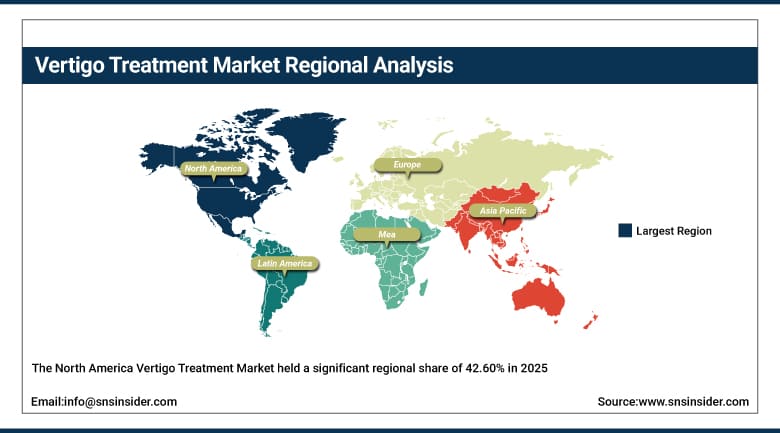
The North America Vertigo Treatment Market held a significant regional share of 42.60% in 2025, driven by the region's comprehensive insurance coverage for vestibular diagnostic and rehabilitation services, high concentration of ENT and neuro-otology specialists, and early adoption of digital balance-assessment and rehabilitation technologies. Established CPT coding infrastructure for vestibular function testing and canalith repositioning procedures gives clinicians a billable pathway that supports sustained investment in diagnostic capacity, while growing Medicare and commercial payer coverage for multi-session vestibular rehabilitation therapy continues to expand access to structured, protocol-driven treatment across both urban and suburban healthcare markets.
United States emerged as the dominant player in the North America Vertigo Treatment Market in 2025, holding an 84.50% share of the regional market. It was due to the strong specialist network present in the country, extensive reimbursement coverage provided by commercial and government insurance companies, and active FDA clearances for various vertigo treatment solutions, which include pharmacologic solutions and software as well. On the other hand, Canada has been contributing towards regional market growth through increased provincial funding for dizziness clinic services and enhanced cross-border usage of telemedicine-assisted vestibular rehab programs.
⮞In March 2026, University of California, San Francisco researchers reported a clinical case series examining the use of gepants for vestibular migraine, highlighting interest in more targeted management of complex dizziness disorders. The authors emphasized preliminary observations rather than evidence sufficient for a new treatment approval.
Get Customized Report as Per Your Business Requirement - Enquiry Now
Europe Vertigo Treatment Market Insights
The Europe region was a major contributor to the Vertigo Treatment Market in 2025, supported by the region's diverse statutory reimbursement systems, well-established generic pharmaceutical manufacturing base, and growing national investment in vestibular rehabilitation networks across both Western and Northern European healthcare systems. Widespread use of betahistine across major European markets, despite its lack of regulatory approval in certain other regions, reflects the continent's distinct prescribing culture and continues to anchor pharmacological treatment volumes even as national health bodies increasingly prioritize generic substitution to control costs.
Germany is one of the major markets in Europe owing to its robust statutory reimbursement framework for digital therapeutics and well-developed neuro-otology specialist network, which together support strong adoption of both pharmacological and software-based vertigo interventions. Other countries such as the United Kingdom, France, and Italy are also contributing to regional growth through expanding community-based balance clinics and rising aging-population-driven demand for chronic vestibular disorder management.
⮞In September 2026, a multicentre, double-blind randomized study published in The Lancet Regional Health – Europe compared endolymphatic duct blockage with endolymphatic sac decompression for refractory Ménière’s disease. Researchers found no significant difference in vertigo control between the two procedures, reinforcing the importance of evidence-based surgical selection.
Asia Pacific Vertigo Treatment Market Insights
The Asia Pacific Vertigo Treatment Market is expected to witness the fastest growth rate during the forecast period 2026-2035, driven by rapidly expanding hospital and specialty-clinic infrastructure, rising healthcare expenditure across China and India, and growing awareness of balance-disorder symptoms among the region's aging urban populations. Government-backed healthcare investment programs are expanding tertiary ENT and neurology capacity across major and emerging Asia Pacific economies, improving diagnostic access for patients who previously had limited pathways to specialist vestibular care.
China is one of the main growth drivers in the Asia Pacific Vertigo Treatment Market, owing to substantial government healthcare investment expanding hospital diagnostic capacity and a large and growing patient pool requiring vestibular disorder management. India, supported by an expanding domestic pharmaceutical manufacturing base producing affordable antivertigo generics, and Japan, with one of the highest rates of Meniere's disease diagnosis globally due to its aging demographic profile, are also contributing meaningfully to regional market growth.
⮞In March 2026, researchers at Tianjin Fourth Central Hospital in China published findings from a randomized study assessing vestibular rehabilitation in patients with residual dizziness following repositioning treatment for benign paroxysmal positional vertigo. The research provides additional clinical evidence for rehabilitation-based management of persistent vestibular symptoms.
Middle East & Africa and Latin America Vertigo Treatment Market Insights
Middle East & Africa and Latin American regions are gradually expanding vertigo treatment adoption as healthcare investment grows across both regions, supported by increasing government focus on specialty clinic infrastructure and growing insurance coverage for neurological and otology services. Rising medical tourism inflows into Gulf Cooperation Council countries are further supporting demand for advanced vestibular diagnostic and treatment capacity in select Middle Eastern markets.
Brazil is set to be a prominent Latin American market, supported by its public healthcare referral system directing dizziness cases into neurology and otolaryngology pathways alongside a growing domestic generic pharmaceutical manufacturing base. Saudi Arabia is investing in modern specialty healthcare infrastructure under national health transformation initiatives, gradually increasing demand for vertigo diagnostic and treatment services across its expanding hospital network.
⮞In September 2026, Brazilian researchers published a clinical study assessing vestibular rehabilitation for young adults with motion-sickness symptoms. Improvements in several posturography measures supported further investigation of structured balance rehabilitation, although the small study did not establish broad treatment effectiveness.
Market Dynamics:
Growth Drivers: Rising ageing population and expanding vestibular rehabilitation access driving market growth
The rising global geriatric population, combined with well-documented links between age-related vestibular decline and fall-related injury, is among the primary drivers of the Vertigo Treatment Market. Vestibular dysfunction is a recognized contributing factor in a substantial share of falls among adults over 65, which remain the leading cause of injury-related hospitalization in this age group, reframing effective vertigo management as a cost-avoidance priority for health systems rather than a purely symptomatic convenience, and encouraging payers to expand coverage for both diagnostic and rehabilitative vestibular services.
Regulatory clearance of prescription digital therapeutics for chronic vestibular hypofunction has opened a new reimbursement pathway that did not exist several years ago, broadening the treatment mix available to patients and reinforcing personalized, outcome-driven care pathways. Continued expansion of vestibular rehabilitation therapist networks, faster diagnostic imaging adoption including video head impulse testing, and growing payer coverage for balance-disorder services across North America and Europe are further supporting sustained demand across the forecast period, as vertigo treatment increasingly shifts from empiric prescribing toward protocol-driven, evidence-based care.
⮞In June 2026, Swedish researchers published a multicentre randomized trial comparing internet-based vestibular rehabilitation with written exercise instructions following acute vertigo. Both groups improved, but the digital program was not statistically superior, suggesting that expanding access to appropriate exercises may be more important than the delivery format alone.
Restraints: Generic price erosion and diagnostic misclassification limiting market expansion
One of the most critical obstacles to Vertigo Treatment Market growth is persistent price erosion across the first-line pharmacological segment, where long off-patent molecules such as meclizine, betahistine, and prochlorperazine face continuous downward pricing pressure from generic competition and tender-based procurement systems across Europe and Asia Pacific. This dynamic means that volume growth in the medication segment consistently outpaces value growth, limiting overall revenue expansion even as patient treatment numbers continue to rise steadily across most major markets.
Diagnostic misclassification in primary care settings, where benign positional vertigo is frequently confused with more serious central or cerebrovascular causes of dizziness and vice versa, continues to inflate imaging expenditures without generating proportional category revenue while simultaneously delaying appropriate treatment initiation for many patients. Additionally, limited reimbursement coverage for digital therapeutics outside a small number of pioneering markets, combined with a persistent shortage of trained neuro-otologists across low- and middle-income regions, continues to constrain broader market expansion despite strong underlying demand.
⮞In January 2026, a French multicentre retrospective study reported vertigo-control outcomes following endolymphatic sac surgery in 45 patients with refractory Ménière’s disease. Approximately two-thirds achieved the study's criteria for successful vertigo control, demonstrating continued clinical interest in specialized interventions while highlighting the need for stronger prospective evidence.
Opportunities: Intratympanic delivery innovation and emerging-market capacity expansion creating new growth avenues
The growing pipeline of intratympanic and sustained-release drug-delivery platforms targeting Meniere's disease represents one of the clearest premium-pricing opportunities in the Vertigo Treatment Market, as local delivery bypasses the systemic sedation concerns that remain the leading tolerability complaint associated with oral vestibular suppressants. Continued clinical-stage investment in otoprotection and gene-therapy candidates targeting inner-ear hair-cell function, though still years from commercial approval, is already reshaping investor interest and long-term competitive positioning across the biotechnology segment of this market.
Expanding tertiary ENT and neurology capacity across India, Brazil, and Saudi Arabia under national health investment programmes presents a substantial emerging-market growth opportunity for companies able to co-locate diagnostic equipment with clinician training partnerships ahead of the anticipated volume wave. Rising interest in wearable gait and balance-monitoring sensors that generate longitudinal fall-risk datasets valuable to payers also presents a significant opportunity to convert one-time device sales into recurring subscription-based analytics revenue, a business model with limited established competition to date.
Recent Developments:
-
2025: Sound Pharmaceuticals received FDA Breakthrough Therapy Designation for SPI-1005, its investigational therapy targeting hearing loss and vertigo symptoms associated with Meniere's disease, following completion of a pivotal Phase 3 trial enrollment.
-
2025: Sensorion SA reported positive interim safety data for its SENS-401 otoprotective candidate in patients with acute unilateral vestibulopathy, advancing its small-molecule inner-ear pipeline toward later-stage trials.
-
2026: Zydus Lifesciences received U.S. FDA approval for its generic meclizine hydrochloride tablets manufactured at its Ahmedabad facility, expanding affordable access to first-line antivertigo therapy across the U.S. market.
-
2026: Dr. Reddy's Laboratories finalized an agreement with Johnson & Johnson to acquire rights to the Stugeron (cinnarizine) brand across select EMEA markets, strengthening its antihistamine-based vertigo treatment portfolio.
-
2026: A leading U.S. health system launched an expanded network of dedicated balance and dizziness clinics integrating portable video head impulse testing with structured vestibular rehabilitation protocols to reduce diagnosis-to-therapy latency.
-
2025: GSK expanded its prochlorperazine-based antivertigo formulation portfolio across select European markets to strengthen its symptomatic vestibular care franchise amid rising generic competition.
Vertigo Treatment Market Key Players are:
-
Bayer AG
-
Abbott Laboratories
-
Novartis AG
-
Merck & Co., Inc.
-
Teva Pharmaceutical Industries Ltd.
-
Viatris Inc.
-
Lupin Ltd.
-
Cipla Ltd.
-
Sun Pharmaceutical Industries Ltd.
-
Zydus Lifesciences Ltd.
-
Glenmark Pharmaceuticals Ltd.
-
Amneal Pharmaceuticals, Inc.
-
Sensorion SA
-
Sound Pharmaceuticals, Inc.
-
Altamira Therapeutics Ltd.
-
Johnson & Johnson
-
AdvaCare Pharma
Vertigo Treatment Market Report Scope:
| Report Attributes | Details |
|---|---|
| Market Size in 2025 | USD 2.58 Billion |
| Market Size by 2035 | USD 4.36 Billion |
| CAGR | CAGR of 5.42% From 2026 to 2035 |
| Base Year | 2025 |
| Forecast Period | 2026-2035 |
| Historical Data | 2022-2024 |
| Report Scope & Coverage | Market Size, Segments Analysis, Competitive Landscape, Regional Analysis, DROC & SWOT Analysis, Forecast Outlook |
| Key Segments | • By Type (Peripheral Vertigo, Central Vertigo) • By Treatment Type (Medication, Surgery) • By Route of Administration (Oral, Topical, Parenteral, Others) • By End User (Hospitals, Specialty Clinics, Ambulatory Surgical Centres, Homecare / Tele-Rehabilitation Settings) |
| Regional Analysis/Coverage | North America (US, Canada), Europe (Germany, UK, France, Italy, Spain, Russia, Poland, Rest of Europe), Asia Pacific (China, India, Japan, South Korea, Australia, ASEAN Countries, Rest of Asia Pacific), Middle East & Africa (UAE, Saudi Arabia, Qatar, South Africa, Rest of Middle East & Africa), Latin America (Brazil, Argentina, Mexico, Colombia, Rest of Latin America). |
| Company Profiles | Pfizer Inc., GSK plc, Sanofi S.A., Bayer AG, Abbott Laboratories, Novartis AG, Merck & Co., Inc., Teva Pharmaceutical Industries Ltd., Viatris Inc., Lupin Ltd., Cipla Ltd., Sun Pharmaceutical Industries Ltd., Zydus Lifesciences Ltd., Glenmark Pharmaceuticals Ltd., Amneal Pharmaceuticals, Inc., Sensorion SA, Sound Pharmaceuticals, Inc., Altamira Therapeutics Ltd., Johnson & Johnson, AdvaCare Pharma |

Frequently Asked Questions
Key players in the Vertigo Treatment Market include Pfizer Inc., GSK plc, Sanofi S.A., Bayer AG, and Abbott Laboratories, among others.
Key opportunities in the Vertigo Treatment Market include intratympanic delivery innovation, emerging-market healthcare capacity expansion, digital therapeutics, and wearable balance-monitoring technologies.
The market is driven by the rising ageing population, increasing prevalence of vestibular disorders, and expanding access to vestibular rehabilitation and advanced diagnostic technologies.
The Peripheral Vertigo segment dominated the Vertigo Treatment Market, accounting for approximately 61.20% market share in 2025.
The North America region dominated the Vertigo Treatment Market in 2025 with a 42.60% share, supported by specialist infrastructure, reimbursement coverage, and advanced vestibular care technologies.
