
Alcohol-Based Disinfectants Market Report Scope & Overview:
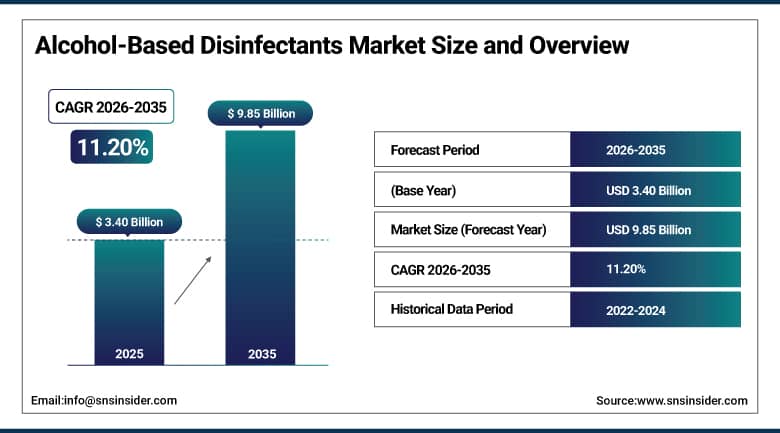
The Alcohol-Based Disinfectants Market was valued at USD 3.40 Billion in 2025 and is expected to reach USD 9.85 Billion by 2035, growing at a CAGR of 11.20% from 2026 to 2035.
The Alcohol-Based Disinfectants Market continues to grow at a consistent and steady pace owing to increasing hygiene consciousness in the healthcare, food manufacturing, hotel, and general surroundings sectors, increased purchases of products that prevent infections by institutions, and increasing consumer inclination towards fast acting antimicrobial preparations. The alcohol-based disinfectants, mainly comprising of ethanol, isopropyl alcohol, or n-propanol as the main active agents, find their applications in hand sanitizer preparations, disinfectant spray and wipes for surfaces, and gels for quick elimination of pathogens. Furthermore, the growth of this market segment is being encouraged by increasing expenditure on infection control in healthcare facilities, increased sanitary requirements in the food and beverages industry, and innovation in skin-friendly, quick drying alcohol formulations.
3M Company and Ecolab Inc. both expanded their alcohol-based hand sanitizer and surface disinfectant production capacity in 2026 to meet growing institutional demand amid tightening infection control regulation across North America, Europe, and Asia Pacific healthcare and food-service sectors.
To Get More Information On Alcohol-Based Disinfectants Market - Request Free Sample Report
Alcohol-Based Disinfectants Market Trends:
-
Rising demand for skin-friendly, moisturizer-infused hand sanitizer formulations is improving user compliance across frequent-use settings.
-
Growing adoption of touchless dispensing systems is expanding institutional deployment of alcohol-based hand sanitizers.
-
Increasing preference for fast-drying, residue-free surface disinfectant sprays is driving demand across food-service and hospitality sectors.
-
Expanding e-commerce and retail distribution channels are broadening consumer access to alcohol-based disinfectant products.
-
Strategic capacity expansions by major hygiene product manufacturers are strengthening supply reliability for healthcare and institutional buyers.
U.S. Alcohol-Based Disinfectants Market Outlook:
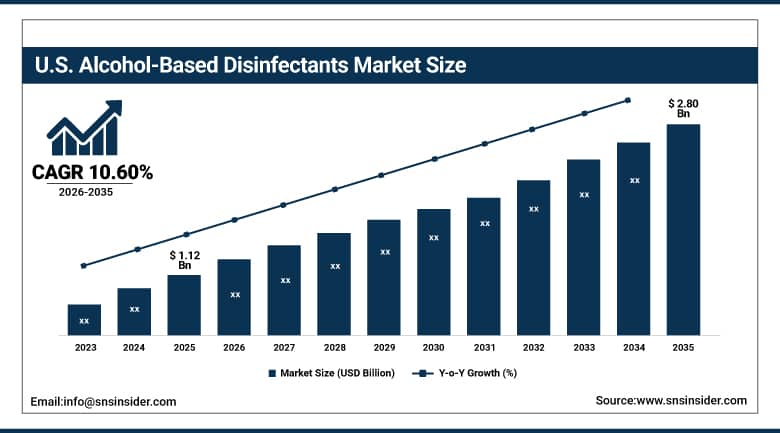
The U.S. Alcohol-Based Disinfectants Market was valued at USD 1.12 Billion in 2025 and is projected to reach USD 2.80 Billion by 2035, growing at a CAGR of 10.60% during 2026-2035.
In the U.S. the leading healthcare systems, food-service operators, and institutional facility managers continue to strengthen their infection prevention protocols due to CDC-aligned hygiene guidance, growing recognition of cross-contamination risks in high-traffic environments, and increased consumer awareness of hand and surface hygiene following heightened pandemic-era hygiene habits. The growing emphasis on touchless, high-compliance dispensing infrastructure, supported by expanding institutional procurement contracts among hospital systems and retail chains, helps to ensure continued demand for alcohol-based disinfectant products. Rising private-sector investment in domestic hand sanitizer and surface disinfectant manufacturing capacity further reinforces the country's position as the largest contributor to the North America Alcohol-Based Disinfectants Market.
In 2026, GOJO Industries expanded its U.S. manufacturing capacity for PURELL-branded alcohol-based hand sanitizer through the addition of a new production line, strengthening its ability to supply healthcare systems and institutional buyers across domestic markets.
Alcohol-Based Disinfectants Market Segment Analysis:
-
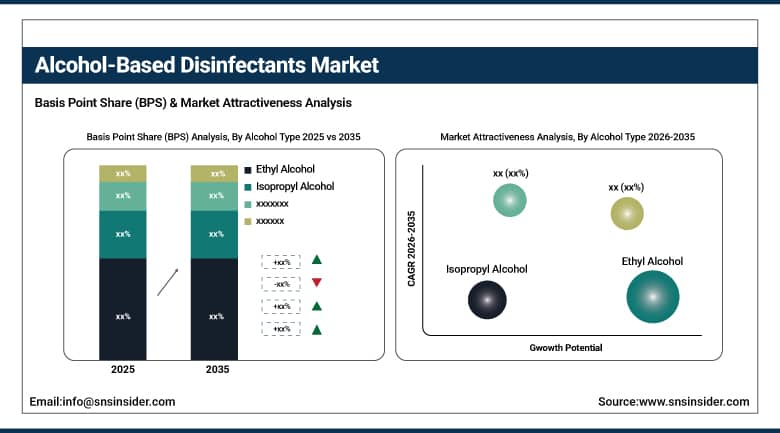
By Alcohol Type, Ethyl Alcohol dominated the Alcohol-Based Disinfectants Market with a 44.60% share in 2025, while Isopropyl Alcohol is the fastest-growing alcohol type segment with a CAGR of 12.80% from 2026-2035.
-
By Form, Liquid dominated the Alcohol-Based Disinfectants Market with a 39.80% share in 2025, while Gel is the fastest-growing form segment with a CAGR of 13.20% from 2026-2035.
-
By Application, Hand Sanitizers dominated the Alcohol-Based Disinfectants Market with a 54.60% share in 2025, while Surface Disinfectants is the fastest-growing application segment with a CAGR of 12.40% from 2026-2035.
-
By End-Use, Healthcare dominated the Alcohol-Based Disinfectants Market with a 41.20% share in 2025, while Commercial & Institutional is the fastest-growing end-use segment with a CAGR of 13.60% from 2026-2035.
By Alcohol Type, Ethyl Alcohol dominated the market, while Isopropyl Alcohol is the fastest-growing segment.
The Ethyl Alcohol segment was the leading contributor in the Alcohol-Based Disinfectants Market. This alcohol type category accounts for being the largest segment due to its broad regulatory acceptance, favorable safety profile for skin contact applications, and proven rapid antimicrobial efficacy across the 60 to 95 percent concentration range recommended by health authorities for hand hygiene and surface sanitation. The wide usage of ethyl alcohol in pharmaceutical grade hand sanitizers and personal care products that lie in the vicinity of cosmetics, together with its efficient and reliable sources from all around the world, has helped it maintain its dominant position in the production of hygiene products over other types of alcohol.
The Isopropyl Alcohol segment is expected to witness the highest CAGR during the forecast period 2026-2035. Increasing demand for cost-effective and fast evaporation of disinfectant formulas in industries, disinfection of healthcare instruments, and electronics cleaning has been increasing the use of isopropyl alcohol at a rapid pace. Rising approval of isopropyl alcohol-formulated solutions in surface and medical devices disinfection along with rising adoption in clean rooms and laboratories sanitation is adding momentum to the segment demand. Constant development in high purity and low residue of isopropyl alcohol has been contributing to the above average growth of the segment compared to other alcohol disinfectants segment.
By Form, Liquid dominated the market, while Gel is the fastest-growing segment.
The Liquid category held a major market share of the Alcohol-Based Disinfectants Market in 2025. The dominance of the liquid formats is due to the fact that they provide the highest cost-efficiency and flexibility as an application format in sprayers, pourers, and bulk dispensing systems which are widely used in healthcare facilities, foodservice settings, and industrial sanitation activities. This format’s applicability for high-volume institutional dispensing systems and constant development of new fast-drying and low-residue liquid products have helped maintain the leading role of this format purchased by hospitals, food processors, and professional cleaning companies in hygiene markets worldwide.
The Gel segment is anticipated to grow at the fastest rate during the forecast period 2026-2035. Increasing consumer preference for portable, spill-resistant hand sanitizer gels suitable for on-the-go personal use is driving adoption across retail, travel, and workplace hygiene applications. Growing investment in moisturizing, skin-friendly gel formulations that reduce the drying effects of frequent alcohol exposure, combined with expanding availability of gel-based products through e-commerce and convenience retail channels, is further accelerating segment growth across consumer-facing hygiene product categories worldwide.
By Application, Hand Sanitizers dominated the market, while Surface Disinfectants is the fastest-growing segment.
The Hand Sanitizers segment dominated the Alcohol-Based Disinfectants Market in 2025. Hand sanitizer applications remain the largest category owing to their essential role in personal hand hygiene across healthcare, retail, hospitality, and public transportation environments, where alcohol-based formulations provide rapid, water-free antimicrobial action recommended by public health authorities when soap and water access is limited, driving sustained procurement of both liquid and gel hand sanitizer products by institutions and individual consumers across major hygiene-conscious markets worldwide.
The Surface Disinfectants segment is expected to register the fastest CAGR during the forecast period 2026-2035. There is growing emphasis on high-touch surface sanitation within healthcare institutions, food-service locations, and public transport, in addition to the increasing number of commercial cleaning services contracts, resulting in high demand for alcohol-based disinfection sprays and wipes. This is due to the fact that such sanitizers are quick-acting and non-residue leaving solutions suitable for rapid sanitation procedures.
By End-Use, Healthcare dominated the market, while Commercial & Institutional is the fastest-growing segment.
The Healthcare segment dominated the Alcohol-Based Disinfectants Market in 2025. Healthcare applications remain the largest category owing to stringent infection control protocols mandated across hospitals, clinics, and long-term care facilities, which require continuous, high-volume procurement of alcohol-based hand sanitizers and surface disinfectants to minimize healthcare-associated infection risk, driving sustained demand from hospital systems, ambulatory care centers, and pharmaceutical distribution networks across major healthcare markets including the United States, Germany, and Japan.
The Commercial & Institutional segment is expected to register the fastest CAGR during the forecast period 2026-2035. The increase in investment by corporations and institutions in infrastructure related to hygiene in the workplace, the rise in the use of touch-free dispensers in offices, retail outlets, and educational establishments, and the increase in facility management contracts which focus on compliance with hygiene regulations have created a high demand for alcohol-based sanitizers, as commercial property owners and institutional purchasers prioritize the health of their tenants.
Regional Insights
|
Region |
Major Country |
Share within Region, 2025 (%) |
|---|---|---|
|
North America |
United States |
86.40% |
|
Europe |
Germany |
24.80% |
|
Asia Pacific |
China |
36.60% |
|
Middle East & Africa |
Saudi Arabia |
28.40% |
|
Latin America |
Brazil |
40.20% |
North America Alcohol-Based Disinfectants Market Insights
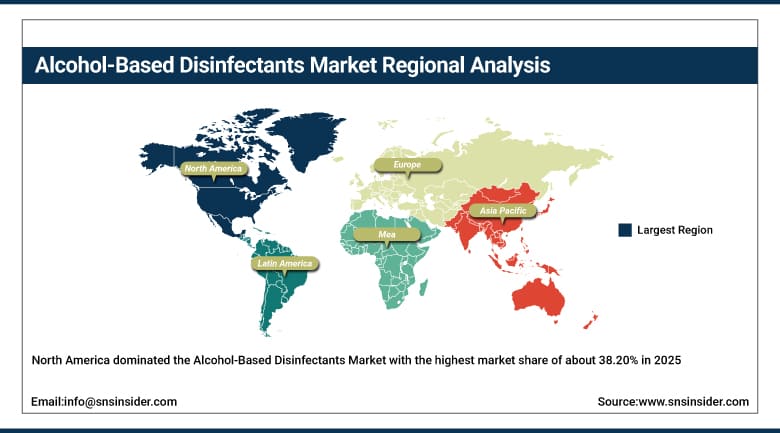
North America dominated the Alcohol-Based Disinfectants Market with the highest market share of about 38.20% in 2025, owing to the region's well-established healthcare infrastructure, stringent CDC and OSHA-aligned hygiene compliance requirements, and sustained institutional procurement of hand sanitizers and surface disinfectants across hospitals, food-service establishments, and commercial facilities. The sophisticated nature of the regulations that have been put in place for infection control procedures in tandem with the availability of retail and online distribution systems ensure continued use of alcohol-based disinfection products.
The US was the leading country within the North America Alcohol-Based Disinfectants Market in 2025, driven by extensive healthcare and food-service infrastructure, dense retail distribution networks, and strong institutional hygiene compliance culture. Canada is contributing to regional growth through its own expanding healthcare facility investment and growing consumer adoption of alcohol-based hygiene products across retail and workplace settings.
Get Customized Report as Per Your Business Requirement - Enquiry Now
Asia Pacific Alcohol-Based Disinfectants Market Insights
The Asia Pacific Alcohol-Based Disinfectants Market is expected to witness the fastest growth rate during the forecast period 2026-2035, registering a CAGR of 13.40%. The market growth is driven by rapidly expanding healthcare infrastructure investment, growing middle-class hygiene awareness across densely populated urban centers, and increasing government public health campaigns promoting hand and surface hygiene as the region's major and emerging economies pursue stronger infection control standards alongside continued urbanization and retail sector expansion.
China is one of the main growth drivers in the Asia Pacific Alcohol-Based Disinfectants Market, owing to its extensive domestic manufacturing base and rapidly growing e-commerce distribution capability supporting both local and export-oriented customers. India and Japan, both major healthcare and consumer hygiene product markets, are also contributing to regional growth through rising investment in institutional hygiene infrastructure and growing adoption of alcohol-based disinfectants across retail and healthcare channels.
Europe Alcohol-Based Disinfectants Market Insights
The Europe region was a major contributor to the Alcohol-Based Disinfectants Market in 2025, expected to register comparatively steady demand for compliance-driven hygiene products during the forecast period. This is owing to the regulatory focus placed by the region in preventing infections associated with health care under the EU biocidal product laws, the presence of well-developed manufacturing facilities for pharmaceuticals and hygiene products and the availability of healthcare and food service infrastructure among member states.
Germany is one of the major markets in Europe owing to its extensive healthcare and pharmaceutical manufacturing base, along with the presence of leading producers such as BODE Chemie GmbH serving both domestic and international healthcare customers. Other countries such as the United Kingdom, France, and Italy, home to significant healthcare and hospitality infrastructure, are also contributing to market growth through continued investment in institutional hygiene procurement and consumer hygiene product adoption.
Middle East & Africa and Latin America Alcohol-Based Disinfectants Market Insights
Middle East & Africa and Latin American regions are gradually expanding alcohol-based disinfectant adoption as healthcare infrastructure and retail distribution investment grows across both regions, supported by increasing institutional hygiene procurement and growing government focus on strengthening public health and infection control standards.
Brazil is set to be a prominent Latin American market fueled by its substantial healthcare and food-service sector requiring extensive hygiene product supply and growing domestic hygiene product manufacturing investment. The Middle East & Africa region has Saudi Arabia and the UAE investing in modern healthcare and hospitality infrastructure that is gradually increasing demand for alcohol-based disinfectants across their expanding institutional and retail hygiene markets.
Market Dynamics
Growth Drivers: Heightened hygiene awareness and institutional infection control mandates driving market growth
The rising institutional focus on infection prevention, expanding healthcare facility hygiene spending, and growing consumer awareness of hand and surface hygiene are among the primary drivers of the Alcohol-Based Disinfectants Market. Alcohol-based disinfectants provide healthcare facilities, food-service operators, and commercial buyers with the fast-acting, broad-spectrum antimicrobial capability required to minimize infection and contamination risk, improving compliance and operational hygiene standards across virtually every major healthcare, hospitality, food processing, and public facility application requiring reliable disinfection capability, from clinical hand hygiene through large-scale commercial surface sanitation.
Product innovation in skin-friendly, fast-drying formulations has significantly increased user compliance, with recent innovations improving moisturizing properties and reducing skin irritation across frequent-use consumer and institutional applications. Rising private-sector investment in dedicated hygiene product manufacturing capacity, growing integration of touchless dispensing systems into commercial and healthcare facilities, and continued expansion of retail and e-commerce distribution channels are further supporting demand across the forecast period, as manufacturers and institutional buyers continue strengthening capability against increasingly stringent hygiene compliance requirements.
Restraints: Raw material price volatility and flammability handling requirements limiting market expansion
The major challenge in relation to the market growth pertains to the price fluctuation of feedstock ethanol and isopropyl alcohol because it is closely connected to agricultural and petrochemical markets and has an effect on the costs of producing alcohol disinfectants. The thing is that producers have to use flexible purchasing policies in order to handle any changes in the costs of inputs, and it makes it difficult for small producers to provide competitive prices.
Moreover, the flammable nature of high-concentration alcohol formulations requires specialized storage, transportation, and handling protocols across different jurisdictions, directly impacting distribution logistics and causing regulatory compliance delays for both manufacturers and institutional buyers operating across multiple regions. Besides, the high technical requirements in terms of maintaining consistent antimicrobial efficacy while improving skin compatibility require considerable ongoing formulation research and development investment from disinfectant producers.
Opportunities: Expansion of skin-friendly formulations and touchless dispensing innovation creating new growth avenues
The increasing need for fast-acting, broad-spectrum disinfection capability across expanding healthcare and commercial facility operations, the rise of touchless and smart dispensing technology, and greater emphasis on skin-friendly formulation innovation due to increased consumer health awareness will provide ample growth opportunities in the Alcohol-Based Disinfectants Market. The need for compliance-driven hygiene capability across healthcare, food-service, and institutional operations will ensure future growth due to strict public health regulations worldwide.
There is immense potential for growth in the area of sustainable, plant-derived alcohol sourcing and biodegradable packaging that reduces environmental impact for manufacturers and environmentally conscious consumers. The increase in healthcare and retail infrastructure investment across emerging economies of Asia Pacific and Latin America, along with government efforts toward strengthening public health and hygiene standards, will drive growth in demand for advanced alcohol-based disinfectant formulations.
Recent Developments:
-
2026: 3M Company partnered with a leading touchless dispenser manufacturer to co-develop an integrated smart hand sanitizer dispensing system for commercial and healthcare facility deployment.
-
2025: Reckitt Benckiser introduced its Dettol Rapid Action surface disinfectant spray, offering fast-drying, residue-free formulation targeted at food-service and hospitality operators.
-
2026: Ecolab Inc. expanded its alcohol-based surface disinfectant production capacity with a new manufacturing line dedicated to institutional and healthcare facility customers.
Alcohol-Based Disinfectants Key Players are:
-
3M Company
-
Reckitt Benckiser Group plc
-
Procter & Gamble Co.
-
Unilever plc
-
BODE Chemie GmbH
-
DuPont de Nemours, Inc.
-
The Clorox Company
-
Diversey Holdings Ltd.
-
Medline Industries, LP
-
Betco Corporation
-
Zep Inc.
-
GOJO Industries, Inc.
-
Kimberly-Clark Corporation
-
STERIS plc
-
Contec Inc.
-
PDI Healthcare (Professional Disposables International, Inc.)
-
Metrex Research, LLC
-
Cardinal Health, Inc.
Alcohol-Based Disinfectants Market:
| Report Attributes | Details |
|---|---|
| Market Size in 2025 | USD 3.40 Billion |
| Market Size by 2035 | USD 9.85 Billion |
| CAGR | CAGR of 11.20% From 2026 to 2035 |
| Base Year | 2025 |
| Forecast Period | 2026-2035 |
| Historical Data | 2022-2024 |
| Report Scope & Coverage | Market Size, Segments Analysis, Competitive Landscape, Regional Analysis, DROC & SWOT Analysis, Forecast Outlook |
| Key Segments | • By Alcohol Type (Ethyl Alcohol, Isopropyl Alcohol, n-Propanol & Others) • By Form (Liquid, Gel, Wipes & Spray) • By Application (Hand Sanitizers, Surface Disinfectants & Others) • By End-Use (Healthcare, Household, Commercial & Institutional, Food & Beverage & Others) |
| Regional Analysis/Coverage | North America (US, Canada), Europe (Germany, UK, France, Italy, Spain, Russia, Poland, Rest of Europe), Asia Pacific (China, India, Japan, South Korea, Australia, ASEAN Countries, Rest of Asia Pacific), Middle East & Africa (UAE, Saudi Arabia, Qatar, South Africa, Rest of Middle East & Africa), Latin America (Brazil, Argentina, Mexico, Colombia, Rest of Latin America). |
| Company Profiles | 3M Company, Reckitt Benckiser Group plc, Procter & Gamble Co., Unilever plc, Ecolab Inc., BODE Chemie GmbH, DuPont de Nemours, Inc., The Clorox Company, Diversey Holdings Ltd., Medline Industries, LP, Betco Corporation, Zep Inc., GOJO Industries, Inc., Kimberly-Clark Corporation, STERIS plc, Whiteley Corporation, Contec Inc., PDI Healthcare (Professional Disposables International, Inc.), Metrex Research, LLC, Cardinal Health, Inc. |

Frequently Asked Questions
The Ethyl Alcohol segment dominated the Alcohol-Based Disinfectants Market in 2025, accounting for approximately 44.60% market share.
The North America region dominated the Alcohol-Based Disinfectants Market in 2025, holding a market share of 38.20%, driven by well-established healthcare infrastructure and stringent hygiene compliance requirements.
The market is driven by heightened hygiene awareness, expanding healthcare facility infection control spending, rising institutional procurement of hygiene products, and continued innovation in skin-friendly disinfectant formulations.
