
Primary Sclerosing Cholangitis (PSC) Market Report Scope & Overview:
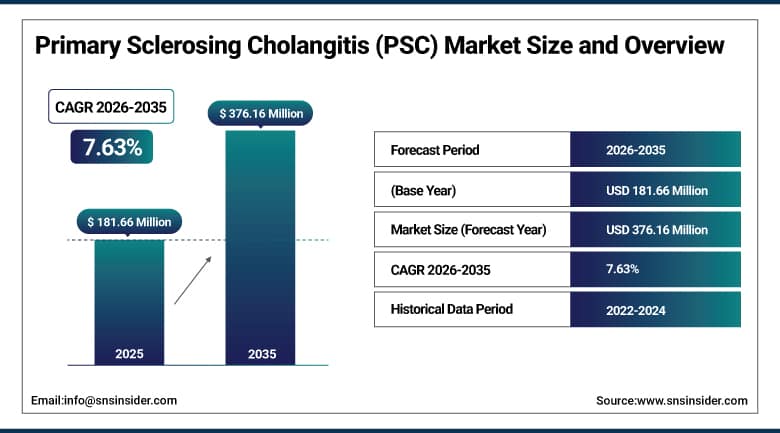
The Primary Sclerosing Cholangitis (PSC) Market was valued at USD 181.66 million in 2025 and is expected to reach USD 376.16 million by 2035, growing at a CAGR of 7.63% from 2026-2035.
The primary sclerosing cholangitis (PSC) market is driven by the increasing prevalence and diagnosis of chronic liver diseases, alongside growing awareness of PSC and advancements in diagnostic technologies that enable earlier disease detection. Additionally, rising investments in clinical research and drug development are supporting the introduction of novel therapies and improving treatment options. Growing healthcare expenditure, expanding access to specialized hepatology services, and increasing demand for effective disease management further contribute to market growth.
The U.S. National Institute of Diabetes and Digestive and Kidney Diseases (NIDDK) estimates that PSC affects approximately 5–16 people per 100,000. In addition, clinical development is expanding, with ClinicalTrials.gov listing a Phase 3 norUrsodeoxycholic acid study with 303 participants and a Phase 2b HK-660S study targeting 105 participants, supporting continued investment in novel PSC therapies.
Market Size and Forecast:
-
Market Size in 2026E: USD 194.13 Million
-
Market Size by 2035: USD 376.16 Million
-
CAGR: 7.63% from 2026 to 2035
-
Fastest Growing Region: Asia Pacific
-
Largest Region: North America
To Get More Information On Primary Sclerosing Cholangitis (PSC) Market - Request Free Sample Report
Primary Sclerosing Cholangitis (PSC) Market Trends:
-
Growing adoption of non-invasive fibrosis biomarkers to monitor disease progression and reduce reliance on liver biopsy.
-
Increasing research into gut microbiome and gut-liver axis mechanisms for novel PSC therapies.
-
Rising clinical trials evaluating disease-modifying therapies targeting fibrosis, bile acids, inflammation, and immune pathways.
-
Growing use of MRI-based imaging and artificial intelligence for earlier disease detection and progression assessment.
-
Increasing development of PSC-specific patient-reported outcome measures to assess symptoms and quality-of-life improvements.
U.S. Primary Sclerosing Cholangitis (PSC) Market Outlook:
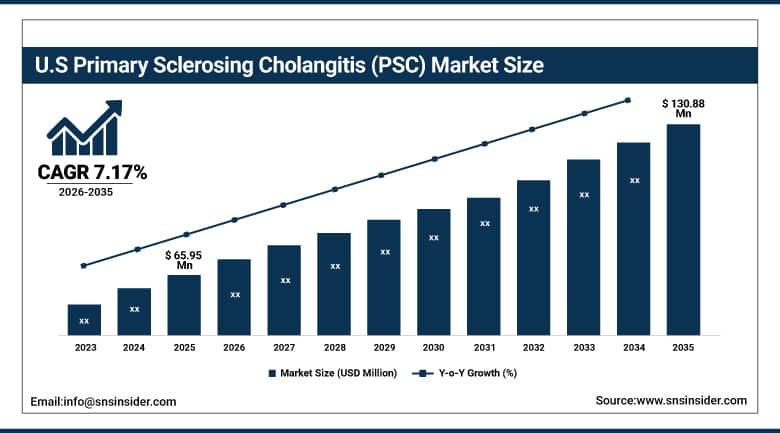
The U.S. Primary Sclerosing Cholangitis (PSC) Market was valued at USD 65.95 million in 2025 and is expected to reach USD 130.88 million by 2035, growing at a CAGR of 7.17% from 2026-2035.
The US Primary Sclerosing Cholangitis Market is mainly fueled by heightened awareness and advanced diagnosis abilities that allow for early detection of the condition, leading to better management of PSC patients. Furthermore, increased research and development efforts related to novel treatment methods are contributing to market growth. Increased investments by pharmaceutical companies and research institutes in the knowledge and treatment of PSC have also contributed to the growth of the US market.
A National Institutes of Health (NIH) review estimated that approximately 29,000 people in the U.S. have PSC, reflecting a substantial patient population requiring long-term disease monitoring and management. This prevalence supports continued demand for diagnostic procedures, specialist care, and emerging therapies, while encouraging pharmaceutical companies and researchers to invest in clinical development and treatment options for PSC.
Primary Sclerosing Cholangitis (PSC) Market Segment Analysis:
-
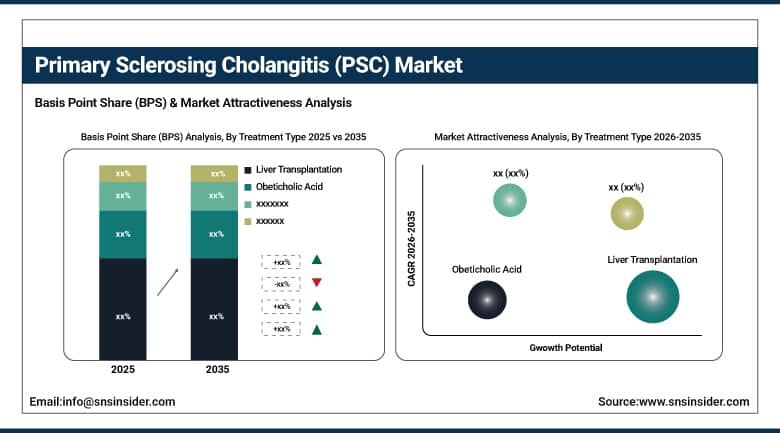
By Treatment Type, liver transplantation dominated the primary sclerosing cholangitis (PSC) market in 2025 with 30.56% share; obeticholic acid is the fastest-growing segment with a 12.01% CAGR.
-
By Route of Administration, oral dominated the market in 2025 with 62.34% share; intravenous is the fastest-growing segment with a 8.89% CAGR.
-
By Distribution Channel, hospital pharmacies dominated the market in 2025 with 42.60% share; online pharmacies are the fastest-growing segment with a 11.62% CAGR.
By Treatment Type, liver transplantation segment dominates the primary sclerosing cholangitis (PSC) market, obeticholic acid segment expected to grow fastest
The liver transplantation segment dominates the primary sclerosing cholangitis (PSC) market because PSC can progressively cause severe bile duct damage, cirrhosis, liver failure, and end-stage liver disease, making transplantation the definitive treatment for eligible patients with advanced disease. The absence of widely established disease-modifying therapies further strengthens reliance on transplantation. Growing availability of specialized transplant centers and improved surgical outcomes also contribute to the segment’s leading market position.
The obeticholic acid segment is expected to grow fastest due to increasing research interest in FXR-targeted therapies for cholestatic liver diseases and the potential of bile acid pathway modulation to address disease progression. Its oral administration and targeted mechanism may support patient convenience and therapeutic adoption. Continued clinical research and pharmaceutical investment in innovative treatments for PSC are expected to increase interest in obeticholic acid-based therapeutic approaches over the forecast period.
By Route of Administration, oral segment dominates the primary sclerosing cholangitis (psc) market, intravenous segment expected to grow fastest
The oral segment dominates the primary sclerosing cholangitis (PSC) market because oral medications offer greater convenience, easier administration, and better suitability for long-term disease management compared with hospital-based intravenous therapies. Patients can generally take oral medicines at home, reducing the need for frequent clinical visits and infusion-related resources. The growing focus on outpatient care and patient-centered treatment approaches further supports the widespread use of oral administration in PSC management.
The intravenous segment is expected to grow fastest as advanced PSC cases may require intensive hospital-based management, supportive therapies, or intravenous administration during complications and advanced disease stages. Intravenous delivery enables rapid and controlled drug administration, which can be particularly valuable in acute clinical settings. Increasing hospitalization of patients with severe liver complications and expanding research into injectable biologics and investigational therapies may further contribute to the segment’s growth.
By Distribution Channel, hospital pharmacies segment dominates the primary sclerosing cholangitis (PSC) market, online pharmacies segment expected to grow fastest
The hospital pharmacies segment dominates the primary sclerosing cholangitis (PSC) market because patients with advanced disease frequently require specialist hepatology care, complex treatment regimens, diagnostic monitoring, and hospitalization. Hospital pharmacies provide direct access to prescribed therapies under physician supervision and facilitate medication management for patients undergoing intensive treatment or transplantation. The concentration of specialized liver-care services within hospitals further strengthens hospital pharmacies as a major distribution channel for PSC-related treatments.
The online pharmacies market is projected to record the highest growth rate because of increased digitalization of the healthcare industry, better availability of the internet, and consumers' inclination towards the convenience of delivering prescriptions at their doorsteps. Chronic disease patients like PSC can gain from online pharmacies because of the convenience in delivering medicines and filling prescriptions without the need to travel.
Regional Analysis:
|
Region |
Major Country |
Share within Region, 2025 (%) |
|---|---|---|
|
North America |
United States |
87.23% |
|
Europe |
Germany |
18.67% |
|
Asia Pacific |
China |
35.54% |
|
Middle East & Africa |
UAE |
28.57% |
|
Latin America |
Brazil |
45.73% |
North America Primary Sclerosing Cholangitis (PSC) Market Insights
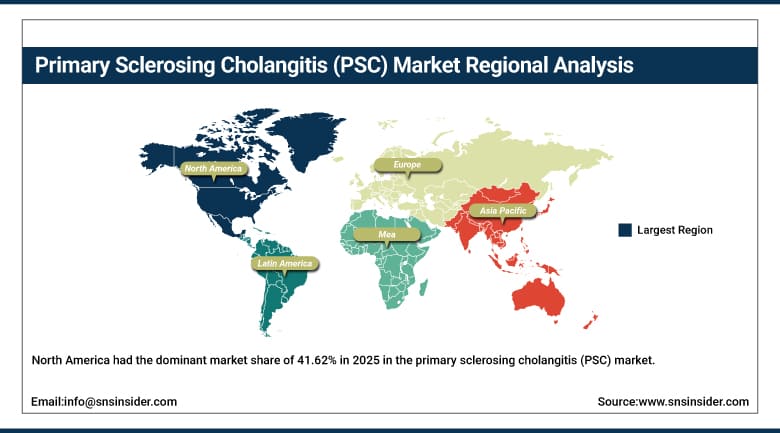
North America had the dominant market share of 41.62% in 2025 in the primary sclerosing cholangitis (PSC) market. The growth drivers of this market are the rising awareness about rare liver diseases and the presence of advanced hepatology services. North America comprises countries that possess well-developed healthcare facilities, including specialized liver centers, advanced diagnostics, and transplantations services. The growing awareness among physicians and effective disease monitoring helps with diagnosing PSC patients in a timely manner.
The growing investments in clinical research and drug development in North America are contributing to the expansion of the region's PSC market. Clinical trials of pharmaceutical firms, biotechnological organizations, and academies aim to understand PSC development and create appropriate medicines. The presence of the developed clinical trial infrastructure and regulations on rare disease drug development stimulates innovations.
Get Customized Report as Per Your Business Requirement - Enquiry Now
Europe Primary Sclerosing Cholangitis (PSC) Market Insights
The PSC market in Europe is sustained due to a high prevalence of the disease in some European Northern and Western countries, which leads to a considerable number of patients that need constant treatment and supervision. The presence of hepatology networks and liver clinics in countries like Germany, the UK, and Scandinavia is one of the factors that lead to an increase in demand for health-related services for PSC patients.
Collaboration between European research organizations, universities, patient communities, and pharmaceutical companies is another driver for PSC research and the development of novel therapeutics for PSC patients. There is a growth in rare disease programs in Europe aimed at promoting the research of disease mechanisms, biomarkers, and possible treatments. Also, regulatory frameworks and networks for conducting clinical research across borders help in the process of conducting clinical trials.
Asia Pacific Primary Sclerosing Cholangitis (PSC) Market Insights
Asia Pacific PSC witnessed fastest growth in primary sclerosing cholangitis (PSC) market with CAGR 9.81% in 2025. The market is driven by improvements in healthcare infrastructure, particularly in countries such as China, Japan, South Korea and Australia. Expanding access to specialized gastroenterology and hepatology services is improving the diagnosis and management of rare liver diseases. Greater adoption of advanced imaging, endoscopic procedures, and laboratory testing is helping identify PSC cases more effectively, while increasing healthcare expenditure supports access to specialist treatment and long-term disease monitoring.
The Asia Pacific PSC market is driven by improvements in healthcare infrastructure, particularly in countries such as China, Japan, South Korea, and Australia. Expanding access to specialized gastroenterology and hepatology services is improving the diagnosis and management of rare liver diseases. Greater adoption of advanced imaging, endoscopic procedures, and laboratory testing is helping identify PSC cases more effectively, while increasing healthcare expenditure supports access to specialist treatment and long-term disease monitoring.
Middle East & Africa and Latin America Primary Sclerosing Cholangitis (PSC) Market Insights
The Middle East, Africa, and Latin America PSC market is being influenced by improvement in healthcare infrastructure and expansion of specialized services for gastroenterology and hepatology patients. Countries like UAE, Saudi Arabia, Brazil, and Mexico are building highly-equipped hospitals and diagnostic centers to improve the diagnosis and treatment of complicated liver conditions along with providing better transplant facilities and follow-up for the diseases.
Healthcare investments and awareness about rare diseases in middle east, africa, and latin america are driving market development. Healthcare authorities in various countries and organizations are enhancing specialized healthcare services while doctors have become well acquainted with complicated cholestatic disorders such as PSC. Moreover, research activities and cooperation among healthcare systems around the world are helping in the diagnosis and treatment of PSC patients.
Market Dynamics:
Growth Drivers: Increasing Disease Awareness, Diagnostic Advances, and Rising IBD Association Are Driving PSC Market Expansion
The growing recognition of primary sclerosing cholangitis (PSC) by healthcare professionals and patients is increasing the rate of disease recognition and diagnosis. The development of imaging technologies, endoscopy and biomarkers is aiding early detection and tracking. In addition, the rising pharmaceutical and scientific research on the disease pathogenesis and novel therapeutic approaches is expanding the treatment options for PSC. Increased availability of hepatology specialists and liver transplantation procedures is helping market growth by providing comprehensive care to patients with PSC.
The close relation between primary sclerosing cholangitis and IBD is increasing the demand for disease screening and monitoring. With growing ability of healthcare systems to diagnose patients suffering from liver diseases along with digestive diseases, the demand for diagnostic services and treatment is growing. Also, the increased availability of hepatology and gastroenterology specialists, especially in developed healthcare markets, is helping market expansion.
Restraints: Limited Disease-Modifying Therapies and High Treatment Costs Restrict PSC Market Development and Patient Access
The PSC market is constrained by the lack of any disease-modifying treatment options that can stop the disease from progressing. Currently, the treatment approach is mainly symptomatic, dealing with complications of the disease, along with the use of transplantation for advanced stages of the disease. This constrains the possibilities of treatment, which leads to an uncertainty of how to manage the disease. As a result, supportive care and other options are used, thus limiting pharmaceutical market development.
The high cost of PSC treatment, consultations, diagnostics, hospitalization, and the procedure of liver transplantation itself could make access to such treatment difficult. It is especially true for developing countries with poor healthcare infrastructure and inadequate insurance programs. Also, PSC treatment includes continuous monitoring, and the cost is high. Furthermore, there is a shortage of specialized hepatology centers.
Opportunities: Expanding Targeted Drug Development and Biomarker Research Create Opportunities for Personalized PSC Treatment
Rising investments into clinical research constitute a major opportunity for the PSC market, with increasing efforts on finding innovative ways of addressing the condition via targeted therapeutics and exploring novel mechanisms. Insights gained from studies on the bile acid metabolism, fibrosis, inflammation, and immune pathways are expected to result in the development of promising treatments capable of modifying the course of the disease. Clinical trial activities as well as rising regulatory focus on rare diseases are expected to bring about further advancements in terms of treatment options.
Development of reliable biomarkers is another major opportunity that can be utilized by the market to increase the efficiency of diagnosing, monitoring the progress of the disease, and prescribing appropriate therapies. Research on genetic, molecular, and imaging biomarkers is expected to allow identifying high-risk patients. The integration of biomarker-driven treatment strategies with the precision medicine concept will contribute to developing more personalized treatment approaches.
Recent Developments:
-
2026: Ipsen advanced elafibranor development through a Phase III, multicenter, randomized, placebo-controlled study involving approximately 350 adults with large-duct PSC. The trial evaluates elafibranor 120 mg against placebo, with treatment continuing until sufficient clinical events occur. The development highlights continued pharmaceutical investment in potential disease-modifying treatments for PSC, where effective approved therapies remain limited.
-
2024: Mirum Pharmaceuticals announced interim results from Phase 2b studies evaluating volixibat, an oral ileal bile acid transporter (IBAT) inhibitor, in patients with primary biliary cholangitis (PBC) and primary sclerosing cholangitis (PSC). In the VANTAGE study, volixibat significantly improved pruritus, while 75% of treated patients achieved more than a 50% reduction in serum bile acids.
Primary Sclerosing Cholangitis (PSC) Market key players are:
-
Acorda Therapeutics, Inc.
-
Gilead Sciences, Inc.
-
NGM Biopharmaceuticals, Inc.
-
Dr. Falk Pharma GmbH
-
Allergan Plc.
-
Shire Plc.
-
Durect Corporation
-
Conatus Pharmaceuticals, Inc.
-
Sirnaomics, Inc.
-
Shenzhen HighTide Biopharmaceutical Ltd.
-
CymaBay Therapeutics
-
Pliant Therapeutics
-
Mirum Pharmaceuticals, Inc.
-
Takeda Pharmaceutical Company Limited
-
Novartis AG
-
Bristol Myers Squibb
-
Madrigal Pharmaceuticals, Inc.
-
Poxel SA
Primary Sclerosing Cholangitis (PSC) Market Report Scope:
| Report Attributes | Details |
|---|---|
| Market Size in 2025 | USD 181.66 Million |
| Market Size by 2035 | USD 376.16 Million |
| CAGR | CAGR of 7.63% From 2026 to 2035 |
| Base Year | 2025 |
| Forecast Period | 2026-2035 |
| Historical Data | 2022-2024 |
| Report Scope & Coverage | Market Size, Segments Analysis, Competitive Landscape, Regional Analysis, DROC & SWOT Analysis, Forecast Outlook |
| Key Segments | • By Treatment Type (Ursodeoxycholic Acid (UDCA), Obeticholic Acid, Antibiotics, Immunosuppressants, Symptomatic Treatment, Liver Transplantation, Other Treatments) • By Route of Administration (Oral, Intravenous, Other Routes) • By Distribution Channel (Hospital Pharmacies, Retail Pharmacies, Online Pharmacies, Specialty Pharmacies) |
| Regional Analysis/Coverage | North America (US, Canada), Europe (Germany, UK, France, Italy, Spain, Russia, Poland, Rest of Europe), Asia Pacific (China, India, Japan, South Korea, Australia, ASEAN Countries, Rest of Asia Pacific), Middle East & Africa (UAE, Saudi Arabia, Qatar, South Africa, Rest of Middle East & Africa), Latin America (Brazil, Argentina, Mexico, Colombia, Rest of Latin America). |
| Company Profiles | Acorda Therapeutics, Inc., Gilead Sciences, Inc., NGM Biopharmaceuticals, Inc., Intercept Pharmaceuticals, Inc., Dr. Falk Pharma GmbH, Allergan Plc., Shire Plc., Durect Corporation, Conatus Pharmaceuticals, Inc., Sirnaomics, Inc., Shenzhen HighTide Biopharmaceutical Ltd., CymaBay Therapeutics, Pliant Therapeutics, Immunic AG, Mirum Pharmaceuticals, Inc., Takeda Pharmaceutical Company Limited, Novartis AG, Bristol Myers Squibb, Madrigal Pharmaceuticals, Inc., Poxel SA. |
Frequently Asked Questions
North America dominated the primary sclerosing cholangitis (PSC) market in 2025.
The primary sclerosing cholangitis (PSC) market is expected to grow at a CAGR of 7.63% from 2026 to 2035.
The primary sclerosing cholangitis (PSC) market was valued at USD 181.66 million in 2025.
The major growth factor is increasing investment in clinical research and development of innovative, targeted therapies for PSC, addressing significant unmet treatment needs.
The oral segment dominated the primary sclerosing cholangitis (PSC) market in 2025.
